null

Portable Dehumidifiers

Excess moisture is one of the more stubborn comfort and structural problems a building can have. Left unchecked, high humidity leads to mold growth, wood rot, damaged building materials, and air that feels heavier and harder to condition efficiently. Portable dehumidifiers are one of the most direct tools for addressing that problem in a specific space, and HVAC365 stocks a broad selection of capacity and application options so you can match the right unit to what the job or the room actually requires, not just what happens to be available.

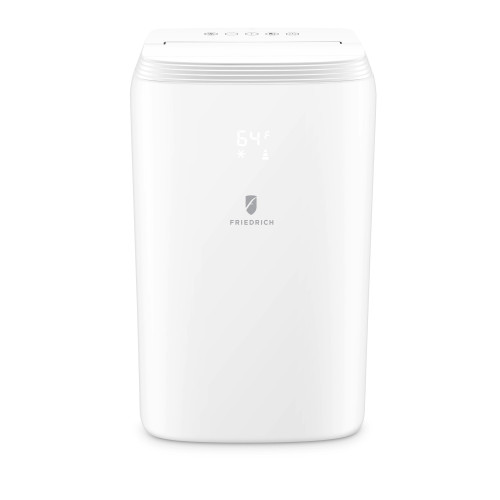
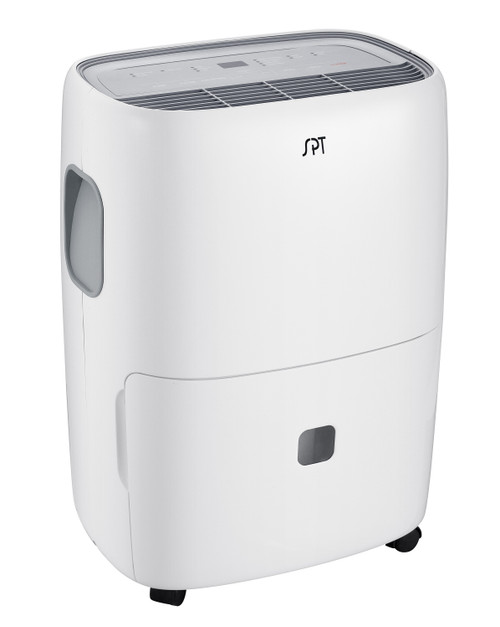
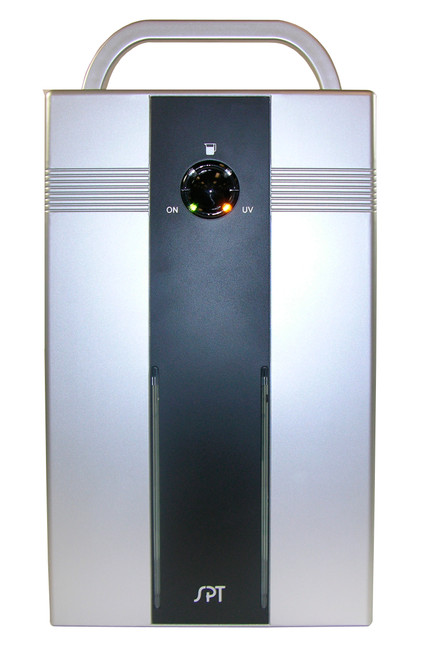
This category covers freestanding, self-contained dehumidifiers designed to be deployed without permanent ducted installation. They pull moisture out of the air in a defined area, and they do it without any major mechanical tie-in to the building's HVAC system. That distinction makes them a fast, flexible answer to moisture problems in basements, crawl spaces, garages, utility rooms, job-site enclosures, storage areas, and any other space where a ducted whole-home system either does not reach or cannot be relied on to handle the load on its own. Homeowners dealing with a damp basement or a chronically humid room will find options here, as will contractors who need a unit for a specific job or remediation project. Light commercial operators managing moisture in a retail, hospitality, or storage context also use portable dehumidifiers for this kind of targeted coverage, and distributors sourcing volume for fleet stock or resale will find a catalog broad enough to work with. If you are exploring where portable dehumidifiers fit within a broader moisture-management strategy, the Dehumidifiers section of the catalog covers the full range of dehumidification approaches available at HVAC365.

Choosing the Right Dehumidifier

Capacity is the most important decision to get right, and it is the one most often guessed at rather than calculated. A dehumidifier is rated by how many pints of moisture it removes from the air per day under defined test conditions. The right capacity for a given space depends on the actual size of that space, how wet it tends to get, how much ventilation or infiltration it sees, whether it is below grade, and other load factors that vary significantly from one installation to the next. A unit that is too small for the space will run constantly without ever getting ahead of the moisture load. A unit that is too large for the space is not necessarily harmful the way an oversized air conditioner short-cycles, but you pay for capacity you are not using and the unit may cycle off before it has adequately dehumidified the air in poorly mixed spaces. Confirm the pint-per-day capacity your space genuinely requires before buying, ideally by working through the calculation rather than estimating by square footage alone, since square footage without a moisture load estimate is not enough information.

Application type matters alongside capacity. A unit designed and rated for a conditioned living space performs differently in a cold, damp basement or an unheated crawl space. Some portable dehumidifiers use refrigerant-based operation that becomes less effective at lower ambient temperatures, while others use desiccant-based or low-temperature-rated refrigerant systems that maintain performance in colder conditions. If the space where you need dehumidification runs cold for any part of the year, verify that the unit you are considering is rated for operation in that temperature range. Running a standard unit in a space that is too cold for it will reduce performance and can cause ice buildup on the coils. The installation notes further down cover operating temperature range as a site-readiness check.

Efficiency is a real consideration for units that will run continuously for months at a time. Dehumidifiers operate on a standardized efficiency metric, and higher-efficiency units cost more upfront but draw less power for the same moisture removal. In spaces where the dehumidifier runs most of the day through an entire humid season, the energy difference adds up. Check whether your utility offers a rebate for certified high-efficiency dehumidifiers before you finalize the purchase; many utilities do, and the rebate can close a significant portion of the price gap. Distributors or contractors sourcing for multiple installations may find that volume pricing and lead time become relevant factors alongside unit efficiency, since the economics shift when you are buying several units at once.

Buying Tips

  • Do not trust the square-footage table on the box without accounting for moisture conditions. Manufacturers include sizing guides, but they typically assume moderate humidity levels. A basement that holds standing water after rain, a crawl space with no vapor barrier, or a space with heavy outdoor air infiltration will need more capacity than the table suggests for that square footage. When in doubt, size up rather than down.
  • Check the drain options before you buy, not after. Portable dehumidifiers collect water in a tank that has to be emptied manually, or they drain continuously through a hose to a floor drain, utility sink, or pump. If the unit will run unattended for any stretch of time, continuous drainage is essentially mandatory. Verify that your space has a drain accessible from where the unit will sit, or budget for a condensate pump if gravity drainage is not feasible. This is a cheap detail to sort out before purchase and an annoying one to deal with after.
  • Factor in noise if the space is occupied. Portable dehumidifiers vary considerably in operating sound level. A unit in an unoccupied basement or equipment room is a different situation from one in a sleeping area, a hotel room, or an occupied retail space. Check the decibel rating if the space is occupied during operation.
  • Consider restart behavior if the unit will run unattended after a power interruption. Some units automatically resume their previous settings when power is restored; others require a manual restart. In an application where the unit is running in a space that is not checked daily, like a crawl space or a seasonal cabin, automatic restart can prevent a moisture problem from developing during an unnoticed outage.

Where Portable Dehumidifiers Make the Most Sense

Portable dehumidifiers cover a wide range of situations, and the configuration that makes sense depends heavily on where and how the unit will be used.

  • Basement and below-grade spaces: This is the most common residential application. Below-grade spaces accumulate moisture through foundation walls, slab infiltration, and poor ventilation, and a central air system often does not pull enough air from a basement to dehumidify it adequately. A portable dehumidifier stationed in the basement handles the moisture load directly, protecting stored belongings, wood framing, and air quality in the rest of the house.
  • Crawl spaces: Crawl spaces with high ground moisture or inadequate vapor barriers are a persistent source of whole-home humidity problems. Dehumidifiers designed specifically for crawl space use tend to be lower-profile and built for colder, damper operating conditions than standard residential units. Confirming the operating temperature and physical clearance requirements before ordering matters here more than in most applications.
  • Garages and utility rooms: These spaces often see more humidity fluctuation than living areas and may have less controlled ambient temperatures. A unit rated for the expected low-end temperature in the space is important in an unheated garage in a cold climate.
  • Job sites and remediation work: Contractors doing water damage restoration, new construction drying, or post-flood remediation use high-capacity portable dehumidifiers as part of a drying protocol. Units in this application often need to move significant moisture quickly and may pair with air movers to circulate air through wet materials. High-capacity commercial-grade portables are the right tool here, not a standard residential unit pushed beyond its design load.
  • Light commercial storage and hospitality spaces: Humidity control in a wine storage room, a document archive, a hotel utility room, or a small retail space often falls outside what the central HVAC system was sized to handle. A portable unit lets an operator target that space without modifying the building's central system.

What It Takes to Install One

Portable dehumidifiers are among the simpler pieces of HVAC equipment to deploy, but there are still real site-readiness factors to check before the unit arrives on site.

Electrical supply is the first thing to verify. Most residential portable dehumidifiers run on standard 120V household current, but higher-capacity commercial units often require 240V. Check the electrical requirements for the specific unit before you order, not after it arrives. Even on a 120V unit, running a high-draw appliance on a shared circuit with other loads can trip breakers under continuous operation. A dedicated circuit is often the right call for a dehumidifier that will run continuously through a humid season, and it is worth checking your panel before assuming the nearest outlet will do the job.

Drainage routing deserves more thought than most buyers give it upfront, since it was flagged in the buying tips above as a common afterthought. Measure the distance from the intended unit location to the nearest floor drain or utility sink. If the unit's hose length does not reach, or if the drain is higher than the unit, a condensate pump is required. Look up the condensate pump lift rating against the actual height difference in your space before purchasing a pump; not all condensate pumps handle the same lift.

Operating temperature range is a site-readiness factor, not just a buying-decision factor. Even after selecting a unit rated for your expected conditions, measure or look up the actual low-end temperature in the space during the coldest period it will operate. If that number approaches or falls below the unit's rated minimum operating temperature, the unit will underperform or ice up. This is particularly relevant for garages, crawl spaces, and unheated storage areas in colder climates.

Airflow around the unit matters more than it looks like it should. Portable dehumidifiers pull air in from one side and exhaust it from another, and placing a unit too close to a wall, a storage rack, or other obstructions reduces how much air it can process per hour. Pull the clearance requirements from the spec sheet for the unit you are considering and make sure the intended location can actually provide them. A unit that is physically in the right space but blocked on its intake or exhaust will underperform relative to its rated capacity.

Controls and smart features vary widely across the category. Basic units run to a set humidity level and cycle off when it is reached. Others include built-in pumps, Wi-Fi connectivity, washable filters, or integration with smart home systems. None of these features changes the core moisture-removal performance, but they do change the day-to-day experience of using the unit, particularly in an application where someone is checking it remotely or running it in an unoccupied space.

Things You Should Know

Q: How do I know what pint capacity I need?

A: Use both square footage and moisture severity as inputs — a damp basement with visible condensation needs more capacity per square foot than a mildly humid living area. When the calculation lands between two sizes, choose the larger unit. The capacity discussion above covers the full reasoning behind why square footage alone is not enough to go on.

Q: Can I use a standard residential portable dehumidifier in a cold basement or unheated garage?

A: It depends on the unit's rated operating temperature range. Standard refrigerant-based dehumidifiers lose effectiveness and can ice up at lower ambient temperatures, though that threshold varies by unit. The application type guidance above explains what to look for — low-temperature-rated refrigerant systems or desiccant-based models — and the installation section covers how to verify the actual low-end conditions in your space.

Q: Do portable dehumidifiers need a dedicated electrical circuit?

A: Not always required, but often the right call. The electrical supply section above explains how to check available circuit capacity against the unit's amperage draw. A dedicated circuit eliminates the risk of tripped breakers in any application where the unit runs around the clock.

Q: What is the difference between tank drainage and continuous drainage, and which do I need?

A: Tank drainage collects water in an internal reservoir that shuts the unit off when full and requires manual emptying. Continuous drainage routes water through a hose to a floor drain or condensate pump and keeps the unit running unattended. For any application where the unit runs overnight or in an unoccupied space, continuous drainage is the practical choice. The drainage routing section above covers what to measure and plan for in your specific space.

Q: Can one portable dehumidifier cover multiple rooms?

A: A portable dehumidifier is most effective in the space where it sits, with adequate air circulation in that space. Open floor plans with good airflow can benefit from a single unit placed centrally, but a unit in one room will have limited effect on adjacent closed rooms. If you need humidity control across multiple separated spaces, plan on a unit per zone or look at whether a whole-home approach makes more sense for your situation.

Q: How do I maintain a portable dehumidifier?

A: The main maintenance items are cleaning or replacing the air filter on the schedule the manufacturer specifies, checking that the drainage path is clear and flowing, and cleaning the water tank periodically to prevent mold growth inside the unit itself. Some units have washable filters; others require replacement. Pull the maintenance schedule from the documentation for the specific unit you purchase and follow it: a clogged filter reduces airflow and capacity.

HVAC365 ships portable dehumidifiers nationwide, which matters when a moisture problem cannot wait on a local supplier's next delivery. Whether you are a homeowner dealing with a wet basement before the next rain, a contractor sourcing a unit for a drying job, or a distributor placing a volume order to stock your fleet, the catalog covers residential through commercial capacities with availability that is not limited to a single region. Search by application or capacity to find what your specific situation calls for.

Compare

Fast Shipping

Easy Returns

Warranty Coverage

Financing Available