
null
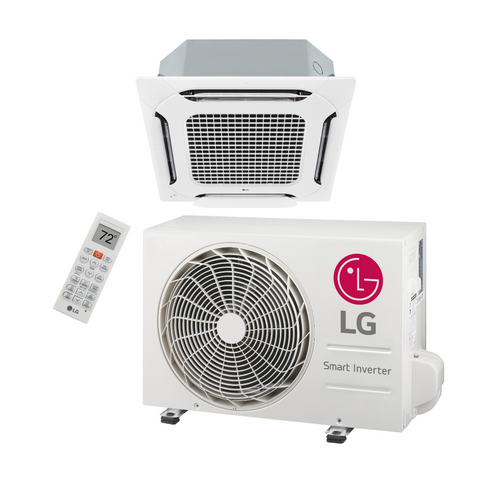
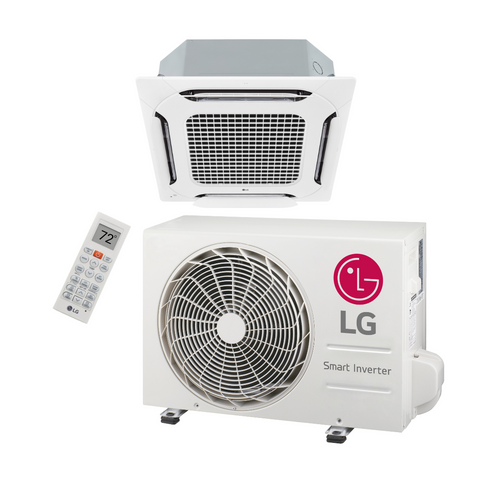
Ductless Mini Split Ceiling Recessed Cassette

Ductless Mini Split Ceiling Recessed Cassette

A leaking window unit or a wall-hung mini split head can feel like a compromise the moment a customer or client walks in. Ceiling recessed cassette mini splits solve that problem by disappearing into the ceiling plane while still delivering the same zoned, ductless cooling and heating performance, and HVAC365 stocks the capacity and application options to match real-world jobs rather than forcing you to guess on a substitute. Whether you are replacing an aging system, outfitting a new commercial build, or stocking inventory for a season of installs, this category covers the single-zone ceiling cassette format from residential living rooms to light commercial spaces. Contractors spec these units when aesthetics matter as much as performance. Homeowners and property managers choose them when a wall-mounted head is not an option or simply not acceptable. Distributors source them when their customers need a concealed indoor unit that works with a single outdoor condensing unit. The category serves all of those buyers, and the product selection reflects that range.

Choosing the Right Ceiling Cassette

Capacity is the first decision to settle, and it is also the one most often rushed. The right BTU or tonnage figure comes from a proper load calculation for the specific space, not from the room's square footage alone. Ceiling height, insulation quality, window area, occupancy load, and local climate all shift the number. Undersizing leaves the space uncomfortable on peak days and runs the compressor continuously. Oversizing causes short-cycling, which degrades comfort, shortens equipment life, and raises operating costs over time. Confirm the capacity your load calculation calls for before you look at models.

Application type is the next consideration, and it is closely tied to capacity. A residential master bedroom and a commercial conference room may have similar square footage but very different load profiles. Light commercial spaces often have higher internal heat loads from lighting, equipment, and occupancy, which typically pushes the required capacity higher than the room dimensions alone would suggest. Some ceiling cassette models are rated specifically for commercial applications; others are optimized for residential use. Matching the unit's rated application to the actual environment is not a formality, it is a reliability decision.

Efficiency tier matters for two reasons: operating cost and rebate eligibility. Higher-efficiency units cost more upfront but cost less to run month over month. Many utility rebate programs set a minimum efficiency threshold, and whether a given unit clears that bar depends on the specific ratings of that model, which you will need to verify against your local utility's published requirements. Local energy codes may also set a floor on acceptable efficiency, so check the applicable code for the jurisdiction before finalizing a selection. The tradeoff between upfront cost and long-run operating savings is real, and it is worth running the numbers rather than defaulting to the lowest-price option.

Distributors evaluating this category for volume purchasing will weigh lead time and availability alongside per-unit cost. A unit that saves a few dollars per piece but carries a six-week lead time creates problems for contractors whose schedules do not have that kind of flex. The installation-readiness factors covered below are also worth factoring into distributor purchasing decisions, since a mismatch on electrical supply or drainage requirements at the job site creates return and re-order friction that affects everyone downstream.

Buying Tips

  • Check the ceiling void depth before ordering. Ceiling cassette units require a specific minimum plenum depth above the finished ceiling for the cassette body to fit. That measurement varies by model, and the rough-in space available on a retrofit job is often less than it looks. Measure the actual void, not the estimated framing depth, before committing to a unit.
  • Verify the panel grille size matches the ceiling grid. Most cassette units are designed for a standard ceiling tile grid, but grille dimensions and tile sizes vary. A mismatch means either a custom ceiling modification or a return. Confirm the grille footprint against the ceiling grid on site before the unit ships.
  • Do not skip the condensate drainage plan. Ceiling cassette units collect condensate that must drain away reliably. Many models include a built-in condensate pump rated for a specific lift height. If the drain destination is above the cassette or at a long horizontal run, verify the pump's rated lift against the actual drainage path. A failed or undersized condensate pump in a ceiling installation causes water damage that is expensive to repair and disruptive to the occupied space below.
  • Match the indoor and outdoor units before purchase. Ceiling cassette indoor units are matched to specific outdoor condensing units by the manufacturer. A cassette purchased separately from its condensing unit must be verified as a compatible matched pair, not assumed to work because the brand and nominal capacity appear the same. Mismatched pairs can void the warranty and cause control and capacity problems.

Ceiling Cassette Configurations and Applications

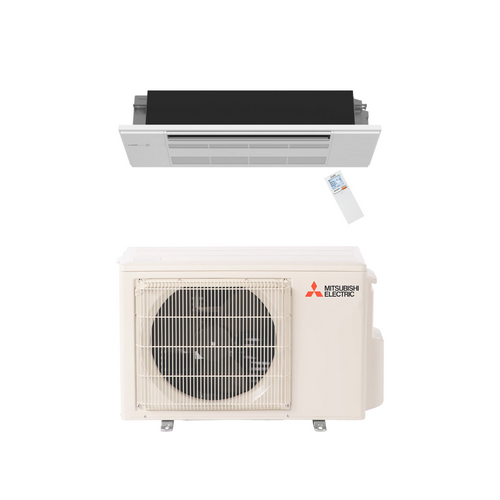
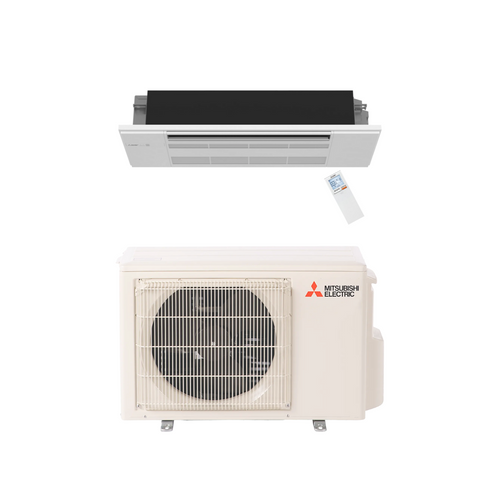
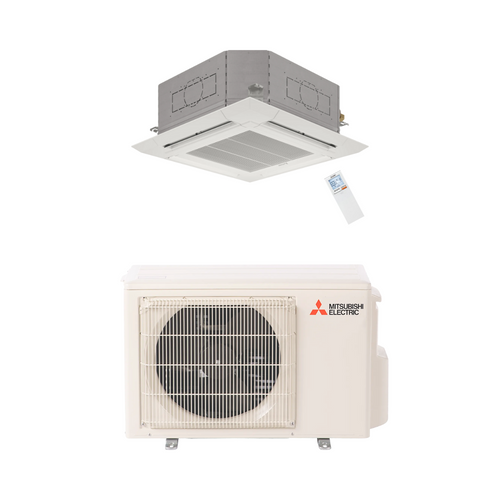
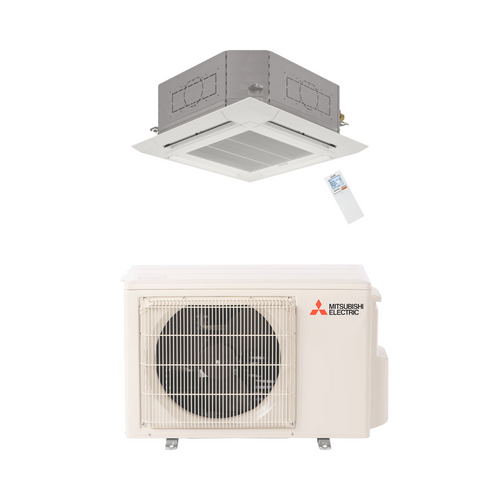
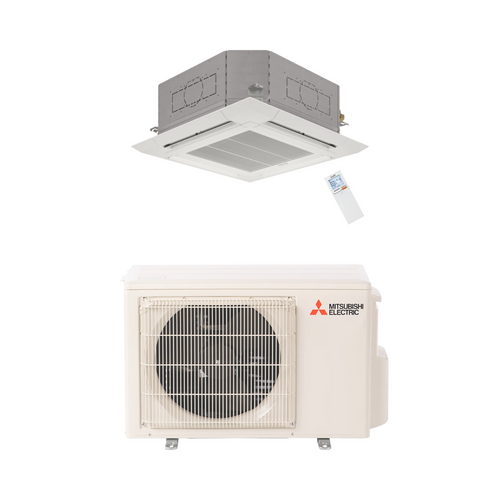
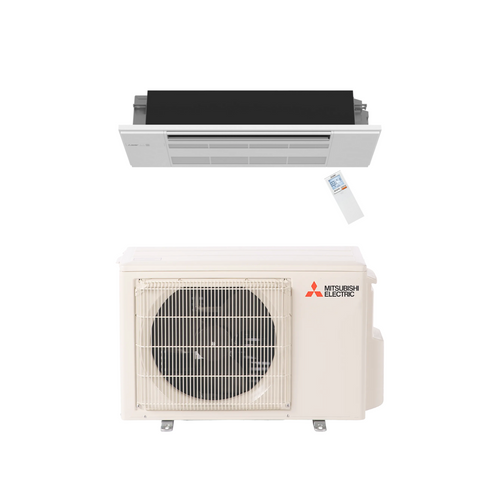
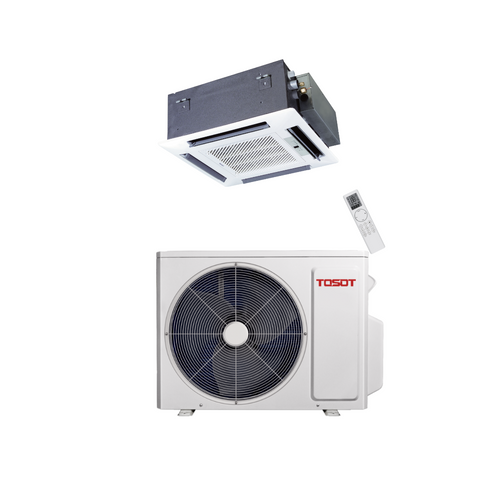
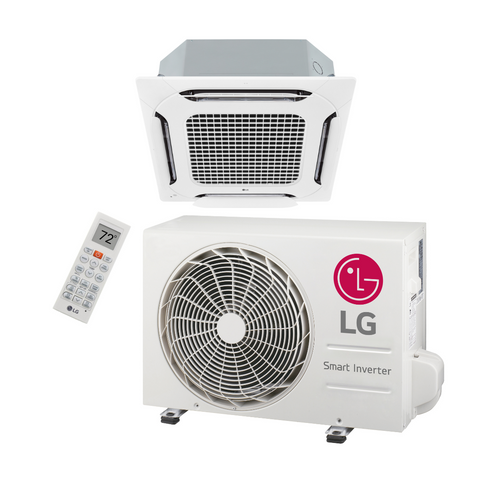
The defining characteristic of this category is the indoor unit format: a ceiling-recessed cassette that mounts flush with or slightly below the finished ceiling and discharges conditioned air through a grille that typically blows in two or four directions. That multi-directional airflow pattern is a core reason contractors and designers choose this format over a wall-mounted or floor-console indoor unit. A four-way discharge pattern distributes air across a larger floor area without drafts, which makes it well suited for open-plan spaces, conference rooms, retail floors, and restaurant dining areas where comfort needs to be reasonably uniform across the occupied zone.

Within the single-zone ceiling cassette format, the real distinctions are capacity range and application rating. A smaller-capacity cassette is appropriate for a residential bedroom, a home office, or a small retail space. A larger-capacity unit handles a bigger open-plan area, a commercial conference room, or a server room with a sustained internal heat load. The right size comes from the load calculation, not from a rough rule of thumb.

Some manufacturers offer cassette models with variable-capacity (inverter-driven) compressors and others with single-stage compressors. Variable-capacity units modulate output to match the actual load at any given moment, which improves efficiency and comfort consistency. Single-stage units run at full capacity or off, which is simpler mechanically but less precise in maintaining setpoint. For spaces with variable occupancy or loads that shift across the day, a modulating unit generally delivers better comfort and lower operating costs. For a space with a stable, predictable load, a single-stage unit may be entirely adequate at a lower upfront cost.

What It Takes to Install a Ceiling Cassette

Ceiling cassette mini splits require more pre-install planning than a wall-mounted unit, and most of the problems that show up at startup trace back to site conditions that were not checked before the equipment arrived.

Electrical supply is the starting point. Pull the unit's nameplate data and spec sheet before the rough-in, and verify the required voltage, amperage, and phase against the panel and circuit capacity already on site. Single-zone mini splits in this format are commonly single-phase, but the specific requirement depends on the model. A dedicated circuit sized to the unit's minimum circuit ampacity is standard; sharing a circuit with other loads is not acceptable and will void most warranties.

Ceiling void depth, as noted in the buying tips above, is a physical constraint that cannot be worked around after the equipment is on site. Measure the actual available plenum depth, account for any existing MEP runs (ductwork, piping, conduit) in that ceiling cavity, and compare against the cassette body dimensions in the installation manual before ordering.

Condensate drainage needs a clear path from the cassette to a drain. Many ceiling cassette units include an integrated condensate pump, but the pump has a maximum rated lift height and a maximum horizontal run. Check those figures in the installation manual against the actual drain routing on the job. If the drain path exceeds the pump's rating, a supplemental pump or a gravity drain reroute is required.

Refrigerant line set routing runs from the outdoor condensing unit to the cassette and must be sized, protected, and insulated per the manufacturer's specifications. The maximum allowable line set length and elevation difference between the indoor and outdoor units are model-specific; look those up in the installation manual and verify them against the actual mounting locations before finalizing the equipment placement. Line sets that exceed the manufacturer's stated limits affect system performance and can void the warranty.

Controls and integration vary by model. Most single-zone ceiling cassette units include a wired or wireless remote controller. Some models support connection to a building automation system or a third-party smart thermostat; others do not. If BAS integration or smart-home control is a requirement, verify that the specific model supports the required communication protocol before purchase rather than after installation.

Operating temperature range is a real limitation for any heat pump application. Mini split heat pumps are rated for heating and cooling operation within a stated ambient temperature range. In climates where outdoor temperatures drop significantly in winter, verify the unit's rated minimum operating temperature against the site's design heating conditions. Some models are rated for low-ambient heating; others are not. Using a unit outside its rated range affects both performance and equipment longevity.

Clearances around the outdoor condensing unit are specified by the manufacturer for airflow and serviceability. Check the spec sheet and installation manual for minimum clearances on all sides and overhead, and verify that the proposed outdoor unit location meets those requirements before setting the equipment.

Things You Should Know

Q: What is a ceiling recessed cassette mini split?

A: A ceiling recessed cassette mini split is a ductless split system where the indoor unit is installed flush with or just below the finished ceiling surface. It delivers conditioned air through a grille that typically blows in two or four directions, covering the floor area more evenly than a wall-mounted unit. The outdoor condensing unit connects via refrigerant line set to the indoor cassette, with no ductwork required.

Q: How do I know what capacity ceiling cassette I need?

A: Run a proper load calculation for the space — square footage alone is not a reliable basis. The sizing factors and consequences of getting it wrong are covered in the selection section above.

Q: Can a ceiling cassette mini split be installed in a retrofit situation?

A: Yes, and the ceiling void depth is the constraint that determines whether it is feasible. The specifics of what to measure and how to verify it are covered in the buying tips and installation sections above.

Q: Does a ceiling cassette require a condensate pump?

A: Many units include a built-in pump, but whether it handles your specific drain routing depends on its rated lift and horizontal run limits. What to check before installation is covered in both the buying tips and installation sections above.

Q: Are ceiling cassette mini splits suitable for commercial spaces?

A: Yes. The four-way discharge pattern and concealed installation make ceiling cassettes a common choice for conference rooms, retail floors, and restaurant dining areas. Commercial spaces typically carry higher internal heat loads than residential rooms of similar size, so base capacity selection on a commercial load calculation rather than a residential rule of thumb.

Q: Do I need a matched set, or can I pair any cassette with any outdoor unit?

A: The indoor cassette and outdoor condensing unit must be a manufacturer-matched pair. Capacity and nominal size alone do not guarantee compatibility. Mismatched pairs can cause control failures, capacity shortfalls, and warranty voidance. Verify the specific indoor-outdoor pairing in the manufacturer's engineering data or product documentation before purchasing the units separately.

Q: What efficiency ratings should I look for?

A: Check your local utility's rebate program thresholds and your jurisdiction's energy code minimums — those two requirements define the floor. The tradeoff between upfront cost and operating savings is covered in the selection section above.

HVAC365 ships ceiling recessed cassette mini splits nationwide, with a broad stocked selection that covers residential replacements through commercial and volume distributor orders. Having the right unit available when the job is ready to move matters, and a catalog that spans the capacity and application range this format covers means fewer substitutions and fewer delays on the schedule.

Compare
Show: 12 24 48

Fast Shipping

Easy Returns

Warranty Coverage

Financing Available