null
Ductless Mini Split Quad Zone

Ductless Mini Split Quad Zone

Trying to condition four separate rooms or zones with one outdoor unit is exactly the problem quad zone ductless mini split systems were built to solve. You get independent temperature control in each space without running ductwork, which makes them a practical choice when gut renovation is not on the table or when duct runs simply do not make sense for the building. HVAC365 stocks a broad selection of quad zone systems specifically because the right answer varies a lot depending on the building, the load, and the application, and a narrow catalog leaves buyers stuck. Whether you are replacing an aging window unit setup in a larger home, outfitting a light commercial space, or speccing a multi-room system for a client's job, the selection here covers the capacity and configuration options those jobs actually call for.

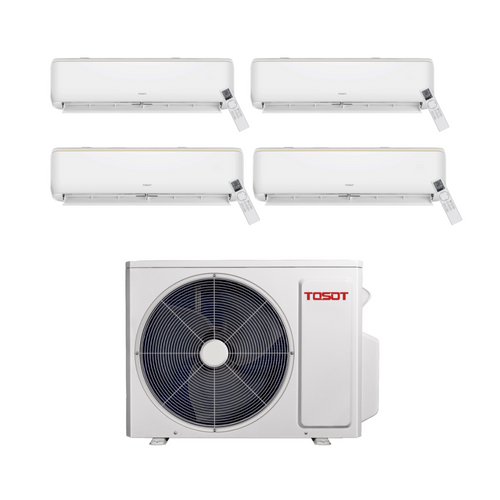
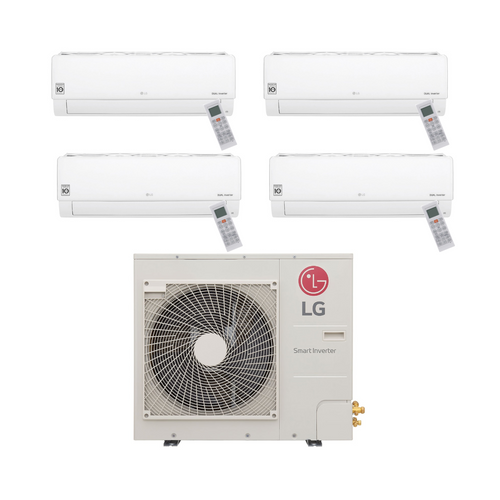
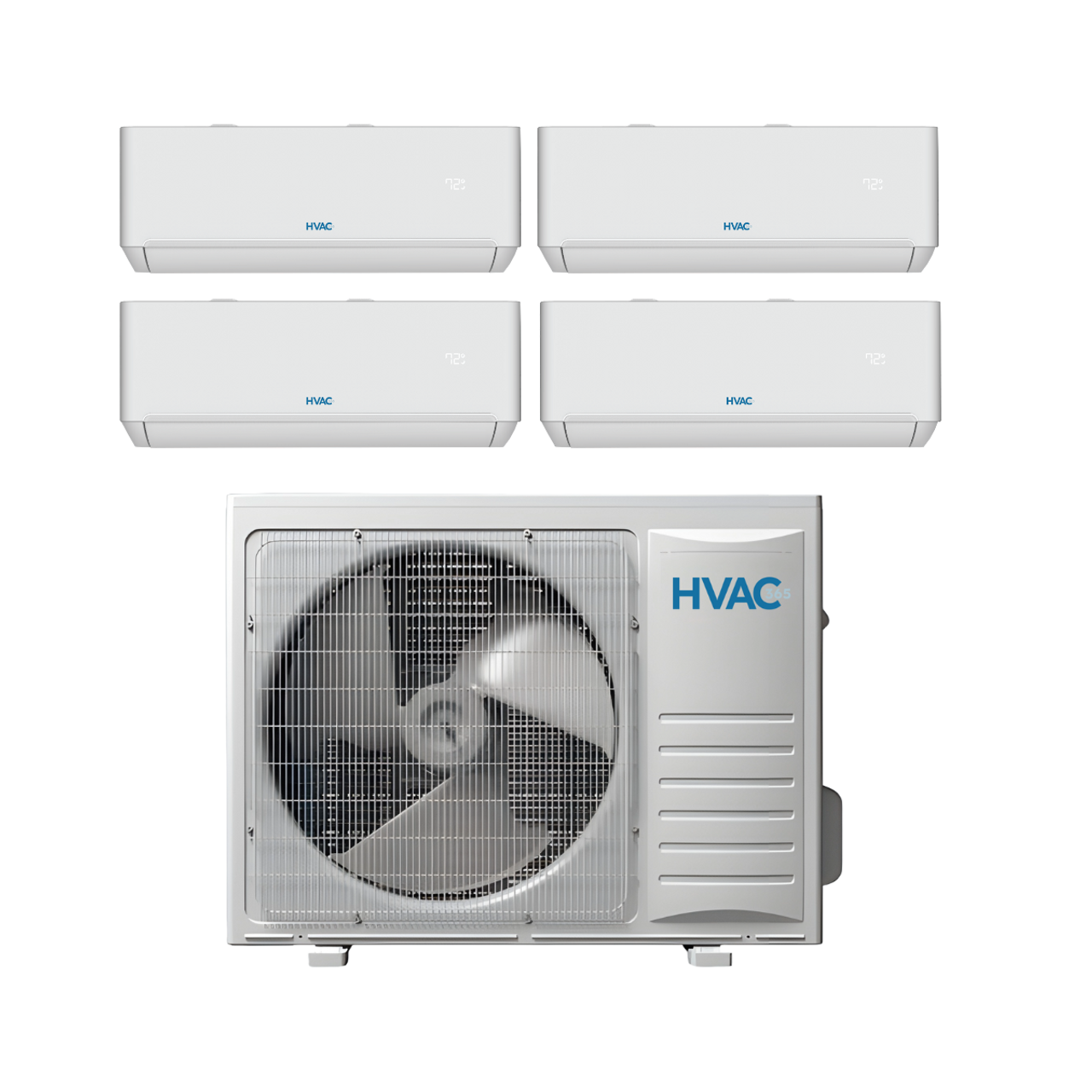
A quad zone system sits within the broader Ductless Mini Split Multi Zone family, which covers everything from two-zone setups up through the higher zone counts used in larger commercial applications. Quad zone specifically refers to one outdoor condensing unit matched to four indoor air handlers, each controlled independently. That independence is the core value: one room can be heating while another is cooling, or two zones can be off entirely while the other two run. It is the kind of flexibility that a single whole-home system, or even a dual-zone setup, cannot replicate.

The buyers who come to this category span a real range. Homeowners replacing multiple window units or adding comfort to a larger home without ductwork find quad zone systems the most practical path. Contractors and installers spec them regularly for residential new construction and retrofit jobs where the client wants room-by-room control. Light commercial installs, like small office suites, multi-room retail spaces, or clinic waiting areas with separate patient rooms, are a natural fit as well. Distributors sourcing for fleet stock or resale will find the selection here supports volume purchasing across different capacity and efficiency configurations.

Choosing the Right Quad Zone System

The first and most important thing to get right is total capacity and how it is distributed across the four zones. Capacity for each indoor head must be matched to the actual load in that space, not estimated by room size alone. A proper Manual J or equivalent load calculation tells you what each zone genuinely needs, and the sum of those loads informs the outdoor unit you select. Oversizing a head in a small room leads to short-cycling: the unit hits setpoint before completing a full run, which hurts dehumidification and efficiency and stresses the equipment. Undersizing leaves the space never quite comfortable on the hottest or coldest days. Get the load calculation done before you spec the system.

Capacity matching also has a less obvious dimension in quad zone systems: most manufacturers allow some flexibility in the ratio between the outdoor unit's rated capacity and the sum of the indoor heads' rated capacities, but that flexibility has limits. Check the manufacturer's combination ratio rules before finalizing your configuration. A setup that looks correct on paper can fall outside the allowed range in ways that void the warranty or degrade performance.

Application type shapes the selection in a second important way. A system going into a residential home has different installation constraints, different warranty expectations, and sometimes different electrical requirements than one going into a light commercial space. Some quad zone systems are rated specifically for residential duty cycles; others are rated for commercial applications with higher run-hour demands. Match the system to the application, not just to the space size.

Efficiency is the third major decision axis. Systems in this category vary in SEER (cooling efficiency) and HSPF (heating efficiency), and where a system lands on those scales affects both the operating cost over time and whether it qualifies for local utility rebates or meets local energy codes. Check your local utility's rebate threshold and your jurisdiction's minimum efficiency requirements before committing to a tier. Higher efficiency generally costs more upfront, and whether that premium pays back depends on your local energy rates and how heavily the system will run. For a distributor or contractor buying across multiple jobs, it is worth knowing which efficiency tiers move well in your market and which sit in the catalog primarily for code compliance reasons.

One more buying-decision note: quad zone systems require four matched indoor units. Many manufacturers sell the outdoor unit and indoor heads separately, which gives you flexibility to mix head types (wall-mount, cassette, floor console, ducted) across the four zones. Others sell pre-configured packages. If your job calls for different head types across the four rooms, verify the outdoor unit supports that combination before you order, because not every outdoor unit is compatible with every head type in a manufacturer's lineup, even within the same generation.

Buying Tips

  • Do not assume all four heads have to be the same type. Most quad zone outdoor units support a mix of wall-mount, cassette, and floor-console heads. Verify the combination matrix in the manufacturer's documentation before ordering, because mixing types you cannot confirm as compatible is one of the costlier mistakes to undo after equipment is on site.
  • Factor in the line set runs for all four zones. Longer refrigerant line sets require additional refrigerant charge and can affect system capacity. Each manufacturer specifies maximum and minimum line set lengths per head and for the combined system. A run that looks fine for a single-zone install can create problems in a quad configuration where one head is significantly farther away than the others.
  • Check the warranty terms for field-matched configurations. Some manufacturers require you to use their own brand of indoor heads with their outdoor units to keep the full warranty in force. Third-party or cross-brand matching may technically work but can void coverage. Confirm this before spec-ing a mix-and-match configuration, especially on a commercial job where warranty matters more if something fails under heavy use.
  • Ask about the control ecosystem before finalizing. Quad zone systems often include a central controller or app that manages all four zones from one interface, but the capability varies by brand and model. If the customer expects smart-home integration or a single-app control experience, verify that the specific system supports it rather than assuming all modern mini splits do.

Quad Zone Configurations Worth Knowing

Within this category, the most meaningful configuration distinction is the type of indoor heads you combine with the outdoor unit. Each head type suits a different room geometry and installation constraint, and because quad zone systems let you mix types across zones, the right combination for a given building is usually specific to that project.

  • Wall-mount heads are the most common choice. They mount high on a wall, blow air horizontally across the room, and install with the shortest line set penetration through the exterior wall. They suit most standard room shapes and are the default starting point for residential installs.
  • Ceiling cassette heads sit flush in a drop ceiling and distribute air in multiple directions. They work well in open commercial spaces, retail floors, or any room where a wall-mount would be obtrusive or where furniture placement makes wall-mounted airflow impractical.
  • Floor console heads mount near the baseboard and blow air upward. They are a good choice in rooms with large window walls, glass curtain walls, or low ceiling heights where wall-mount placement is not possible, and they do not require ceiling access.
  • Ducted (concealed) heads connect to short duct runs and are hidden in a ceiling cavity or utility chase. They are useful when the room design cannot accommodate an exposed indoor unit but the space still needs the flexibility of a separate zone.

The combination you build matters. Some outdoor units in this category support all four head types; others limit which types can be used on which of the four ports. Pull the combination matrix from the manufacturer's spec sheet before ordering, rather than assuming any head works on any port.

What It Takes to Install a Quad Zone System

Quad zone ductless systems are more involved to install than single-zone units, and the site readiness requirements multiply across four heads instead of one. Going in with a clear picture of what the site needs prevents the most common mid-install surprises.

Electrical is the first thing to sort out. The outdoor unit requires its own dedicated circuit; verify the voltage, amperage, and breaker size against the unit's nameplate before pulling permits. Most residential quad zone outdoor units require 208/230V single-phase power, but check the specific unit's requirements rather than assuming. Each indoor head typically draws low current on its own control wiring, but some configurations require a separate power feed to each head as well. Look at the wiring diagram for the specific system before the electrician schedules their rough-in visit.

Refrigerant line sets run from the outdoor unit to each of the four heads. Measure the actual routing distance for each run, including vertical rise, and compare those numbers against the manufacturer's specified maximum and minimum line lengths. The outdoor unit is usually mounted at grade or on a wall bracket with enough clearance for airflow and service access; check the clearance requirements in the installation manual before picking the location, especially in tight side-yard situations. Line set routing also means four wall or ceiling penetrations, which need to be properly sealed for weather, vapor, and pest exclusion.

Condensate drainage is required at each indoor head. Wall-mount heads typically drain by gravity if the line set penetration angles slightly downward through the wall. Cassette and floor units may require a condensate pump if gravity drainage to the exterior or a drain is not feasible from their mounting position. Verify the drainage path for each of the four heads before finalizing their mounting locations.

Operating temperature range is a spec to pull from the outdoor unit's documentation, not to assume. Most heat pump-based mini splits can heat effectively at outdoor temperatures well below freezing, but the lower limit varies by model and affects whether the system can serve as the primary heat source in your climate or needs a backup. Check the heating capacity rating at the lowest ambient temperature you expect, not just at the standard rating point.

Controls and integration vary by system. Most quad zone units come with individual remote controls for each head and some form of central wired or wireless controller. Smart-home integration via Wi-Fi module or BACnet interface is available on some systems and not others. If the job requires integration with a building automation system or a specific smart-home platform, confirm compatibility with the specific system before the purchase, not after. Some Wi-Fi modules are included; some are add-on accessories that need to be ordered separately.

Things You Should Know Before You Buy

Q: How do I know what total capacity I need for a quad zone system?

A: Run a load calculation for each of the four zones separately, then use those zone-level loads to select each indoor head and the outdoor unit that supports the combined load within the manufacturer's allowed combination ratio. Room square footage is a starting point, but ceiling height, insulation, window area, and local climate all shift the real number. The sizing and combination-ratio details covered earlier in this page explain what to watch for once you have your numbers.

Q: Can I mix different head types across the four zones of a quad zone system?

A: Yes, most quad zone outdoor units support a mix of wall-mount, cassette, floor console, and ducted heads, but the combination options are model-specific. The head type breakdown and the combination-matrix caution above cover this in full — the short version is: check the manufacturer's documentation before ordering, not after equipment arrives.

Q: Does each indoor head need its own dedicated electrical circuit?

A: The outdoor unit always requires its own dedicated circuit; verify the amperage and breaker size from the unit's rating plate. Indoor heads typically run on low-voltage control wiring from the outdoor unit, but some systems require a separate power feed to each head as well. The electrical section above goes through what to confirm with the electrician before rough-in.

Q: What is the maximum line set length I can run to each indoor head?

A: Maximum line set length is model-specific and stated in the manufacturer's installation documentation. Longer runs require additional refrigerant charge and can reduce effective capacity at the head; there is also a minimum length on most systems. The line set section above covers how to measure and verify all four runs before finalizing the outdoor unit location.

Q: Can a quad zone mini split work as the primary heat source in a cold climate?

A: It depends on the outdoor unit's rated heating capacity at the lowest ambient temperature in your climate, which varies by model. Many modern mini splits maintain substantial heating output well below freezing, but output drops as temperature falls. Pull the low-ambient heating capacity data from the unit's spec sheet and compare it against your design winter temperature — the operating temperature range note in the installation section above covers what else to check.

Q: Do quad zone systems include a central controller, or do I manage each zone separately?

A: Most quad zone systems include individual remote controls for each head and some form of central wired or wireless controller, but capability varies by brand and model. Smart-home integration is available on some systems and requires a separate accessory on others. The controls note in the installation section and the buying tip above both cover what to confirm before purchase.

Q: What accessories are typically required versus optional on a quad zone install?

A: Required accessories usually include line set covers or conduit (depending on local code and the install location), mounting brackets or pad for the outdoor unit, and condensate pumps for any indoor heads where gravity drainage is not feasible. Optional accessories commonly include Wi-Fi modules for smart-home integration, line set extension kits for longer runs, and decorative lineset covers for finished interior spaces. Check the installation manual for the specific system to see what is included in the box and what needs to be ordered separately.

HVAC365 ships quad zone ductless systems nationwide, with a stocked catalog broad enough to cover the range of capacity and configuration options these jobs typically call for, from residential replacements to light commercial installs to distributor volume orders. If a quad zone system is what the job needs, the availability is there without the uncertainty of a thin selection or a long sourcing wait that puts a project behind schedule.

Compare
Show: 12 24 48

Fast Shipping

Easy Returns

Warranty Coverage

Financing Available