null
Filters & Sanitizers

Filters & Sanitizers

Clean, safe pool and spa water does not happen on its own. The right filtration and sanitization equipment is what keeps a pool swimmable and a spa safe, and when that equipment fails or wears out, the problem is immediate. HVAC365 stocks a broad range of filters and sanitizers sized and configured for everything from a backyard above-ground pool to a commercial aquatic facility, so you can find the right equipment without hunting across a dozen suppliers.

This category covers the core equipment that keeps pool and spa water clear and sanitized: mechanical filters that remove particulate, and sanitization systems that control bacteria, algae, and other biological load. Whether you are a homeowner replacing a worn cartridge filter on a residential pool, a facility manager sourcing filtration for a commercial installation, a pool-service contractor buying for a specific job, or a distributor stocking a range of equipment for resale, the selection here is built to cover those needs without requiring you to piece it together from multiple sources. For a broader look at what HVAC365 carries for outdoor water and recreation, the Pool & Spa parent category lays out the full lineup.

Choosing the Right Filter or Sanitizer

The single most important starting point is matching the filter's flow rate and turnover capacity to the actual volume of water in the pool or spa. Undersizing a filter for the gallonage it needs to cycle means perpetually cloudy water and a system that runs constantly without ever getting ahead of the load. Oversizing is less catastrophic, but it can drive up cost unnecessarily and, in some pump-and-filter combinations, create flow-rate mismatches that reduce efficiency. The right question to start with is: what is the total water volume of this pool or spa, and what turnover rate does local code or the equipment manufacturer require?

Application type matters just as much as volume. A residential pool has different demands than a commercial facility with high bather loads. Commercial installations typically need higher-capacity equipment, more robust construction, and may face specific code requirements about turnover cycles and disinfection levels. A pool-service professional spec-matching for a hotel or aquatic center needs to verify those code requirements before selecting equipment, not after. Residential replacements have more flexibility, but the same principle applies: the new filter or sanitizer needs to match or exceed the performance of what it is replacing, and preferably match the existing plumbing connections and footprint to simplify the install.

Sanitization approach is a genuine buying decision with real tradeoffs. Traditional chlorine systems are widely understood, broadly compatible, and inexpensive to start. Salt chlorine generators produce chlorine on-site from dissolved salt, which many pool owners prefer for feel and reduced chemical handling. UV and ozone systems reduce chemical demand but typically work alongside a residual sanitizer rather than replacing it entirely. Each approach has different ongoing costs, different compatibility requirements with existing equipment, and different maintenance demands. Confirming which approach works with the rest of the pool system, and what ongoing operating costs look like, is worth doing before purchase rather than after.

For distributors or contractors buying across multiple jobs, lead time and volume availability are practical selection factors alongside specs. A filter or sanitizer that is routinely in stock is worth more to a service business than a marginally better-spec'd unit that ships on a long lead.

Buying Tips

  • Match the connection size before you buy. Filter tanks and sanitizer systems connect to existing plumbing at specific port sizes. Buying a unit with the wrong port size means adapter fittings, potential flow restrictions, and extra labor. Check the existing plumbing connections before ordering, not after the unit arrives.
  • Do not ignore the multiport valve. On sand and DE filters, the multiport valve controls backwash, rinse, recirculate, and waste functions. A cracked or worn valve undermines an otherwise functional filter system. If the tank is being replaced, evaluate the valve at the same time.
  • Check the pump's flow rate against the filter's rated capacity. Filter capacity and pump output need to work together. A high-flow pump paired with a filter rated for a lower flow can channel water through too fast to filter effectively. The filter's rated flow range and the pump's GPM output should be in the same window.
  • Sanitizer systems have compatibility constraints with certain surfaces and materials. Salt systems, for example, can accelerate corrosion on certain metal fittings, ladders, and heater components. Verify compatibility with the existing equipment and pool construction before committing to a sanitization approach.

Filter Types and Sanitization Systems

Filters in this category fall into a few distinct types, and the right one depends on how fine a filtration the application requires, how much maintenance the owner is willing to do, and what the existing equipment configuration looks like.

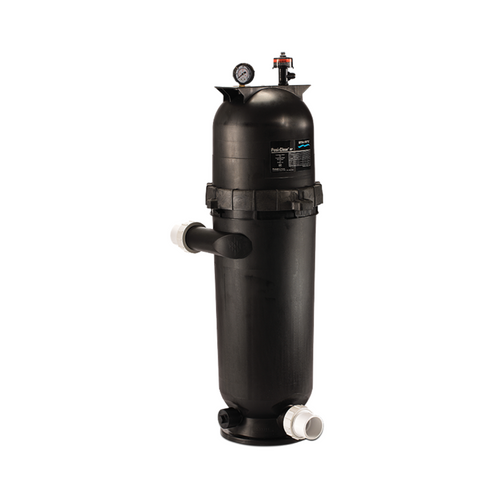
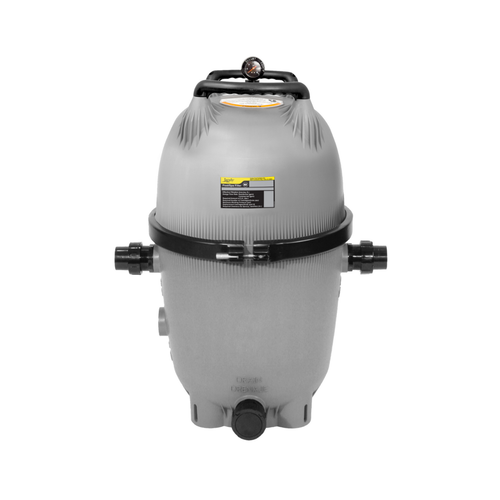
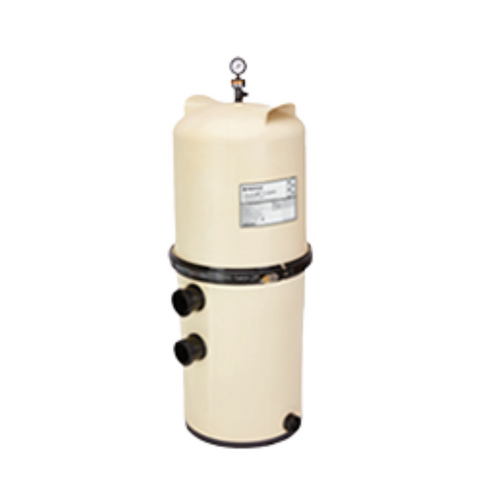
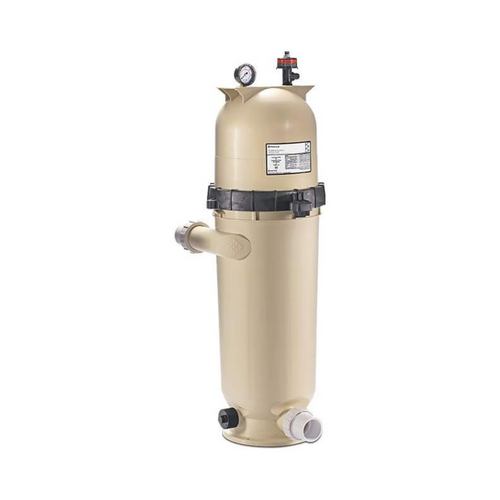
  • Cartridge filters use a pleated polyester element to trap particulate. They filter to a finer micron level than sand, require no backwashing (the cartridge is removed and rinsed instead), and work well for residential pools with moderate bather loads. The tradeoff is that cartridges eventually need replacement, and a heavily used pool goes through them faster.
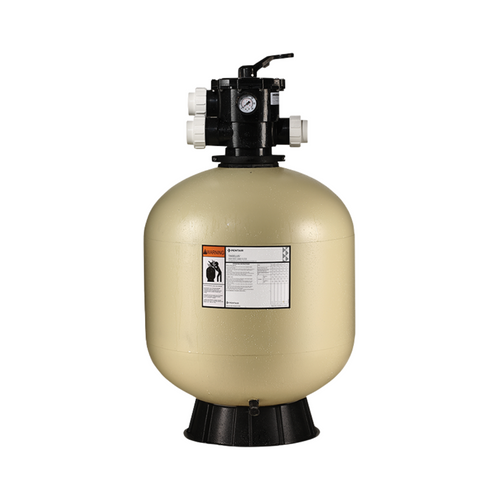
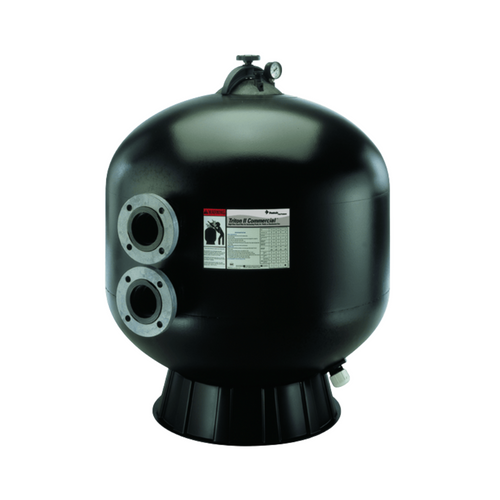
  • Sand filters are the most common type for residential pools. They use a tank of filter sand to trap particles and are cleaned by backwashing, which reverses the flow to flush debris out to waste. They require the least hands-on maintenance of the three main types, though they filter to a coarser level than cartridge or DE.
  • Diatomaceous earth (DE) filters filter to the finest level of the three, using a powder made from fossilized algae to coat a series of grids inside the tank. They produce the clearest water but require more involved maintenance: periodic backwashing plus fresh DE added after each backwash, and occasional full disassembly for cleaning.

On the sanitization side, the main system types are chlorine feeders (tablet or liquid), salt chlorine generators, UV systems, and ozone systems. Chlorine feeders are the baseline, compatible with virtually any pool setup. Salt generators are a popular upgrade for residential pools. UV and ozone systems, often called secondary or supplemental sanitizers, reduce the chemical load but are almost always paired with a primary residual sanitizer rather than used alone. The installation notes below cover the site-readiness factors relevant to each.

What It Takes to Install Pool Filtration or Sanitization Equipment

Plumbing connections are the starting point. Measure the existing suction and return line sizes and check the connection type (threaded, slip, or union) before ordering any filter or sanitizer. Many residential filter systems use standardized connection sizes, but it is still worth verifying rather than assuming a replacement will fit without adapters.

For any electrically powered sanitization system, including salt chlorine generators, UV systems, and ozone units, check the electrical supply at the equipment pad. These systems have specific voltage and amperage requirements, and the circuit feeding the equipment needs to be sized and protected correctly. Look at the existing panel and dedicated breaker for the pool equipment, and compare it against the new equipment's listed electrical requirements. If the existing circuit does not match, that is an electrician's job to address before the equipment is installed.

Salt systems require a specific salt level in the pool water before the generator will operate, and that level needs to be reached and tested before startup. The generator cell also needs to be installed in the correct flow orientation and at the correct distance from other equipment, particularly heaters, to avoid premature corrosion. Pull the manufacturer's installation instructions for the specific unit and follow the cell placement and bonding requirements carefully.

UV and ozone systems are typically installed in-line on the return line, downstream of the filter and before the heater. Verify that the plumbing configuration allows for that placement, and check whether the unit requires a bypass for servicing. Some UV systems have operational requirements around minimum flow rates; compare those against the existing pump's output to confirm they are compatible.

For replacement filters, check whether the new tank is compatible with the existing multiport valve, pump unions, and pad footprint before purchasing. A filter replacement that requires new plumbing, a new valve, or a new mounting pad is a larger job than a direct swap, and knowing that up front changes the scope and cost of the project.

Questions We Hear Often About Filters and Sanitizers

Q: How do I know what size filter my pool needs?

A: Start with the total water volume of the pool in gallons, then determine the turnover rate required. Divide total volume by the target turnover time in hours to get the minimum flow rate in gallons per hour, then match that to a filter rated at or above that flow. Your pump's GPM output also needs to fall within the filter's rated flow range, so check both together. The sizing logic above walks through the full reasoning behind why both numbers matter.

Q: Can I replace just the filter cartridge or media instead of the whole tank?

A: In most cases, yes. Cartridge filters use replaceable elements that drop into the existing tank housing, and sand filters can be recharged with fresh filter sand without replacing the tank. DE filter grids are also individually replaceable. The tank itself typically only needs replacement if it is cracked, warped, or the internal manifold is damaged. Check the condition of the tank, valve, and connections whenever you replace media, since those components wear out too and a new element in a failing tank is a short-term fix.

Q: Is a salt chlorine generator a full replacement for chlorine, or does it supplement it?

A: A properly sized and functioning salt chlorine generator produces enough chlorine to sanitize the pool on its own under normal conditions. You still need to monitor and adjust chlorine levels, pH, and other chemistry regularly, and you may need to shock the pool periodically after heavy use or rain. Think of it as automating chlorine production rather than eliminating the need for water chemistry management.

Q: Do UV or ozone systems work without any chlorine at all?

A: In most residential and commercial applications, no — UV and ozone systems are used alongside a residual chlorine or bromine sanitizer, not as a complete replacement. UV and ozone destroy contaminants as water passes through, but they do not maintain a residual in the water between cycles. Without a residual sanitizer, bacteria can multiply in water that has not recently passed through the unit. The sanitization tradeoffs section above explains how each approach fits into the overall equipment picture.

Q: How often does a sand filter need to be backwashed?

A: Backwash when the filter pressure gauge reads 8 to 10 PSI above the clean starting pressure, or when you notice a visible drop in return flow. For most residential pools, that works out to roughly once every one to four weeks depending on bather load, debris, and time of year. Do not backwash on a fixed schedule if the pressure has not risen, since backwashing a clean filter is unnecessary and wastes water.

Q: What happens if I oversize my filter?

A: An oversized filter generally performs fine and may extend cleaning intervals. The main concern is ensuring the pump's flow rate falls within the filter's rated operating range — a significantly oversized filter may not achieve adequate flow velocity through the media to filter effectively. Matching pump output to filter flow rating is the check to run, as covered in the sizing guidance above.

Q: Are there code or permit requirements for replacing pool filtration or sanitization equipment?

A: Requirements vary by jurisdiction. Many areas treat a like-for-like equipment replacement differently than a new installation or a system type change. Commercial facilities almost always face inspection and code requirements. For residential replacements, check with your local building or health department, particularly if you are switching sanitization approaches or adding electrical equipment. A licensed pool contractor can identify what applies in your area.

HVAC365 ships nationwide, so whether you are a homeowner in a single-family residence or a contractor servicing commercial accounts across multiple locations, the selection here is available to you without geographic restriction. The catalog covers the range from straightforward residential cartridge filter replacements through higher-capacity commercial filtration and sanitization systems, and it is stocked to support both individual one-off orders and distributor-level volume. When pool or spa equipment fails, waiting on a back-ordered part is not an option, and a broad, reliably stocked selection is what keeps that from becoming your problem.

Compare
Show: 12 24 48

Fast Shipping

Easy Returns

Warranty Coverage

Financing Available