null
Copper Line Sets

Copper Line Sets

A ductless mini split system is only as reliable as the refrigerant lines connecting its two halves. If those copper lines are the wrong diameter, too short, improperly routed, or missing the insulation jacket they need, the system either will not work or will work poorly until something fails. Copper line sets solve that problem, and finding the right one for a specific job should not require a scavenger hunt. HVAC365 stocks a broad selection of line sets sized and configured for the real-world variety of mini split installs, so whether a job calls for a short residential run or a longer commercial-length set, the right option is available and ships nationwide.

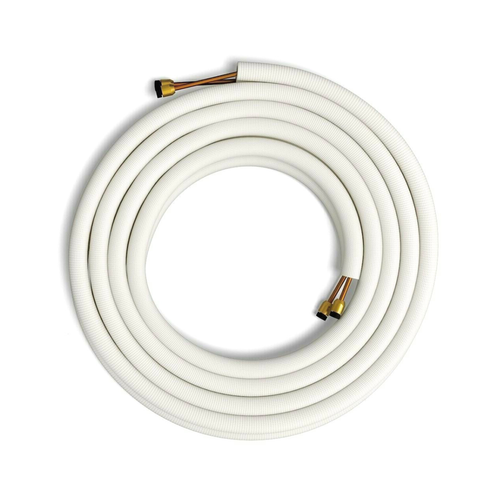
Copper line sets are the paired refrigerant tubing that carries refrigerant between the outdoor condenser unit and the indoor air handler (or handlers, in a multi-zone setup). They come as a pre-insulated pair, one suction line and one liquid line, sized to match the specific indoor and outdoor units they connect. This category lives within the broader mini split accessories section and is aimed at the full range of buyers doing this work: homeowners managing a room addition or a DIY-eligible system replacement, contractors and installers pulling line sets for a specific job they need to get right the first time, light commercial buyers outfitting a server room or retail space, and distributors sourcing volume quantities for fleet or resale inventory.

Picking the Right Line Set

The two variables that matter most are diameter and length. Get either one wrong and you are looking at reduced system efficiency, compressor strain, or an install that has to be partially redone before startup.

Diameter is not a choice you make based on preference. It is dictated by the equipment. The indoor and outdoor units have rated connection sizes, and the line set you buy has to match those exactly. Check the spec sheet or rating plate on both units before ordering, and if you are replacing an existing system, do not assume the old line set is the right diameter just because it fit. Equipment generations change, and a line set that matched a previous unit may not match a new one.

Length is where buyers most often underestimate. Measure the actual routing path, not the straight-line distance through the wall. Account for every horizontal run, every vertical drop or rise, every corner where the line changes direction, and add a working margin. Running out of line mid-install means a splice or a full replacement, either of which costs more time and money than buying a longer set from the start. Most manufacturers also publish a maximum line length and maximum elevation difference between the indoor and outdoor units; exceeding those limits affects system performance and can void the warranty, so pull those figures from the equipment documentation before you pick a length.

Efficiency and capacity decisions come before you select a line set, not alongside it. Those choices are made at the unit-selection stage (sizing the system to a load calculation, matching application type, evaluating efficiency tiers relative to local utility rebate thresholds). The line set then needs to match whatever units you have already specified. For contractors quoting a job, lead-time and availability are also real buying factors, particularly for longer or less common sizes; the installation-readiness factors covered further down are worth reviewing before a final order.

Buying Tips

  • Order longer than you think you need. The single most common line-set mistake is a set that comes up short on the actual routing path. Measuring in a straight line underestimates real-world runs almost every time. Buy with margin, and trim to length at the install rather than splicing.
  • Match diameter to both units, not just one. Some multi-zone setups have indoor heads with different connection sizes. Verify the spec on every unit the line set will serve, not just the first one you check.
  • Check the insulation jacket before you pull it through a wall. Pre-insulated line sets vary in insulation thickness and jacket quality. A thin or degraded jacket lets condensation form on the suction line, which can drip inside walls and cause moisture damage over time. Inspect what you have before it goes into a chase.
  • Do not reuse old flare fittings. If you are replacing a line set on an existing system, replace the flare fittings too. A used flare that has been tightened and loosened is a leak waiting to happen, and refrigerant leaks mean a callback and a recovery cost.

Line Set Configurations Worth Knowing

Copper line sets are not a one-size product, but the configuration choices are simpler than they are for the mini split units themselves. The main variables are length, diameter pair, and whether the set is pre-flared or requires field flaring.

  • By length: Line sets come in standard lengths suited to typical wall-penetration distances as well as longer runs for installations where the outdoor unit is further away. Longer sets are common in commercial applications or multi-story buildings where the condenser sits on a roof or at ground level well away from the interior unit. Match the length to the actual measured routing path, as described above.
  • By diameter pair: The suction line and liquid line in a set have different diameters, and those diameters scale with the system's capacity. Smaller-capacity systems use smaller-diameter tubing; larger-capacity systems require larger tubing to handle refrigerant flow without excessive pressure drop. The equipment documentation specifies which diameter pair the system requires.
  • Pre-flared vs. field-flared: Some line sets ship with factory-flared ends ready to connect. Others require the installer to cut to length and flare in the field. Pre-flared sets save time on straightforward installs. Field-flared sets offer more flexibility when the exact routing distance is uncertain or when a custom length is needed. Both are valid options; the choice depends on the install conditions and the installer's preference.

What the Install Actually Requires

A line set is a passive component, but getting it into place involves real site conditions that need to be checked before the order goes in.

Start with the wall penetration. The line set, refrigerant lines, and any bundled communication or power wiring all have to pass through the same hole. Measure the combined bundle diameter against the hole you are working with. For new installs, the hole is cut to spec; for replacements, verify the existing opening is large enough before you route anything through it.

Vertical elevation difference matters. Mini split systems have a rated maximum vertical separation between the indoor and outdoor units, and exceeding it stresses the compressor and reduces efficiency. Pull the figure from the equipment spec sheet and compare it against the actual elevation difference on the job site before finalizing line placement.

Insulation is not optional in any climate. The suction line runs at a significantly lower temperature than ambient air, which means condensation will form on any uninsulated section. Any portion of the line set exposed to ambient conditions inside a wall cavity, attic, or crawl space needs to be properly jacketed. Check the condition of existing insulation on replacement jobs; damaged jackets should be replaced, not left in place.

Refrigerant compatibility is the manufacturer's call, not an assumption you make. The line set material (copper) is standard, but the system's refrigerant type, operating pressures, and required line sizing all come from the unit documentation. Do not substitute based on what was previously installed without verifying against the new equipment's specifications.

Finally, verify that the line set length and configuration you are using falls within the equipment manufacturer's allowed range for maximum line length and any required additional refrigerant charge beyond a specified length. Some systems require adding refrigerant if the line set exceeds a stated length threshold; that is documented in the installation manual and should be addressed at startup, not after the fact.

Things Buyers Ask About Copper Line Sets

Q: How do I know what diameter line set my mini split needs?

A: The required suction and liquid line diameters are published in the equipment's installation manual or spec sheet. Look up those dimensions for both the indoor and outdoor units before ordering. Do not assume a diameter based on the system's capacity class alone — the exact sizes have to come from the documentation for the specific model you are installing.

Q: Can I use a longer line set than my system is rated for?

A: No. Every mini split has a manufacturer-stated maximum line length and maximum elevation difference. Exceeding those limits causes refrigerant distribution problems, hurts efficiency, and voids the equipment warranty. The diameter and length guidance above covers how to pull those figures before you order.

Q: Do I need to add refrigerant if I use a long line set?

A: Many systems come pre-charged for a standard line length and require additional refrigerant beyond a stated threshold. The installation manual specifies the threshold and the charge amount per additional foot or meter. As noted above, this is a startup task for a licensed technician — knowing it applies ahead of time prevents a missed step at commissioning.

Q: Can I reuse the existing copper line set when replacing a mini split?

A: Sometimes, but it depends on line condition, diameter match, and refrigerant compatibility. A line set that held a different refrigerant may carry residual oil contamination that is incompatible with the new system. Verify diameter requirements against the new unit specs and inspect the existing lines and insulation before deciding. When in doubt, a new line set is cheaper than a compressor warranty claim.

Q: What is the difference between the suction line and the liquid line?

A: The suction line is the larger-diameter tube that carries low-pressure refrigerant vapor from the indoor unit back to the outdoor compressor. The liquid line is the smaller-diameter tube that carries high-pressure liquid refrigerant from the outdoor unit to the indoor unit. They always connect in the same orientation. Insulation on the suction line is especially critical because it runs cold and will condense moisture from the air if left exposed — the installation notes above cover what to check before routing.

Q: Do copper line sets come pre-insulated?

A: Most line sets sold for mini split applications include a pre-applied foam insulation jacket on the suction line, and many include it on both lines. Check the product listing to confirm what is included. For any section routed through an unconditioned space or exposed to ambient air, adequate insulation is required regardless of what comes pre-applied — additional wrap may be needed depending on routing and local climate, as covered in the installation section above.

Q: What happens if the line set insulation is damaged or missing?

A: The suction line runs well below ambient temperature, so any uninsulated section will sweat, dripping condensation into walls, ceilings, or wherever the line is routed. Over time that moisture causes mold and structural damage. Inspect the insulation jacket before the line goes into a wall chase, and replace damaged sections rather than leaving them in place.

HVAC365 ships copper line sets to every state, stocking the lengths and diameter pairs that cover the real spread of residential and commercial mini split installs. Whether you are a homeowner doing a single-room replacement or a distributor sourcing inventory for a season of installs, the selection is available and accessible without a special order for most common configurations. If you need help confirming which line set matches the units on your job, the product details and documentation are there to verify before checkout.

Compare
Show: 12 24 48

Fast Shipping

Easy Returns

Warranty Coverage

Financing Available