null

Air Curtains

An open doorway is one of the most persistent energy drains in any building. Whether it's a walk-in cooler door that never fully closes, a retail entrance propped open during deliveries, or a garage entry connecting a conditioned space to the outside, every minute that opening sits exposed means conditioned air walks straight out and unconditioned air (along with insects, dust, and street-level exhaust) walks right in. Air curtains fix that problem without asking anyone to keep a door shut. HVAC365 stocks air curtain models across the capacity and application range that commercial and residential jobs actually call for, so you can match the right unit to the opening rather than settling for whatever happens to be locally available.

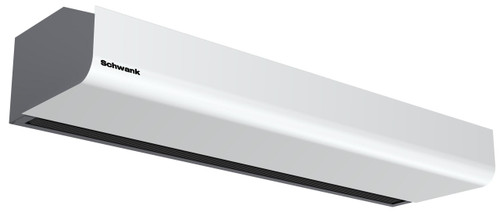
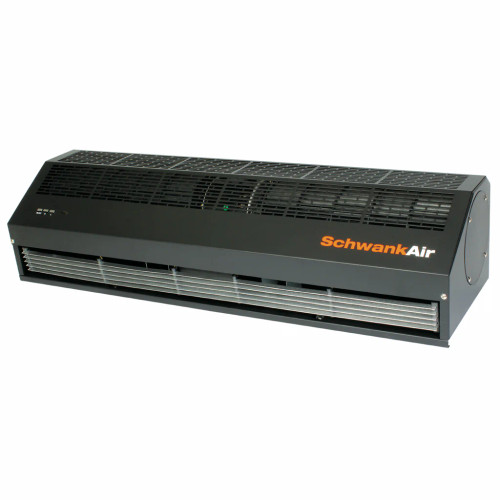
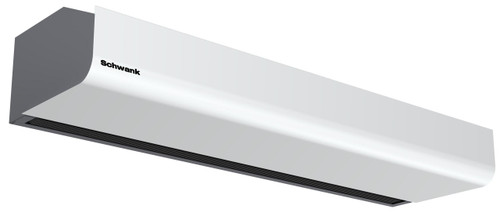
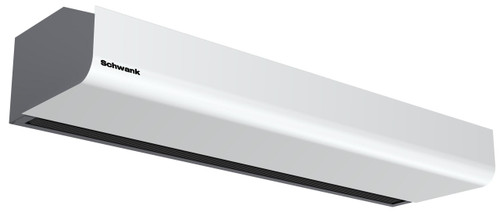
An air curtain (sometimes called an air door) is a fan-driven unit mounted above a doorway or other opening. It projects a continuous, controlled sheet of air downward across the opening, creating an invisible barrier between two environments. That barrier does not stop people or forklifts from passing through, but it does dramatically reduce the exchange of air, heat, insects, and airborne particles between the two sides. The result is a more stable interior environment, lower heating and cooling loads at the entry point, and a noticeably better experience for anyone standing near the door. Air curtains sit inside the broader Ventilation category alongside exhaust fans, louvers, and related equipment, but they solve a specific problem that general ventilation products do not address: controlling the air at an opening that cannot or will not stay closed.

The buyers in this category span a wide range. Homeowners replacing an older unit above a garage door or connecting breezeway represent the residential side. Light-commercial operators, facility managers, and building owners installing units above retail entrances, restaurant kitchens, or warehouse loading docks make up a large share of commercial demand. Contractors and mechanical installers specifying and sourcing units for new construction or retrofit jobs are a consistent professional audience, and distributors sourcing in volume for resale or fleet stock round out the mix. The right unit and the right approach to selecting it can differ meaningfully across those situations, which is worth keeping in mind as you work through the options.

Choosing the Right Air Curtain

The single most important variable is the height and width of the opening the unit needs to cover. An air curtain that is not wide enough to span the opening leaves gaps at the edges where air exchange continues unimpeded. One that is sized without accounting for the mounting height will project a curtain that either falls short of the floor or disperses too widely before it gets there. Before looking at models, measure the opening width and the height from the mounting point above the door to the floor or threshold. Those two numbers anchor every other decision.

After you have the opening dimensions, think about the application environment. A unit serving a conditioned retail space where the primary concern is keeping flies out and air conditioning in has different requirements than one serving a refrigerated warehouse where maintaining a significant temperature differential across the opening is the operational priority. Units designed for higher-temperature differential applications are built differently, and pushing a standard unit into a demanding refrigerated-space application will underperform and wear faster. Match the rated application type to the actual use case, not just the opening size.

Heating is another dimension worth resolving early. Air curtains come in unheated (ambient air) versions and heated versions. A heated air curtain adds a supplemental heat source to the air stream, which is useful at exterior entrances in cold climates because the curtain itself becomes a first line of defense against cold infiltration. An unheated unit at a northern climate exterior entrance will still reduce air exchange, but it will not warm the incoming air stream. If the installation is in a cold-weather location, decide whether the application calls for heating capability before narrowing the model selection, because adding heat capability after the fact means replacing the unit, not retrofitting it.

Velocity and airflow volume matter for taller openings. The taller the opening, the more powerful the air stream needs to be to maintain an effective barrier at the floor level. The installation readiness factors covered further down, particularly electrical supply, become relevant here because higher-output units draw more power, and the available circuit capacity on site needs to match.

For distributors and contractors purchasing across multiple jobs, lead time and volume availability are practical buying-decision factors alongside specs. A unit that is consistently in stock is worth factoring into a specification when several equivalent options are otherwise available, particularly for projects with firm installation windows.

Buying Tips

  • Do not underestimate the mounting height. The manufacturer's rated coverage height is the maximum the unit is designed to handle at a given airflow setting. Mounting it two inches higher than the spec allows does not mean marginal performance; it often means the air stream disperses before it reaches the floor and the barrier breaks down. Measure the mounting height as it will actually be installed, not as a rough estimate.
  • Match the unit to the door type, not just the opening. A sliding door, a roll-up door, and a swinging door create different airflow dynamics and may sit at different positions relative to the wall plane. Where the unit mounts relative to the door opening affects how well the curtain aligns with the gap. Check the manufacturer's installation guidance for the specific door configuration before ordering.
  • Heated models need the right electrical infrastructure in place before the unit arrives. Discovering on installation day that the available circuit cannot support the unit's draw means a delay and an additional electrical rough-in. Pull the unit's electrical requirements and compare them against the site's panel and available circuits during the planning phase, not during installation.
  • Consider noise in the environment. Air curtains run continuously while the door is in use, and fan noise varies meaningfully across models and airflow settings. In a loud warehouse environment that is a non-issue; in a quiet retail showroom or a restaurant dining area it is a real consideration. Check the rated sound level if the installation environment is noise-sensitive.

Air Curtain Configurations and Where They Apply

The most fundamental split in air curtain selection is between heated and unheated models. Unheated (ambient) units project room-temperature air across the opening and are well-suited to interior separations, climates where the temperature differential at the opening is modest, and applications where insect and dust control is the primary goal rather than thermal separation. Heated units add an electric or hydronic heating element to the air stream, making them the right choice for exterior doors in climates with meaningful winters and for any opening where maintaining interior warmth is operationally important.

Beyond that, air curtains break down into a few practical categories based on mounting configuration and scale:

  • Horizontal (over-door) units: The most common configuration. The unit mounts above the opening and projects air straight down. This is the standard for most commercial and residential doorways and the default assumption unless the opening geometry makes it impractical.
  • Vertical (side-mounted) units: Used where overhead mounting is not possible, such as very tall openings or certain industrial applications. The unit mounts to one side of the opening and projects the curtain horizontally across the gap. Coverage requirements and airflow dynamics are different from over-door units, and the application is more specialized.
  • Recessed units: Designed to mount flush within the ceiling or soffit above the opening rather than projecting below it. Common in applications where aesthetics or clearance make a surface-mounted unit impractical, such as retail storefronts or building lobbies.
  • High-capacity industrial units: Built for wide or tall openings where standard commercial units lack the airflow to maintain an effective barrier, such as large loading dock doors or hangar-style openings. These units run at significantly higher airflow volumes and typically have more demanding electrical requirements.

The right category here is determined by the physical constraints of the opening and the environment on both sides, not by a preference for one configuration over another. If the opening geometry limits you to one mounting option, that decision is already made.

What It Takes to Install an Air Curtain

Electrical supply is the first thing to check on any air curtain installation. Smaller residential and light-commercial units often run on standard 120V single-phase circuits, but larger commercial units and virtually all heated models require 208V, 240V, or three-phase power depending on the heating capacity and motor size. Pull the electrical specifications from the unit's data sheet and compare them against the available service at the installation location before ordering. Running a new circuit or panel upgrade discovered during installation adds cost and delays the job.

Verify that the circuit amperage available at the location matches the unit's draw, not just the voltage. A dedicated circuit is generally required for heated units, and the breaker size needs to match the unit's specifications. This is a detail worth resolving in the planning phase.

Mounting structure is another factor that deserves attention before the unit goes up. Air curtain units, particularly larger commercial and heated models, carry meaningful weight. The mounting surface above the doorway needs to be structurally adequate to support the unit and absorb the vibration load during operation. Check the unit's weight against the mounting surface's capacity, and look up the manufacturer's anchor and bracket requirements for the specific installation type.

Measure the mounting height carefully against the unit's rated coverage distance. The unit's performance rating is tied to a specific maximum mounting height, and exceeding it degrades curtain effectiveness. If the as-installed mounting height is taller than the unit's rated range, the unit will not perform as specified regardless of how well it is otherwise installed.

Controls integration is worth addressing at the specification stage for commercial applications. Many air curtains can be interlocked with door sensors or access control systems so the unit activates when the door opens and cycles down when it closes, rather than running continuously. This reduces wear and energy consumption. Ask whether the unit supports that kind of interlock and whether the site's door hardware is compatible before finalizing the model selection.

For heated units, also look at the rated inlet air temperature range. A heated air curtain that ingests air from a space that falls below its rated operating range during cold weather can cycle on internal protection limits and fail to maintain the curtain. This matters most in applications where the unit draws air from a space that is itself exposed to outdoor temperatures.

Things You Should Know Before You Buy

Q: How do I determine the right air curtain width for my opening?

A: The unit's effective coverage width needs to match or exceed the clear width of the opening. Most manufacturers specify effective coverage in terms of the opening width the unit spans at a given mounting height — and that coverage width can narrow as mounting height increases. Measure actual opening width and cross-reference it against the unit's spec at the mounting height you intend to use.

Q: Do I need a heated or unheated air curtain?

A: Unheated units handle insect and dust control, interior separations, and milder climates well. Heated units are the right call for exterior doors in cold climates where maintaining interior warmth matters. The heated-versus-unheated tradeoffs are covered in detail in the selection guidance above.

Q: Can an air curtain replace a door entirely?

A: In most building and fire code contexts, no. Air curtains are intended to complement an existing door opening, not replace a required fire or egress door. They are most commonly used on openings that must remain passable — loading docks, service entries, high-traffic retail entrances — rather than as a substitute for a physical door. Always verify local building and fire codes for the specific application before specifying an air curtain as a door replacement.

Q: What electrical supply does a typical air curtain require?

A: Smaller ambient units often run on 120V circuits; larger commercial units and heated models typically require 208V, 240V, or three-phase service. Pull the electrical spec from the unit's data sheet and check it against available supply and circuit capacity at the site before ordering — the electrical planning steps above walk through exactly what to verify.

Q: Can an air curtain be interlocked with a door sensor?

A: Many commercial models support interlock wiring that triggers the unit when a door opens and cycles it off when the door closes, reducing continuous run time and extending motor life. Compatibility depends on the specific model and the door hardware already installed — check the unit's control wiring documentation and confirm it works with the site's door sensors before specifying the interlock setup.

Q: Are air curtains difficult to install?

A: The mechanical installation itself is generally straightforward for a qualified contractor. The planning steps are where it matters: mounting height, electrical supply, structural support, and control interlock all need to be sorted before installation day. The installation section above covers each of those site-readiness items.

Q: Will an air curtain work on a very tall opening like a loading dock door?

A: Standard commercial units are rated to specific maximum mounting heights, and pushing them beyond that rating reduces curtain effectiveness significantly. Very tall or very wide openings typically require high-capacity units built for that application — see the configuration options above for how those units differ from standard commercial models.

HVAC365 ships air curtains nationwide, covering the full range from residential entry-level units to high-capacity commercial and industrial models, so whether you are replacing a single unit above a retail entrance or sourcing across a portfolio of locations, the selection is available without chasing down multiple suppliers. The catalog covers residential replacements through distributor volume orders, and broad in-stock availability means a specification does not have to wait on a long lead time to move forward.

Compare
Show: 12 24 48

Fast Shipping

Easy Returns

Warranty Coverage

Financing Available