null
Patio Heaters

Patio Heaters

When the temperature drops, outdoor spaces that get heavy use, whether it's a backyard patio, a restaurant deck, or a covered commercial area, need reliable heat to stay functional. Patio heaters solve that problem directly: they put warmth where people are, without heating the surrounding air volume the way an indoor system would. HVAC365 stocks a broad selection of patio heaters across fuel types, mounting styles, and output capacities, so whether you need one unit for a residential patio or several for a commercial outdoor dining area, you can find what the job actually calls for. This category sits within the broader Outdoor Living section of the catalog.

The buyers who shop this category are a genuinely mixed group. Homeowners replacing an aging unit, upgrading to a more efficient fuel type, or heating an outdoor space for the first time make up a large share. Contractors and installers spec and purchase heaters for residential and light commercial jobs. Commercial buyers, restaurants, event venues, hotels, and retail environments that rely on year-round outdoor usability, look here for units built to handle heavier duty cycles. Distributors sourcing in volume for resale or fleet stock will also find a selection worth reviewing. The considerations for each of those buyers overlap more than they differ, so the guidance below applies broadly, with a few notes where buyer type genuinely changes the decision.

Choosing the Right Patio Heater

The first question to answer is fuel source, because it shapes everything else. Propane heaters run off portable tanks, which means flexibility in placement but ongoing fuel logistics. Natural gas units connect to a permanent gas line and are better suited to fixed installations where a line already exists or can be run economically. Electric and infrared models draw from an electrical circuit and tend to be favored where gas isn't available, where odor or open flame is a concern, or where the installation context (an enclosed porch, for instance) makes combustion appliances less practical. The right choice depends on what's already at the site, not on a general preference.

Heat output is the next variable, and it matters more than any single spec number. The output you need depends on the size of the area you're heating, how exposed it is to wind, whether it's covered or open, and how cold the climate gets during the months the heater will be used. A covered restaurant patio in a mild climate and an open backyard deck in a cold-weather region are both "outdoor spaces," but they call for very different outputs. Resist the temptation to guess based on square footage alone. Factor in ceiling height if the space is covered, typical wind exposure, and how much of the heat will be radiant (warming people directly) versus convective (warming air that may blow away). A load estimate, even a rough one, is more useful than a square-footage rule of thumb.

Mounting style and physical format are a practical constraint as much as a preference. Freestanding units are portable and require no installation, which suits homeowners who want flexibility or commercial operators who need to reconfigure a space seasonally. Wall-mounted and ceiling-mounted heaters are fixed and are better suited to covered structures where placement can be planned in advance. Tabletop models heat a small area immediately around them and work well for accent warming at individual seating areas. For larger commercial or permanent residential installations, in-ground or post-mounted models are worth considering where the structural support already exists or can be added.

Efficiency and operating cost matter differently depending on context. A homeowner running a patio heater for a few hours on weekend evenings has different fuel-cost exposure than a restaurant running multiple units for four-hour dinner services seven nights a week. For high-use commercial applications, the operating cost over a season can significantly outweigh the upfront equipment cost, so it's worth doing that math before defaulting to the lowest-priced unit. For lower-use residential applications, upfront cost is often the more practical constraint. Neither approach is wrong; they're just different problems.

Distributors and contractors buying for multiple jobs or restocking a supply should weigh lead time and availability alongside unit specs. A heater that's backordered by six weeks is a real problem for a contractor whose project timeline is fixed or a restaurant trying to open a patio for the spring season.

Buying Tips

  • Don't undersize for a commercial application. It's common to select a heater that's adequate for a still, mild evening and then find it inadequate on the nights when it matters most. For commercial use, size for the worst realistic conditions, not the average ones.
  • Verify the fuel connection before you buy. Propane heaters need tank storage and a refill plan. Natural gas models need a dedicated gas line at the right pressure. Electric models need a circuit with the correct amperage at the planned location. Discovering a mismatch after delivery is an expensive problem.
  • Check local codes before mounting anything permanently. Clearance requirements, setback rules, and fuel-type restrictions vary by jurisdiction. A fixed wall or ceiling mount that doesn't meet local fire or building codes may need to be relocated or removed entirely.
  • Freestanding doesn't mean no setup. Portable propane units still need assembly, tank connections, and a stable base on an uneven surface. If the unit is going on a restaurant deck where it could be knocked over by foot traffic, a weighted or tethered base is a real consideration, not an afterthought.
  • Replacing an existing unit? Match the fuel type and connection specs of the old unit before ordering to avoid a retrofit job on delivery day. If you're upgrading from propane to natural gas, factor in the cost of running or extending a gas line before committing to the new equipment.

Patio Heater Types and When Each One Fits

Patio heaters break down along two main axes: fuel type and physical format. Understanding both helps you match the equipment to the situation rather than buying on brand recognition or price alone.

By fuel type:

  • Propane (LP) heaters are the most portable option. They're the right pick when there's no gas line and no nearby electrical circuit, or when the heating location changes seasonally. The tradeoff is ongoing tank management.
  • Natural gas heaters are the better long-term solution for fixed outdoor spaces where a gas line exists or can be run. They eliminate the refill cycle and typically have lower per-BTU fuel costs than propane over time.
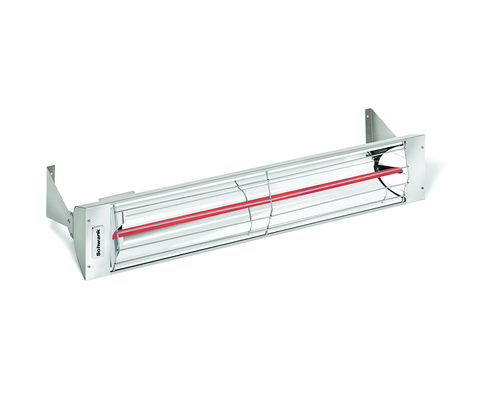
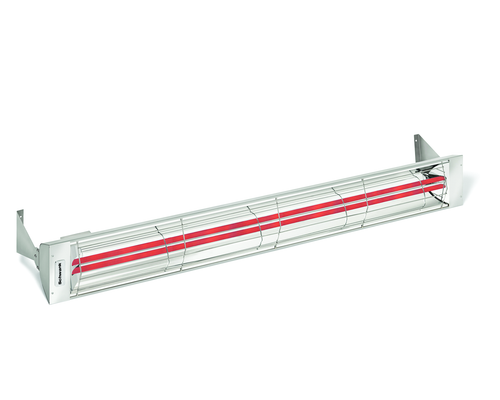
  • Electric and infrared heaters are well-suited to enclosed or semi-enclosed spaces where open flame isn't appropriate. Infrared models heat objects and people directly rather than the surrounding air, which can make them more efficient in breezy or open environments where convective heat would simply blow away.

By format:

  • Freestanding (mushroom-top) heaters are the most familiar format. They're portable, widely available, and require no permanent installation. They work well for residential patios and flexible commercial layouts.
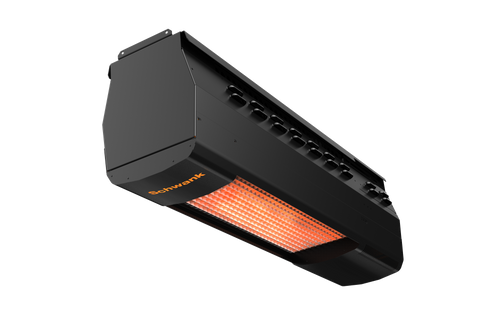
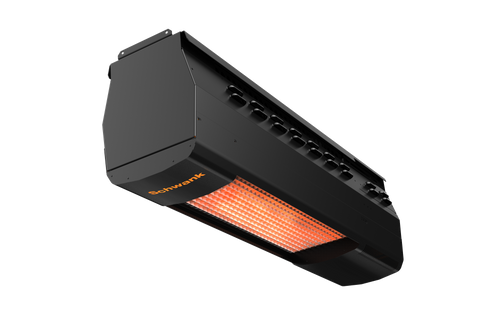
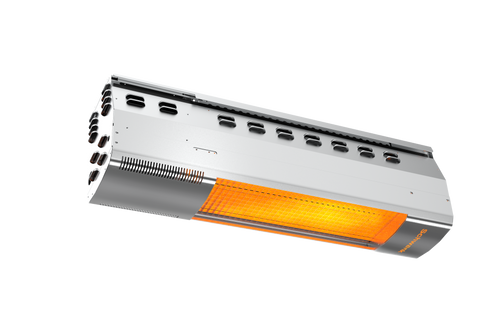
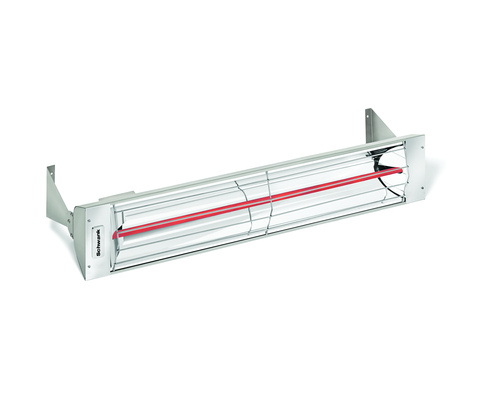
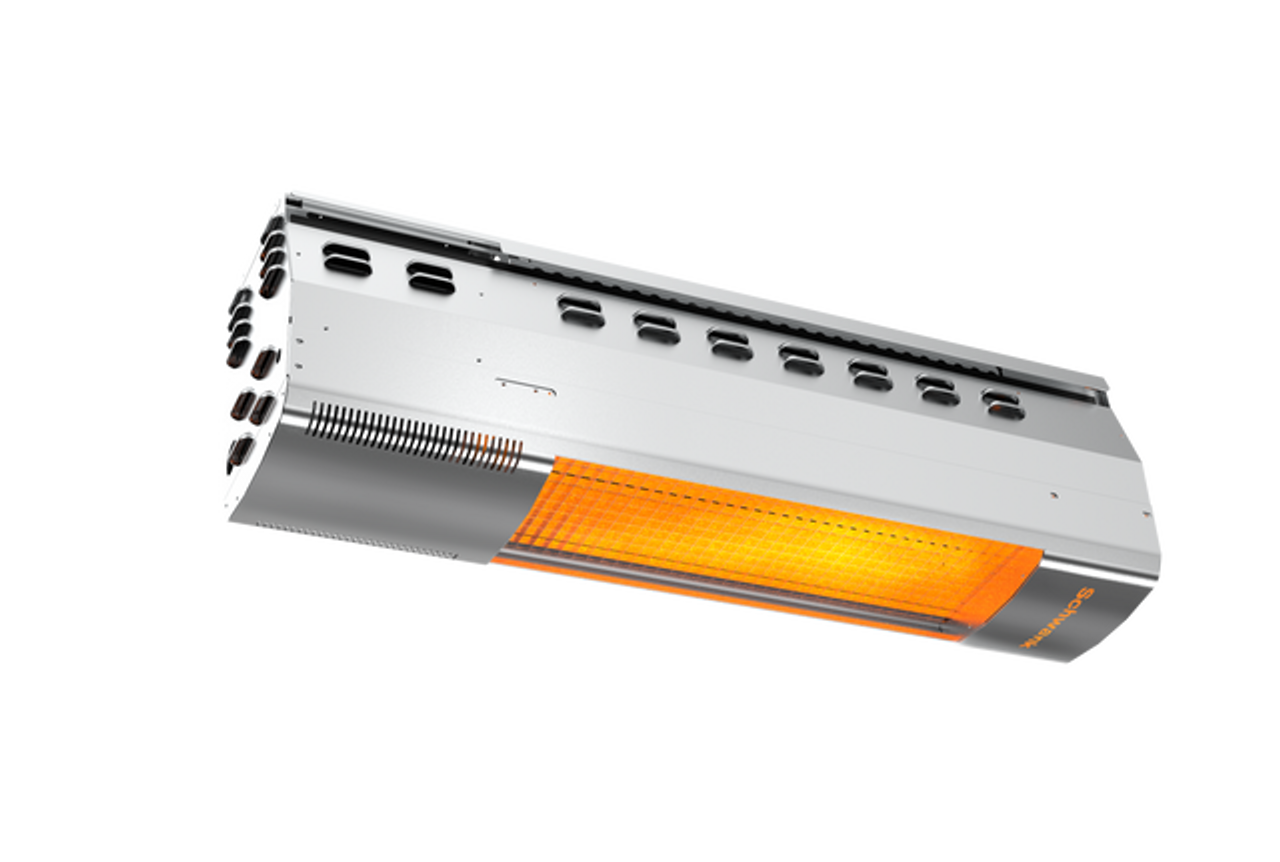
  • Wall-mounted and ceiling-mounted heaters are fixed units intended for covered structures. They keep the floor clear and allow precise directional placement, which is why they're common in commercial dining and hospitality settings.
  • Tabletop heaters are small-format units that heat a localized area, useful as supplemental warmth for individual seating areas rather than as the primary heat source for a space.
  • Post-mounted and in-ground heaters are intended for permanent installation and are typically specified for commercial or high-end residential projects where a custom outdoor layout is being built out.

What to Verify Before Installation

For propane units, check that the regulator and hose assembly included with the heater are rated for the tank size and pressure you're working with. Not all propane accessories are interchangeable, and a mismatched regulator is a safety issue, not just a performance one.

For natural gas models, have a licensed plumber or gas fitter verify that the supply line pressure matches the heater's rated input pressure before connection. Look up the BTU input rating on the unit's spec sheet and compare it against the capacity of the existing line, especially if other appliances share that line. Undersized supply pressure will cause the heater to operate below its rated output and may prevent ignition altogether.

Electric and infrared heaters need a dedicated circuit in most cases. Measure the unit's amperage draw from the spec sheet and compare it to the breaker and wiring already at the installation point. Running a high-draw heater on a shared circuit with other outdoor loads is a common cause of tripped breakers and, in older wiring, a fire risk. For permanent outdoor installations, the circuit needs to be GFCI-protected and rated for outdoor use.

Clearance matters for every type. Check the manufacturer's minimum clearance requirements above, to the sides, and from any combustible material before mounting or placing the unit. For covered patios with wood or composite ceilings, the clearance requirements for gas-fired units are typically more restrictive than buyers expect. Verify them against the specific unit, not a general assumption.

Wind exposure affects both performance and safety. High-output gas heaters in exposed locations may have automatic shutoff features that trip in strong gusts. Understand how the safety shutoff on a specific unit behaves in wind before placing it in an exposed position where frequent nuisance trips would be a problem.

Things You Should Know

Q: What fuel type is best for a residential patio heater?

A: It depends on what's available at the site. Propane is the most flexible because it requires no permanent connection. Natural gas is more convenient long-term if a line can be run to the patio. Electric or infrared units work well in covered spaces where open flame isn't appropriate. The fuel type breakdown above covers each option and its tradeoffs in more detail.

Q: How do I know what heat output I need?

A: Square footage alone isn't enough. The heater selection guidance above walks through the full set of factors — coverage, wind exposure, ceiling height, and climate — but the short answer is: when in doubt, size up rather than down, especially for commercial use where an undersized heater is a recurring problem rather than a one-time inconvenience.

Q: Can I use a propane patio heater under a covered patio or pergola?

A: It depends on the specific unit and the clearances available. Most propane heaters have manufacturer-specified minimum clearances above and to the sides of the burner head. Check those clearances against the actual dimensions of your covered structure and against any combustible materials overhead before using the heater in that position. Some units are rated for partially covered use; others are not. The installation verification section above covers what else to check on clearances before you place or mount any unit.

Q: Do electric patio heaters need a dedicated circuit?

A: In most cases, yes. High-output electric and infrared heaters draw enough current that sharing a circuit with other loads is likely to trip the breaker, and in older wiring it can be a safety concern. The installation verification section above covers what to check on amperage, breaker sizing, and GFCI protection before you connect.

Q: Are patio heaters suitable for year-round commercial use?

A: Many are, but the unit needs to be matched to the duty cycle. A heater running four or more hours a night, seven nights a week through a six-month season has very different durability requirements than one used occasionally at a residential patio. For commercial applications, look at the build quality, the warranty terms, and the expected operating cost at that usage level, not just the upfront price.

Q: What's the difference between radiant and convective patio heaters?

A: Radiant heaters (including most infrared models) warm people and objects directly through radiant energy, similar to how sunlight feels warm even on a cool day. Convective heaters warm the surrounding air. In open or breezy outdoor environments, radiant heating is generally more effective because the heat goes directly to where people are rather than being dispersed by wind. In calm, enclosed, or semi-enclosed spaces, both approaches can work well.

Q: Do I need a permit to install a natural gas patio heater?

A: Permit requirements vary by jurisdiction. Permanent gas line extensions and fixed gas appliance installations typically require a permit and inspection in most municipalities. Check with your local building department before running a new gas line or making a permanent connection. Even if the heater itself is portable, adding a gas stub-out for it to connect to usually triggers permit requirements.

HVAC365 ships patio heaters nationwide, with a stocked catalog that covers propane, natural gas, electric, and infrared models across residential and commercial output ranges. Whether you're a homeowner replacing a single unit before the season starts or a distributor sourcing multiple heaters for resale, the same selection is available to you. If the space you're heating can't wait for a special order, having a broad, in-stock catalog to pull from is worth more than a lower price on something that's weeks out.

Compare
Show: 12 24 48

Fast Shipping

Easy Returns

Warranty Coverage

Financing Available