null

Ventilation

Poor ventilation is one of the most quietly damaging problems a building can have. Stale air, excess moisture, and inadequate fresh-air exchange don't just make a space uncomfortable — they drive up humidity, encourage mold growth, degrade indoor air quality, and over time can damage the building itself. HVAC365 stocks a broad selection of ventilation equipment across capacity and application types, so whether you're replacing a single exhaust fan or specifying airflow systems for a commercial build-out, there's a real product match here, not a workaround.

Ventilation as a category covers the equipment that moves air into, out of, and through a building intentionally — exhaust fans, supply fans, air curtains, energy-recovery ventilators, heat-recovery ventilators, inline fans, whole-house ventilation units, and the controls and accessories that tie them together. The common thread is controlled airflow: getting the right volume of air moving in the right direction, for health, comfort, code compliance, or all three. Homeowners replacing a bathroom exhaust fan or adding attic ventilation, commercial buyers specifying makeup air or vestibule air curtains, contractors pulling equipment for a residential or light-commercial job, and distributors stocking for regional demand all shop this category for the same reason: airflow problems don't fix themselves.

Choosing the Right Ventilation Equipment

The single most important variable to resolve before selecting any ventilation product is airflow capacity, measured in CFM (cubic feet per minute). The right CFM is not a guess — it follows from the size of the space being ventilated, the application type, and in many cases a code requirement or ASHRAE guideline that sets a minimum. For bathrooms and kitchens, building codes typically specify a minimum air-change rate; confirm what applies to your jurisdiction before selecting a unit. For larger commercial or industrial applications, a proper ventilation design calculation should drive the number, not a rule of thumb. Confirm the CFM your space actually requires; a unit that is undersized will underperform, and one that is oversized can create negative-pressure problems or unnecessary noise.

Application type shapes the decision almost as much as capacity. A bathroom exhaust fan, a commercial air curtain over a loading dock door, an energy-recovery ventilator for a tightly sealed home, and a supply fan for a makeup-air system are all ventilation equipment, but they solve different problems with different physical designs. Match the product type to the application first, then look at capacity. Buying a residential exhaust fan for a commercial kitchen hood application, for instance, is a mismatch that no amount of CFM rating fixes.

Efficiency is worth factoring in, especially for units that run continuously or near-continuously. Energy-recovery and heat-recovery ventilators reclaim a significant portion of the energy from exhaust air before it leaves the building, which matters a great deal in climates with harsh winters or hot, humid summers. Some utility rebate programs cover high-efficiency ventilation equipment; check your local utility's current program before committing, because the qualifying criteria vary and change. For intermittent-use fans (a bath fan that runs during and after a shower, for example), efficiency is a secondary consideration compared to CFM, noise rating, and durability.

Noise, measured in sones, is a spec that residential buyers frequently overlook until after installation. A unit rated at 1 sone or below is nearly silent; units above 3-4 sones are audible in a quiet room. If the fan is going into a bedroom bathroom or a quiet office, the sone rating belongs on your checklist alongside CFM. For commercial applications — a mechanical room, a warehouse, a loading dock — noise is generally not a concern.

Distributors and contractors evaluating multiple units for a job or for fleet stock should also weigh lead time and model continuity alongside the usual technical specs. A product that is available consistently and ships from stocked inventory matters more on a schedule-driven project than a marginal spec difference between comparable units. The installation-readiness factors covered further down are worth confirming before committing to a model for a large order.

Buying Tips

  • Don't conflate CFM ratings between application types. A residential bath fan and a commercial inline duct fan may both advertise the same CFM, but they are rated under different test conditions and built for different duty cycles. Compare within the correct product type, not across them.
  • Check the mounting depth before ordering. Air curtains and certain inline fans have physical depth requirements that are easy to miss on a spec sheet. An air curtain that doesn't fit the door header or a fan that won't clear the joist bay is a return shipping problem that takes a week to resolve. Pull the rough-in dimension from the spec sheet and measure the opening before placing the order.
  • Factor in the controls from the start. Many ventilation units are sold without a timer, humidistat, or motion sensor — those are separate accessories or separate SKUs. Deciding at rough-in that you want humidity-controlled operation and then finding the fan you installed doesn't support the right control type is an avoidable problem. Know what control scheme the application calls for and verify compatibility before ordering the fan.
  • For energy-recovery and heat-recovery ventilators, balance the system. An ERV or HRV that is sized correctly but installed without balancing the supply and exhaust airflows will underperform and may void the manufacturer warranty. If you're not doing the commissioning yourself, confirm the installer is familiar with the balancing procedure for the specific unit. If you're also looking at humidity control for the same space, the Dehumidifiers category covers the moisture-removal side of that equation.

Ventilation Types and When Each One Fits

Ventilation equipment isn't one-size-fits-all, and the category covers meaningfully different product types suited to different situations. Understanding which type the application calls for is the starting point for any selection.

  • Exhaust fans (bath, kitchen, utility): The most common residential ventilation product. These move air out of a specific space — a bathroom, a laundry room, an attic — and are typically point-of-use, intermittent-duty units. Sizing is straightforward for most residential applications, driven by room square footage and code minimums.
  • Inline and duct fans: Mounted inside the duct run rather than at the grille, these are used when the exhaust point is too far from the fan location for a standard unit to move air effectively, or when a single fan needs to serve multiple rooms through branched ductwork. They're common in multi-bath residential applications and in light commercial layouts.
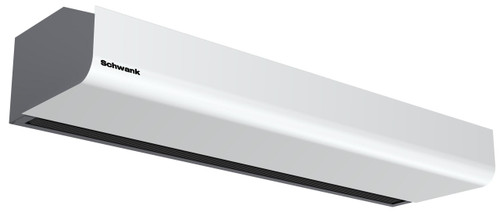
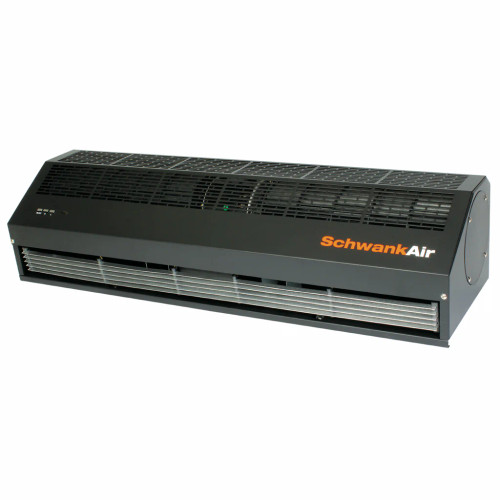
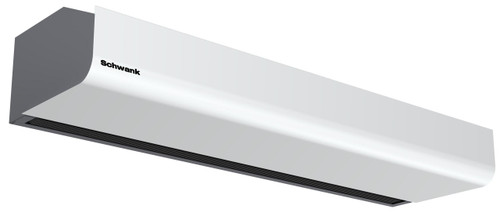
  • Air curtains: Installed above doorways in commercial, industrial, and food-service applications to create an invisible air barrier that keeps conditioned air in and insects, dust, and outdoor air out without a physical door. Sizing is governed by door width and height and the air velocity needed to form an effective barrier. These are almost exclusively commercial products.
  • Energy-Recovery Ventilators (ERVs) and Heat-Recovery Ventilators (HRVs): Whole-building or zone-level ventilation systems that bring fresh air in while exhausting stale air, recovering a large portion of the thermal energy (and, for ERVs, the moisture content) from the outgoing air. These are the right solution for tightly sealed, well-insulated homes and commercial spaces where fresh-air exchange is needed without the energy penalty of simply exhausting conditioned air. HRVs suit dry climates; ERVs suit climates where humidity transfer is also beneficial.
  • Makeup air units: Commercial and light-commercial kitchens that run large exhaust hoods need a compensating supply of outdoor air to maintain neutral pressure. Makeup air units supply that air, often with tempering (heating or cooling) to avoid dumping raw outdoor air into a conditioned kitchen. These are typically specified as part of a kitchen ventilation design, not selected independently.
  • Attic and whole-house fans: Move large volumes of air through an attic or an entire home to flush out heat, typically during cooler evening hours. These are a cost-effective cooling supplement in the right climate (low humidity, significant day-to-night temperature swing) but are not a substitute for air conditioning in humid climates.

What It Takes to Install Ventilation Equipment

Every ventilation product has site-readiness requirements that should be verified before the equipment is ordered, not after it arrives. The specifics vary by product type, but the common areas to check are consistent.

Electrical supply is the first. Most residential exhaust fans run on standard household voltage and connect to a switched circuit, but verify the amperage draw and circuit requirements against what's available at the installation point. Inline fans, air curtains, ERVs, HRVs, and makeup air units often have different voltage, phase, or amperage requirements — pull the electrical spec from the product's specification sheet and compare it against the panel and available circuit before ordering. If the site requires a new dedicated circuit, that's work to plan and price before the equipment shows up.

Ductwork routing is the next area to measure carefully. The duct diameter, duct type (rigid versus flexible), and total duct run length all affect the fan's actual delivered CFM — a fan rated at a given CFM in a lab is rated under specific static pressure conditions that a long, flexible duct run with multiple elbows will not replicate. Check the product's static pressure curve and compare it to the duct layout you're actually installing into. For air curtains, measure the door opening dimensions precisely; the unit's coverage width must span the door.

Termination points matter more than buyers often anticipate. An exhaust fan must terminate outside the building — not into an attic, a crawlspace, or a wall cavity. Verify a clear path to an exterior termination point and that the termination cap is appropriate for the duct size and outdoor exposure. In cold climates, look up whether the duct run needs to be insulated to prevent condensation inside the duct.

For ERVs and HRVs, there are both a fresh-air supply duct and an exhaust duct to route, plus a condensate drain connection on some models. Measure the available space in the mechanical room or utility area carefully; these units are physically larger than a standard exhaust fan and need access for filter changes and periodic maintenance.

Controls and integration are worth sorting out at the rough-in stage. If the application calls for a humidistat, a timer, a motion sensor, or integration with a smart-home or building-automation system, verify that the fan or ventilation unit supports the control type before the unit is ordered. Some units have built-in controls; others require external accessories that may or may not be compatible with every model in the line. Check the mounting configuration as well: ceiling-mount, wall-mount, and inline units have different rough-in requirements, and some air curtains require a specific bracket type that may be a separate accessory.

Things You Should Know

Q: How do I know what CFM rating I need?

A: For residential bathrooms, building codes set a minimum based on room square footage or air-change rate — confirm what your jurisdiction requires. For kitchens, the hood manufacturer's spec typically drives the exhaust requirement. For whole-building ERV or HRV sizing, use ASHRAE 62.2 or an equivalent fresh-air calculation. For commercial applications, a ventilation design calculation is the right starting point. The CFM selection framework is covered in detail earlier on this page.

Q: What is the difference between an ERV and an HRV, and which one do I need?

A: Both recover heat from exhaust air. An HRV transfers heat only; an ERV transfers both heat and moisture. In dry climates or very cold heating seasons, an HRV is typically preferred. In humid climates, an ERV limits outdoor humidity intake while still delivering fresh air. The right choice depends on your climate and indoor humidity conditions — the ERV/HRV product type descriptions above cover the climate logic in more detail.

Q: Can I run exhaust duct into my attic instead of through the roof or wall?

A: No. Terminating an exhaust fan into an attic deposits moisture-laden air into a confined space, which leads to mold, wood rot, and insulation damage. Every exhaust fan must terminate to the building exterior through an appropriate cap or vent. This is a code requirement in virtually every jurisdiction, not just a best practice.

Q: Do air curtains replace HVAC at an entrance?

A: No. An air curtain reduces infiltration at a doorway but does not condition the space. In most commercial applications, air curtains work alongside the existing HVAC system to reduce the load at high-traffic doorways. Some air curtains include a heating element to temper incoming air at the entrance zone, but that is supplemental heat, not a primary system.

Q: What sone rating should I look for in a bathroom exhaust fan?

A: For a bedroom bathroom or any room where quiet operation matters, look for a fan rated at 1 sone or below — nearly inaudible during normal use. Ratings above 3 sones are clearly audible in a quiet room. Compare the sone rating alongside CFM rather than treating CFM as the only selection criterion; both specs are on the product sheet.

Q: Does ventilation equipment require a dedicated electrical circuit?

A: Standard residential exhaust fans typically share a circuit, but larger units — inline fans, ERVs, HRVs, air curtains with heating elements, makeup air units — often require a dedicated circuit with specific amperage. Pull the electrical requirements from the product's specification sheet and compare them against available panel capacity before ordering. The installation section above covers the full electrical check.

Q: How often does ventilation equipment need maintenance?

A: Most exhaust fans benefit from an annual cleaning of the grille and fan blade to prevent dust buildup that reduces airflow and increases motor wear. ERVs and HRVs require periodic filter cleaning or replacement and core inspection on a schedule the manufacturer specifies, typically every three to six months depending on the environment. Air curtains generally need periodic filter cleaning if they include a filter, and motor and blade inspection annually. Check the specific maintenance schedule in the unit's installation and service manual.

HVAC365 ships ventilation equipment nationwide, with a stocked catalog that covers residential exhaust fans through commercial air curtains and whole-building ERV and HRV systems. Whether it's a single-unit replacement for a homeowner who can't wait out a mold or moisture problem or a volume order for a distributor or contractor stocking for a project, the breadth of the selection means the right product is available without substituting a workaround. Questions about which unit fits a specific application are the kind of thing worth calling in: 1.888.509.3391.

Compare
Show: 12 24 48

Fast Shipping

Easy Returns

Warranty Coverage

Financing Available