
null
Ductless Mini Split Floor Mounted

Ductless Mini Split Floor Mounted

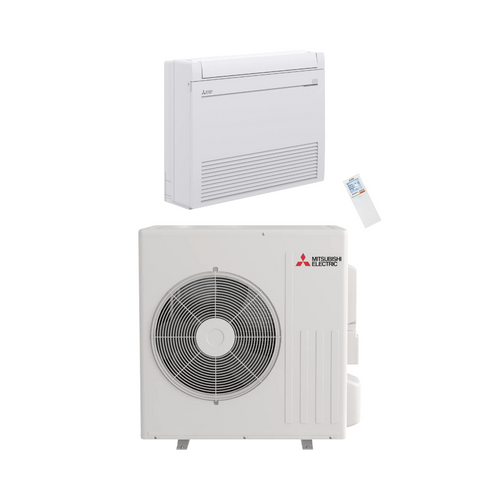
When ceiling or wall space is off the table, and a room still needs reliable year-round comfort, a floor-mounted ductless mini split is often the most practical answer. These units sit low on the wall, close to the floor, and push conditioned air out at ground level, which works especially well in spaces where ceilings are sloped, walls are too thin, or running refrigerant lines to a high-wall or ceiling cassette just does not make sense. HVAC365 stocks a broad selection of single-zone floor-mounted units across a range of capacities and configurations, so whether you are replacing an aging system or planning a new install from scratch, the options are here to match the job.

This category covers single-zone floor-mounted ductless mini split systems, the kind that pair one indoor floor console with one outdoor condensing unit. They are not the same as multi-zone systems, which serve several rooms from a single outdoor unit, and they are not high-wall or ceiling cassette units, even though all of those are ductless. Floor-mounted single-zone systems are a specific solution for a specific situation, and that specificity is exactly what makes them worth understanding before you buy. The buyers who land here run the full range: homeowners replacing an old unit or adding comfort to a finished basement or sunroom; light commercial operators conditioning a small office, server room, or retail space; HVAC contractors sourcing equipment for a job; and distributors replenishing stock for their own customers.

Choosing the Right Floor-Mounted Mini Split

The most important decision you will make in this category is capacity, and the only defensible way to size a floor-mounted mini split is a proper load calculation. Manual J is the industry standard for residential work; a simplified equivalent is common for light commercial. Guessing based on room square footage alone is how units end up short-cycling in winter or struggling to pull down humidity on a humid summer afternoon. Confirm the BTU or tonnage your load calculation produces before you look at a single model.

Once you have a capacity target, think about application fit. A floor console in a home addition handles a different thermal load profile than the same capacity unit in a ground-floor commercial suite or a garage workshop. The internal environment, occupancy patterns, solar gain, insulation quality, and local climate all push you toward different efficiency tiers and operating-temperature ratings. Higher-efficiency units typically carry higher upfront costs, but in climates where heating and cooling run for long seasons, the long-term operating cost difference is real. Before you commit to a tier, check whether your local utility or state energy office offers rebates for units at or above a specific efficiency threshold. Those programs change, so the buyer should look them up directly rather than rely on any number printed here.

Single-stage versus variable-capacity (inverter-driven) compressors are a meaningful tradeoff in this category. A single-stage unit is either running at full output or it is off. An inverter-driven unit modulates its output to match the load, which generally means quieter operation, better humidity control at part load, and lower operating costs over time. For a space that sees consistent occupancy and relatively stable conditions, either may serve fine. For a space with variable occupancy or a wide swing between heating and cooling loads across the season, inverter technology usually earns its price premium. A contractor evaluating this tradeoff for a specific job, or a distributor spec-matching for a customer, will want to weigh the installation site conditions carefully rather than defaulting to one or the other.

Buying Tips

  • Buy the matched system, not just the indoor unit. Floor-mounted mini splits are sold as matched outdoor-indoor pairs, and the performance ratings on the label apply only when both components are from the same manufacturer-approved combination. Mixing an indoor console from one brand with an outdoor unit from another is rarely certified and can void the warranty on both sides.
  • Do not undersize because the space is small. A common mistake is treating a small room as an excuse to drop to the lowest available capacity. If the load calculation says you need a specific size, buy that size. An undersized unit will run constantly, wear out faster, and still not meet the setpoint on the hottest or coldest days.
  • Check the line-set length limits before the rough-in starts. Every manufacturer specifies a minimum and maximum refrigerant line length for each model. Exceeding the maximum without adding refrigerant charge per manufacturer instructions will hurt performance. Running a line shorter than the minimum requires a loop or coil. Both situations are easier to handle before the walls are closed up.
  • Floor placement is not always the lowest point in the room. These consoles mount low on the wall, not directly on the floor, and the condensate drain line has to run downhill from the unit to a proper termination point. Sketch the condensate path before you order, because fixing a drainage problem after the drywall is finished costs real money.

If the job calls for conditioning multiple rooms from a single outdoor unit rather than zoning each room independently, a multi-zone ductless system is the category to look at instead. And if a high-wall indoor unit would work better for the space, the broader Ductless Mini Split Single Zone category covers other indoor unit styles alongside floor consoles.

Where Floor-Mounted Units Make the Most Sense

Floor-mounted ductless mini splits are not a universal substitute for every indoor unit style. They exist because certain spaces genuinely favor them over high-wall or ceiling units. Understanding which situations those are saves time during the selection process.

  • Rooms with sloped or vaulted ceilings. A high-wall unit needs a flat vertical surface of adequate height. When that surface does not exist, a floor console mounted low on a knee wall or under a window is often the cleanest solution.
  • Spaces at or below grade. Basements, below-grade suites, and walk-out lower levels tend to be cooler at floor level than at ceiling height. A floor console distributes conditioned air where people actually are, which can improve both comfort and efficiency compared to a ceiling-level unit fighting stratification.
  • Retrofit projects with limited wall penetration options. In older construction or buildings where wall cavities are inaccessible, getting refrigerant lines and electrical from the outdoor unit to a high-wall location can require significant cutting and patching. A floor console near an exterior wall often allows a shorter, simpler line run.
  • Sunrooms and enclosed porches. Glass-heavy spaces gain and lose heat quickly. Floor consoles perform well in these applications because they push conditioned air across the floor level, where it can counteract cold radiating off glass in winter or heat accumulation in summer.
  • Server rooms and small equipment spaces. Cold air falls naturally. A floor-level unit can deliver cooling more directly to heat-generating equipment at or near floor level, though the specifics depend on the equipment layout and the room's airflow pattern.

What It Takes to Install a Floor-Mounted Mini Split

Site readiness determines whether an installation goes smoothly or turns into a series of expensive surprises. Before the unit arrives, work through each of the following.

Electrical supply is the starting point. These systems require a dedicated circuit sized to the unit's specifications, which you will find on the equipment's rating plate or in the installation manual. The voltage, amperage, and breaker size requirements vary by model and capacity, so pull the spec sheet for the specific unit rather than assuming from a previous job. A licensed electrician should verify that the panel has capacity for the new circuit and that the disconnect and wiring meet local code. Do not assume what was on site for a previous unit is the right size for the replacement.

Condensate drainage needs a clear path. Floor-mounted units generate liquid condensate during both cooling and, in certain operating modes, heating. That condensate has to drain somewhere: a floor drain, a condensate pump, or an existing drain line. Measure the distance and elevation change from the unit's drain port to the termination point. A condensate pump can handle situations where gravity drainage is not possible, but it adds a component that needs power and occasional maintenance.

Refrigerant line sets connect the indoor console to the outdoor condensing unit. The lines run through a wall penetration, typically close to the floor for this style of unit. Verify the required line-set diameter, insulation type, and maximum and minimum run lengths specified for the model. If the existing line set from a previous installation is being reused, check its condition and whether it was flushed, the correct diameter, and within spec for the new unit.

Operating temperature range matters more for floor consoles in extreme climates than for units in moderate ones. Some units are rated for heating operation well below freezing; others are not. Look up the rated operating range for the specific model against the lowest expected outdoor temperature at the site. Running a unit outside its rated range can damage the compressor.

Clearance and mounting surface requirements are easy to overlook. The unit needs a structurally sound wall section at the specified mounting height, enough clearance on the sides and front for airflow and service access, and a clean path for the refrigerant lines to exit the wall. Some models have specific requirements for the wall sleeve or line-set cover. Read the installation manual for the unit, not a generic guide.

Controls and integration are increasingly relevant. Most current floor-mounted mini splits include a wireless remote and many offer Wi-Fi connectivity for app-based control. If the buyer needs the unit to integrate with a building management system, a smart thermostat, or a zone controller, verify compatibility before the purchase, not after. Some manufacturers offer optional communication kits or BACnet/Modbus interfaces for commercial applications; availability depends on the specific model.

Things You Should Know Before You Buy

Q: What is the difference between a floor-mounted mini split and a high-wall mini split?

A: Both are ductless split systems pairing an indoor air handler with an outdoor condensing unit. A floor console sits low on the wall and pushes air at or near floor level; a high-wall unit mounts near the ceiling and distributes air downward. The right choice depends on the room's ceiling geometry, wall layout, and where you want airflow to originate — the situations where floor consoles have a clear edge are covered in the section above.

Q: How do I know what capacity I need?

A: A proper load calculation is the correct starting point — Manual J for residential work, a simplified equivalent for light commercial. Square footage alone is not reliable. The sizing section above covers the key variables and why guessing leads to problems.

Q: Can a floor-mounted mini split provide both heating and cooling?

A: Most ductless mini splits sold today are heat pumps, meaning they provide both cooling in summer and heating in winter by reversing the refrigerant cycle. Verify that the specific model you are considering is listed as a heat pump rather than a cooling-only unit if you need year-round operation.

Q: Do I need a professional to install a floor-mounted mini split?

A: In most jurisdictions, yes. Refrigerant handling requires EPA Section 608 certification. Electrical work on a dedicated circuit typically requires a licensed electrician. Many local building codes require a permit and inspection for mini split installations. Check the requirements in your area before proceeding.

Q: What kind of maintenance does a floor-mounted mini split need?

A: Regular filter cleaning is the most frequent task, typically every few weeks during heavy use. The outdoor unit should be kept clear of debris, snow, and ice. The condensate drain should be checked periodically to make sure it is clear. An annual professional inspection is a reasonable practice to catch refrigerant issues, verify electrical connections, and confirm the unit is operating within spec.

Q: Can I use an existing line set from a previous mini split installation?

A: Sometimes, but not automatically. The existing line set needs to be the correct diameter for the new unit, within the manufacturer's specified length range, free of damage or contamination, and compatible with the refrigerant used in the new system. If the old system used a different refrigerant, the line set will need to be flushed or replaced. The installation section above covers what to verify before reusing existing lines.

Q: What is the minimum outdoor temperature a floor-mounted mini split can heat in?

A: It depends on the specific model. Some units are designed for low-ambient heating and can operate reliably well below freezing; others are rated for a narrower range. Check the operating temperature specifications in the product documentation for the model you are considering and compare against the coldest expected temperatures at your site — the installation section above explains why this matters.

HVAC365 ships floor-mounted ductless mini splits nationwide, with a stocked selection deep enough to cover the range of capacities and configurations a real job actually calls for. Whether it is a single unit for a homeowner finishing a basement or a volume order for a distributor replenishing seasonal stock, the catalog is available and orders ship to any address in the country. If a project cannot wait on backorders, having a well-stocked source matters, and that is what this catalog is built to be.

Compare

Fast Shipping

Easy Returns

Warranty Coverage

Financing Available