null
Room Air Conditioners

Room Air Conditioners

When a space heats up and a central system is not an option, the right room air conditioner is the fastest path to reliable cooling. That might be a window unit for a bedroom addition, a PTAC for a hotel corridor, or a portable unit for a server closet that runs hot in August. HVAC365 keeps a broad selection in stock across unit types, capacity ranges, and applications so you are not guessing what is available when the job cannot wait.

Room air conditioners are self-contained cooling systems designed to condition a single room or zone without connecting to a central duct system. They cool by drawing warm room air across a refrigerant coil, rejecting the heat outside, and returning conditioned air to the space. That simplicity is exactly what makes them useful across a wide range of situations. A homeowner replacing a failed window unit before a heat wave hits is looking for something specific. A contractor specifying a PTAC package for a new motel build has a completely different set of requirements. A distributor stocking a slate of units for regional resale is buying on lead time and volume. This category covers the full spread, and HVAC365 stocks accordingly so each of those buyers can find and get what they actually need.

Picking the Right Room Air Conditioner

The single biggest mistake buyers make in this category is choosing a unit before they know what the space actually demands. Capacity matters more than brand or price. A unit that is too small will run constantly without reaching setpoint; a unit that is oversized will short-cycle, leave the room feeling clammy, and wear out the compressor faster than it should. Neither outcome is acceptable, and both are avoidable.

Start with the cooling load for the space. Room dimensions are a starting point, but the real calculation depends on factors like ceiling height, insulation quality, window area and orientation, occupancy, and heat-generating equipment in the room. A formal load calculation is the accurate method; rough rules of thumb based on square footage alone tend to underestimate or overestimate in anything but a simple, well-insulated room. Before you select a unit, verify that the BTU capacity you are targeting lines up with a real assessment of the load, not just a floor-area estimate.

Application type also shapes the decision. A residential window unit installed in a home is a different purchase from a commercial-grade PTAC going into a hospitality or healthcare facility. Commercial-grade units are typically built for higher duty cycles and easier serviceability in environments where the equipment runs around the clock and downtime is not acceptable. A homeowner replacing a failed bedroom unit does not need that level of build; a property manager outfitting 80 hotel rooms does. Matching the unit's design to the actual application avoids premature failures and warranty complications.

Efficiency is the third lever. Higher-efficiency units cost more upfront and generally save money over time on operating costs, but the math depends on how many hours per year the unit actually runs. A unit in a weekend cabin runs far fewer hours than one in a primary residence in a hot climate. Check whether your local utility or jurisdiction offers rebates for units that meet specific efficiency thresholds, since those programs can shift the break-even point significantly. The installation-readiness factors covered further down, particularly electrical supply, can also influence which efficiency tier is practical for a given site.

Distributors and contractors sourcing multiple units at once have an additional set of questions to resolve: availability by volume, lead times on specific configurations, and whether a given model is stocked consistently enough to supply a multi-unit project without substitutions mid-build. Those are worth a direct conversation with HVAC365 before committing to a specification.

Buying Tips

  • Do not skip the window or sleeve measurement. Window units are sized to specific opening dimensions, and PTAC units require a specific wall sleeve. Ordering before you measure the rough opening is a common mistake that creates delays and sometimes forces a return. Measure the opening width, height, and depth before you select a unit.
  • Check the amperage draw against the circuit before you buy, not after. Many room air conditioners require a dedicated circuit. If the panel or the circuit in the space cannot support the unit's draw, you are looking at electrical work before the unit can even be tested. Pull the electrical specs from the product documentation and compare them against what is already on site.
  • Confirm the refrigerant type if you are replacing an existing unit. This matters most in commercial and hospitality applications where the same technician will service multiple units. Keeping refrigerants consistent across a property simplifies service and avoids recovery equipment and certification complications. If you are also looking at supplemental heating or ventilation for the same space, the Heating category covers additional options that may work alongside room cooling.
  • For PTAC replacements, verify the chassis dimensions before ordering. PTAC units are not universally interchangeable. Sleeve dimensions vary by manufacturer and vintage, and a unit that does not fit the existing sleeve means wall work. Confirm the sleeve size and wiring configuration against the existing installation before specifying a replacement.

Window, Portable, and PTAC: Which One Fits the Job

Room air conditioners come in three main configurations, and the right one depends almost entirely on where and how it will be installed.

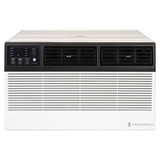
  • Window air conditioners mount in a standard window opening and exhaust heat directly to the outside. They are the most common solution for residential bedrooms, apartments, and small offices where a window is available and permanent installation is acceptable. Installation is straightforward, but the window must meet the unit's size requirements and must be operable. These are the most widely stocked units and cover the broadest range of cooling capacities within the room AC category.
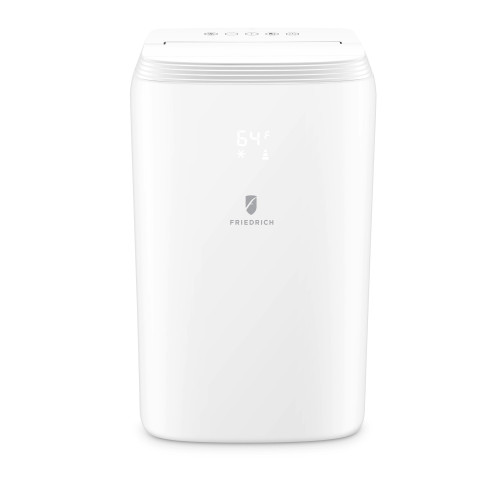
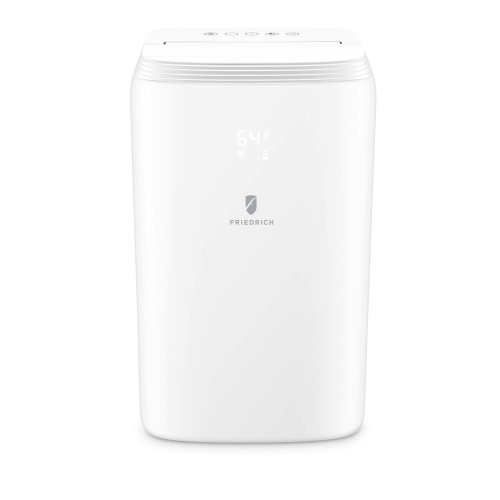
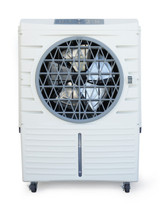
  • Portable air conditioners sit on the floor and exhaust through a flexible duct vented through a window kit or a small wall penetration. They do not require a permanently dedicated opening, which makes them useful in spaces where window installation is not allowed (many rental properties, historic buildings) or where the cooling need is temporary. The tradeoff is that portable units are generally less efficient than window units of similar capacity and require the exhaust hose to be routed correctly to avoid recirculating hot air back into the space.
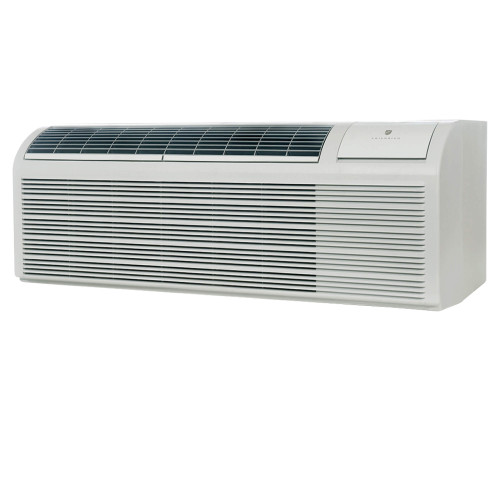
  • PTAC Units are packaged terminal air conditioners designed for through-the-wall installation in a dedicated sleeve. They are the standard configuration for hotels, motels, assisted living facilities, and similar applications where each room needs independent climate control and the units need to be serviceable from inside the room without disrupting adjacent spaces. PTAC units typically offer both heating and cooling in a single chassis, and their commercial build quality reflects that they are expected to run continuously in occupied spaces. Because PTAC replacements involve sleeve compatibility, wiring, and potentially drain routing, that sub-category page covers those specifics in more depth.

What It Takes to Install a Room Air Conditioner

Room air conditioners are often marketed as easy to install, and for a standard window unit in a typical residential setting, that reputation is mostly earned. But there are real site-readiness factors that can turn a simple installation into a complicated one, and it is worth working through them before the unit arrives.

Electrical supply is the most common source of problems. Verify the voltage and amperage requirements from the unit's specification sheet before you order. Many higher-capacity room air conditioners require a 240V circuit and a dedicated breaker, and not every space has one in the right location. Smaller units may run on a standard 120V outlet, but even those can trip a shared circuit if other loads are present. Look at what is already on site, check the panel for available capacity, and confirm a match before finalizing the selection.

For window units, measure the rough opening carefully. Width, height, and sill depth all matter. Units come with side panels that extend to fill gaps, but those panels have limits. A window that is too wide, too narrow, or too shallow for the chassis means either returning the unit or fabricating a solution on site. Neither option is good when someone is waiting on the cooling.

Drainage is less of a concern for standard window and portable units than it is for PTACs and some larger commercial installations. Most window and portable units are designed to evaporate condensate internally or drain it out the back, but in humid climates or high-load applications, verify how the unit handles condensate and whether any active drain connection is needed. For PTAC installations, ask specifically about drain routing, since some sleeve configurations do not naturally drain to the outside and require a condensate pan or drain line.

Portable units require an exhaust path. The exhaust hose must vent to the outside, and the window kit or wall penetration used to do that needs to seal reasonably well. A poorly sealed exhaust path pulls hot outside air back into the space and kills efficiency. Check that the window kit included with the unit (or available separately) fits the window opening before assuming it will work.

For PTAC installations, the existing sleeve dimensions are the critical constraint. Measure the interior sleeve opening width, height, and depth, and compare those against the replacement unit's chassis specifications. Confirm the wiring configuration and voltage at the existing receptacle as well. PTAC wiring is not standardized across all manufacturers, and a wiring mismatch can require an electrician visit even on what looks like a straightforward swap.

Controls and compatibility are worth a brief check for any installation going into a managed property or building automation context. Some room air conditioners support thermostat integration, occupancy sensors, or building management system connections; others are fully standalone. If the property has centralized control requirements, look up which units support them before purchasing.

Things You Should Know

Q: How do I know what BTU capacity I need for my room?

A: Use a load calculation that accounts for ceiling height, insulation, window area and orientation, sun exposure, and occupancy — not just square footage. Square footage alone frequently leads to over- or under-sizing. The sizing notes above explain what drives an accurate number and why getting it right matters more than most buyers expect.

Q: Can I use a room air conditioner in a commercial or hospitality setting?

A: Yes, but the unit needs to be rated for that application. PTAC units are built for continuous operation in hotels, motels, and similar environments; standard residential window units are not. The configurations section above covers the difference in detail.

Q: Do room air conditioners need a dedicated electrical circuit?

A: Many do, particularly at higher capacities. Pull the amperage and voltage requirements from the unit's spec sheet and compare them against the circuit on site before ordering. The electrical checks covered in the installation section above walk through exactly what to verify.

Q: What is the difference between a window AC and a PTAC unit?

A: A window unit mounts in a standard window opening and suits residential and light commercial use. A PTAC installs through the wall in a dedicated sleeve, provides both heating and cooling in one chassis, and is engineered for commercial and hospitality environments where units run continuously and need to be serviced from inside the room. The configurations section above covers both in detail.

Q: Can a portable air conditioner cool a room as effectively as a window unit?

A: A portable unit can cool a room effectively, but for a given BTU rating it is generally less efficient than a comparable window unit — partly because a poorly sealed exhaust hose allows some hot air to re-enter the space. Portable units are the right choice where window installation is not possible, not simply a more convenient alternative.

Q: What should I check before replacing a PTAC unit?

A: Measure the existing wall sleeve opening (width, height, and depth) and confirm the wiring configuration and voltage at the existing receptacle. PTAC chassis dimensions and wiring are not standardized across all brands. The installation notes above cover the full checklist.

Q: Does HVAC365 carry room air conditioners for both residential and commercial applications?

A: Yes. The selection includes window units suited to residential and light commercial use, portable units for flexible or temporary cooling needs, and PTAC units for hospitality, healthcare, and similar commercial applications. Stock spans multiple capacity ranges and unit types so buyers at any scale can find what the job calls for.

HVAC365 ships room air conditioners nationwide, with a stocked catalog that covers the full range of unit types and applications described on this page. Whether you are a homeowner sourcing a replacement before the next heat wave or a contractor or distributor equipping multiple rooms on a commercial project, stock depth and nationwide reach mean you are not waiting on a backordered unit when the space needs cooling now. For help matching a unit to a specific application or sleeve size, call the team directly at 1.888.509.3391.

Compare
Show: 12 24 48

Fast Shipping

Easy Returns

Warranty Coverage

Financing Available