null

Electronic & HEPA Air Cleaners

Indoor air quality problems are not always visible, but they show up in allergy flare-ups, musty odors, dust that settles back on surfaces within days of cleaning, and in some cases real respiratory health concerns. Electronic and HEPA air cleaners are the equipment class designed to address those problems at the source, pulling airborne particles, allergens, and contaminants out of the air stream before they circulate through a building. HVAC365 stocks a broad selection across capacity and application types, so whether you are sourcing a single residential replacement or specifying units across a commercial project, you are not waiting on a special order to get the job moving.

This category covers whole-home electronic air cleaners that integrate with existing forced-air systems, standalone HEPA filtration units, and commercial-grade air cleaning equipment for light and heavy commercial applications. The real-world problem these products solve ranges from reducing airborne allergens and fine particulate matter in a home to meeting indoor air quality standards in a commercial or institutional building. Buyers here include homeowners replacing or upgrading an existing air cleaner as part of a broader air cleaner upgrade, contractors and installers sourcing equipment for a specific job, commercial facility managers specifying air quality solutions for occupied spaces, and distributors buying in volume for resale or fleet stock.

Choosing the Right Air Cleaner

The single most important factor in selecting an air cleaner is matching the unit's clean air delivery capacity to the space it needs to serve. Undersizing means the unit cannot turn over the air volume in the room or duct system fast enough to make a measurable difference. Oversizing is less of a problem than it is with cooling and heating equipment, but it does affect cost and, in ducted systems, can create airflow resistance that the air handler has to work against. The question to answer before selecting a unit is: what is the square footage and ceiling height of the space, and what air change rate is appropriate for the application? Residential living spaces, commercial offices, and medical or specialty environments each have different target air change rates, and those drive the capacity you need.

Technology type is the other major decision. Electronic air cleaners (sometimes called electrostatic precipitators) use an electrical charge to capture particles on collector plates. They are highly effective at fine particulate capture and can be cleaned and reused rather than replaced, which reduces ongoing filter costs. HEPA filtration takes a different approach: a physical filter medium captures particles mechanically, and the HEPA standard guarantees a minimum capture efficiency for particles of a specific size. Both technologies work; the tradeoff is between lower maintenance cost over time with electronic units versus the proven, validated filtration rating that a true HEPA filter carries. For buyers in regulated environments, like healthcare, food service, or certain commercial applications, that documented HEPA rating may be a code or standards requirement, not just a preference.

Efficiency ratings matter beyond just the technology type. Higher-efficiency units capture smaller particles and capture them more reliably, but they also typically create more airflow resistance in ducted applications. If you are installing an air cleaner in-line with an existing air handler, check whether the system's blower can maintain adequate airflow against the added static pressure. That is a site-readiness check rather than a buying decision in isolation, but it is worth flagging here because it can make a higher-efficiency unit the wrong choice even when the filtration performance looks right on paper. The installation factors are covered in more detail further down.

For commercial applications, the decision also involves where in the air stream the unit sits, whether it serves a single zone or the full building, and whether local code or building standards specify a minimum filtration class. Contractors specifying for a commercial job should pull the building's mechanical drawings and confirm the equipment class before ordering. Distributors buying in volume should factor lead time and stocking strategy against the project schedule; units with proprietary filter media or replacement cells can create ongoing supply dependencies worth evaluating before committing to a product line.

Buying Tips

  • Check collector plate and filter replacement costs before you buy. The upfront price of an electronic air cleaner can look attractive next to a HEPA unit, but if the replacement collector plates or pre-filters for that specific model are expensive or hard to source, the lifetime cost flips. Get the replacement part numbers and prices before committing.
  • Confirm the unit's static pressure rating against your duct system. A high-efficiency air cleaner installed in a system with a blower that cannot push adequate airflow through it will reduce system performance and comfort. This is one of the more common mistakes on retrofit installs, and it is cheaper to size it correctly before purchase than to pull it out after.
  • Do not assume all HEPA labels mean the same thing. True HEPA filters meet a specific, tested particle capture standard. "HEPA-type" or "HEPA-style" filters do not. If the application requires verified filtration performance, read the product's actual filter certification, not just the marketing language on the box.
  • Think about where the unit's power and controls connect. Some air cleaners wire directly into the air handler or furnace control board; others need a separate power source or dedicated circuit. If you are not planning for that during rough-in, you may be fishing wire after drywall is up.

If you are also evaluating humidity control for the same space, the Humidifiers and Dehumidifiers categories address the moisture side of indoor air quality, which works alongside particle filtration rather than being interchangeable with it.

Types of Electronic and HEPA Air Cleaners

The configuration distinctions in this category break along a few meaningful lines: how the unit integrates with the HVAC system, what filtration technology it uses, and what scale of application it is designed for.

  • Whole-home ducted electronic air cleaners. These install in-line with a forced-air system, typically at the return air plenum or between the return and the air handler. They filter all air passing through the system, which makes them effective for whole-home air quality without requiring room-by-room units. They require a compatible ducted forced-air system and a power connection. This is the most common configuration for residential retrofits and new residential construction.
  • Whole-home ducted HEPA systems. Similar placement to electronic units but with a true HEPA filter medium. These are more common in applications where a validated filtration standard is required. Because HEPA filters are physically dense, these systems sometimes require a dedicated bypass fan to maintain adequate airflow through the filter. Static pressure impact on the main air handler is a key spec to verify before selection.
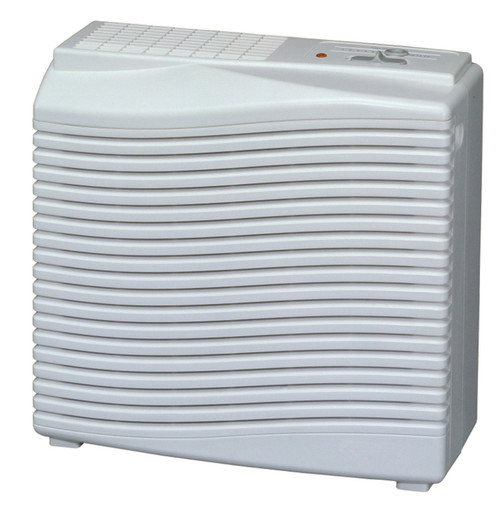
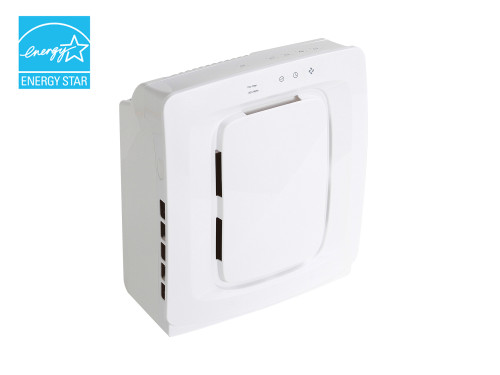
  • Portable and room HEPA units. Freestanding units that filter the air in a single room or zone. These are appropriate where a ducted system does not exist, where a specific room requires a higher filtration level than the central system provides, or as a supplemental solution. Sizing is based on the room's square footage and the unit's clean air delivery rate (CADR).
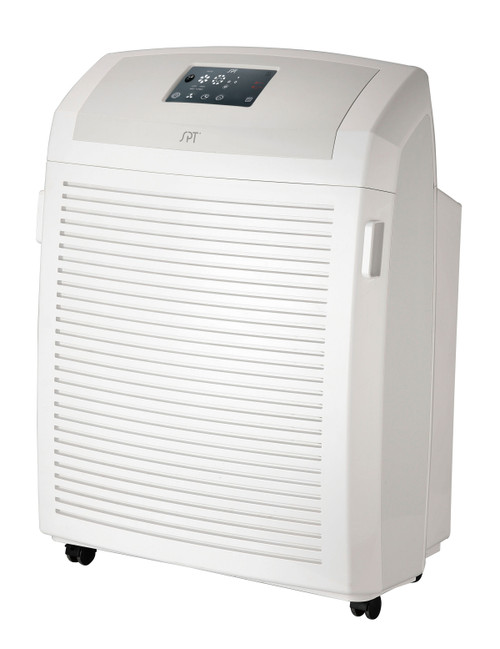
  • Commercial and light-commercial air cleaners. Larger-capacity units designed for commercial air handlers, rooftop units, or dedicated outdoor air systems (DOAS). These are specified against the system's airflow volume and the building's ventilation requirements rather than residential square footage guidelines. Filtration class requirements for commercial applications often follow ASHRAE or local mechanical code standards.

Installation and Compatibility

Installation requirements vary significantly between ducted whole-home units and portable room units, so the first thing to establish is which type you are working with.

For ducted units, measure the return air duct opening where the unit will install before ordering. Air cleaners are sized to match specific duct dimensions, and a unit that does not fit the opening requires sheet metal work to adapt, which adds cost and time. Pull the air handler's specifications and verify the blower's ability to handle the additional static pressure the air cleaner will add. This is especially important for high-efficiency HEPA systems; check the manufacturer's static pressure rating and compare it against the air handler's external static pressure capacity.

Electrical requirements depend on the unit type. Electronic air cleaners require a power connection, typically 120V, but verify the specific unit's requirements on the product's spec sheet rather than assuming. Some units wire directly into the furnace or air handler control board; others need a separate circuit. Look at what is available at the installation location before ordering, and flag any electrical work needed as part of the project scope.

Controls and integration are worth checking early. Some ducted air cleaners operate independently of the thermostat and run whenever the air handler fan runs. Others have their own controls or can integrate with a communicating HVAC system. If the homeowner or facility manager expects to control air cleaning modes separately or view filter status through a smart thermostat or building automation system, verify that the unit supports that before purchase.

For HEPA systems with bypass fans, the bypass configuration needs to be accounted for in the ductwork layout. These systems divert a portion of the return air through the HEPA filter via a secondary fan, which means additional duct connections and a power source for that fan. Confirm the available space in the mechanical room or utility area and map out the duct connections before the unit arrives on site.

Portable room units have simpler installation requirements: adequate space, a standard power outlet, and placement that allows for reasonable air circulation through the unit. Check the manufacturer's recommended clearances so the unit is not pushed against a wall or piece of furniture that restricts airflow into the intake.

Replacement filter or collector plate logistics are worth sorting before the install is complete. Confirm availability and lead time for the specific replacement media the unit requires, and document that information for the end user. A whole-home air cleaner with a filter that takes six weeks to special-order is a problem the first time it needs service.

Things You Should Know

Q: What is the difference between an electronic air cleaner and a HEPA air cleaner?

A: Electronic air cleaners use an electrical charge to attract and capture airborne particles on collector plates, which can be cleaned and reused. HEPA air cleaners use a dense physical filter medium certified to a specific particle capture efficiency standard. The practical difference is maintenance approach and whether you need a documented filtration rating — covered in full in the technology comparison above.

Q: How do I know what size or capacity air cleaner my space needs?

A: For ducted whole-home units, match the unit to the duct system's airflow volume and the return air opening dimensions. For portable room units, use the room's square footage and ceiling height against the unit's CADR rating. The sizing logic behind both is explained in the selection guidance above.

Q: Can I add an electronic or HEPA air cleaner to my existing HVAC system?

A: Yes, ducted whole-home air cleaners are designed for retrofit installation on existing forced-air systems. The key checks — duct dimensions, blower static pressure capacity, and power availability — are detailed in the installation section above.

Q: Do electronic air cleaners require ongoing maintenance?

A: Yes. The collector plates accumulate captured particles and need to be cleaned periodically, typically every one to three months depending on conditions, to maintain filtration efficiency. Most units are designed so the plates slide out and can be washed. If the plates are not cleaned regularly, filtration performance drops and the unit may produce ozone at higher levels than when operating correctly.

Q: Are there code or standards requirements for commercial air cleaner installations?

A: Commercial installations are often subject to ASHRAE ventilation and filtration standards, local mechanical codes, and in some cases industry-specific requirements (healthcare, food service, schools). Pull the applicable codes and the building's mechanical specifications before selecting equipment. The filtration class required may be stated in the building's design documents or in the applicable code for that occupancy type.

Q: Does a whole-home air cleaner affect my HVAC system's airflow or efficiency?

A: It can, particularly with high-efficiency HEPA systems that add significant static pressure to the duct system. An air handler blower that cannot overcome that added resistance will move less air, reducing both comfort and the air cleaner's effectiveness. Electronic air cleaners generally add less static pressure than HEPA filters. The static pressure considerations behind this are covered in the selection and installation sections above.

Q: What does "HEPA-type" mean versus true HEPA?

A: True HEPA filters meet a specific, tested and certified particle capture efficiency standard. "HEPA-type" or "HEPA-style" are marketing terms that do not carry the same certification and do not guarantee the same filtration performance. For applications where filtration performance needs to be documented or where a specific capture efficiency is required, only a certified true HEPA filter meets the standard.

HVAC365 ships electronic and HEPA air cleaners nationwide from a broad, stocked catalog, so residential replacements and commercial installs alike can be sourced without waiting on back-ordered equipment. The selection spans whole-home ducted systems, portable room units, and commercial-grade air cleaning equipment, available for single-unit purchases through distributor volume orders.

Compare

Fast Shipping

Easy Returns

Warranty Coverage

Financing Available