null
Towel Warmers

Towel Warmers

A cold, damp towel is a small discomfort with a straightforward fix. Towel warmers do exactly what the name says: they keep towels dry, warm, and ready to use, while adding a low-profile source of radiant heat to a bathroom or changing area. They also reduce the lingering moisture that feeds mildew on towel fabric and grout. Because HVAC365 stocks a broad selection across mounting styles, heat sources, and output levels, you can find the right unit whether you're replacing a failed warmer in a guest bathroom, outfitting a hotel or spa renovation, or sourcing a handful of units for a multi-room project.

Towel warmers sit inside the broader Heaters category, but they serve a specific and well-defined purpose: supplemental radiant warmth in wet areas, delivered through a wall-mounted or freestanding rack. The buyers who shop this category run the full range. Homeowners typically want a single unit that fits a specific wall space and connects cleanly to existing wiring or plumbing. Light commercial buyers, such as boutique hotels, spas, fitness centers, and short-term rental operators, often need multiple units that meet commercial durability expectations and consistent lead times. Contractors and installers are usually spec-matching for a job, balancing output, finish, and mounting requirements against what the site can support. Distributors sourcing for resale or fleet stock are thinking about availability, lead time, and whether a model runs consistently across a product line.

Choosing the Right Towel Warmer

The first question to resolve is heat source: electric or hydronic. Electric towel warmers run off a dedicated electrical circuit and operate independently of any heating system. Hydronic models connect to a hot water supply, either a dedicated loop or a tie-in to an existing radiant or hydronic system. Electric units are easier to retrofit into most bathrooms because they do not require any plumbing connection, but they do depend on available circuit capacity. Hydronic units are more common in new construction or whole-home hydronic heating projects, where the infrastructure is already planned in.

After heat source, consider output relative to the space. A towel warmer in a small powder room has different demands than one in a large master bathroom or a commercial locker room. The goal is not to oversize the unit and waste energy, or undersize it and end up with a rack that barely takes the chill off. Look at the square footage of the room, how well it is insulated, whether the warmer is the primary heat source for that space or purely supplemental, and what the ambient temperature tends to be in winter. For commercial settings, factor in how frequently the room turns over and how many towels need to stay warm at once.

Finish and aesthetics matter more in this category than in most HVAC equipment, because the unit is visible and often a design element. Polished chrome, brushed nickel, matte black, and other finishes are common. Make sure the finish is rated for wet-area use. Bar spacing is also worth checking against your actual towel sizes before buying, since a rack dimensioned for hand towels will not hold bath sheets effectively.

Efficiency and operating cost are worth a brief look, especially for electric units running in commercial settings where they may be on for extended hours. Some electric models include timers or thermostatic controls; those features are worth the modest price difference if the unit is going into a space that is not occupied around the clock. A buyer equipping a hotel with multiple units should weigh per-unit operating cost carefully, because the numbers compound across rooms. For distributors evaluating volume orders, consistency of availability across a model line is as important as the per-unit spec, and the installation-readiness factors covered further down should be confirmed before specifying at scale.

Buying Tips

  • Check the wattage before assuming it will heat the room. A towel warmer sized for towel drying does not necessarily produce enough output to serve as the primary heat source for a cold bathroom. If space heating is part of the goal, verify the unit's wattage and calculate whether it is adequate for the room, rather than assuming any warmer will do both jobs.
  • Confirm the mounting type matches the wall construction. Hardwired wall-mounted units need stud or solid backing at the right spacing for the rail brackets. Discovering the studs do not line up after the unit arrives adds time and material to what should be a straightforward install.
  • For hydronic models, know what you are connecting to before you order. Tying a hydronic towel warmer into an existing system requires compatible pressure ratings, fluid compatibility, and valve sizing. Getting those wrong is expensive to undo. The installation notes below go into more detail on what to verify on the supply side.
  • Factor in the timer or thermostat option early, not as an afterthought. Adding a programmable control after the fact often means additional wiring work. If the use case calls for scheduled operation, specifying a model with integrated controls from the start is the lower-cost path.

Mounting Styles and Common Applications

Towel warmers come in wall-mounted and freestanding configurations. Wall-mounted units are the most common choice for dedicated bathrooms with finished walls, both residential and commercial. They keep floor space clear, look intentional in the space, and can be hardwired directly into the wall for a clean installation. Freestanding models are useful where wall mounting is not practical, such as in a rental property where you cannot make permanent modifications, or in a larger space where the warmer needs to move or serve multiple areas.

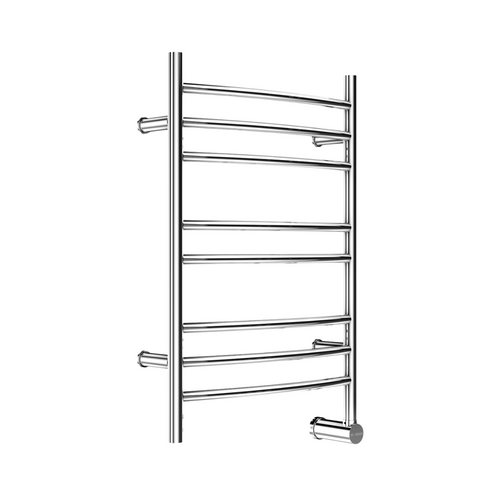
Within wall-mounted units, ladder-style racks with horizontal bars are the standard form for full-size bath towels. Panel-style warmers present a flat radiant surface rather than individual bars and tend to work better as supplemental space heaters in addition to towel warming. Rail-style units with fewer, wider bars are sometimes chosen for display towels in spa or hospitality settings.

On the application side, the category serves a wide range of real-world installations:

  • Primary bathroom, residential: A single ladder-style or panel unit, typically hardwired, providing daily-use towel warming and light supplemental heat.
  • Guest bathroom or powder room: Often a smaller unit where the emphasis is aesthetics and convenience rather than output capacity.
  • Hotel and hospitality: Multiple units per room, commercial-grade finish, coordinated across a property. Consistency of supply matters as much as individual unit performance.
  • Spa and fitness facilities: Higher turnover of towels, longer operating hours, and heavier-duty use patterns. Durability and output become the dominant selection criteria.
  • Short-term rentals: Owners often prioritize easy installation and low maintenance over premium finish options.

What It Takes to Install a Towel Warmer

Electric towel warmers require a dedicated circuit in most cases, particularly for hardwired models. Check the unit's amperage draw against what the bathroom panel can support, and verify whether the local electrical code requires a GFCI-protected circuit for bathroom installations (it typically does). If the circuit does not already exist, that is a task for a licensed electrician before the warmer goes on the wall. Plug-in electric models are simpler from an electrical standpoint but are less common in permanent installations and may not be code-compliant in all jurisdictions for bathroom use; look up the local requirements before specifying one.

For hardwired units, measure the wall space carefully before ordering. The junction box location needs to line up with the warmer's wiring knockout, or you will be moving the box, which means opening the wall. Bracket spacing for the rail mounts also needs to fall on solid backing. Mark stud locations before finalizing the mounting position.

Hydronic towel warmers involve plumbing connections in addition to any electrical requirements for a control valve or pump. Verify the supply pressure the unit is rated for against the actual system pressure on site. Check fluid compatibility if the existing system uses glycol or a treated fluid, since not all towel warmer materials are compatible with all fluid chemistries. The connection size and valve type need to match what is available at the supply and return points. If tying into an existing hydronic system, a plumber or hydronic specialist should review the tie-in plan, particularly regarding flow rate and whether the added load affects system balance.

For both types, clearances matter. Most manufacturers specify minimum clearances from surrounding fixtures, shelving, and the floor. Do not install a warmer where towels can rest against a wall or adjacent surface for extended periods; the radiant heat needs space to circulate. Operating temperature range is generally not a concern in a conditioned interior bathroom, but verify the unit's rated ambient conditions if the installation is in an unconditioned space such as a mudroom or outdoor shower enclosure.

Controls range from a simple on/off switch to programmable timers and thermostatically regulated models. In a commercial setting, a timer that limits operating hours to occupancy periods can meaningfully reduce energy use across a multi-unit installation. Verify that the control type specified is compatible with the building's existing wiring configuration and, where applicable, any building automation system the property runs.

Things You Should Know Before You Buy

Q: What is the difference between an electric and a hydronic towel warmer?

A: Electric models use an internal heating element on a dedicated circuit; no plumbing required. Hydronic models circulate hot water through the bars or panel from a connected supply line. Electric units retrofit more easily into most bathrooms; hydronic units make more sense when a hot water loop is already in place. The heat-source section above covers how to choose between them.

Q: Can a towel warmer heat a whole bathroom, or is it only for towels?

A: It depends on the unit's wattage and the room's size and insulation. Some warmers are sized to do both; others produce only incidental warmth beyond towel drying. Compare the unit's wattage against the bathroom's actual heat load — the output and sizing guidance above walks through what to weigh.

Q: Do I need a dedicated electrical circuit for a towel warmer?

A: Hardwired electric models typically do, and most local codes require GFCI protection for bathroom circuits. The installation section above covers amperage checks and code considerations in detail.

Q: How do I size a towel warmer for my bathroom?

A: Start with square footage and insulation quality, then decide whether the warmer is purely supplemental or needs to carry the room's heat load. A unit used only for towel drying can be chosen on bar count alone; one expected to heat the room needs wattage matched to the actual load. The sizing factors are laid out in the choosing section above — or consult the manufacturer's sizing guidance for a specific unit.

Q: What finishes are available, and are they suitable for wet environments?

A: Common finishes include polished chrome, brushed nickel, oil-rubbed bronze, matte black, and white powder coat, though availability varies by model. Always verify on the product's spec sheet that the specific finish is rated for continuous wet-area exposure.

Q: Can a hydronic towel warmer connect to my existing hot water heating system?

A: Often yes, but system pressure, flow rate, fluid compatibility, and connection sizing all need to be confirmed first. The installation section above details what to verify, including when to bring in a plumber or hydronic specialist.

Q: Are timers or thermostatic controls worth the added cost?

A: For units in unoccupied or lightly used spaces, yes — a programmable timer cuts operating hours and energy use without affecting the experience when the space is in use. For commercial installs with multiple units, the savings compound. Specify the control type at purchase rather than trying to add it later, as the buying tips above explain.

HVAC365 ships nationwide, which means a towel warmer for a single bathroom remodel and a volume order for a hotel renovation both ship from the same stocked catalog without requiring different sourcing channels. Having a broad selection in stock matters when a contractor's schedule depends on parts arriving before a tile job closes the wall, or when a homeowner's renovation timeline is not flexible. Whether the order is a single residential unit or a distributor restocking for resale, the catalog is available and fulfillment covers the full country.

Compare

Fast Shipping

Easy Returns

Warranty Coverage

Financing Available