
null
Indoor Sauna

Indoor Sauna

A home sauna is one of those additions that sounds like a luxury until you realize how straightforwardly it works: a well-sized, properly installed indoor unit delivers consistent dry or steam heat in a contained space, giving you a controlled environment for relaxation, muscle recovery, and the kind of deep warmth that a hot shower simply cannot replicate. Getting that right depends on matching the heater output, room size, and construction to the actual conditions of your space, and HVAC365 stocks a broad indoor sauna selection across sizes and configurations so that finding a unit suited to the job is realistic rather than a guessing game. Whether you are replacing an aging unit, upgrading from a builder-grade cabin to a higher-output heater or better enclosure, or outfitting a new space from scratch, the selection covers all three situations. If you want to see how indoor saunas sit alongside other heat-based comfort products, the broader Saunas category covers the full picture.

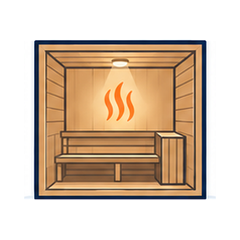
Indoor saunas are purpose-built enclosed rooms or pre-fabricated units designed to generate and hold radiant dry heat (or steam, depending on the heater and enclosure type) at elevated temperatures for therapeutic and relaxation use. The category ranges from compact single-person barrel-style cabins that fit in a spare bedroom or basement corner, all the way to multi-person room-sized installations built for light commercial use in gyms, spas, or wellness facilities. Residential buyers replacing or upgrading a home sauna, contractors spec-ing and installing a unit for a client, commercial operators outfitting a gym or spa facility, and distributors sourcing volume inventory for resale all shop this category, and the right unit genuinely looks different for each of those situations.

Choosing the Right Indoor Sauna

Sizing is the first and most consequential decision. A sauna heater is rated to heat a specific cubic footage of room, and the enclosure must match that rating. If the heater is undersized relative to the room volume, the space will not reach temperature in a reasonable time, and may never fully reach it in cooler ambient conditions. Oversizing the heater in a small room is less common as a mistake but does happen, and it creates uncomfortable intensity and faster element wear. Before you commit to a unit, measure the room or enclosure volume you are working with (length x width x ceiling height), account for the type of wood in the walls and benches (denser woods hold heat differently than lighter ones), and compare that to the heater's rated capacity. If you are building a custom room rather than buying a pre-fabricated cabin, the heater choice and room dimensions need to be worked out together, not independently.

The type of heat matters too. Traditional Finnish-style dry saunas use a sauna stove (kiuas) with rocks that can accept a small amount of water poured over them to produce brief bursts of steam (löyly) without making the room a steam room. Infrared saunas work on a fundamentally different principle: instead of heating the air in the room, infrared panels radiate energy that is absorbed directly by the body, operating at lower ambient air temperatures. The two are not interchangeable in terms of enclosure construction, heater type, or the experience they produce. Know which type you or your client actually wants before selecting the enclosure or heater, because retrofitting from one to the other after the fact is rarely straightforward. Steam rooms are a distinct category again and require a sealed, waterproofed enclosure and a steam generator rather than a sauna heater.

For commercial or semi-commercial installs, the usage pattern changes the calculus significantly. A sauna in a residential home might run a few times a week for an hour at a time. A gym or spa sauna may run multiple sessions daily. Heater duty cycle, element longevity, and the robustness of the control system matter more in that context than they would for a home unit used occasionally. Contractors and commercial operators should factor in not just the purchase price but the total cost of ownership across a realistic usage cycle.

Distributor buyers weighing volume orders have an additional set of decisions around lead time, unit consistency across a fleet or multi-site order, and whether the product lines they are sourcing have reliable parts availability. Those are worth working through with HVAC365 directly for volume inquiries.

Buying Tips

  • Do not skip the room sealing. A pre-fabricated sauna cabin is only as effective as the quality of its assembly and sealing. Gaps in panels, doors that do not close flush, or a ceiling that leaks heat will all push the heater harder and still fail to get the room to temperature. If you are assembling a kit unit, take the time to get every joint tight before you call it done.
  • The door matters more than most buyers think. A sauna door that swings outward (the correct and safer orientation) with a proper glass or wood fit, good gasket contact, and a wooden interior handle is a functional safety and performance item, not a cosmetic detail. A cheap or ill-fitting door is one of the most common sources of heat loss and user dissatisfaction after install.
  • Plan the bench layout before ordering. Upper benches are significantly hotter than lower benches in a traditional sauna because heat rises. If the primary use case is a solo user who runs at high temperatures, a single upper bench in a small unit may be exactly right. If the unit needs to serve users who prefer lower-intensity heat, lower bench depth and positioning matters. Some pre-fab units have fixed bench configurations, so verify before purchase rather than after delivery.
  • Check compatibility with your electrical panel before the unit ships. Sauna heaters, especially larger ones, draw substantial amperage and typically require a dedicated circuit. The installation notes below cover this in more detail, but the key point from a purchasing standpoint is to look up the electrical requirements of the specific unit before it arrives, not after.

Indoor Sauna Configurations

Indoor saunas come in a few genuinely distinct formats, and the right one depends on your space, installation context, and how the unit will be used.

  • Pre-fabricated cabin kits: Factory-assembled panel systems that arrive flat-packed and are assembled on-site. These are the most common choice for residential installs where you are not building a dedicated room from scratch. They come in a range of sizes (typically measured by person capacity) and can be placed in a basement, garage, or large bathroom with the right electrical supply. The enclosure and benches are included; you supply the heater and controls, or they are sold as a complete package depending on the product.
  • Custom-built sauna rooms: Framed and insulated rooms built from scratch, lined with sauna-specific wood (cedar, aspen, hemlock, and thermally modified woods are common choices). This approach fits an existing room footprint, allows non-standard dimensions, and is common in higher-end residential and commercial installs. The heater is selected separately based on the room's cubic footage and wood type.
  • Infrared sauna units: Distinct from traditional heat-based units, these use infrared panels rather than a stove or heater. They operate at lower air temperatures, require less warm-up time, and have different (generally lower) electrical demand than a traditional heater of comparable size. The enclosure construction and the experience are meaningfully different from a Finnish-style sauna, so these serve a different buyer preference rather than being a direct substitute.
  • Barrel saunas (indoor-rated): Cylindrical cedar or pine barrel-style units originally designed for outdoor use, with some models built or rated for sheltered indoor placement. Their curved shape creates efficient natural heat circulation, and they can be a visually distinctive option for a basement or large finished space with adequate ceiling height and electrical access.

What It Takes to Install an Indoor Sauna

Electrical supply is the most important site-readiness item to verify before a unit ships. Traditional sauna heaters draw significant power, and most require a dedicated 240V circuit with amperage matched to the heater's rated draw. Check the heater's specification sheet for the exact voltage, amperage, and breaker size required, and verify your panel has capacity and a breaker slot available before ordering. Infrared units generally draw less power and some smaller models run on 120V, but verify that against the specific product you are buying. Any sauna heater installation should be done by a licensed electrician if you are not certain the existing wiring and panel configuration are adequate.

Ventilation is a real consideration that is easy to underestimate. A sauna room needs a small intake vent near the floor and an exhaust vent near the ceiling to allow controlled air exchange. Without it, the air becomes stale and the experience is unpleasant. The exact sizing of those vents depends on the room volume; look up the manufacturer's ventilation guidance for the specific heater and room size combination you are working with.

The floor directly below and the walls around a sauna heater need to be non-combustible or adequately shielded. Most heater manufacturers specify minimum clearances from walls, ceiling, and combustibles. Measure those clearances against your actual installation space before committing to a placement.

For pre-fabricated units, the subfloor needs to be level and structurally sound. A sauna with benches and users is heavier than it looks. If you are placing a cabin-style unit on an upper floor, check the floor load capacity. A loaded sauna in a basement on a concrete slab is a simpler situation than one in a second-floor bonus room.

Door orientation is both a comfort and safety issue. Sauna doors must open outward so that a user who becomes unwell cannot be trapped inside. If you are fitting a sauna into a space where an outward-swinging door creates a clearance problem, that constraint needs to be resolved before install, not after.

Controls range from simple analog timers and thermostats integrated into the heater unit itself, to separate wall-mounted control panels, to app-connected systems that let you preheat the sauna remotely. Look up what comes included with the specific unit and what is an optional add-on, and make sure any remote or smart control is compatible with your electrical setup and network before purchase.

Things You Should Know

Q: How do I size a sauna heater to my room?

A: Calculate the cubic footage of the room (length x width x ceiling height) and match it to the heater's rated capacity range. If the walls are made of dense materials like concrete or tile (rather than wood), some manufacturers recommend adding to the calculated cubic footage to account for the extra thermal mass those materials absorb. Use the manufacturer's sizing guide for the specific heater, not a generic rule of thumb, since heater output and room construction interact.

Q: What is the difference between a traditional sauna and an infrared sauna?

A: A traditional sauna heats the air in the room to a high temperature using a stove with rocks; an infrared sauna uses panels that emit radiation absorbed directly by the body at lower ambient temperatures. The two produce a genuinely different experience, use different enclosure construction, and are not interchangeable — the heater type and configuration sections above cover how each works and which applications each suits.

Q: What electrical supply does an indoor sauna heater require?

A: Most traditional sauna heaters require a dedicated 240V circuit; smaller infrared units may run on 120V. The specifics — voltage, amperage, breaker size — vary by product, so pull the specification sheet for the unit you are considering and confirm your panel can support a dedicated circuit of that rating before it ships. The installation notes above cover the full picture, including when to bring in a licensed electrician.

Q: Can I install a pre-fabricated sauna cabin myself?

A: The assembly of the cabin panels and benches is generally within reach for a competent DIYer who follows the manufacturer's instructions carefully. The electrical connection to the heater is the part that typically requires a licensed electrician, depending on your jurisdiction and the circuit requirements. Check local permit requirements before starting, since some municipalities require a permit for sauna installation even in a residential setting.

Q: Do indoor saunas require ventilation?

A: Yes — a properly functioning sauna needs a small floor-level intake vent and a ceiling-level exhaust for controlled air exchange. Without it, air becomes oxygen-depleted and stale, which is both unpleasant and a safety concern. Vent sizing depends on room volume and heater output; the installation notes above explain what to verify on site, and the manufacturer's documentation will give you the specifics for your heater and room combination.

Q: What wood types are used in sauna construction and does it matter?

A: Yes, it matters. Common choices include cedar (naturally resistant to moisture and aromatic), aspen (odorless, which some users prefer), hemlock, and thermally modified woods. Denser or more moisture-absorbent woods can affect how quickly the room reaches temperature and how the heater needs to be sized. The manufacturer's documentation for your heater will typically specify whether any adjustment to the rated cubic footage is needed based on wall materials.

Q: How do I know if my floor can support a sauna?

A: A loaded sauna with benches and users is heavier than the empty unit weight suggests. On a concrete slab, this is rarely an issue. On an upper floor or suspended subfloor, check the floor's rated load capacity against the total expected weight of the assembled sauna (the product listing or manufacturer should provide the assembled weight). If you are uncertain, a structural assessment before install is the right call rather than finding out afterward.

HVAC365 ships indoor saunas nationwide, and the catalog covers a broad range of sizes and configurations so that residential buyers, contractors sourcing for a client job, and commercial operators can find a unit that fits the actual application rather than settling for the nearest available option. If you are comparing multiple units or need to match a specific room volume or electrical supply, the full selection is available to browse online, and ordering is open to buyers across all volume levels.

Compare

Fast Shipping

Easy Returns

Warranty Coverage

Financing Available



