
-
Amana
Amana Distinctions 7,000 BTU 13.1 EER PTAC Air Conditioner With 2.5 kW Electric Heat, 208/230V 1-Phase, 15 A | DCP073A25AA
SKU: DCP073A25AA
$1,280.73- 🚚Qualifies for FREE Shipping
- Fast Shipping
Ships in 1-2 Business Days10 in stock -
Amana
Amana 7,000 BTU 12.8 EER PTAC Air Conditioner With 2.5 kW Electric Heat, R-32, 208/230V 1-Phase, 15 A | PTC073J25AXXX
SKU: PTC073J25AXXX
$1,866.67- 🚚Qualifies for FREE Shipping
- Fast Shipping
Ships in 1-2 Business Days10 in stock -
Amana
Amana 7,000 BTU 12.8 EER PTAC Air Conditioner With 3.5 kW Electric Heat, R-32, 208/230V 1-Phase, 20 A | PTC073J35AXXX
SKU: PTC073J35AXXX
$1,866.67- 🚚Qualifies for FREE Shipping
- Fast Shipping
Ships in 1-2 Business Days10 in stock -
Amana
Amana 7,000 BTU 12.4 EER PTAC Heat Pump With 2.5 kW Electric Heat, R-32, 208/230V 1-Phase, 15 A | PTH073J25AXXX
SKU: PTH073J25AXXX
$2,041.29- 🚚Qualifies for FREE Shipping
- Fast Shipping
Ships in 1-2 Business Days10 in stock -
Amana
Amana 7,000 BTU 12.4 EER PTAC Heat Pump With 3.5 kW Electric Heat, R-32, 208/230V 1-Phase, 20 A | PTH073J35AXXX
SKU: PTH073J35AXXX
$2,041.29- 🚚Qualifies for FREE Shipping
- Fast Shipping
Ships in 1-2 Business Days10 in stock -
Friedrich
Friedrich 7200 BTU 11.9 EER PTAC Heat Pump Air Conditioner ZoneAire Select R32 Refrigerant in 230V | PZH07K2SC
SKU: PZH07K2SC
$1,566.48- 🚚Qualifies for FREE Shipping
- Fast Shipping
Ships in 3-4 Business Days10 in stock -
Friedrich
Friedrich 7200 BTU 11.9 EER PTAC Heat Pump Air Conditioner ZoneAire Select R32 Refrigerant in 230V | PZH07K3SC
SKU: PZH07K3SC
$1,571.60- 🚚Qualifies for FREE Shipping
- Fast Shipping
Ships in 3-4 Business Days10 in stock -
Friedrich
Friedrich 7200 BTU 12.0 EER PTAC Air Conditioner ZoneAire Select with Electric Heat and R32 Refrigerant in 230V | PZE07K3SC
SKU: PZE09K3SC
$1,576.71- 🚚Qualifies for FREE Shipping
- Fast Shipping
Ships in 3-4 Business Days10 in stock -
Friedrich
Friedrich 7200 BTU 13.3 EER ZoneAire PTAC Electric Heat with R32 Refrigerant and 3.0 kW Heat Strip in 230V | PDE07K3SG
SKU: PDE07K3SGR3
$1,603.92- 🚚Qualifies for FREE Shipping
- Fast Shipping
Ships in 3-4 Business Days10 in stock -
Friedrich
Friedrich 7200 BTU 13.3 EER ZoneAire PTAC Electric Heat with R32 Refrigerant and 3.0 kW Heat Strip in 265V | PDE07R3SG
SKU: PDE07R3SGR3
$1,814.35- 🚚Qualifies for FREE Shipping
- Fast Shipping
Ships in 3-4 Business Days10 in stock -
Friedrich
Friedrich 7400 BTU 13 EER PTAC Heat Pump Air Conditioner ZoneAire with R32 Refrigerant in 230V | PDH07K3SGR3
SKU: PDH07K3SGR3
$1,778.58- 🚚Qualifies for FREE Shipping
- Fast Shipping
Ships in 3-4 Business Days10 in stock -
Amana
Amana Distinctions 9,000 BTU 11.3 EER PTAC Air Conditioner With 2.5 kW Electric Heat, 208/230V 1-Phase, 15 A | DCP093A25AA
SKU: DCP093A25AA
$1,313.67- 🚚Qualifies for FREE Shipping
- Fast Shipping
Ships in 1-2 Business Days10 in stock
Buying guidance
PTAC Air Conditioners

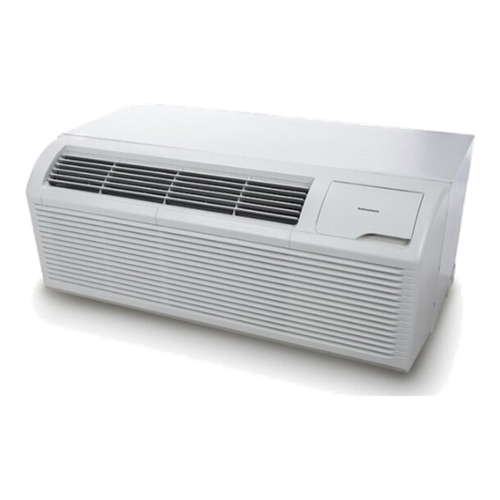
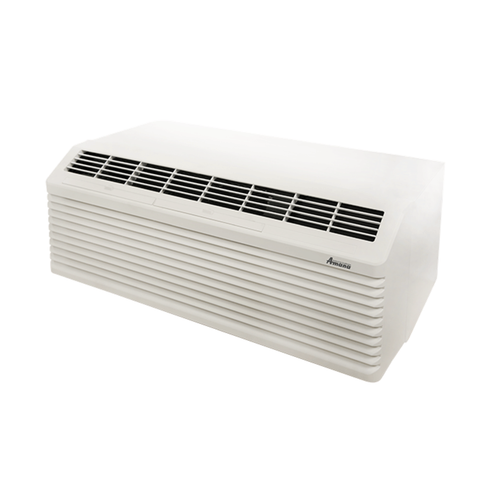
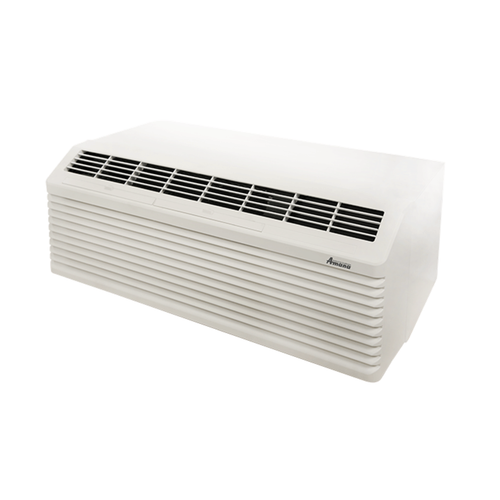
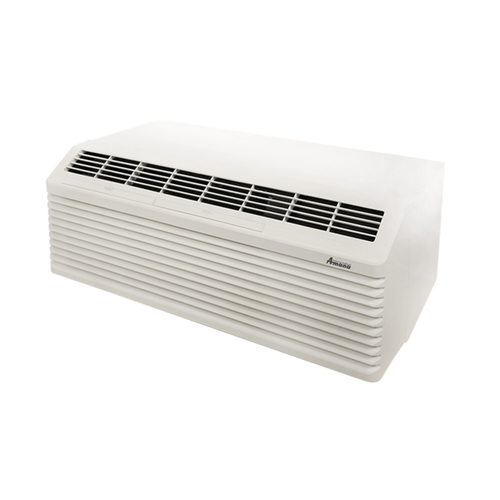
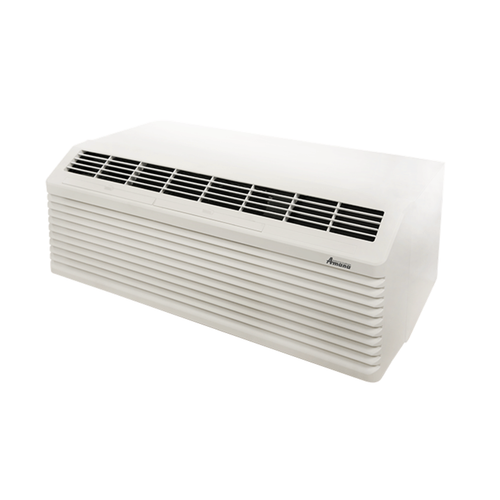


When a room needs its own independent climate control, a packaged terminal air conditioner (PTAC) is usually the right answer. These self-contained wall units handle both heating and cooling without tying into a central system, which makes them the go-to choice anywhere a single-room solution is more practical than running ductwork. Whether a unit needs to be replaced in a hotel corridor, an apartment building, a senior living facility, or a converted room addition at home, availability matters almost as much as selecting the right equipment. HVAC365 stocks a broad range of PTAC units across capacity tiers and heating configurations so contractors, property managers, homeowners, and volume buyers can find what a specific job actually calls for without hunting across multiple suppliers. If you're browsing room air conditioning options more broadly, this category sits within the wider Room Air Conditioners lineup.
How to Pick the Right PTAC Unit
The most important decision is capacity: a PTAC has to be sized to the room it serves, not just the sleeve opening in the wall. That sizing should come from a load calculation that accounts for the room's square footage, ceiling height, insulation quality, window area, and typical occupancy, not from a rough guess based on room size alone. Oversizing a PTAC is a real problem: an oversized unit short-cycles, meaning it reaches thermostat setpoint quickly but never runs long enough to pull adequate humidity from the air. The room ends up feeling clammy even when the temperature reads right. Undersizing is the other failure mode, where the unit runs continuously and still cannot hold setpoint on a hot day.
After capacity, choose the heating configuration. PTACs come in cooling-only versions, heat pump configurations, and electric resistance heat configurations. A heat pump is generally more efficient in mild climates but loses effectiveness as outdoor temperatures drop. Electric resistance heat is simpler mechanically and performs at lower outdoor temperatures, though operating costs run higher. In colder climates, heat pump PTACs are sometimes paired with electric resistance as a backup strip. Which configuration makes sense depends on the climate, the utility rates at the property, and how hard the unit will work through a heating season.
Efficiency ratings matter for two reasons: operating cost and utility rebates. Higher-efficiency units cost more upfront but cost less to run over time, and many utility programs offer rebates tied to minimum efficiency thresholds. It is worth checking the relevant utility program for that property before finalizing a model, because a rebate can shift the payback math meaningfully. The installation-readiness factors covered further down, especially electrical supply, also play into which efficiency tier is practical for a given site.
Buyers sourcing PTAC units for a whole property rather than a single room should also look at lead time and sleeve compatibility across the building. A professional specifying units for a multi-room installation needs every unit's chassis dimensions to match the existing wall sleeves, or sleeve replacement becomes part of the job scope. A distributor or volume buyer evaluating an order should factor whether the models being specified are stocked at sufficient depth for the project timeline.
Buying Tips
- Sleeve dimensions are not universal. PTAC chassis widths, heights, and depths vary by manufacturer, and a replacement unit that does not match the existing sleeve forces a wall opening modification or a full sleeve swap. Measure the sleeve currently in the wall before ordering, not after.
- Check whether the property is wired for the voltage the unit requires. Some PTACs run on standard 115V circuits; others require 208V or 230V. The breaker and outlet already installed in the wall are the fastest way to know what voltage the replacement must match. Mismatching voltage means the unit will not work on arrival and the return process adds cost to the job.
- Heating type affects more than efficiency. Electric resistance models are generally simpler to service and work reliably at low outdoor temperatures. Heat pump models save on operating costs in mild conditions but may need supplemental heat in colder climates. Get clear on the climate profile of the property before choosing.
- Wall sleeve condition matters at replacement. An old sleeve that is corroded, bent, or no longer sealing properly will undermine even a new unit's performance. Inspect it while you have access during the swap. Replacing the sleeve at the same time as the unit is far cheaper than a callback later.
PTAC Configurations Worth Understanding
PTACs are self-contained by design, but they still come in meaningfully different configurations. Understanding which type fits the situation before ordering saves time and avoids a return.
- Cooling only: These units handle air conditioning without any heating function. They suit climates where supplemental heat is already provided by another system, such as a hydronic baseboard or central heat, and the PTAC is only needed for summer cooling.
- Electric resistance heat: A heating element inside the unit provides warmth directly. Simple, reliable, and effective at any outdoor temperature. Operating costs are higher than a heat pump, but there are no refrigerant-cycle limitations in cold weather.
- Heat pump with electric resistance backup: The heat pump handles most of the heating load efficiently in mild weather, and the electric strip kicks in when outdoor temperatures fall too low for the heat pump to keep up. This is a common configuration in facilities that need year-round comfort control in a range of climates.
Beyond heating configuration, PTACs also vary in amperage draw and chassis size. Both of those factors interact directly with the existing wall sleeve and electrical circuit at the site, which the next section addresses.
What It Takes to Install a PTAC
PTAC installation is less complex than a split system, but there are still several site conditions to verify before the unit arrives on the job.
Start with the electrical supply. PTACs draw significant amperage and typically require a dedicated circuit. Pull the rating plate from the existing unit or check the panel and disconnect already on site to determine what voltage and amperage the circuit is set up for. Replacing a unit with one that requires a different voltage or a higher amperage than the existing breaker supplies means electrical work before the PTAC install, which changes the scope and cost of the job.
Sleeve fit is its own check. Measure the interior dimensions of the wall sleeve carefully: width, height, and depth. A new chassis that does not match those dimensions will not seal properly against the sleeve, creating air and water infiltration points that undermine both performance and building integrity. Some manufacturers offer universal or multi-fit sleeves, but confirm compatibility explicitly rather than assuming.
Look at the wall opening from a weatherproofing standpoint as well. The sleeve needs to seal against the wall on the exterior side to keep out wind, rain, and insects. Check whether the existing exterior louver or grille is in good condition and compatible with the replacement unit. A mismatched or damaged louver can let in weather or restrict airflow enough to affect unit performance.
Condensate management is simpler with PTACs than with many other cooling systems. Most PTAC units use a slinger-ring design that re-evaporates condensate using the condenser fan, so there is no drain line to route in a typical installation. That said, verify how the specific unit handles condensate, especially in high-humidity applications, because some configurations or heavy-load conditions can produce more moisture than the evaporation system handles cleanly.
Controls integration is worth thinking through in multi-room commercial properties. PTACs can operate on individual wall thermostats, but many facilities also want centralized energy management or occupancy-based setback controls. Check whether the units being specified support the control interface the property uses. Some PTACs accept a proprietary energy management system (EMS) connection; others do not, and retrofitting control capability after the fact is harder than specifying it upfront.
Finally, confirm clearances at the front of the unit. PTACs need adequate airflow on the indoor side to function correctly. Furniture, drapes, or built-in millwork that blocks the front grille will degrade performance and may cause reliability issues over time.
Things You Should Know Before You Buy
Q: What is a PTAC unit and how is it different from a window air conditioner?
A: A packaged terminal air conditioner installs through a wall sleeve, not a window frame. The sleeve is a permanent part of the wall opening, which means the unit sits flush with the interior wall and does not block a window. PTACs are purpose-built for commercial and multi-unit residential applications where each room needs independent climate control, and they are available in heating and cooling configurations that most window units are not.
Q: How do I know what size PTAC to buy?
A: Size comes from a load calculation for the specific room — square footage, ceiling height, insulation, window area, occupancy, and climate all factor in. Do not rely on square footage alone. If you are replacing an existing unit, the rating plate is a useful starting point, but confirm the original was sized correctly. The capacity selection section above covers the oversizing and undersizing failure modes in detail.
Q: Can I replace a PTAC myself or does it require a licensed contractor?
A: A direct like-for-like chassis swap in an existing sleeve is within the reach of a handy property owner or maintenance technician when the voltage, amperage, and sleeve dimensions all match. Any work involving electrical circuit changes, sleeve modifications, or refrigerant handling requires licensed work. Check local codes before starting because requirements vary by jurisdiction and building type.
Q: Does a PTAC unit need a drain line?
A: Most PTACs use a slinger-ring system that re-evaporates condensate using the outdoor fan, eliminating the need for a dedicated drain line in typical installations. High-humidity or heavy-load situations can exceed what that system handles cleanly — the installation section above covers what to verify on site for those cases.
Q: What voltage does a PTAC unit require?
A: PTACs are available in multiple voltage configurations and the unit must match what is already wired to the wall sleeve. Check the existing unit's rating plate or the dedicated circuit in the electrical panel before ordering. The buying tips above spell out the fastest way to confirm this on site and what goes wrong if voltage is mismatched.
Q: Are PTAC units eligible for utility rebates?
A: Some are, depending on the unit's efficiency rating and the rebate programs in that utility territory. Availability and qualifying thresholds vary by utility and change periodically. Check the relevant program before selecting a model — as noted in the selection guidance above, a qualifying unit can meaningfully shift the payback math between efficiency tiers.
Q: Can I use any PTAC brand as a replacement if the sleeve is already installed?
A: Only if the chassis dimensions match the existing sleeve. PTAC sleeves are not universal across manufacturers — width, height, and depth all need to match within the tolerances the sleeve manufacturer specifies. Measure before ordering. Some manufacturers offer adapters or multi-fit sleeves to bridge common dimension differences, but confirm compatibility rather than assuming it will work.
HVAC365 ships PTAC units nationwide, which matters when a property has a down unit that cannot wait and sourcing locally is not practical. The catalog covers the range of heating configurations and capacity tiers a real job calls for, from a single hotel room replacement to a multi-unit property restocking, so residential buyers and volume accounts alike can find what they need in one place.


