
-
$895.95Ships in 1-2 Business Days5 in stock
-
Appion
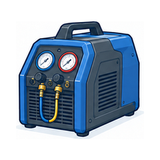
Appion Twin Cylinder Refrigerant Recovery Unit R134A R22 R407C R410A A2L Compatible | G5Twin
SKU: G5Twin
Was:$1,205.95$969.99Ships in 1-2 Business days105 in stock
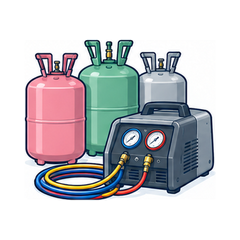
Refrigerant handling is one of those jobs where the wrong tool doesn't just slow you down — it can contaminate a system, create an EPA compliance problem, or put a refrigerant charge in the wrong cylinder. Getting it right starts with the right equipment, and HVAC365 stocks the tools that match the actual scope of the job, whether that's a straightforward residential service call or a complex commercial recovery and recharge. This category covers the full range of refrigerant management tools: recovery machines, manifold gauge sets, vacuum pumps, refrigerant scales, charging equipment, and related service instruments. These are the tools contractors reach for on every refrigerant-side service call, and homeowners and facility managers use to support their own maintenance or verify a technician's work. Contractors buying for a van or job site, distributors stocking for a service fleet, and residential customers handling their own maintenance work all land here.
The first question to ask is what task you're actually performing. Recovery, recycling, reclaiming, evacuating, and charging are distinct operations that need distinct tools — a recovery machine is not a substitute for a vacuum pump, and a manifold gauge set alone won't tell you the refrigerant weight you've pulled from a system. Buying a multi-function unit can make sense if the job scope is broad, but it's worth confirming that a combined unit performs each function at the level your work actually demands rather than trading depth for convenience.
Refrigerant type compatibility matters more than it used to. The transition away from older refrigerants toward lower-GWP alternatives means the equipment you buy today needs to be rated for the refrigerants you'll be working with — both now and as your customer base shifts. Check the manufacturer's compatibility list for any recovery machine, gauge set, or hose assembly before you buy. A unit rated for one refrigerant family may not be appropriate for another, and mixing incompatible refrigerants through shared equipment is both a technical and a regulatory problem.
Recovery machine capacity is another genuine decision point. Pull rate matters on commercial jobs where recovery time is a real cost; a machine that's fine for residential systems may be too slow for the refrigerant volumes in a larger commercial install. On the other hand, a high-capacity commercial recovery unit may be more equipment than a residential-focused service tech needs day to day. Match the pull rate and cylinder capacity to the systems you actually work on, not the largest theoretical job.
For manifold gauge sets, the choice between analog and digital comes down to accuracy requirements and ease of reading. Digital manifold sets give you direct pressure-temperature readout and often log data, which is useful when you need to document a charge or verify system performance over time. Analog sets are simpler, require no batteries, and are often more durable in rough service conditions. Neither is categorically better — the right pick depends on how you work. Professionals spec-matching for a commercial account may value the data-logging capability; a contractor running residential service calls may prefer analog simplicity.
Vacuum pumps should be selected based on the CFM rating appropriate to the system size and the depth of vacuum the manufacturer requires for that refrigerant. A shallow vacuum will leave moisture in the system and cause problems after the charge goes in — this is one of the more common sources of avoidable callbacks. The site-readiness factors covered further down are relevant here, because the vacuum depth a system requires depends on the refrigerant and system design, not just the pump.
Distributors and contractors buying for a fleet or for resale should also factor in availability and lead time alongside the tool specifications. Refrigerant management equipment is not a commodity — specific models matter — and having a known reliable source for replacement parts or quick restocking is worth weighing as part of the purchase decision.
This category breaks down into a few distinct tool types, each handling a different part of the refrigerant service process. Here's how they map to actual work:
Refrigerant management tools don't require the same electrical and structural site prep as HVAC equipment installation, but there are still real readiness factors that affect which tools will work and how well.
Power supply for recovery machines and vacuum pumps is the most immediate consideration. Check the voltage and amperage requirements of the specific unit against what's available at the job site. A high-capacity recovery machine may draw more current than a standard residential outlet can supply — verify this before you're standing on a roof trying to figure out why the machine won't pull to rated speed. Some units are dual-voltage and can be switched in the field; others are not.
Cylinder storage and transport are governed by DOT regulations that apply to both recovery and refrigerant supply cylinders. Cylinders must be secured during transport, stored upright in ventilated spaces, and kept away from heat sources. Look up the specific requirements for the refrigerant type you're working with, since different refrigerants have different transport and storage classifications.
Service port access on the equipment being serviced matters more than it sounds. Older systems may have Schrader-valve ports in sizes or configurations that require adapters. Newer systems — particularly those designed for lower-GWP refrigerants — may use different port styles entirely. Measure or identify the port type before you're at the job site so you bring the right adapter or fitting, not after you've already set up.
If you're working with refrigerant identifiers or leak detectors, check the calibration status and battery condition before the job. A detector that hasn't been calibrated recently or is running on a low battery may give false negatives — which is the worst possible failure mode for a leak detector. Compare the detector's sensitivity rating against what the refrigerant manufacturer specifies as the acceptable leak rate for that system.
For vacuum pumps specifically, verify that the pump's achievable micron depth is appropriate for the refrigerant and system design you're working on. Pull the spec sheet for the refrigerant if you're unsure of the required evacuation depth, and use a micron gauge to confirm actual vacuum depth rather than relying on the pump's time-to-vacuum estimate alone.
A: The tools themselves — recovery machines, manifold gauges, vacuum pumps, scales — generally do not require certification to purchase. However, purchasing regulated refrigerants in containers above a certain size does require Section 608 certification, and using recovery equipment on systems that contain regulated refrigerants requires certification as well. If you're buying tools for professional service work, confirm the certification requirements for the refrigerants you'll be handling with the EPA or your local regulatory authority before you start the job.
A: Check the manufacturer's compatibility list in the product documentation or on the rating label. Recovery machines are rated for specific refrigerant types or families — using one with an incompatible refrigerant can damage the compressor or contaminate the recovery cylinder. If the system's refrigerant is unknown, use an identifier before connecting any recovery equipment, as covered in the equipment types above.
A: There's no single universal number — it depends on the refrigerant type and the system manufacturer's specification. Pull the spec sheet for the refrigerant and system being serviced, and use a micron gauge to verify actual depth. The vacuum pump selection guidance above covers what to look for when choosing a pump for this task.
A: Some manifold gauge sets support multiple refrigerants, but verify compatibility for each type before use. Cross-contamination through a shared manifold or hose assembly is a real risk if the equipment isn't properly rated and cleaned between uses. Digital manifold sets often include refrigerant selection menus with built-in pressure-temperature charts — confirm the refrigerant you're working with appears on that unit's list.
A: Follow the manufacturer's interval as a minimum, and change sooner if the oil looks milky, cloudy, or discolored — those are signs of moisture contamination. As noted in the buying tips above, contaminated oil directly limits achievable vacuum depth and affects system reliability after charging. Bringing the pump up to operating temperature after an oil change helps ensure accurate performance on the next job.
A: Match the cylinder's rated capacity to the refrigerant charge in the system, keeping in mind that DOT regulations limit fill to 80% of rated volume — the same point covered in the buying tips above. For large commercial charges, undersizing means stopping mid-recovery to swap cylinders. Check the system nameplate or service records for the refrigerant charge weight before you start.
A: System labels are a starting point, but they're not always reliable — labels fade, get covered, or aren't updated after a field refrigerant change. If there's any doubt, use an identifier before connecting recovery equipment. Recovering an unknown or mislabeled refrigerant into a cylinder that already contains a different type contaminates both, which typically means the cylinder must be sent out for reclamation at significant cost.
HVAC365 ships refrigerant management tools nationwide, so a contractor whose job schedule can't flex around a missing tool or a facility manager who needs a replacement vacuum pump before the next service window can get what they need without a long wait. Orders range from single-tool purchases for a homeowner doing their own equipment checks through volume orders for distributors stocking a service fleet — the same inventory covers the full range, and availability is built around the reality that refrigerant service work rarely schedules itself conveniently.
Appion
SKU: G5Twin

Fast Shipping

Easy Returns

Warranty Coverage

Financing Available

