null
Outdoor Sauna

Outdoor Sauna

A well-chosen outdoor sauna turns an underused corner of a backyard into a genuine wellness space — and getting the choice right means matching the structure, the heat source, and the capacity to how the sauna will actually be used, not just to what looks good in a photo. HVAC365 stocks a range of outdoor sauna options so that whether you're replacing an aging unit, building out a new backyard setup, or sourcing for a client's project, you can find something that fits the real job rather than settling for whatever happens to be available. Outdoor saunas in this category are freestanding, weather-rated structures designed to live outside year-round — from compact two-person barrel saunas to larger cabin-style rooms — and they serve homeowners adding a wellness feature to their property, contractors and installers working on residential or light-commercial wellness builds, and property developers or volume buyers outfitting multiple sites.

Choosing the Right Outdoor Sauna

The single biggest decision is capacity: how many people will use the sauna at the same time, and how often? Undersizing leads to a cramped, frustrating experience; oversizing means a heater working harder and longer to bring a large space up to temperature before a single person gets in. Think realistically about peak use, not best-case scenarios. A two- or three-person sauna is right for most residential households; families or buyers planning regular group sessions should look at larger configurations. Professionals speccing a sauna for a client's project should confirm the intended occupancy clearly before ordering, because changing the structure after delivery is not a simple swap.

Heat source is the other fork-in-the-road decision, and it drives nearly everything downstream — electrical requirements, installation complexity, the feel of the heat, and ongoing operating cost. Wood-burning sauna stoves produce traditional, high-humidity heat and need no electrical hookup for the heater itself, but they require a supply of seasoned wood, a proper flue through the roof, and local compliance with any open-flame or air-quality ordinances. Electric sauna heaters are simpler to install in most backyards, offer precise temperature control, and are the more practical choice where wood fires are restricted — but they do require a dedicated electrical circuit rated to the heater's draw, which is a site-readiness consideration covered further down. Some buyers also consider infrared panels, which operate at lower ambient temperatures and shorter warm-up times; those are a meaningfully different sauna experience and worth evaluating separately if that's what the end user actually wants.

Material and construction matter for longevity, especially because this structure will be outside in all weather. Nordic spruce, western red cedar, and thermowood are common choices, each with different natural resistance to moisture, insects, and UV. Cedar in particular holds up well in wet climates and has a natural aroma that many buyers expect from a sauna. Check what the manufacturer specifies for the specific unit, and consider how much maintenance — oiling, sealing, retreating — the buyer is actually willing to do over the years.

Efficiency and operating cost are real considerations even for a leisure structure. An oversized heater in a small room reaches temperature faster but burns more energy per session. The right match is a heater sized to the interior cubic volume of the specific sauna room, confirmed against the manufacturer's heater-sizing guidance for that unit. Buyers splitting their decision between a higher-end well-insulated structure and a lower-cost option should factor in the long-run energy difference, not just the purchase price. For distributor or volume buyers, lead time and consistent availability across an order matter too — worth confirming before committing to a project timeline.

Buying Tips

  • Check local permitting before you order. Many municipalities require a building permit for a freestanding outdoor structure above a certain square footage, and some HOAs restrict outbuildings entirely. Finding this out after the sauna arrives is an expensive problem. A quick call to the local building department before purchase costs nothing.
  • Foundation prep cannot be an afterthought. An outdoor sauna needs a level, stable, well-drained base — concrete pad, compacted gravel, or pressure-treated timber frame — and if that isn't ready on delivery day, the sauna sits exposed or gets installed improperly. Plan the foundation alongside the sauna purchase, not after it.
  • Don't skip the assembly review before the delivery truck leaves. Sauna kits arrive in multiple crates. Inspect all components for shipping damage and verify the parts list against the packing slip on the spot. Freight claims on damaged structural panels are far easier to resolve before the driver is gone.
  • Match the heater to the room, not the other way around. Some outdoor sauna kits include a heater; others do not. If you're sourcing the heater separately, verify the manufacturer's recommended heater capacity (usually expressed in kilowatts relative to the room's cubic volume) before buying — an underpowered heater in a large room simply won't get the sauna to a proper temperature in a reasonable time.

Barrel, Cabin, and Pod: Which Style Fits

Outdoor saunas come in a few genuinely distinct structural forms, and the right one depends on space, aesthetics, and budget rather than on any single superior design.

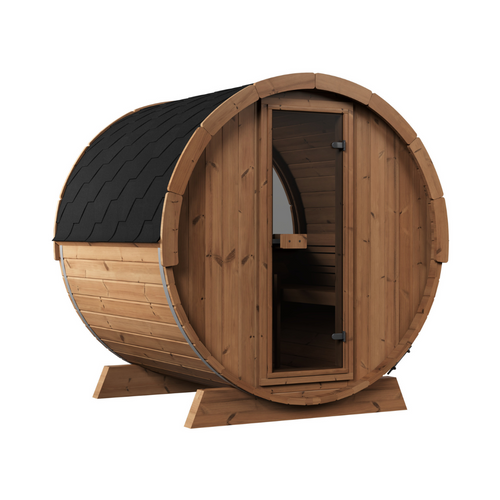
  • Barrel saunas are the most recognizable format — cylindrical, made from staved wood, often the most compact footprint for a given capacity. The curved ceiling naturally circulates heat efficiently. They're a strong choice for homeowners with limited yard space who want a traditional look and a straightforward installation. Most arrive as pre-cut kits that assemble without specialized tools.
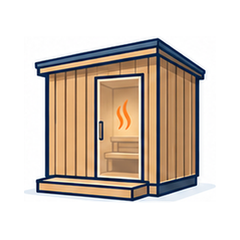
  • Cabin-style saunas are essentially small wooden rooms — square or rectangular, with vertical walls and a conventional roof. They typically offer more interior headroom and seating flexibility, and they're easier to customize with windows, changing rooms, or an attached porch. They're the more common choice for larger capacity builds or for projects where the sauna is meant to feel like a permanent structure on the property.
  • Pod and cube saunas are a newer format — compact, often with large glass panels on one face for a view or open feel. They suit modern landscaping aesthetics and smaller spaces but may have less interior volume than a barrel or cabin of equivalent exterior footprint. Worth considering if the visual design of the backyard is a primary driver.

What It Takes to Install One

Even though an outdoor sauna is a freestanding structure rather than a built-in HVAC system, there are real site-readiness factors to work through before delivery day.

For an electric sauna heater, you'll need a dedicated circuit run to the installation site — check the specific heater's nameplate for voltage and amperage requirements, and have a licensed electrician pull the permit and run the wire before the sauna arrives. Running conduit to a backyard structure after the sauna is already in place is more complicated and more expensive than doing it beforehand. If the sauna kit does not include the heater, verify the heater's electrical requirements independently before assuming a standard outlet will work — most quality electric sauna heaters draw significantly more than a standard 120V household circuit can provide.

For a wood-burning stove, the flue installation is the critical path item. The flue must exit the roof of the sauna structure with appropriate clearance, and local fire codes govern the specifics — look up the applicable requirements in your jurisdiction before selecting the stove or cutting the roof. In some areas, wood-burning appliances in residential zones require a permit or are restricted outright.

Measure the delivery path carefully — gate width, side-yard clearance, overhanging branches — before the truck shows up. A fully crated large cabin sauna can arrive on a pallet that won't fit through a standard gate. Ask about delivery method (liftgate, curbside, or white-glove) and plan accordingly.

Ventilation inside the sauna room matters more than most buyers expect. A small vent near the floor and an adjustable vent near the ceiling allow fresh air exchange and let the user control the intensity of the heat. Verify the kit includes or accommodates proper venting; a sauna without adequate air exchange becomes uncomfortable and potentially unsafe at high temperatures.

Finally, consider proximity to water — both for the traditional post-sauna cold rinse and for the moisture the sauna itself generates. Siting the unit near an outdoor shower or hose bib adds function. Siting it where drainage is poor, on the other hand, will accelerate wood deterioration at the base of the structure no matter how good the materials are.

Things You Should Know

Q: What size outdoor sauna do I need for two to four people?

A: Capacity depends on interior bench space, not just overall footprint. A two-person sauna typically provides enough bench length for two adults to sit comfortably side by side; a four-person unit needs meaningfully more interior room. Review the manufacturer's stated capacity and interior bench dimensions for the specific unit, and account for how people will actually sit — traditional sauna benches are designed for reclining, which takes more space than sitting upright.

Q: Do I need a permit to install an outdoor sauna?

A: In most jurisdictions, yes — at minimum for the electrical work, and often for the structure itself if it exceeds a certain square footage. Requirements vary by municipality and HOA. Check with your local building department before ordering; skipping the permit process can complicate resale and create liability if something goes wrong.

Q: What's the difference between an electric sauna heater and a wood-burning stove for an outdoor sauna?

A: Electric heaters offer precise temperature control and simpler regulatory compliance but require a dedicated electrical circuit at the site. Wood-burning stoves deliver traditional steam heat with no electrical supply needed for the heater, but they require a proper flue and compliance with local open-flame rules. The full site-readiness detail for both is covered above.

Q: Can an outdoor sauna stay outside year-round?

A: Most outdoor saunas are designed and rated for year-round exterior use, but the specific materials and construction quality matter significantly. Cedar and thermowood hold up better in wet, cold, or high-UV climates than untreated softwoods. Check the manufacturer's climate rating and maintenance guidance for the specific unit, and plan for periodic re-treatment of the exterior wood regardless of material.

Q: How long does it take to assemble an outdoor sauna kit?

A: Assembly time varies by size and style. A small barrel sauna kit can typically be assembled by two people in a day; a larger cabin-style sauna may take a full weekend or longer. Check the manufacturer's estimated assembly time and required tools before scheduling. Having the foundation and electrical run completed before assembly starts is the factor most likely to keep the project on schedule.

Q: What foundation does an outdoor sauna need?

A: The sauna needs a level, stable, well-drained surface — concrete pad, compacted gravel bed, or pressure-treated timber sleepers are all common approaches. The specific recommendation depends on the sauna manufacturer and your local climate; check the installation guide for the unit you're buying. Poor drainage under the base is the leading cause of premature wood rot at the floor level, regardless of how good the wood itself is.

Q: Is infrared the same as a traditional outdoor sauna?

A: No — infrared panels heat the body directly using radiant heat at lower ambient air temperatures, while a traditional sauna heats the air and surfaces of the room to high temperatures, often with steam from pouring water on hot rocks. The experience, warm-up time, and health claims differ meaningfully. If a buyer specifically wants the traditional high-heat experience, verify the unit uses a conventional sauna heater rather than infrared panels before purchasing.

HVAC365 ships outdoor saunas nationwide, which matters when you're working on a project timeline and can't afford to wait weeks on a regional supplier's backorder. Whether you're a homeowner replacing an aging unit, adding a new sauna to your backyard, or a contractor sourcing for a client build, orders ship to your delivery address — so the unit is on site when you need it, not stuck at a warehouse two states away. Questions about a specific model or configuration? Reach out directly and get a straight answer before you commit.

Compare

Fast Shipping

Easy Returns

Warranty Coverage

Financing Available