
null
Window Air Conditioners

Window Air Conditioners

A room that gets unbearably hot is more than uncomfortable; it disrupts sleep, productivity, and in some cases health, and the problem compounds every day a working unit is not in place. Window air conditioners are one of the most direct fixes available: self-contained, no ductwork required, and installable in a single afternoon when the right unit is on hand. HVAC365 stocks a broad selection of window AC units across capacity and application types, so whether you're sourcing one replacement unit or stocking up for a seasonal push, the catalog is there when you need it.

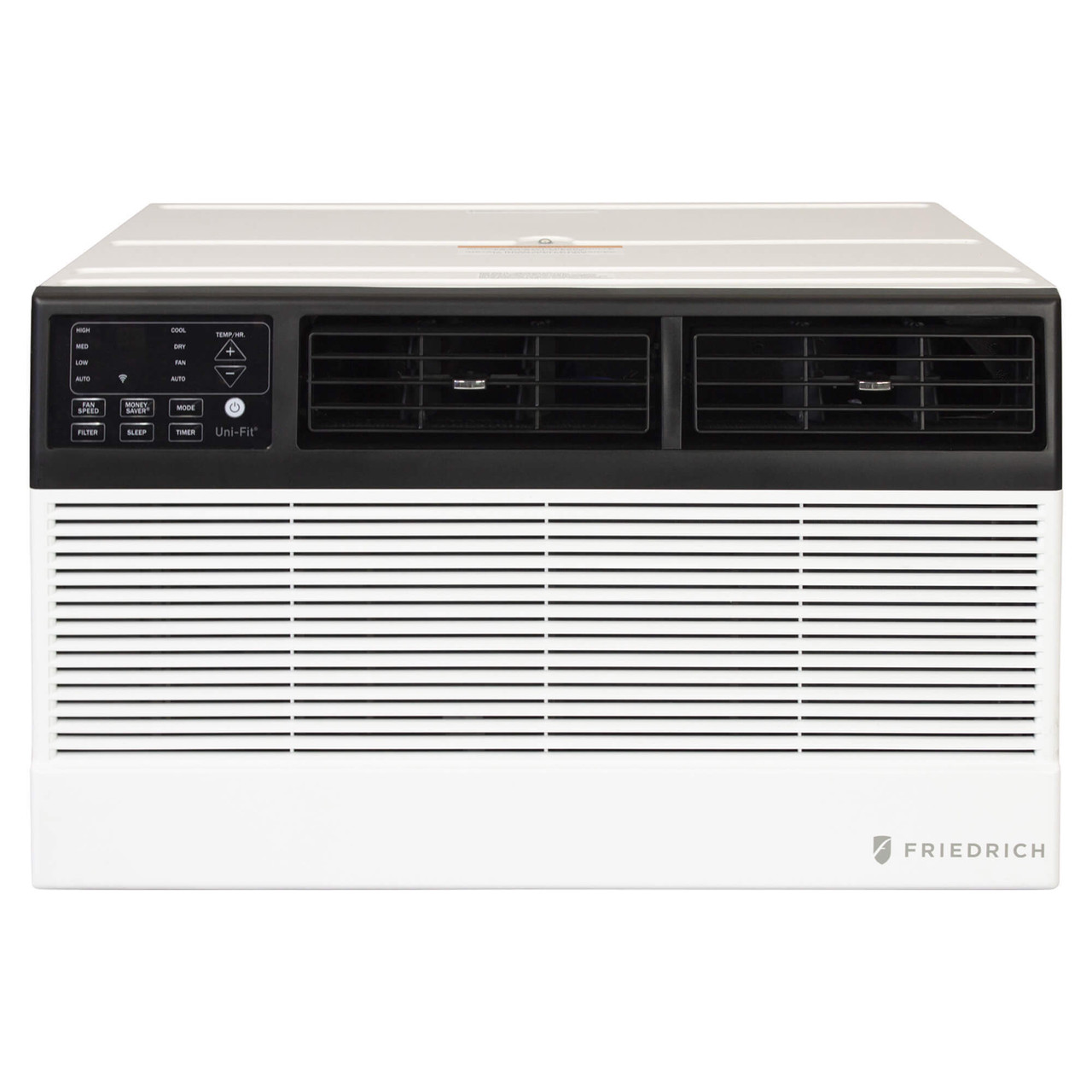
Window air conditioners sit under the broader Room Air Conditioners category and cover the specific product type designed to mount in a standard double-hung or sliding window frame, drawing warm interior air over a refrigerant coil and exhausting heat outside. They are a fit for a wide range of buyers. Homeowners handling a straightforward bedroom or living room replacement are the most familiar face in this category. So are contractors and installers sourcing units for a specific job, particularly in multi-family, hospitality, or office settings where window units are specified. Light commercial property managers dealing with server closets, back offices, or individual suites use them regularly too. And distributors buying in volume for resale or fleet stocking will find the catalog depth here relevant to that kind of purchasing.

Choosing the Right Window Air Conditioner

The single most important variable is cooling capacity, and it has to be matched to the actual space, not guessed. Undersized units run constantly without ever reaching setpoint; oversized units short-cycle, which means they cool the air quickly but do not run long enough to pull adequate humidity out of it. Either way, the result is a room that feels uncomfortable even when the thermostat reads the right number. A proper load calculation accounts for room square footage, ceiling height, insulation quality, sun exposure, occupancy, and heat-generating equipment in the space. If you're replacing an existing unit and the previous one performed well, its capacity rating is a reasonable starting reference point, but it's still worth checking the math rather than assuming the original spec was correct.

Application type is the second question to resolve before selecting a unit. A residential bedroom and a commercial server room both use window ACs in some situations, but the duty cycle, ambient conditions, and reliability requirements are different enough to matter. Units marketed for residential use are typically rated for standard indoor ambient conditions and moderate duty cycles. A space that generates significant internal heat load or runs the equipment around the clock may need a unit rated for those operating conditions specifically. Check the manufacturer's application guidance and operating temperature range before committing to a spec.

Efficiency is the third lever. Window AC units carry an EER (Energy Efficiency Ratio) rating, and some markets or utility programs have minimum thresholds or rebate tiers tied to specific efficiency levels. The upfront cost of a higher-efficiency unit is real, and the payback period depends on how many hours per year the unit runs and what electricity costs locally. For a unit that runs a few weeks per year in a rarely occupied space, efficiency may not move the needle much. For a unit running eight or more hours a day through a long cooling season, the operating cost difference over several years can be significant. Check your local utility's rebate programs before purchasing; qualifying units sometimes have to meet specific rated criteria that are not always obvious from the product listing alone.

For contractors spec-matching a unit to a job, the install conditions covered further down this page (window dimensions, electrical supply, drainage expectations) are part of the selection decision, not an afterthought. For distributors evaluating volume pricing or lead times, those conversations are best had directly with the supplier rather than assumed from list pricing.

Buying Tips

  • Measure the window opening before ordering. Window AC units have a fixed chassis width and height. Some include side accordion panels that extend to fill gaps, but those panels only span a limited range. A unit that is even slightly too wide for the window is not installable, and returning a large appliance is a logistical headache. Pull the actual opening dimensions, including the depth of the sill and any trim that limits how far the unit can project inward, before the unit ships.
  • Check the amperage draw against the circuit that is actually on site. Many window AC units, particularly at higher capacities, require a dedicated 20-amp or higher circuit, and some require 240V supply. The electrical supply question is covered in more detail in the installation section below, but the buying mistake to avoid here is selecting a unit based on BTU alone and discovering after delivery that the existing outlet or circuit cannot support it.
  • Do not assume the noisiest setting is the one that matters. Some buyers select units based on noise ratings at low fan speed, but the compressor and high-fan operation determine how disruptive the unit is when it first kicks on or when the room is furthest from setpoint. If the install is in a bedroom or recording environment, look at the full operating noise spec, not just the low-speed figure.
  • Budget for the installation hardware at the point of purchase. Some window AC installations require additional support brackets, weatherstripping, or security hardware that does not ship in the box. Finding this out after the unit arrives adds a delay and a second trip to the supply house.

Window AC Configurations Worth Knowing

Window air conditioners do not come in dramatically different configuration types the way split systems or packaged rooftop units do, but there are a few distinctions that genuinely affect which unit is right for a given install.

  • Standard window-mount units are designed for traditional double-hung windows that open vertically. This is the most common residential configuration and what most people picture when they think of a window AC.
  • Sliding or casement window units are designed for windows that open horizontally or swing outward. A standard window-mount unit cannot be installed in a casement window, and forcing one creates gaps that defeat the seal entirely. If the window in question slides or cranks open, this is not a cosmetic distinction; it determines whether the unit is installable at all.
  • Built-in or through-the-wall units are sometimes grouped with window ACs in conversation, but they are a distinct product type designed to be permanently mounted through a sleeve in the wall rather than set in a window frame. They are not interchangeable with window-mount units in either the install method or the chassis design.
  • Higher-capacity commercial-duty units exist within this category for spaces where a residential-rated unit would be undersized or insufficiently durable. These are typically rated for higher ambient temperatures and heavier duty cycles.

What It Takes to Install One

Window AC installation is straightforward for most units, but there are a handful of site conditions worth verifying before the unit arrives, because getting them wrong after the fact is significantly more expensive than checking in advance.

Start with the electrical supply. Verify the outlet type (standard 120V/15-amp, 120V/20-amp, or 240V depending on the unit's requirements), whether the circuit is dedicated or shared, and whether a dedicated circuit is required by the unit's specs or by local code. A unit that draws more amperage than the circuit can supply will trip breakers repeatedly and, in a worst case, create a fire hazard. Do not assume the outlet currently in the room is appropriate for the unit you're buying; pull the spec sheet and cross-reference it against what's actually on the wall.

Next, measure the window opening against the unit's installed dimensions. This goes beyond width and height; also check the depth of the sill, how far the window frame sits from the interior wall, and whether the existing window hardware (locks, handles, or security stops) will conflict with the unit's chassis or support bracket.

Condensate drainage is something buyers often overlook on window ACs specifically. Most residential window units are designed to re-evaporate the condensate through the condenser fan and exhaust it outside. Under high-humidity conditions or at certain operating points, though, some water may collect or drip. Know where that water is going before installation, especially in commercial or multi-family settings where dripping onto a public walkway or a neighboring unit below can create a liability or a maintenance complaint.

Sealing is also a practical consideration that is easy to underestimate. Gaps around the unit's side panels or top are not just an efficiency problem; they are an entry point for insects, outdoor air, and in humid climates, humidity that works against the unit's dehumidification function. Use weatherstripping or foam tape around the perimeter of the installation. If the window has a gap at the top that the unit's mounting frame does not close fully, address that before the first hot day of the season.

Finally, look up whether the local jurisdiction requires a permit or inspection for window AC installations in commercial settings. Residential installs almost never require permitting, but commercial or multi-family installs sometimes do, and discovering that after the fact creates delays or compliance problems that could have been avoided with a five-minute call.

Things You Should Know Before You Buy

Q: How do I know what capacity window AC I need for my room?

A: Match capacity to the actual space using a proper load calculation — square footage, ceiling height, insulation, sun exposure, occupancy, and internal heat sources all factor in, as covered in the selection guidance above. If you're replacing a unit that performed well, its BTU rating is a useful starting point, but verify the original sizing was correct rather than assuming it was.

Q: Can I install a window AC in a casement or sliding window?

A: Not with a standard window-mount unit. As noted in the configurations section above, casement and sliding windows require units specifically designed for that opening type. Installing a standard unit in the wrong window type leaves gaps that cannot be sealed and may make the unit physically unsecure in the frame.

Q: What electrical supply does a window AC require?

A: It depends on the unit. Lower-capacity residential units typically run on a standard 120V household outlet, but higher-capacity units often require a 240V supply or a dedicated 20-amp circuit. The installation notes above detail what to check on site — pull the unit's spec sheet and compare it against what is actually available at the install location before purchasing.

Q: How is a window AC different from a through-the-wall unit?

A: A window AC sits in an openable window frame and can be removed seasonally. A through-the-wall unit is installed permanently in a sleeve mounted in the exterior wall. The chassis designs are different and they are not interchangeable; using a window AC in a through-the-wall sleeve (or vice versa) creates airflow and structural problems. If the installation is a permanent wall sleeve, you need a through-the-wall unit, not a window unit.

Q: Will a window AC adequately dehumidify the room as well as cool it?

A: Window ACs do remove humidity as part of the cooling process, but their dehumidification output is a byproduct of cooling, not independently controlled. In very humid climates or in spaces where moisture control is the primary concern (a basement, for example), a dedicated dehumidifier may be needed to handle what the AC alone cannot. The two can be used together effectively in high-humidity environments.

Q: Do window AC units require any maintenance?

A: Yes. At minimum, the air filter needs to be cleaned or replaced on the schedule the manufacturer specifies, typically every few weeks during heavy-use periods. Coils should be checked seasonally for debris, and the condensate system should be inspected if the unit produces visible drips inside the room. Neglecting the filter alone noticeably reduces airflow and efficiency over a single season.

Q: Is a permit required to install a window AC?

A: For residential installs, permits are rarely required. For commercial or multi-family settings, some jurisdictions do require a permit or inspection, particularly if electrical work is involved. Check with the local building authority before installation in a commercial context; the answer varies by municipality.

HVAC365 ships window air conditioners nationwide, and the catalog covers the range of capacity and application types that residential replacements, commercial installs, and volume purchasing situations call for. Having the right unit in stock matters most on the days when the heat is already a problem, and stocking a broad selection is how we make sure you are not waiting on a backorder when that happens. Whether you are ordering a single replacement or sourcing units in quantity, the catalog and the support team are there to help you get to the right unit the first time.

Compare
Show: 12 24 48

Fast Shipping

Easy Returns

Warranty Coverage

Financing Available