-
$228.89Ships in 2-4 Business days35 in stock
-
$185.99Ships in 2-4 Business days35 in stock
-
$555.56Ships in 2-4 Business days35 in stock
-
$173.99Ships in 2-4 Business days35 in stock

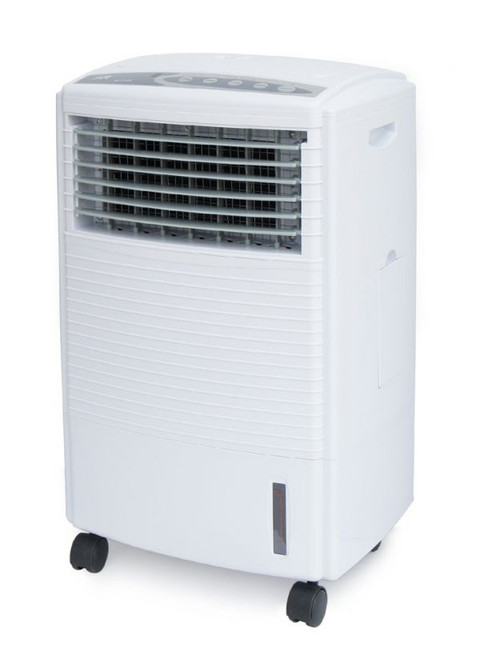
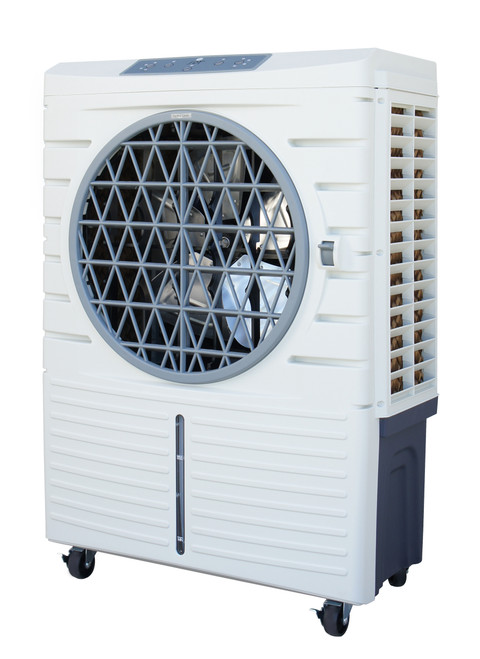
When summer heat hits and the air is dry, evaporative coolers offer a genuinely different approach to cooling: they pull warm outside air through water-saturated pads, drop the temperature through evaporation, and push that cooled air into the space without the refrigerant cycle a conventional air conditioner relies on. The catch is real but well-understood, and knowing it upfront saves a lot of frustration: evaporative cooling works best where humidity is low. In the right climate, though, the efficiency advantage is substantial, and HVAC365 stocks the capacity and configuration options to match the equipment to the application, whether that's a single room or a whole structure.
Evaporative coolers sit within the broader Room Air Conditioners category, but they work on a fundamentally different principle than refrigerant-based equipment. That makes the buying decision different too. Homeowners replacing a failed rooftop swamp cooler, contractors spec'ing cooling for a warehouse or outdoor work area, and light commercial operators looking to cut cooling costs in dry-climate regions all shop this category, and the right unit looks different for each application. The page below covers what to weigh before you buy, how to check your site is ready, and the real-world configuration choices this category actually involves.
The most important question to answer first is whether evaporative cooling is the right technology for your climate. These units are effective where ambient relative humidity is consistently low during the cooling season. In humid climates they lose most of their effectiveness because the air is already too saturated to absorb much more moisture through the evaporation process. Before you go any further, check the typical summer humidity for your region and compare it against the manufacturer's operating range for any unit you're considering.
Once you've confirmed the climate is a fit, sizing is the next decision. Evaporative cooler output is typically rated in CFM (cubic feet per minute of airflow), not BTUs the way a refrigerant-based unit is rated. The right CFM for a given space depends on the volume of the space and how many air changes per hour you need, which varies by use case. A residence wants a different air-change rate than a warehouse or a workshop. Rather than guessing, use a proper airflow calculation or the manufacturer's sizing guide for the unit you're evaluating. Undersizing means the cooler runs all day without getting the space to a comfortable temperature. Oversizing is less of a problem with evaporative units than it is with refrigerant-based equipment, but it still wastes money upfront and may introduce more humidity than the space benefits from.
Application type shapes the decision in a second important way. A portable unit on a job site has different demands than a whole-house rooftop cooler ducted into a home's existing distribution system. A ducted system moves treated air through the house in a controlled way but requires compatible ductwork and a roof or wall penetration. A portable or window-mounted unit is easier to install but cools a more limited area. Where a buying decision genuinely depends on electrical supply, duct compatibility, or drainage, those are site-readiness factors covered further down on this page.
Efficiency and operating cost matter here too, though the calculation is different from what you'd run on a refrigerant-based system. Evaporative coolers consume water continuously and also use electricity for the blower and pump. Check the water consumption rate and the motor wattage on units you're comparing, and weigh those against your local water and electricity costs. Some utility programs offer rebates for high-efficiency evaporative equipment, so it's worth checking what your local utility offers before you commit to a tier.
If you're a contractor spec'ing units for multiple jobs or a distributor buying in volume, lead time and availability become part of the decision alongside the equipment specs. Availability can vary seasonally since search and purchase interest peaks around June, so planning orders ahead of the cooling season is a practical consideration.
Evaporative coolers come in a few genuinely different configurations, and the right one depends on the size of the space, how the building is laid out, and whether you want a permanent installation or a movable unit.
Evaporative cooler installation varies a lot by configuration, but there are a few site-readiness questions worth resolving before the unit arrives.
Water supply is the first one to sort out. Whole-house and wall-mounted units need a cold water supply line with a float valve assembly, similar to what feeds a swamp cooler or a humidifier. Verify that there's a supply line accessible at the installation point, or that running one is in scope for the job. Portable units avoid this by using an internal reservoir, but that reservoir needs to be filled and drained regularly.
Electrical supply is the next item. Most residential evaporative coolers run on standard 120V circuits, but larger whole-house and commercial units may require 240V or higher amperage. Check the unit's nameplate rating and compare it against what's available at the installation point. A dedicated circuit is typically required, and the breaker size needs to match the motor load. Look at the existing panel capacity if you're working on a house that hasn't had evaporative cooling before.
For ducted rooftop systems, measure the existing duct openings and plenum dimensions before ordering a replacement unit. Duct sizing that worked with an old unit doesn't always translate to a new one, particularly if you're changing the CFM output. Also check the roof curb dimensions; rooftop units mount to a curb, and curb dimensions vary by manufacturer and model family.
Airflow relief is a requirement that catches some installers off guard, as noted in the buying tips above. An evaporative cooler pushes a continuous supply of fresh outside air into the conditioned space, so the space needs relief openings (operable windows, relief vents, or dampers) sized appropriately for the airflow the unit produces. Without an adequate relief path, the cooler will pressurize the space and stop moving air effectively.
Pad access for maintenance is worth verifying at installation time too. Evaporative pads need to be inspected and replaced at least once a cooling season, and on some unit configurations the panels that allow pad access are easier to reach than others. Consider the service position relative to the roof edge, the unit's height, or whatever the local access constraints are.
Controls integration is relatively straightforward on most evaporative coolers compared to a refrigerant-based system: most units use a simple two-speed or variable-speed blower switch and a pump switch, without the refrigerant-cycle staging logic a conventional AC thermostat manages. Some newer units offer thermostat compatibility or smart controls, so if controls integration matters for the application, verify compatibility with the control system already in place before specifying the unit.
A: No. They work in dry, arid, and semi-arid climates where relative humidity stays low during the cooling season. In humid climates, the air can't absorb enough additional moisture through evaporation to produce meaningful cooling. As covered above, checking summer dew points and humidity for your location before you buy is the single most important step in this decision.
A: By airflow capacity in CFM, not BTU output. The right CFM depends on the room volume and the air-change rate the application requires. Use the manufacturer's sizing guide or a proper airflow calculation — the sizing section above explains why estimating tends to go wrong.
A: Possibly, but verify before buying. Measure your existing duct openings, plenum dimensions, and roof curb size, and compare them against the replacement unit's specs. The installation section above covers what to check and why duct and curb dimensions vary across units.
A: Whole-house rooftop and wall-mounted units do. Portable units use a built-in reservoir you fill manually. The water supply details — including when to factor plumbing into your project budget — are covered in both the buying tips and the installation section above.
A: At minimum, evaporative pads need inspection and replacement at least once per cooling season, sometimes more often depending on water quality and run time. The water reservoir or distribution system should be flushed periodically to prevent mineral buildup and biological growth. Blower belts (on belt-drive units) and pump operation should be checked at the start of each season.
A: Not effectively. Evaporative coolers work by continuously pushing fresh outside air through the space, which requires open windows or relief vents to let that air exit. The airflow relief requirement is explained in detail in both the buying tips and the installation section above. A sealed building pressurizes quickly and stops airflow, and the two systems are generally not run simultaneously.
A: Yes, particularly for large, open, or partially open spaces like warehouses, loading docks, and outdoor work areas, where a sealed refrigerant-based system would be impractical or prohibitively expensive to operate. Commercial evaporative units are built to move very high air volumes and handle demanding environments. The configurations section above describes how commercial units differ from residential ones; sizing requirements scale up significantly, so use an airflow calculation appropriate for the space volume and use-case air-change requirements.
HVAC365 ships evaporative coolers nationwide and maintains a broad stocked catalog so a failed unit on the hottest week of the summer or a time-sensitive commercial project doesn't have to wait on a special order. Whether you're a homeowner replacing an aging rooftop cooler or a contractor sourcing equipment for a large dry-climate install, the catalog covers the configurations and capacity ranges the job actually calls for. Orders are available across the full range of buyer types, from single residential replacements through distributor volume orders.

Fast Shipping

Easy Returns

Warranty Coverage

Financing Available