null
Ductless Mini Splits

Ductless Mini Splits

Adding cooling or heating to a space without existing ductwork is one of the most common problems homeowners, builders, and commercial contractors run into. Whether it's a room addition, a converted garage, a server room, or a multi-tenant buildout, ductless mini split systems solve that problem without the cost or disruption of installing new duct runs. HVAC365 stocks a broad selection of mini split systems across capacity ranges and configurations so you can match the right equipment to the actual job, not just whatever happens to be available.

Ductless mini splits are split-system air conditioners and heat pumps that connect an outdoor condensing unit to one or more indoor air handlers through a small refrigerant line set, without any ductwork. They deliver zoned comfort control, meaning each zone can be set independently, and they're used across a wide range of applications. Homeowners buy them for room additions, sunrooms, and spaces that a central system never quite reached. Contractors spec them for new construction, renovations, and light commercial projects where zoning or the absence of ductwork makes a traditional system impractical. Commercial buyers use them for server rooms, retail spaces, and tenant improvements. Distributors sourcing for fleet inventory or resale will find the depth of selection here worth the stop.

How to Pick the Right Mini Split

The first question to answer is capacity. Undersizing a mini split means it runs constantly and never quite keeps up; oversizing causes short cycling, which wastes energy and leads to humidity problems because the system shuts off before it's had time to dehumidify the space. Neither failure is obvious until the equipment is already installed. The right starting point is a proper load calculation (Manual J or equivalent) for the space being conditioned, not a rough rule-of-thumb square footage estimate. That calculation accounts for ceiling height, insulation, window area and orientation, local climate, and occupancy. Don't skip it.

Once you have a capacity target, consider the application type. A system rated for residential use in a moderate climate may not be specified for a commercial environment with higher internal heat loads, different duty cycles, or wider outdoor temperature swings. Verify that the system you're selecting is rated for the application, not just approximately the right size.

Efficiency is the third axis. Mini splits span a wide range of efficiency tiers, and where a unit lands on that spectrum affects both operating cost and eligibility for utility rebates or tax credits. Check your local utility's current rebate requirements and any applicable energy code minimums before you commit to a tier. Higher efficiency generally costs more upfront; the tradeoff is lower monthly operating cost and potential incentive money back. That math is worth doing before purchase, not after. Also consider whether you need a single-stage system or a variable-capacity (inverter-driven) compressor. Inverter systems modulate output to match the actual load, which improves comfort consistency and efficiency at partial load. Single-stage systems are simpler and less expensive upfront. For most residential applications the inverter system wins on comfort and operating cost over time; for a low-use or supplemental application, the simpler unit may be the better value.

For distributors or contractors buying across multiple jobs, lead time and volume availability matter alongside spec. If you're sourcing for a project pipeline rather than a single install, flag that when you reach out so selection and fulfillment can be matched to the volume.

Buying Tips

  • Don't buy a single-zone system when the job actually needs two zones. It's a common shortcut, and it results in either an uncomfortable second space or a second outdoor unit bolted on later at much higher total cost. If there's any chance a second zone will be needed within a few years, price the multi-zone option now.
  • Check the minimum operating temperature before you buy. Not every mini split is rated to heat efficiently in very cold climates. "Heat pump" does not automatically mean "cold-climate heat pump." If the install location sees hard winters, verify the low-ambient heating rating against the local design temperature, not just the average winter temperature.
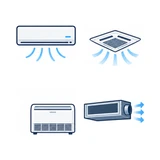
  • Confirm the indoor unit mounting style fits the space. Mini split indoor units come in wall-mounted, ceiling cassette, floor-mounted, and ducted air handler configurations. The right choice depends on room layout, ceiling construction, and where the line set can practically run. Ordering a wall unit for a space that needs a cassette is a return problem that delays the whole job.
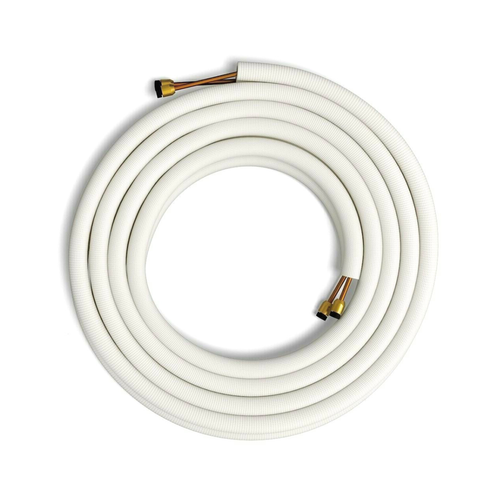
  • Match the line set length to the actual run, not an estimate. Line set length affects system performance and refrigerant charge requirements. Measure the actual distance the refrigerant lines will travel, including any vertical rise, before ordering. Manufacturers publish maximum and minimum line set lengths; exceeding them voids the warranty and degrades performance.

Single-Zone vs. Multi-Zone: Picking the Right Configuration

The most fundamental configuration choice in this category is how many indoor zones the system needs to serve.

  • Single-zone systems pair one outdoor unit with one indoor air handler. They're the right pick when the goal is conditioning one defined space. Installation is straightforward, and these systems are generally less expensive than multi-zone setups for the same capacity. They're common for room additions, garages, small offices, and supplemental comfort zones where the rest of the home or building is handled by a separate system.
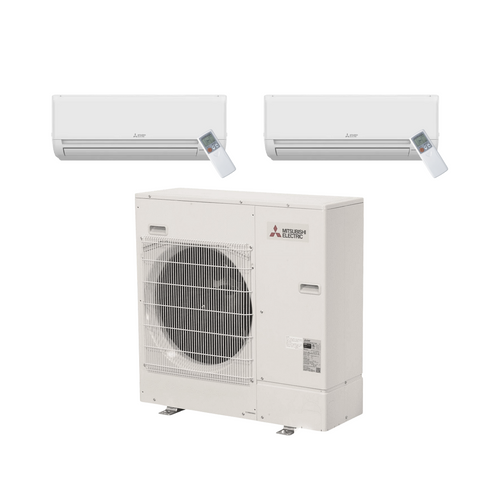
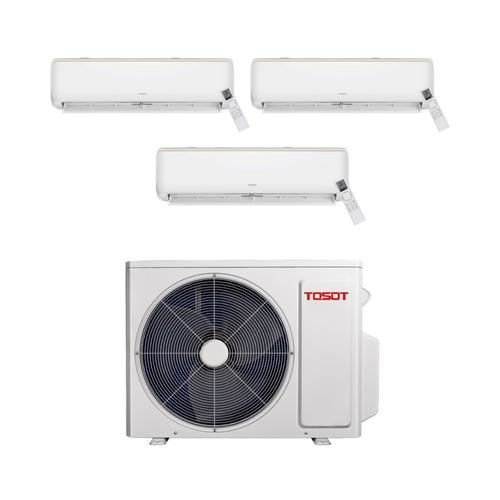
  • Multi-zone systems connect one outdoor unit to two or more indoor air handlers, each controlled independently. This is the right approach for whole-home ductless installs, multi-room commercial buildouts, or any application where multiple spaces need to be conditioned from a single outdoor unit. The upfront cost is higher than a single-zone unit, but lower than running separate outdoor units for each zone. Each indoor unit can be set to a different temperature, so a bedroom can be cooler than a living room without any compromise.

Indoor air handler style is its own choice within both configurations. Wall-mounted units are the most common for residential applications. Ceiling cassettes work well in commercial or open-plan spaces where a wall unit would be obtrusive or the room layout doesn't support one. Floor-mounted units are useful where wall or ceiling mounting isn't practical. Ducted mini split air handlers let the system serve a small duct network, which can be a useful middle ground for spaces that have some existing ductwork but don't need or can't support a full central system.

What It Takes to Install a Ductless Mini Split

Mini splits are less invasive than installing a ducted system, but they are not plug-and-play. Every installation has a set of site conditions to verify before the equipment arrives on the job.

Start with the electrical supply. Mini splits require a dedicated circuit sized to the unit's specifications, at the voltage and amperage the equipment requires. Check the electrical panel to verify available capacity and the correct voltage. A disconnect is typically required at or near the outdoor unit per code. If the panel is already at capacity or the wrong voltage is present at the install location, that needs to be resolved before equipment is ordered, not after it's on site.

Condensate drainage is something that gets overlooked on quick installs. The indoor unit produces condensate during cooling operation, and that water needs a path out. Many wall-mounted units drain by gravity through a small line to the exterior, but the slope has to be correct and the exit point has to make sense for the installation location. In some situations a condensate pump is needed. Look at the actual installation location and plan the drain routing before finalizing the indoor unit placement.

Line set routing matters more than most buyers anticipate. The refrigerant lines, power wiring, and condensate line run through a small penetration in the wall and then along the exterior or through a chase to the outdoor unit. Measure the actual routing distance, account for any vertical rise or drop, and compare that to the manufacturer's published minimum and maximum line set lengths. Going shorter than the minimum or longer than the maximum requires a refrigerant charge adjustment or voids the warranty depending on the system.

Outdoor unit placement affects both performance and longevity. The unit needs adequate clearance on all sides for airflow as specified by the manufacturer, a stable mounting surface (a pad, wall bracket, or roof curb depending on the installation), and protection from conditions that could restrict airflow or cause ice bridging in winter. Keep it away from dryer vents, cooking exhaust, and anything else that will throw debris or grease into the coil.

Operating temperature range is a spec that buyers in cold climates need to pull from the equipment documentation specifically. Standard mini splits have both a minimum heating rating and a minimum cooling operating temperature. Cold-climate or hyper-heat systems extend those ranges, particularly on the heating side. Pull the spec sheet and compare it against the local design temperatures for both summer and winter before committing to a model.

Controls and integration are worth planning ahead. Most mini splits ship with a wireless remote. Many also support wired wall controllers, app-based control, or integration with smart home platforms, depending on the brand and model. If a specific control method is required by the application (a commercial tenant who needs a programmable wired thermostat, for example), verify that the equipment supports it before the order is placed, not after the unit is on the wall.

Things You Should Know Before You Buy

Q: How do I know what capacity mini split I need?

A: Use a Manual J or equivalent load calculation — not a square-footage estimate. The sizing section above explains what that calculation accounts for and why guessing leads to either a unit that can't keep up or one that short-cycles and leaves the space humid.

Q: Can I use a mini split as my only heating source in a cold climate?

A: It depends on the specific equipment. Standard mini splits lose heating capacity as outdoor temperatures drop; cold-climate or hyper-heat models are rated to deliver meaningful output well below freezing. Pull the heating capacity curve from the spec sheet and compare it against your local design temperature. The installation considerations above cover how to check operating temperature range against your climate before committing to a model.

Q: Do I need a professional to install a mini split, or can it be DIY?

A: Handling refrigerant requires EPA Section 608 certification in the US, which rules out most DIY installs on traditional systems. Some manufacturers offer pre-charged line set systems marketed for DIY use, but these have specific limitations on configuration and line set length. Electrical work, line set brazing, and equipment startup on a conventional mini split should be done by a licensed technician. Check local permit and code requirements before starting any installation.

Q: What is the difference between a single-zone and a multi-zone mini split?

A: A single-zone system pairs one outdoor unit with one indoor air handler; a multi-zone system connects one outdoor unit to two or more indoor air handlers, each controlled independently. The configuration section above covers how to choose between them and what each is best suited for.

Q: What line set length do I need?

A: Measure the actual routing distance — including any vertical rise — before ordering. Manufacturers publish both a minimum and a maximum; the installation section above explains why both limits matter and what happens when either is exceeded.

Q: Can a mini split heat and cool, or is it only for cooling?

A: Most mini splits sold today are heat pumps, meaning they provide both cooling and heating. Cooling-only mini splits exist but are a narrower segment. Verify the unit you're selecting is a heat pump if year-round comfort is the goal. The product listing will specify whether it's a heat pump or a cooling-only unit.

Q: Are mini splits eligible for utility rebates or tax credits?

A: Many mini splits qualify for utility rebates and federal or state tax incentives, but eligibility depends on the equipment's efficiency rating and the specific program requirements in your area. Check your utility's rebate portal and the applicable federal incentive programs for current thresholds before you select a model. Choosing a unit one efficiency tier higher can make the difference between qualifying and not.

HVAC365 ships nationwide, which means a contractor in the middle of a job or a homeowner dealing with a failing system doesn't have to wait on a regional distributor's stock situation to get moving. The catalog spans the capacity ranges and configuration types that real residential and commercial jobs call for, from single-zone residential installs through multi-zone commercial applications, and is available for orders ranging from a single residential replacement to distributor volume. If you're not sure which system fits the job, reach out and we'll help you work through it.

Compare
Show: 12 24 48

Fast Shipping

Easy Returns

Warranty Coverage

Financing Available