null
Ductless Mini Split Tri Zone

Ductless Mini Split Tri Zone

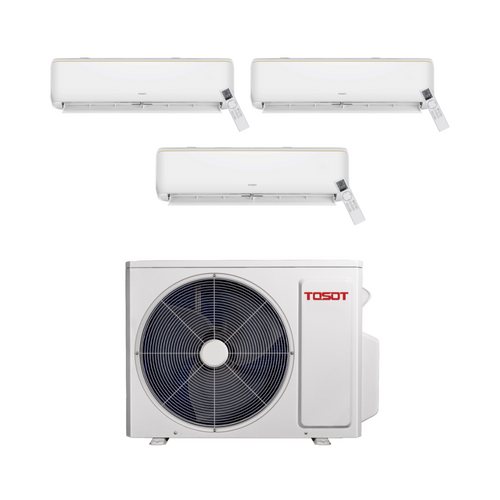
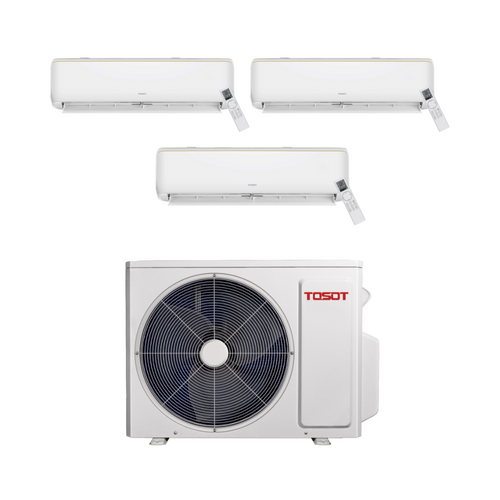
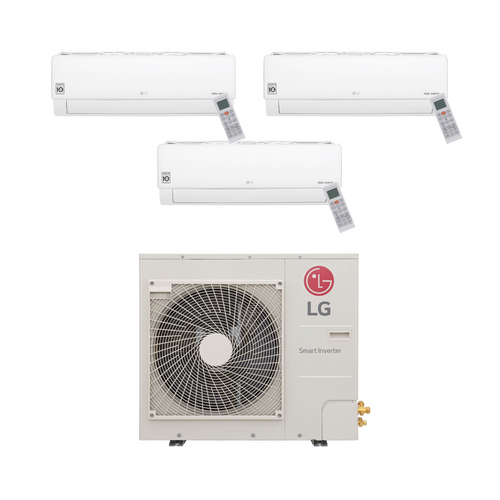
Keeping three separate spaces comfortable with one system is exactly the problem tri-zone ductless mini splits solve, and it is a problem that comes up constantly whether you are a homeowner finishing a basement addition, a contractor specifying equipment for a light commercial buildout, or a distributor stocking inventory for the shoulder season. One outdoor condensing unit connects to three independent indoor air handlers, each with its own thermostat-level control, so the living room, the master suite, and the home office are not all locked to the same setpoint. HVAC365 stocks a broad selection across the capacity and configuration options this type of install actually calls for, so you are not waiting weeks to find a unit that matches your load and your site.

Tri-zone systems sit within the broader Ductless Mini Split Multi Zone category, which covers everything from two-zone pairings up through larger multi-head arrangements. The tri-zone tier specifically is the most common starting point for whole-home retrofits and additions where three distinct areas need independent conditioning without the cost or disruption of running new ductwork.

The buyers in this category are genuinely varied. Homeowners replacing window units or extending a system into a new addition make up a significant share of orders. Contractors and installers account for another large slice, spec-matching a system to a specific job and pulling equipment when the project starts. Light commercial operators, like small offices, studios, and server rooms where three zones cover the footprint, also land here. And distributors buying in volume to stock for regional demand are a real part of the picture too, particularly for multi-zone equipment where project timing and lead times can make stocking ahead worthwhile.

Choosing the Right Tri-Zone System

The single most important thing to get right before you order is capacity, and the only reliable way to get it right is a proper load calculation for each zone. Tri-zone systems are matched systems: the outdoor unit is rated for a combined total load, and each indoor head is rated for its individual space. If you size by square footage alone and skip the heat gain and heat loss math, you will either undersize a zone that runs continuously without reaching setpoint, or oversize one that short-cycles and leaves the space humid and clammy. A Manual J load calculation, or an equivalent software-based tool for commercial applications, is the starting point, not a step you verify after the fact.

Capacity is not the only variable worth thinking through carefully. Application type matters in a different way. A residential bedroom has very different load characteristics than a small commercial server room or a yoga studio with wall-to-wall glass. Residential equipment is rated and tested for residential conditions. Equipment intended for commercial use is tested to different standards and is often built to handle higher duty cycles. Before committing to a unit, check that its application rating matches what the space actually demands.

Efficiency is worth weighing honestly rather than defaulting to the highest-rated option. Higher efficiency units carry a higher upfront cost. Utility rebates in many markets offset some of that premium, but the thresholds and eligibility rules vary by utility and by jurisdiction. Check your local utility's rebate program and any applicable energy code minimums before you finalize a model, because a unit that just clears the rebate threshold may pay back its cost difference in two years while the next tier up takes five. That math is worth running rather than assuming.

One note for contractors and distributors: when you are spec-matching for a specific job or buying ahead for a project pipeline, lead time and system availability across all three indoor heads matter as much as the unit's nameplate performance. A tri-zone system where you can only source two of the three heads is not a tri-zone install. The installation considerations covered further down the page add more detail on how to confirm a matched set.

Buying Tips

  • Buy the matched set, not the pieces. It is tempting to mix an outdoor unit from one manufacturer with indoor heads from another to hit a price point. Most manufacturers void the warranty on unmatched combinations, and some systems will not communicate properly or will throw fault codes that are impossible to diagnose cleanly. Source the full matched set, or at minimum verify compatibility with the outdoor unit manufacturer's engineering documentation before mixing components.
  • Account for line set length in your capacity planning. Most manufacturers derate performance when line sets exceed a certain run length. If your install requires a long refrigerant line between the outdoor unit and one of the heads, check the manufacturer's derating table before you finalize the capacity selection for that zone, not after the equipment is on site.
  • Think through the drain path for each head before you order the indoor unit style. Wall-mounted cassettes, ceiling cassettes, and floor-mounted units all drain differently. If one of your three zones has no practical gravity drain path, you will need a condensate pump. That is a cheap fix if you plan for it; it is a callback if you do not.
  • Check inverter compatibility with your local power quality. Most modern mini splits use inverter-driven compressors that are sensitive to voltage fluctuations. If the service address has known power quality issues, confirm the unit's input voltage tolerance before you spec it in.

How Tri-Zone Systems Are Typically Configured

The defining feature of every tri-zone system is the one-to-three relationship: one outdoor unit, three indoor heads. Beyond that, there is real variation in how those heads are configured, and the right combination depends on the spaces you are conditioning.

The most common configuration pairs one outdoor condensing unit with three wall-mounted mini split heads. Wall mounts are the default for residential bedrooms, living rooms, and home offices because they are straightforward to install, easy to service, and widely stocked. They mount high on the wall, blow air in a horizontal pattern, and work well in rectangular rooms with reasonable ceiling heights.

Ceiling cassette heads are a common alternative for spaces where a wall mount is impractical or aesthetically unwanted: open-plan commercial spaces, conference rooms, or finished basements with drop ceilings. A cassette recesses into the ceiling grid and distributes air in a four-way pattern, which covers a wider floor area more evenly than a wall mount. Cassette installations require enough ceiling cavity depth to accommodate the unit and its drain pan.

Floor-mounted heads are used in spaces where wall or ceiling mounting is not an option, or in very cold climates where blowing warm air at floor level improves comfort. Some installers also use floor mounts in rooms with floor-to-ceiling windows where there is simply no clear wall space above the glass line.

One important configuration decision in a tri-zone system is whether all three heads need to be the same capacity or whether you are mixing head sizes to match three different-sized zones. Many outdoor units support mixed-head configurations within a capacity range. If your three zones have meaningfully different loads, a mixed configuration lets you right-size each space rather than compromise.

What It Takes to Install a Tri-Zone System

Tri-zone mini split installations are more involved than single-zone installs, and the site conditions for three separate indoor locations all need to be worked through before equipment arrives.

Electrical is usually the first constraint to check. The outdoor unit requires a dedicated circuit, typically a 240V circuit with the amperage rating matching the unit's nameplate. Pull the installation manual or the submittal sheet for the specific model and compare that against the available panel capacity and the breaker and disconnect already on site. If the panel is near capacity, that conversation needs to happen before the equipment is ordered, not the morning of the install.

Each indoor head also needs a connection back to the outdoor unit via refrigerant line set and control wiring. Three heads means three line set runs. Measure each run carefully, including any vertical rise between the indoor and outdoor units, and compare those distances against the manufacturer's published maximum and minimum specifications. Line set runs that are too short can cause refrigerant management problems; runs that exceed the published maximum require derating or are not permitted at all.

Condensate drainage needs to be worked out for each head independently. Verify that each indoor unit's location has a viable drain path, either by gravity to a drain or to the exterior, or plan for a condensate lift pump at any location where gravity drainage is not achievable.

Operating temperature range is worth reviewing against the climate at the install site. Most modern mini splits can heat efficiently well below freezing, but the rated low-temperature heating capacity varies by model. In regions with sustained extreme cold, look at the low-ambient heating rating on the submittal sheet and compare it to the design heating temperature for the site.

Controls integration is increasingly relevant. Most current tri-zone systems include wireless remote controls as standard, and many support Wi-Fi control via a manufacturer app or an optional module. If the buyer or building owner expects integration with a smart home platform or a building management system, verify compatibility before finalizing the model, not after the equipment is on the wall.

Clearance requirements around the outdoor unit vary by manufacturer and by total system capacity. Check the installation manual for required service clearances on all four sides and above the unit, and confirm the proposed mounting location meets those requirements. Rooftop, ground-level, and wall-bracket installations each have different considerations for vibration isolation and airflow.

Things You Should Know

Q: Can I mix indoor head sizes on a single tri-zone outdoor unit?

A: Yes, most tri-zone outdoor units support mixed indoor head configurations, meaning the three heads can be different capacities as long as the combined load stays within the outdoor unit's rated range and each individual head is within the permitted indoor unit capacity range for that model. Check the outdoor unit's engineering documentation for the specific permitted indoor unit combinations before ordering.

Q: How do I determine the right total capacity for the outdoor unit?

A: Run a load calculation for each of the three zones and add those loads together. The outdoor unit's rated capacity should cover the combined total. Square-footage sizing alone routinely produces over- or undersized results — the capacity sizing discussion above explains the full reasoning and consequences.

Q: Do all three zones have to run at the same time?

A: No. Each indoor head operates independently and can be turned on, off, or set to a different temperature from the others. The outdoor unit modulates its output based on the combined demand from whichever heads are active. This is one of the practical advantages of a tri-zone system over multiple standalone units.

Q: What refrigerant do tri-zone mini splits use?

A: The refrigerant type varies by manufacturer and model year. Check the submittal sheet or the unit's rating plate for the specific refrigerant before ordering any line set fittings, recovery equipment, or refrigerant stock. Do not assume all units in this category use the same refrigerant type.

Q: Is a permit required to install a tri-zone mini split system?

A: In most jurisdictions, yes. A tri-zone system involves refrigerant handling, electrical work, and in many cases structural penetrations, all of which typically require permits and inspections. Requirements vary by municipality, so check with the local building department before starting work. Most jurisdictions also require that refrigerant work be performed by an EPA 608-certified technician.

Q: Can a tri-zone system heat as well as cool?

A: Most tri-zone mini split systems are heat pumps, meaning they provide both heating and cooling from the same equipment. Verify that the specific model you are considering includes heat pump operation rather than cooling only, particularly for older or economy-tier units where cooling-only configurations still appear in some catalogs.

Q: What is the difference between a tri-zone system and buying three separate single-zone units?

A: A tri-zone system uses one outdoor unit shared across three indoor heads, which typically reduces the total footprint of outdoor equipment, the number of dedicated electrical circuits required, and the refrigerant connections exposed to weather. Three separate single-zone systems each need their own outdoor unit, their own dedicated circuit, and their own line set penetration. The tri-zone approach is generally more cost-effective and less disruptive when all three zones can share a single outdoor location, but separate single-zone units may be preferable when the three zones are spread across a building in a way that makes a shared line set impractical.

HVAC365 ships tri-zone mini split systems nationwide, with stocked inventory across a range of capacities and configurations to cover residential replacements, new additions, and light commercial installs through distributor volume orders. When you cannot afford to wait on availability, having a broad catalog in stock is what keeps the job moving.

Compare
Show: 12 24 48

Fast Shipping

Easy Returns

Warranty Coverage

Financing Available