null

Wall Mounted Ductless Mini Splits

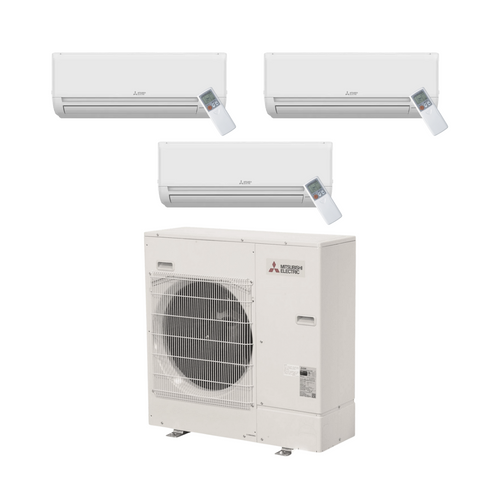
Wall mounted tri zone ductless mini split indoor head units mounted high on interior walls in a residential two-room installation

Running a separate thermostat for every room sounds simple until you're paying to cool a bedroom nobody's in, or heating a home office while the living room swelters. Wall mounted ductless heads for tri zone systems solve that directly: two independently controlled zones, no ductwork required, and sizing options that span from a small bedroom addition to a larger open living space. HVAC365 stocks a broad selection across capacity and efficiency tiers so you can match the right head to what the job or the house actually calls for, not just whatever happens to be available.

This category covers wall mounted indoor air handler units configured for ductless tri zone systems. That means two indoor heads connected to one outdoor multi zone condenser, each zone controllable on its own schedule and setpoint. The people shopping here run the full range: a homeowner replacing a failed unit in a two-room addition, a contractor spec-matching heads to an existing multi zone outdoor unit on a light commercial job, a residential HVAC professional outfitting a new build with a zoned comfort system, and distributors sourcing wall mounted heads in volume for their own customers or fleet stock.

Picking the Right Wall Mounted Head for a Tri Zone Setup

The single most important decision in this category is capacity, and the right answer is not a guess. Each zone needs to be sized against an actual load calculation for that space, not a rule of thumb based on square footage alone. Ceiling height, insulation quality, window area and orientation, local climate, and internal heat loads all shift the number meaningfully. A unit that is too small will run continuously without reaching setpoint. One that is too large will short-cycle, which degrades humidity control and increases wear. Neither problem is obvious during a sales conversation; both are obvious the first summer or winter after install.

Application type shapes the decision too. A wall mounted head going into a standard residential bedroom has different demands than one serving a light commercial server room, a retail space with high foot traffic, or a home gym with significant internal heat loads. The operating conditions, duty cycle expectations, and sometimes the minimum ambient temperature ratings differ. Match the unit's rated application to what the space actually is, not just to its square footage.

Efficiency tier is the third axis. Higher efficiency units carry a higher upfront cost, but they lower operating cost over the life of the equipment and may qualify for utility rebates or state incentive programs that offset some of the purchase price. The threshold that qualifies for a given rebate program varies by utility and by jurisdiction, so look up the specific program requirements before spec-ing the efficiency tier. Buying a unit one tier below what would have qualified is an easy mistake to make and an expensive one to undo after install.

For contractors and distributors, lead time and availability factor into the selection in ways they do not for a single homeowner replacement. If one head configuration is on a long lead and the job has a firm completion date, that changes which options are actually on the table. The installation-readiness factors covered further down this page also affect which head is the right pick for a given site, particularly around electrical supply and line set sizing.

Buying Tips

  • Match the indoor head to the outdoor unit's approved combination list, not just the brand. Multi zone outdoor condensers are not universally compatible with every indoor head from the same manufacturer. Most brands publish a verified combination or matchup guide. An indoor head that is not on the approved list for that specific outdoor unit may void the equipment warranty and can cause control or refrigerant circuit issues that are difficult to diagnose after the fact.
  • Do not assume the line set from the previous unit will work. Line set diameter requirements vary by capacity and sometimes by refrigerant circuit design. If you are replacing a head in an existing system and the line set is staying in place, pull the spec sheet for the new unit and verify that the existing line set diameter and length are within the new unit's approved range before ordering.
  • Wall penetration size and location are not trivial. The routing path for refrigerant lines, the condensate drain, and the communication and power cables all have to clear the wall in the right place. Confirm the new head's line connection location (left, right, bottom, or rear exit) matches what the wall penetration and the line set routing actually allow. Swapping exit sides on a wall mount after the hole is cut is an avoidable problem.
  • Check minimum ambient operating temperature if the zone will run in heating mode during cold weather. Not all wall mounted heads are rated for the same low-ambient heating performance. If the zone needs to deliver heat at very low outdoor temperatures, verify the unit's rated minimum operating temperature before purchasing, not after the outdoor unit is already running.

How Wall Mounted Tri Zone Heads Are Typically Configured

Within this category, the primary configuration variables are capacity (sized to each zone's actual load), the unit's physical profile (slim-depth units exist for tighter wall clearance situations), and whether the head includes enhanced features like built-in air purification, wifi-integrated controls, or auto-swing louvers across multiple axes. Those feature differences matter depending on the application and the end user's expectations, but they do not change the fundamental installation footprint or the refrigerant circuit design.

The more meaningful configuration split in a tri zone system is at the system level: which two zones are being served, what the capacity split between them is, and whether the outdoor unit's total capacity is being fully utilized or partially loaded. A tri zone system where both heads are running at full demand simultaneously has to stay within the outdoor unit's rated total capacity. How the manufacturer handles capacity sharing across zones differs by product line, so review the system-level documentation, not just the indivitri head spec sheet.

For buyers looking at the broader multi zone picture, the parent category for this section covers ductless multi zone tri zone systems at the system level, including outdoor unit selection and system-level configuration, which is useful context if you are building a system from scratch rather than replacing an existing head.

What It Takes to Install a Wall Mounted Tri Zone Head

Wall mounted mini split heads are low-profile units that mount high on the wall and discharge conditioned air horizontally across the room. The mounting surface needs to be structurally sound enough to carry the unit's weight plus the bracket hardware. Measure the wall stud spacing and verify the mounting bracket included with the unit or specified for it will land on solid structure, not just drywall.

Electrical supply requirements vary by unit. Check the spec sheet for the indoor head's power requirements. Some wall mounted heads are powered from the outdoor unit through the communication cable and do not need a separate dedicated circuit at the indoor unit; others require their own power feed. Pull the wiring diagram, not just the summary spec, to understand what the indoor unit actually needs at the wall.

The refrigerant line set connecting the indoor head to the outdoor multi zone manifold has to match the unit's specified pipe diameters. Line set length also has to stay within the manufacturer's published maximum and minimum limits. Too short a line set between the head and the outdoor unit can cause refrigerant circuit problems just as a line set that exceeds the maximum run can. Look up the approved range in the installation manual before running lines.

Condensate drainage from the indoor head needs a path to drain. Wall mounted heads produce condensate in cooling mode and, depending on the unit, in certain heating modes. Verify where the condensate outlet is on the specific head you are ordering and plan the drain routing before the unit arrives on site. In some installs a condensate pump is required because gravity drainage is not possible; that is an accessory to order ahead of time, not a field improvisation.

Communication wiring between the indoor head and the outdoor unit is typically a multi-conductor control cable specified by the manufacturer. The wire gauge, number of conductors, and maximum run length are all specified in the installation documentation. Substituting a different cable type or gauge without checking the manufacturer's requirements is a common source of communication faults that are time-consuming to troubleshoot after the system is charged and running.

Operating temperature range matters at the system level. Wall mounted heads in a tri zone system depend on the outdoor unit's ability to operate across the local temperature range. If the outdoor unit has a low-ambient heating limitation, that limitation applies to both zones. Verify the system's rated operating range against the actual climate conditions at the site, not just the cooling season.

Things Worth Knowing Before You Buy

Q: Do I need two separate wall mounted heads for a tri zone system, or can one head cover both zones?

A: A tri zone system requires two separate indoor units, one per zone. Each head operates independently, maintaining its own setpoint. A single indoor head cannot split into two independently controlled areas regardless of its capacity.

Q: How do I determine the right capacity for each wall mounted head in a tri zone setup?

A: Each zone needs a load calculation based on that specific space — square footage, ceiling height, insulation, window area and orientation, and local climate all factor in. A Manual J calculation or equivalent is the right tool. The capacity sizing discussion above explains why both oversizing and undersizing create real problems after install.

Q: Can I mix head capacities in a tri zone system, for example a larger head in the living room and a smaller one in a bedroom?

A: Yes, mismatched capacity between the two heads in a tri zone system is normal and often correct. Each head should be sized to its own zone's load. The constraint is that the combined load on the outdoor unit stays within its rated total capacity. Verify the specific capacity combination is within the outdoor unit manufacturer's approved combination list.

Q: Does the wall mounted head include the refrigerant line set, or do I need to order that separately?

A: Line sets are almost always ordered separately. The indoor head unit does not include refrigerant lines. Size and source the line set to match the unit's specified pipe diameters and your site's run length — the installation notes above cover approved diameter and run length requirements in detail.

Q: What wall preparation is needed before mounting a wall mounted mini split head?

A: The mounting surface needs to support the unit's weight on the bracket hardware, which typically means landing on wall studs rather than drywall alone. You also need a wall penetration sized and located for the line set, condensate drain, and communication/power cables. Penetration location has to align with the unit's line exit direction — left, right, bottom, or rear — so plan the hole based on the specific unit ordered. The installation section above covers exit direction and line routing considerations.

Q: Is a permit required to install a wall mounted ductless mini split head?

A: Permit requirements vary by jurisdiction. Most localities require a permit for new mini split installations and for significant replacements, and the work typically has to be performed or inspected by a licensed HVAC contractor. Check with the local building department before starting work. Installing without a required permit can create issues at resale and may affect equipment warranty coverage.

Q: Will a wall mounted head from one brand work with an outdoor unit from a different brand?

A: Generally, no. Ductless mini split systems use proprietary communication protocols and refrigerant circuit designs. Cross-brand compatibility is rare and usually not supported or warrantied by either manufacturer. Even within the same brand, not every indoor head model is approved for every outdoor unit — always verify using the manufacturer's published matchup or combination guide, as covered in the buying tips above.

HVAC365 ships wall mounted tri zone mini split heads nationwide, covering residential replacements, new construction installs, light commercial applications, and distributor volume orders from the same stocked catalog. A broad selection across capacity and feature levels means the right head for the job is available without waiting on a special order in most cases. Whether you are sourcing a single unit for a homeowner or pulling multiple heads for a larger project, the catalog is available online with direct ordering.

Compare
Show: 12 24 48

Fast Shipping

Easy Returns

Warranty Coverage

Financing Available