
-
Bohn
Bohn DVT005 Air-Cooled Remote Condenser, 1 Fan, 5,050 CFM, 208-230V 1-Phase | DVT005
SKU: DVT005
$8,622.31- 🚚Qualifies for FREE Shipping
- ⚡Fast Shipping
Ships from MFG in 2-4 Weeks10 in stock -
Bohn
Bohn DVT008 Air-Cooled Remote Condenser, 1 Fan, 6,450 CFM, 208-230V 1-Phase | DVT008
SKU: DVT008
$10,889.66- 🚚Qualifies for FREE Shipping
- ⚡Fast Shipping
Ships from MFG in 2-4 Weeks10 in stock -
Bohn
Bohn DVT010 Air-Cooled Remote Condenser, 2 Fans, 10,100 CFM, 208-230V 1-Phase | DVT010
SKU: DVT010
$13,310.13- 🚚Qualifies for FREE Shipping
- ⚡Fast Shipping
Ships from MFG in 2-4 Weeks10 in stock -
Trenton
Trenton 8 Ton TCS Air-Cooled Remote Condenser, 96,750 BTU/h THR, Horizontal or Vertical Discharge, 208/230V 1-Phase | TCS008S2A
SKU: TCS008S2A
$5,914.98- 🚚Qualifies for FREE Shipping
- ⚡Fast Shipping
Ships in 1-2 Business Days2 in stock -
Trenton
Trenton 5 Ton TCS Air-Cooled Remote Condenser, 64,900 BTU/h THR, Horizontal or Vertical Discharge, 208/230V 1-Phase | TCS005S2A
SKU: TCS005S2A
$4,648.13- 🚚Qualifies for FREE Shipping
- ⚡Fast Shipping
Ships in 1-2 Business Days2 in stock -
Trenton
Trenton 10 Ton TCS Air-Cooled Remote Condenser, 127,500 BTU/h THR, Horizontal or Vertical Discharge, 208/230V 1-Phase | TCS010S2A
SKU: TCS010S2A
$7,728.53- 🚚Qualifies for FREE Shipping
- ⚡Fast Shipping
Ships in 1-2 Business Days2 in stock -
Trenton
Trenton 3 Ton TCS Air-Cooled Remote Condenser, 38,500 BTU/h THR, Horizontal or Vertical Discharge, 208/230V 1-Phase | TCS003S2A
SKU: TCS003S2A
$2,388.33- 🚚Qualifies for FREE Shipping
- ⚡Fast Shipping
Ships in 1-2 Business Days2 in stock
Buying guidance
Air-Cooled Remote Condensers


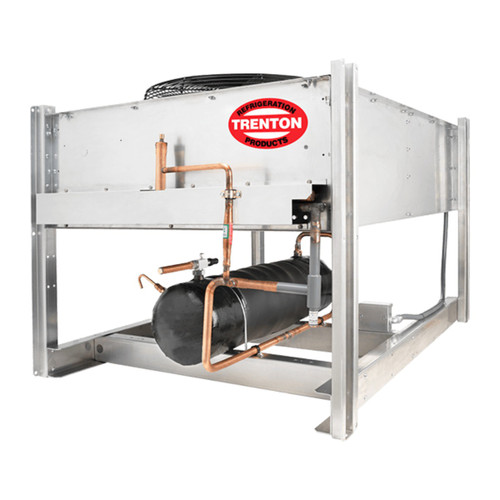
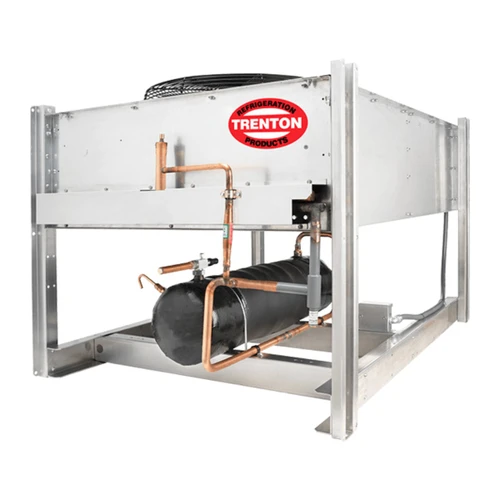

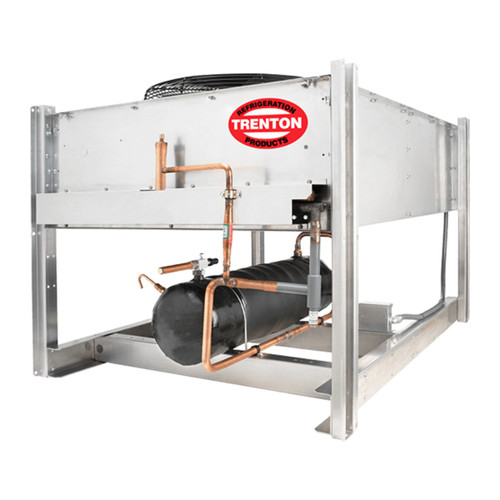
An air-cooled remote condenser moves the heat rejection part of a refrigeration system outside, away from the compressor and the space being cooled. Remote condensers are used with refrigeration racks, split systems where the compressor sits indoors, and remote-cooled ice machines. Moving the heat outdoors keeps kitchens and equipment rooms cooler and quieter.
This category includes refrigeration remote condensers from Bohn in single and multiple fan configurations, and remote condensers made for Manitowoc and Koolaire ice machines. Ice machine condensers are designed to pair with specific remote-cooled ice machine heads, so check compatibility on each listing.
Choosing the Right Remote Condenser
For refrigeration systems, condensers are sized by total heat of rejection, which is the evaporator load plus the heat added by the compressor. Ratings are given at a temperature difference between condensing temperature and outdoor air, commonly 10°F to 15°F for refrigeration. Select a condenser that covers the heat of rejection at your design ambient temperature.
For ice machines, use the condenser the ice machine manufacturer specifies for that head. Remote ice machine condensers are matched to the head's charge and controls, and the manufacturer also limits line length and the height difference between the head and condenser.
Buying Tips
- Size for the hottest day. Capacity drops as outdoor temperature rises. Use your local design summer temperature.
- Plan winter operation. In cold climates, fan cycling, variable-speed fans or a flooding head pressure control keep the system stable.
- Check fan count and voltage. Multi-fan units offer more capacity and better head pressure control options.
- Follow line-length limits. Especially for ice machines, stay within the manufacturer's line-set length and rise.
What It Takes to Install
A licensed, EPA Section 608 certified contractor should install remote condensers. The unit is set level with clear airflow on all sides, mounted on a roof curb or rails where needed, piped with properly sized discharge and liquid lines, evacuated, charged and wired with any head pressure or fan cycling controls.
Things You Should Know Before You Buy
Local building, electrical, mechanical and energy codes apply and vary by location, so confirm requirements with your contractor or local building department. Refrigerant rules are also changing, so verify that the refrigerant you choose is permitted for your application.
Frequently Asked Questions
Q: What is a remote condenser used for?
A: It rejects refrigeration heat outdoors when the compressor is located indoors, such as with refrigeration racks, split systems and remote-cooled ice machines.
Q: Can I use any remote condenser with my ice machine?
A: No. Use the condenser the ice machine manufacturer specifies for that model, and follow its line-length and rise limits.
Q: How is a refrigeration remote condenser sized?
A: By total heat of rejection, the evaporator load plus compressor heat, at your design outdoor temperature and the rated temperature difference of the condenser.
Q: Do remote condensers work in cold weather?
A: Yes, with head pressure control such as fan cycling, variable-speed fans or a flooding valve to keep pressure up in winter.


