
-
$0.58
- 📦$9.95 Flat-Rate Shipping
- ⚡Fast Shipping
Ships from Mfg. in 3-5 Business Days10 in stock -
$0.87
- 📦$9.95 Flat-Rate Shipping
- ⚡Fast Shipping
Ships from Mfg. in 3-5 Business Days10 in stock -
C&D Valve
C&D Valve 1/4" Flare A2L Red Anodized Aluminum Hex Cap with O-Ring Seal - 6 Pack | CD2235R/6
SKU: CD2235R/6
$4.79- 📦$9.95 Flat-Rate Shipping
- ⚡Fast Shipping
Ships in 1-2 Business Days10 in stock -
$1.07
- 📦$9.95 Flat-Rate Shipping
- ⚡Fast Shipping
Ships from Mfg. in 3-5 Business Days10 in stock -
$1.13
- 📦$9.95 Flat-Rate Shipping
- ⚡Fast Shipping
Ships from Mfg. in 3-5 Business Days10 in stock -
C&D Valve
C&D Valve 1/4" Flare A2L Red Anodized Aluminum Hex Cap with O-Ring Seal - 10 Pack | CD2235R/10
SKU: CD2235R/10
$7.88- 📦$9.95 Flat-Rate Shipping
- ⚡Fast Shipping
Ships in 1-2 Business Days10 in stock -
$1.47
- 📦$9.95 Flat-Rate Shipping
- ⚡Fast Shipping
Ships from Mfg. in 3-5 Business Days10 in stock -
$1.60
- 📦$9.95 Flat-Rate Shipping
- ⚡Fast Shipping
Ships from Mfg. in 3-5 Business Days10 in stock -
$10.96
- 📦$9.95 Flat-Rate Shipping
- ⚡Fast Shipping
Ships in 1-2 Business Days92 in stock -
$1.87
- 📦$9.95 Flat-Rate Shipping
- ⚡Fast Shipping
Ships from Mfg. in 3-5 Business Days10 in stock -
$2.18
- 📦$9.95 Flat-Rate Shipping
- ⚡Fast Shipping
Ships from Mfg. in 3-5 Business Days10 in stock -
C&D Valve
C&D Valve 1/4" Flare A2L Red Anodized Refrigerant Locking Cap - Single | CD2290R/S
SKU: CD2290R/S
$17.04- 📦$9.95 Flat-Rate Shipping
- ⚡Fast Shipping
Ships in 1-2 Business Days246 in stock
Buying guidance
Refrigeration Parts & Accessories



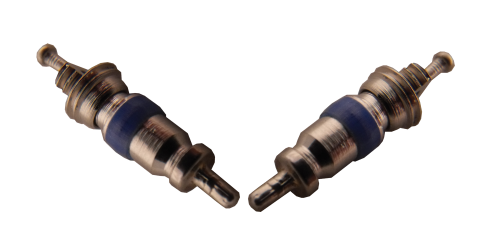

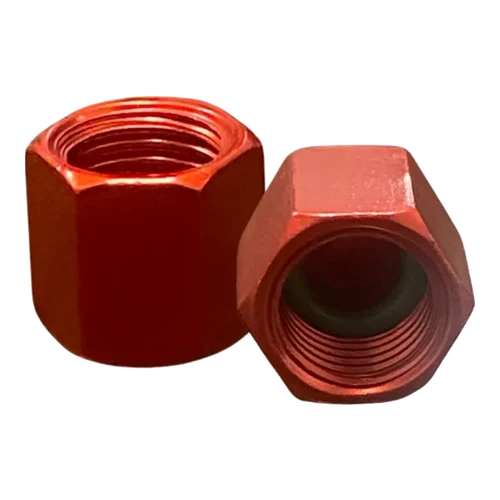
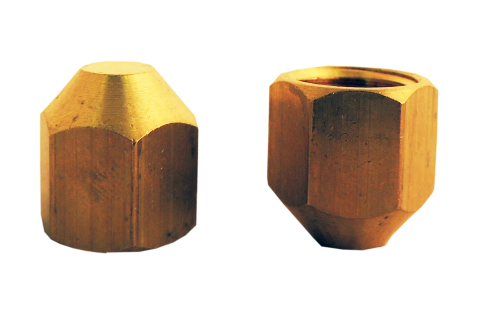
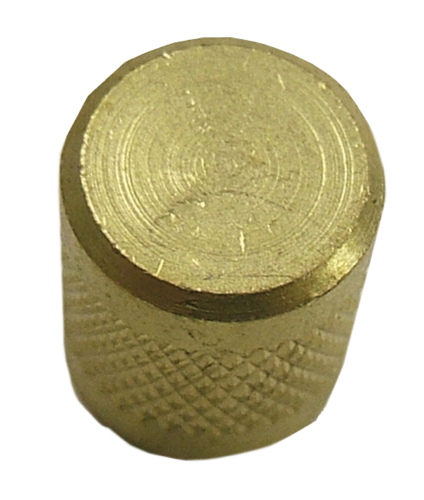


Refrigeration parts and accessories are what a technician reaches for on almost every service call. A walk-in that will not hold temperature, a rack that keeps tripping on low pressure or a display case stuck in defrost usually comes down to one failed component, and getting the right replacement on the truck quickly is what gets the customer back in business. This category gathers the controls, valves, sensors, electrical parts and OEM replacement components used to service and build commercial refrigeration systems in restaurants, convenience stores, supermarkets, warehouses and cold storage facilities.
You will find Danfoss KP pressure and temperature controls, MP 55 lube oil controls, AKV electronic expansion valves, CCM and CCMT CO2 regulating valves, AKS temperature sensors and pressure transmitters, ADAP-KOOL case controllers with their AK2 extension and communication modules, VLT Micro Drive variable frequency drives, along with valves and access fittings, locking caps, capillary tubing, motors, overloads, relays, defrost heaters, condensate pumps and Heatcraft and Copeland OEM parts such as drain pans, coils and condenser assemblies.
What Each Part Type Does
Pressure controls
Low pressure controls stop the compressor before suction pressure drops far enough to cause freezing, overheating or a loss of charge failure, and they are often used for pump down control. High pressure controls stop the compressor when discharge pressure climbs from a dirty condenser, a failed fan or an overcharge. Dual pressure controls combine both functions in one housing. Fan cycling controls hold head pressure stable in cold weather by switching condenser fans on and off. Oil pressure controls protect semi-hermetic compressors by shutting them down when the oil pressure differential stays too low for longer than the time delay.
Temperature controls, sensors and transmitters
Mechanical thermostats with a remote bulb or room sensing element switch a load directly at a set temperature. Electronic systems use temperature sensors such as the Danfoss AKS 11, AKS 12 and AKS 21 and pressure transmitters such as the AKS 32 to feed a controller, which then makes the decisions. Sensors are matched to the controller by resistance type, such as PT1000 or NTC, so the type matters as much as the lead length.
Expansion and regulating valves
Thermostatic expansion valves meter refrigerant based on superheat at the evaporator outlet. Electronic expansion valves, such as the Danfoss AKV family, are pulsed open and closed by a controller and also act as the liquid line solenoid. On transcritical CO2 systems, stepper motor valves such as the CCM and CCMT handle gas cooler pressure, flash gas bypass and receiver pressure duties. Orifice kits let you change valve capacity without replacing the valve body.
Electronic controllers and modules
Case and room controllers manage temperature, defrost, fans, lights, anti-sweat heaters and alarms. AK2 and AK-XM extension modules add inputs and outputs to a controller, and communication modules connect it to a store system manager over LON, Modbus or other networks. DIN rails, brackets, cables and transformers complete the installation.
Electrical and mechanical parts
Motors, capacitors, relays, overloads, contactors, defrost heaters and timers keep fans, compressors and defrost cycles running. Locking caps keep refrigerant secure at access ports, capillary tubing replaces damaged metering lines, and drain pans and condensate pumps manage water from the evaporator.
How to Choose the Right Replacement
- Start with the part number. Read the code number or OEM part number from the old part or the equipment's parts list. Many controls look identical but differ in range, differential, reset type or connection.
- Check the refrigerant. Valves, controls and transmitters are rated for specific refrigerants and pressures. A control set up for R-404A is not automatically correct for R-448A, R-449A or CO2.
- Match the range and differential. For pressure and temperature controls, confirm the cut-in, cut-out and differential the system needs, and whether it should reset automatically or manually.
- Confirm connections. Note flare or solder connection size, capillary length, sensor lead length and electrical ratings before ordering.
- Match the controller. Sensors, modules and valves must be compatible with the controller that runs them. Check the controller family and software version when expanding an existing Danfoss system.
- Watch for superseded parts. Manufacturers regularly replace older part numbers with newer versions. The replacement fits the same application but may look different or need a setting transferred.
Troubleshooting Tips
- Before replacing a pressure control, verify actual system pressures with gauges and compare them with the control's setting. Many controls that appear faulty are simply set wrong or reacting correctly to a real problem.
- When a box will not hold temperature, check the evaporator for ice, the condenser for dirt, and the expansion valve superheat before blaming the controller.
- For sensor alarms, measure the sensor's resistance at a known temperature and compare it with the manufacturer's chart. Damaged leads and loose terminals cause more alarms than failed sensors.
- A defrost that never terminates usually points to a termination sensor, a defrost heater, or the controller's defrost settings.
- If a new part fails quickly, look for the underlying cause, such as a shorted motor, a flooded compressor or a voltage problem.
Installation and Safety
- Refrigeration service requires EPA Section 608 certification for any work that opens the refrigerant circuit.
- Recover refrigerant properly, braze with a nitrogen purge, replace the filter drier and evacuate to a deep vacuum before recharging.
- Disconnect and lock out power before working on controls, motors or electrical components, and confirm it is off with a meter.
- Set and test every safety control after installation, and record settings for the next technician.
- Use the correct torque on flare connections and protect valve bodies from heat when brazing.
Stocking a Service Van
Many refrigeration contractors keep a small inventory of high-use parts so common calls can be finished on the first visit. A practical starting kit includes low and high pressure controls in the ranges you see most, a dual pressure control, a remote bulb thermostat, a few temperature sensors in common lead lengths, a pressure transmitter, condenser and evaporator fan motors with capacitors, a defrost termination switch, a filter drier assortment and locking caps. Restocking from the same listings each time keeps part numbers consistent across the fleet.
Reading Danfoss Code Numbers
Danfoss identifies each product with a code number, and learning a few patterns makes ordering faster. KP pressure controls sold in North America often carry numbers in the 060-5xxx range, and the listing describes the range, differential, reset type, connection and capillary length. KP thermostats use 060L code numbers. MP 55 lube oil controls carry 060B numbers that specify the time delay and differential. AKV electronic expansion valves use 068F numbers, with the orifice size shown in the type designation, such as AKV 10P3 or AKV 15-2. AKS 32 and AKS 32R pressure transmitters use 060G numbers that identify the pressure range and connection. Temperature sensors carry 084N numbers, ADAP-KOOL controllers and modules use 080Z numbers, and EKC controllers use 084B numbers.
When the label on an old part is worn or missing, the equipment's wiring diagram or parts list usually names the code number. If you only have the type designation, compare the range, connection and voltage on the product page with the original before ordering, and remember that the same type, such as a KP 1, can be built in several versions.
Frequently Asked Questions
Can I replace a mechanical control with an electronic controller?
Often yes. Electronic controllers offer tighter temperature control, smarter defrost and alarms, but they need compatible sensors and sometimes an electronic expansion valve. Plan the full conversion before ordering.
What does auto reset versus manual reset mean?
An auto reset control returns to normal on its own once pressure or temperature recovers. A manual reset control stays tripped until someone presses the reset button, which is common for high pressure safety controls.
Do Danfoss sensors work with other brands of controllers?
Only if the controller is designed for the same sensor type, such as PT1000. Check the controller's input specification before mixing brands.


