
-
Bohn
Bohn 1,000 BTU/h Thin Profile Reach-In Unit Cooler, Air Defrost, 115V 1-Phase | TA10AG
SKU: TA10AG-BOHN
$677.40- 🚚Qualifies for FREE Shipping
- ⚡Fast Shipping
Ships in 3-5 Business Days2 in stock -
Larkin
Larkin 1,000 BTU/h Thin Profile Reach-In Unit Cooler, Air Defrost, 115V 1-Phase | TA10AG
SKU: TA10AG-LARKIN
$1,079.25- 🚚Qualifies for FREE Shipping
- ⚡Fast Shipping
Ships in 3-5 Business Days2 in stock -
Bohn
Bohn 1,000 BTU/h Thin Profile Reach-In Unit Cooler, Coated Coil, Air Defrost, 115V 1-Phase | TAK10AG
SKU: TAK10AG-BOHN
$790.12- 🚚Qualifies for FREE Shipping
- ⚡Fast Shipping
Ships in 3-5 Business Days2 in stock -
Larkin
Larkin 1,000 BTU/h Thin Profile Reach-In Unit Cooler, Air Defrost, Coated Coil, 115V 1-Phase | TAK10AG
SKU: TAK10AG-LARKIN
$1,357.64- 🚚Qualifies for FREE Shipping
- ⚡Fast Shipping
Ships in 3-5 Business Days2 in stock -
Bohn
Bohn 1,000 BTU/h Back Bar Reach-In Unit Cooler, Electric Defrost, 115V 1-Phase | BBL10AG
SKU: BBL10AG
$2,360.12- 🚚Qualifies for FREE Shipping
- ⚡Fast Shipping
Ships from MFG in 2-4 Weeks10 in stock -
Bohn
Bohn 1,100 BTU/h Back Bar Reach-In Unit Cooler, Air Defrost, 115V 1-Phase | BBM11AG
SKU: BBM11AG
$1,683.68- 🚚Qualifies for FREE Shipping
- ⚡Fast Shipping
Ships in 3-5 Business Days2 in stock -
Bohn
Bohn 1,200 BTU/h V-Profile Reach-In Unit Cooler, Coated Coil, Air Defrost, 115V 1-Phase | VAK12AG
SKU: VAK12AG-BOHN
$1,299.55- 🚚Qualifies for FREE Shipping
- ⚡Fast Shipping
Ships in 3-5 Business DaysOnly 1 in stock -
Larkin
Larkin 1,200 BTU/h V-Profile Reach-In Unit Cooler, Air Defrost, Coated Coil, 115V 1-Phase | VAK12AG
SKU: VAK12AG-LARKIN
$801.68- 🚚Qualifies for FREE Shipping
- ⚡Fast Shipping
Ships in 3-5 Business DaysOnly 1 in stock -
Bohn
Bohn 1,200 BTU/h Thin Profile Reach-In Unit Cooler, Electric Defrost, 115V 1-Phase | TL12AG
SKU: TL12AG-BOHN
$1,962.27- 🚚Qualifies for FREE Shipping
- ⚡Fast Shipping
Ships in 3-5 Business Days30 in stock -
Larkin
Larkin 1,200 BTU/h Thin Profile Reach-In Unit Cooler, Electric Defrost, 115V 1-Phase | TL12AG
SKU: TL12AG-LARKIN
$1,892.51- 🚚Qualifies for FREE Shipping
- ⚡Fast Shipping
Ships in 3-5 Business Days30 in stock -
$777.13
- 🚚Qualifies for FREE Shipping
- ⚡Fast Shipping
Ships from MFG in 2-4 Weeks10 in stock -
Larkin
Larkin 1,300 BTU/h Thin Profile Reach-In Unit Cooler, Air Defrost, Coated Coil, 115V 1-Phase | TAK13AG
SKU: TAK13AG-LARKIN
$711.46- 🚚Qualifies for FREE Shipping
- ⚡Fast Shipping
Ships in 3-5 Business DaysOnly 1 in stock
Buying guidance
Unit Coolers & Evaporators
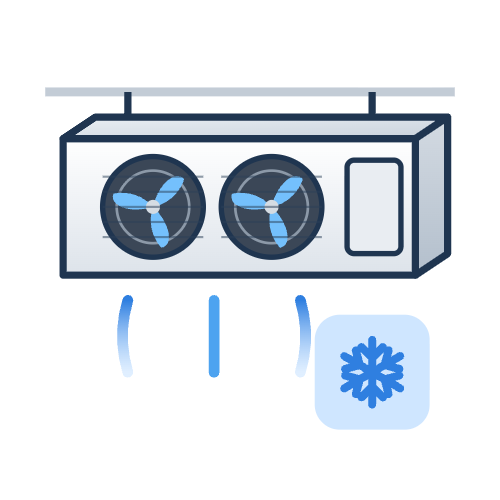

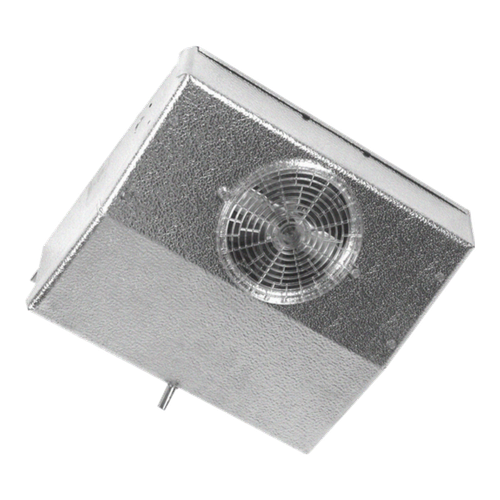


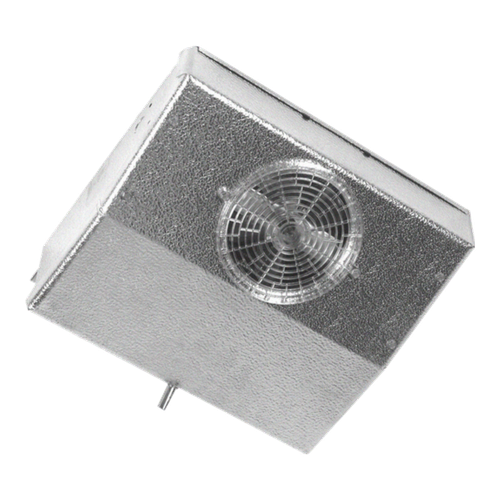
The unit cooler is the inside half of a commercial refrigeration system. Mounted in the walk-in or case, it pulls warm air across a refrigerated coil and blows cold air back into the space. It also handles moisture: water removed from the air drains away, and in freezers the coil defrosts on a schedule to clear ice.
This category covers unit coolers and evaporators from Bohn, Larkin, Kramer, RDI and Russell. Styles include low profile, medium profile, center mount, large unit coolers and reach-in or specialty coils, with air, electric and hot gas defrost options, standard or EC fan motors, and a wide range of capacities for both cooler and freezer duty.
Choosing the Right Unit Cooler
Capacity comes first. Unit coolers are rated in BTU/h at a temperature difference (TD) between the box air and the refrigerant. Coolers commonly use a 10°F TD, which keeps humidity higher for fresh product. Freezers commonly use about a 10°F TD as well. Match the rated capacity at your TD to the box load and to the condensing unit.
Style follows the box. Low profile units fit low ceilings and small boxes. Medium profile and large unit coolers throw air farther in long or tall boxes. Center mount units hang in the middle of the ceiling and blow both directions, which suits square boxes and prep rooms. Reach-in coils fit inside cases and back bars.
Defrost depends on temperature. Coolers usually use air (off-cycle) defrost. Freezers need electric or hot gas defrost to melt ice from the coil.
Buying Tips
- Check air throw. The listed throw should reach the far wall of the box so there are no warm spots.
- Mind fin spacing. Freezer coils use wider fin spacing so frost does not block airflow between defrosts.
- Consider EC motors. Electronically commutated fan motors use less energy than shaded-pole motors, and some areas require them.
- Match the expansion valve. The valve must suit the refrigerant and capacity. Many units list the recommended valve.
Unit Cooler Types
Low profile for small boxes and low ceilings. Medium profile for mid-size boxes that need longer throw. Center mount for square rooms and prep areas. Large unit coolers for warehouses and big boxes. Reach-in and specialty coils for cases, back bars and small spaces.
What It Takes to Install
A licensed, EPA Section 608 certified refrigeration contractor should install unit coolers. The coil is hung level with the specified clearance from walls and ceiling, the expansion valve and refrigerant lines are connected, the condensate drain is pitched and trapped outside the box (heated in freezers), and the fans, defrost and controls are wired and tested.
Things You Should Know Before You Buy
Local building, electrical and energy codes apply and vary by location, so confirm requirements with your contractor or local building department. Refrigerant rules are also changing, so verify that the refrigerant you choose is permitted for your application.
Frequently Asked Questions
Q: What is the difference between a unit cooler and an evaporator?
A: In commercial refrigeration the terms are used interchangeably. A unit cooler is a packaged evaporator coil with fans, a drain pan and defrost components.
Q: Can I use a cooler unit cooler in a freezer?
A: Not usually. Freezer unit coolers have electric or hot gas defrost, wider fin spacing and drain heaters. Cooler models typically rely on off-cycle defrost and cannot keep a freezer coil clear.
Q: How do I size a unit cooler?
A: Match its BTU/h rating at your design temperature difference to the box load, and make sure the condensing unit is rated for the same capacity at the same suction temperature.
Q: Does a unit cooler include the condensing unit?
A: No. Unit coolers are the indoor half only. For a complete package, shop our matched walk-in cooler and walk-in freezer systems.


