The Brand Story
Larkin: Nearly a Century of Keeping the Cold Room Clean
Walk into the back of almost any busy restaurant just before the dinner rush and you will find the same scene: a cook shouldering open a heavy insulated door, a blast of cold air, shelves of produce, proteins and sauces waiting under the soft hum of a unit cooler mounted near the ceiling. Nobody looks up at it. That is the point. For a walk-in cooler, the best compliment is silence, steady temperature and a coil that stays clean year after year. Larkin has been building toward that quiet kind of reliability since 1928, and today the name sits on a long row of white unit coolers, reach-in coils and condensing units that keep kitchens, labs and stores running.
Chapter 1 · 1928
A brand built for clean environments
Larkin traces its work in commercial refrigeration back to 1928, and from the start its reputation was tied to places where cleanliness matters as much as cold: foodservice kitchens, prep rooms and storage spaces where equipment has to be easy to wipe down and slow to collect grime. That focus explains a detail many contractors recognize at a glance. Larkin unit coolers have long been associated with white cabinets, a look that suits stainless kitchens and food-safe environments.
Over the decades the brand's territory grew well beyond restaurants. Its maker now describes Larkin equipment serving mission-critical rooms such as data centers and biomedical laboratories, spaces where a temperature excursion is not an inconvenience but a loss.
Chapter 2 · 1973
Joining a family that began in an Iowa machine shop
Larkin's modern story runs through Lennox International, a company Dave Lennox founded in 1895 in Marshalltown, Iowa, a small Midwestern town far from any walk-in cooler. Lennox grew into one of the country's best-known heating and cooling manufacturers, and in 1973 it widened its reach into commercial refrigeration by acquiring Heatcraft, which brought the Larkin, Bohn, Chandler and Climate Control names under one roof.
The result was an unusual family of sister brands, each with its own customers. Bohn grew up serving supermarkets and grocery stores. Chandler, in commercial refrigeration since 1933, engineers custom systems for large warehouses and cold storage. Climate Control arrived in the 1970s and became a familiar name in convenience stores. Larkin kept its focus on foodservice and clean spaces.
Chapter 3 · 1990 to 2008
Tifton, Georgia, and a lab of its own
Much of the Larkin story is written in south Georgia. In 1990 a plant in Tifton that had originally been an independent Larkin facility became part of Heatcraft Refrigeration Products. It grew into a manufacturing campus of about 560,000 square feet with roughly 500 employees, and in 2008 a second building was added.
In 1993 Heatcraft founded what it calls its Global Lab, about 30,000 square feet of space devoted to testing and developing refrigeration equipment. In 2008 that lab was accepted into UL's Client Test Data Program, a recognition that its own test data can support product certification. For a coil or condensing unit, that means ratings, defrost performance and safety are proved out before a product ever reaches a walk-in.
Chapter 4 · Today
Stone Mountain and the North American business
Heatcraft Refrigeration Products is headquartered in Stone Mountain, Georgia, about 20 miles east of Atlanta, in a 120,000-square-foot complex that houses executive, sales and marketing teams alongside research, development and custom fabrication. Finished equipment is warehoused in Tifton and in Eastvale, California.
The parent company has reshaped itself around it. In 2010 Lennox bought Kysor/Warren from The Manitowoc Company for $138 million, adding supermarket display cases. In 2023 Lennox sold its European commercial HVAC and refrigeration businesses to funds managed by Syntagma Capital. The North American refrigeration business, including Larkin, remains part of Lennox, which is headquartered in Richardson, Texas.
The Lineup
What Larkin builds today
Larkin builds the two halves of a walk-in or reach-in refrigeration system: the evaporator inside the box and the condensing unit that rejects the heat outside, plus the controls that tie them together. The Larkin equipment HVAC365 carries spans the following families:
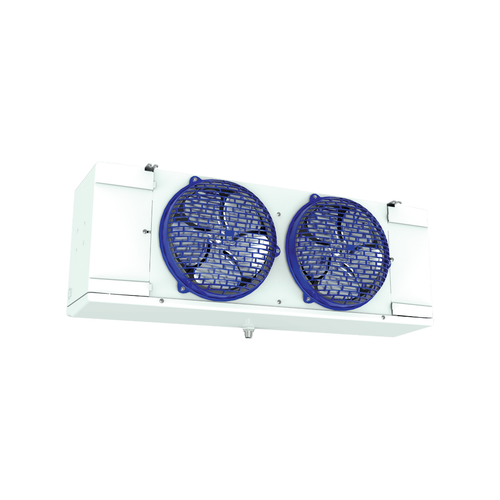
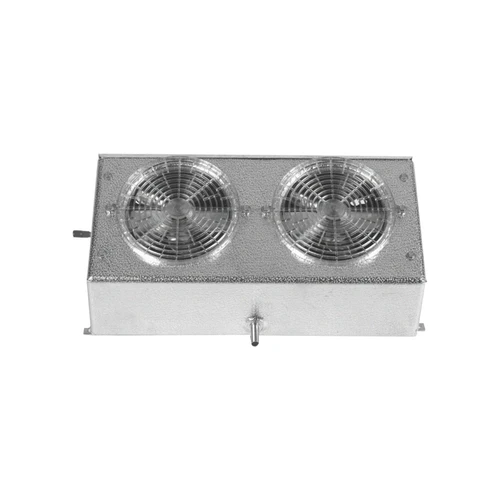
- Low profile unit coolers: the workhorse of the small and medium walk-in, offered with PSC motors or 2-speed EC motors and with air or electric defrost for cooler and freezer duty.
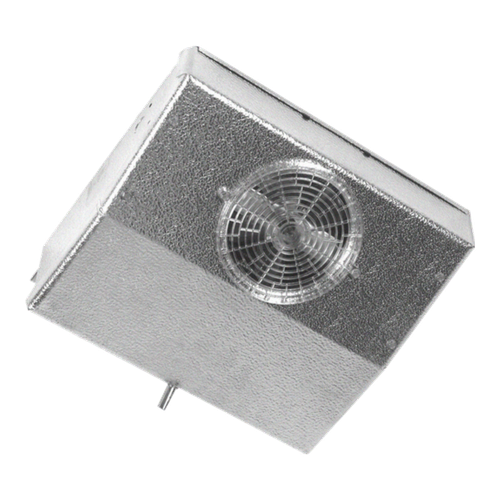
- Center mount and low velocity center mount coolers: ceiling-hung units that throw air in two directions, with the low velocity versions built for prep rooms and floral or produce spaces where people work and drafts matter. Several are offered with intelliGen controls.
- Large unit coolers: high-capacity evaporators for bigger boxes and distribution rooms, including 3-phase models.
- Reach-in and specialty coolers: Thin Profile coils for reach-in cabinets and display cases, including coated-coil versions, plus Reverse Mullion coils that tuck into the frame between glass doors.
- Medium temp condensing units: air-cooled units from fractional horsepower up through large multi-horsepower models for walk-in coolers, including extended medium temp outdoor hermetic units.
- Low temp condensing units: outdoor scroll and hermetic units for freezers, including models ready for A2L refrigerants.
Browse the full range under unit coolers and evaporators and refrigeration condensing units.
The Next Chapter
A2L refrigerants arrive in the walk-in
Commercial refrigeration is in the middle of its own refrigerant transition. Higher-GWP blends like R-404A are giving way to newer options, and some of the leading replacements, including R-454A, R-454C and R-455A, carry an A2L, or mildly flammable, safety classification. That changes how equipment is designed and installed. Newer Larkin condensing units are listed for these A2L refrigerants, and some Larkin unit coolers are described as A2L ready with provisions for refrigerant detection systems, the sensors that watch for a leak inside the box. For contractors it means matching the evaporator, the condensing unit and the refrigerant carefully, and following the manufacturer's A2L installation guidance on every job.
At a Glance
Larkin by the numbers
- Serving clean environments since
- 1928
- Manufacturer
- Heatcraft Refrigeration Products
- Parent company
- Lennox International
- Joined Lennox family
- 1973, with Heatcraft
- Headquarters
- Stone Mountain, Georgia
- Main plant
- Tifton, Georgia, about 560,000 sq ft
- Sister brands
- Bohn, Chandler, Climate Control
- Focus
- Foodservice and mission-critical refrigeration
Questions
Frequently asked questions about Larkin
Who makes Larkin refrigeration equipment?
Larkin is built by Heatcraft Refrigeration Products, the commercial refrigeration business of Lennox International. Lennox acquired Heatcraft, including the Larkin brand, in 1973.
Where is Larkin equipment made?
Heatcraft's main manufacturing campus is in Tifton, Georgia, a plant that began as an independent Larkin facility. The company is headquartered in Stone Mountain, Georgia, near Atlanta.
How old is the Larkin brand?
Larkin dates its work in refrigeration for clean environments back to 1928, making it one of the longest-running names in walk-in and reach-in refrigeration.
What is the difference between Larkin and Bohn?
Both are Heatcraft brands built by the same company. Larkin is focused on foodservice and clean, mission-critical environments, while Bohn grew up serving supermarkets, grocery stores and retail refrigeration.
Does Larkin make equipment for A2L refrigerants?
Yes. Newer Larkin condensing units are listed for A2L refrigerants such as R-454A, R-454C and R-455A, and some Larkin unit coolers are A2L ready with provisions for refrigerant detection systems.
What is a low profile unit cooler?
A low profile unit cooler is a compact evaporator that mounts high on a walk-in wall or ceiling to save headroom. It is the most common evaporator style in small and medium walk-in coolers and freezers.