
-
MRCOOL
MRCOOL Compact Refrigeration System 12,000 BTU Walk-In Cooler Through-Wall Monoblock R-32 230V | MMFDW12D
SKU: MMFDW12D
$2,751.35- 🚚Qualifies for FREE Shipping
- ⚡Fast Shipping
Special Order - Ships in 2-3 Weeks -
Copeland
Copeland 1/6 HP Medium Temp M-Line Hermetic Condensing Unit, Air-Cooled, Multi-Refrigerant, 115V 1-Phase | M6JM-H023-IAA-177
SKU: M6JM-H023-IAA-177
$1,574.92- 🚚Qualifies for FREE Shipping
- ⚡Fast Shipping
Ships in 3-5 Business Days10 in stock -
Bohn
Bohn 1/2 HP Medium Temp Scroll Air-Cooled Condensing Unit, 208/230V 1-Phase | BCH0005MBACZA0000
SKU: BCH0005MBACZA0000
$4,243.71- 🚚Qualifies for FREE Shipping
- ⚡Fast Shipping
Ships in 1-2 Business DaysOnly 1 in stock -
Larkin
Larkin 0.5 HP Medium Temp Outdoor Scroll Condensing Unit, R-448A/R-404A, Electric Defrost Timer, 208/230V 3-Phase | LCH0005MCACZA0200
SKU: LCH0005MCACZA0200
$5,403.85- 🚚Qualifies for FREE Shipping
- ⚡Fast Shipping
Ships from MFG in 2-4 Weeks10 in stock -
Kramer
Kramer 1/2 HP Medium Temp Scroll Next-Gen MiniCon Condensing Unit, R-454A/R-454C/R-455A, 208/230V 1-Phase | KFON060M4ADA
SKU: KFON060M4ADA
$5,089.75- 🚚Qualifies for FREE Shipping
- ⚡Fast Shipping
Ships in 3-5 Business DaysOnly 1 in stock -
Copeland
Copeland 1/2 HP Multi-Temp M-Line Hermetic Condensing Unit, Air-Cooled, Multi-Refrigerant, 115V 1-Phase | M6ZP-0053-IAA-177
SKU: M6ZP-0053-IAA-177
$1,677.59- 🚚Qualifies for FREE Shipping
- ⚡Fast Shipping
Ships in 3-5 Business Days10 in stock -
RDI Systems
RDI Systems 3/4 HP Medium Temp Scroll Pre-Charged Condensing Unit, R-404A, 208/230V 1-Phase | PC69MZOP-2E
SKU: PC69MZOP-2E
$6,187.69- 🚚Qualifies for FREE Shipping
- ⚡Fast Shipping
Ships in 3-5 Business Days10 in stock -
Bohn
Bohn 1/2 HP Medium Temp Scroll Air-Cooled Condensing Unit, 208/230V 3-Phase | BCH0005MCACZA0000
SKU: BCH0005MCACZA0000
$4,243.71- 🚚Qualifies for FREE Shipping
- ⚡Fast Shipping
Ships in 1-2 Business Days6 in stock -
Larkin
Larkin 0.5 HP Medium Temp Outdoor Scroll Condensing Unit, R-448A/R-404A, Electric Defrost Timer, 208/230V 1-Phase | LCH0005MBACZA0200
SKU: LCH0005MBACZA0200
$5,454.16- 🚚Qualifies for FREE Shipping
- ⚡Fast Shipping
Ships from MFG in 2-4 Weeks10 in stock -
Copeland
Copeland 1/4 HP Low Temp M-Line Hermetic Condensing Unit, Air-Cooled, Multi-Refrigerant, 115V 1-Phase | M6JL-H030-IAA-177
SKU: M6JL-H030-IAA-177
$1,788.59- 🚚Qualifies for FREE Shipping
- ⚡Fast Shipping
Ships in 1-2 Business Days10 in stock -
Kramer
Kramer 1/2 HP Medium Temp Scroll Next-Gen MiniCon Condensing Unit, R-448A/R-449A/R-404A, 208/230V 1-Phase | KFO060M4SDA
SKU: KFO060M4SDA
$5,191.00- 🚚Qualifies for FREE Shipping
- ⚡Fast Shipping
Ships in 3-5 Business DaysOnly 1 in stock -
Bohn
Bohn 1.9 HP Low Temp Hermetic Reciprocating Air-Cooled Condensing Unit, Preconfigured Electric Defrost Timer, 208/230V 3-Phase | BCH0019LCACHA0200
SKU: BCH0019LCACHA0200
$4,277.96- 🚚Qualifies for FREE Shipping
- ⚡Fast Shipping
Ships from MFG in 2-4 Weeks10 in stock
Buying guidance
Refrigeration Condensing Units
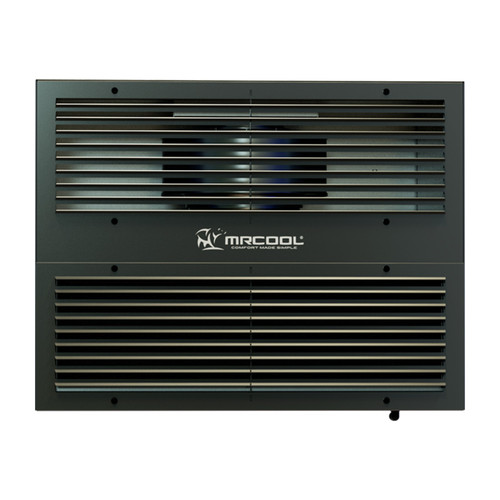

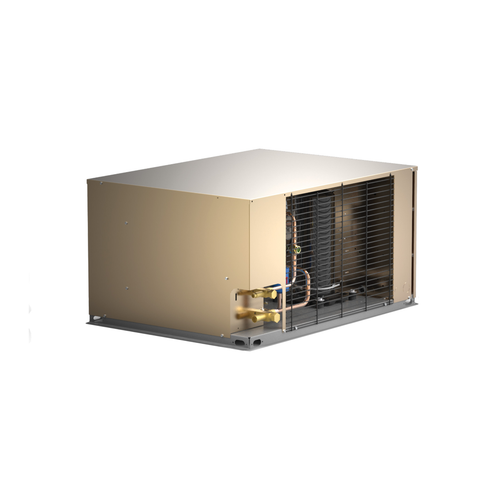

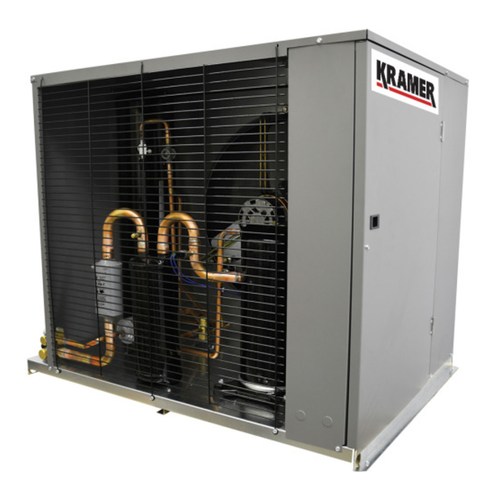


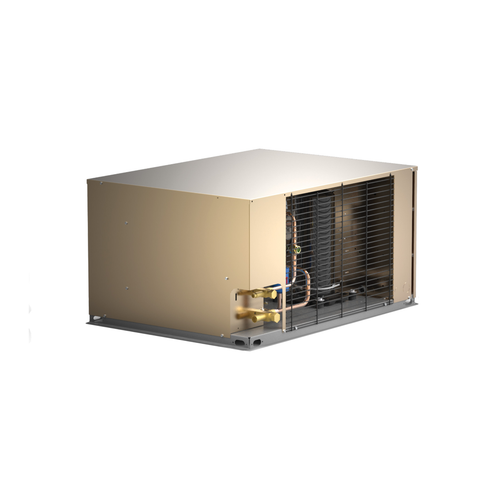


The condensing unit is the outdoor half of a commercial refrigeration system. It houses the compressor that pumps refrigerant, the condenser coil and fans that reject heat, and the controls that keep everything running safely. Paired with a unit cooler or display case inside, it is what keeps a walk-in cooler, walk-in freezer or reach-in case at temperature day after day.
This category covers air-cooled condensing units from Bohn, Copeland, Larkin and other established refrigeration brands. Units are split into medium-temperature models for coolers and fresh product and low-temperature models for freezers, with scroll and hermetic reciprocating compressors, a range of horsepower ratings and single-phase or three-phase power.
Choosing the Right Condensing Unit
The first decision is temperature range. Medium-temperature units run at suction temperatures suitable for boxes around 35°F to 40°F. Low-temperature units are built for boxes from about -10°F to -20°F. A unit selected for the wrong range will either fail to reach temperature or run outside its compressor envelope.
Next is capacity. Condensing units are rated in BTU/h at a given saturated suction temperature and ambient temperature, and horsepower is only a rough guide. Match the unit to the calculated box load and to the unit cooler it will serve, using the manufacturer's rating at your design conditions.
Then confirm refrigerant, voltage and phase, and the location. Hot rooftops and enclosed mechanical rooms reduce capacity. Cold climates may need head pressure control and a crankcase heater for reliable winter operation.
Buying Tips
- Match the evaporator. The condensing unit and unit cooler must be balanced. If you are replacing only one half, compare capacities at the same suction temperature.
- Check the refrigerant. Confirm the unit is approved for the refrigerant in the system or the one you plan to use.
- Look at the options. Preconfigured units may already include a receiver, sight glass, filter drier, pressure controls or low-ambient kit. Compare listings carefully.
- Consider a matched system. If you are building a new walk-in, our walk-in cooler and freezer systems pair the condensing unit with the right unit cooler for you.
Condensing Unit Types
Scroll units are quiet and efficient with few moving parts. Hermetic reciprocating units are a proven, economical choice for smaller loads. Indoor and outdoor housings differ in weather protection and fan arrangement. Preconfigured units ship with common accessories already installed to save time on the job.
What It Takes to Install a Condensing Unit
Installation requires a licensed refrigeration contractor with EPA Section 608 certification. The unit is set level with clearance for airflow, refrigerant lines are sized, brazed under nitrogen and pressure tested, the system is evacuated to a deep vacuum and charged, and electrical and safety controls are wired and tested.
Things You Should Know Before You Buy
Local building, electrical, mechanical and energy codes apply and vary by location, so confirm requirements with your contractor or building department. Refrigerant regulations are also changing, so verify that the refrigerant you choose is permitted for your application.
Frequently Asked Questions
Q: What is the difference between medium temp and low temp condensing units?
A: Medium-temperature units are built for coolers and fresh product held around 35°F to 40°F. Low-temperature units are built for freezers held around -10°F to -20°F. They use different compressors and are not interchangeable.
Q: Can I size a condensing unit by horsepower?
A: Only as a rough guide. Capacity depends on suction temperature, ambient temperature and refrigerant. Use the BTU/h rating at your design conditions and match it to the box load and the unit cooler.
Q: Does a condensing unit come with a unit cooler?
A: Not in this category. These are condensing units only. For a complete package, shop our walk-in cooler and walk-in freezer systems.
Q: Can a condensing unit be installed outdoors?
A: Most air-cooled condensing units are designed for outdoor installation. In cold climates, head pressure control and a crankcase heater help the system run reliably in winter.


