The Brand Story
Bohn: A Detroit Foundry Name That Learned to Keep Things Cold
It is two in the morning behind a neighborhood restaurant. The kitchen is dark, the last cook has gone home, and inside the walk-in cooler a fan keeps turning, pulling air across a cold coil so that tomorrow's produce, dairy and fish are still good at sunrise. Nobody thinks about that box until it stops. On a great many of those coils, the name on the label is Bohn, a name that started out in the metal shops of Detroit and now belongs to the commercial refrigeration business of Lennox International.
Chapter 1 · 1924
Metal first, cold later
The Bohn story begins with castings, not compressors. In 1924 the C.B. Bohn Foundry Company merged with the General Aluminium and Brass Company to form the Bohn Aluminum and Brass Corporation in Detroit, a city whose factories ran on aluminum, brass and bronze parts. The company became known for its striking advertising, which imagined a streamlined, futuristic world built from the metals it poured.
Metalworking and heat transfer are close cousins. A refrigeration coil is, at heart, a careful arrangement of tubes and fins that moves heat from one place to another, and inside the Bohn organization a heat transfer business took shape. It would eventually carry the name Bohn Heat Transfer, and it would outlive the foundry that gave it its name.
Chapter 2 · 1963 to the 1980s
A name passed from hand to hand
Like many mid-century industrial companies, Bohn was absorbed into a series of conglomerates. It merged into Universal American Corporation in 1963, and Universal American merged into Gulf and Western Industries in 1966. The business later ended up with the Wickes Companies, which eventually split it in two. The aluminum and brass operations went to Norsk Hydro. The Heat Transfer Group, including Bohn Heat Transfer, went to Heatcraft, a subsidiary of Lennox International.
It was not the only refrigeration name with a Wickes chapter. Larkin, another long-running commercial refrigeration brand that would end up under the same roof, had also been part of the Wickes world before joining Heatcraft.
Chapter 3 · 1973 to 1990
Finding a home at Heatcraft
Heatcraft had its own path to Lennox. The Tennessee-based company, a maker of coils, condensing units and copper tubing, was acquired by Lennox from PEP Industries in 1973. Through the late 1980s Heatcraft grew by buying plants: a coil and copper tube operation in Grenada, Mississippi, and in 1988 a refrigeration products plant in Wilmington, North Carolina.
Lennox's own filings record that Heatcraft acquired Bohn Heat Transfer in 1990. That same year, a plant in Tifton, Georgia, which had begun life as an independent Larkin facility, joined Heatcraft Refrigeration Products under the Lennox umbrella. The Bohn name, nearly seven decades removed from its foundry, now sat alongside Larkin in a company built entirely around heat transfer and refrigeration.
Chapter 4 · 1993 to today
Stone Mountain, Tifton and the lab between them
Today Heatcraft Refrigeration Products operates as a business segment of Lennox International, which is headquartered in Richardson, Texas, and traces its roots to a furnace business in Marshalltown, Iowa. Heatcraft's headquarters is a 120,000 square foot complex in Stone Mountain, Georgia, outside Atlanta. Its manufacturing heart is the Tifton plant, a 560,000 square foot facility that employs about 500 people and added a second building in 2008, with warehousing in Tifton and in Eastvale, California.
In 1993 the company founded its Global Lab, about 30,000 square feet of test space where coils, fans and condensing units are run through their paces. In 2008 the lab was recognized as a UL Client Test Data Program lab. Heatcraft now goes to market under several names, including Bohn, Larkin, Climate Control and Chandler, along with InterLink parts and intelliGen controls. In 2023 Lennox sold its European commercial HVAC and refrigeration businesses, while Heatcraft Refrigeration Products remains a Lennox business in North America.
The Lineup
What Bohn builds today
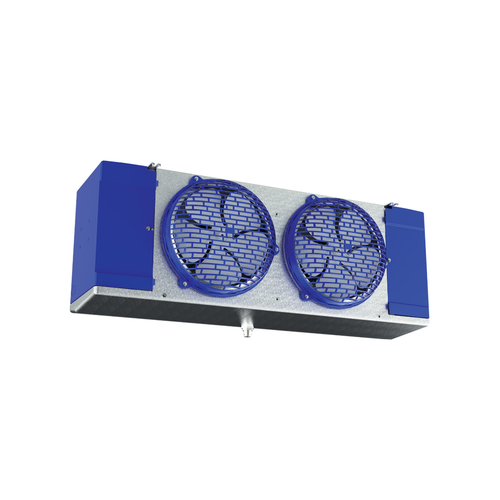
Heatcraft's refrigeration catalog covers nearly every piece of a commercial cold room: walk-in unit coolers in low profile, center mount and medium profile styles, large warehouse coolers, reach-in coolers for display cases and back bars, air-cooled condensing units from fractional horsepower up to 100 HP, water-cooled condensing units, remote compressor units, PRO3 packaged systems, air-cooled condensers and gas coolers, and the controls that tie them together. These are the pieces behind supermarkets, convenience stores, restaurants, warehouses and distribution centers. Here is what HVAC365 carries from Bohn:
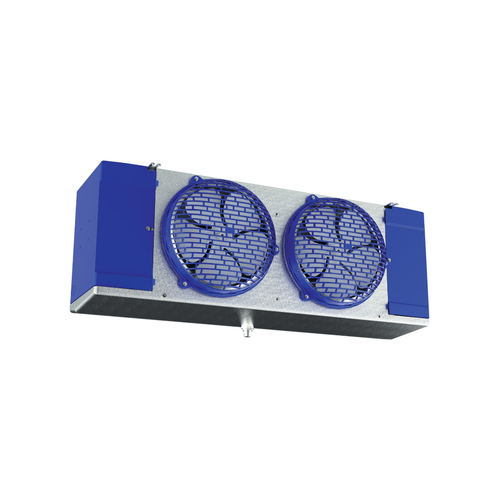
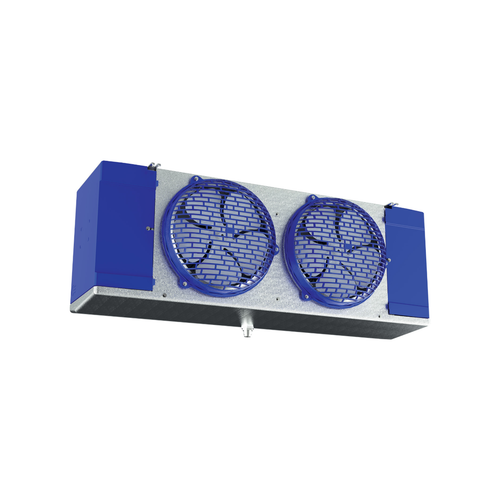
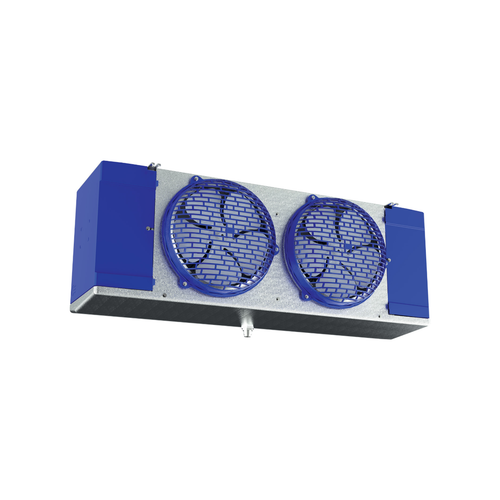
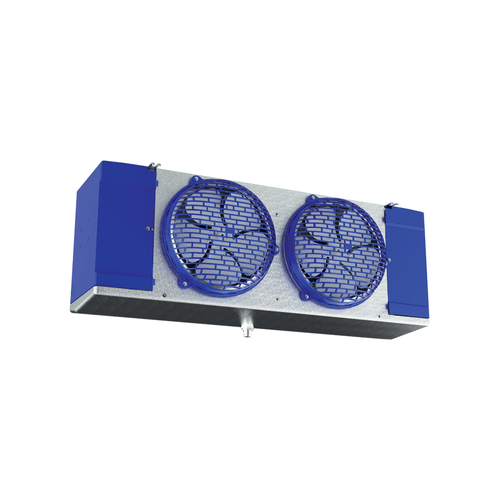
- Low profile unit coolers: slim evaporators for walk-in boxes with limited headroom, such as 4,500 and 5,200 BTU/h air defrost models on 115V, including versions with two-speed EC fan motors.
- Unit coolers and evaporators: the wider family, including center mount evaporators like the 9,500 BTU/h two-speed EC model that hang in the middle of a box and throw air in two directions.
- Reach-in and specialty unit coolers: back bar, mullion, twin flow, V-profile and thin profile coolers from about 800 to 5,500 BTU/h, some with coated coils for harsher environments.
- Medium temperature condensing units: for coolers held above freezing, including a 3/4 HP scroll air-cooled unit with a preconfigured electric defrost timer and extended medium temperature hermetic reciprocating units, air-cooled and water-cooled.
- Low temperature condensing units: the outdoor half of freezer systems, matched to low temperature unit coolers with electric defrost.
- All refrigeration condensing units: the full range of Bohn air-cooled and water-cooled condensing units in single-phase and three-phase power.
The Next Chapter
A refrigerant rulebook in motion
Commercial refrigeration is in the middle of its own refrigerant transition. Under the EPA's HFC Technology Transitions rule, new remote condensing unit systems were scheduled to face global warming potential limits of 150 or 300, depending on charge size, beginning January 1, 2026. In October 2025 the EPA proposed an interim limit of 1,400 for those systems through 2031, with the stricter limits returning in 2032. Because the rule has been changing, the refrigerant for any new walk-in system should be confirmed against current federal requirements and the equipment nameplate before installation.
At a Glance
Bohn by the numbers
- Name origin
- C.B. Bohn Foundry Company
- Corporate roots
- Detroit, Michigan, 1924
- Joined Heatcraft
- 1990
- Parent company
- Lennox International
- Business unit
- Heatcraft Refrigeration Products
- Headquarters
- Stone Mountain, Georgia
- Heatcraft plant
- Tifton, Georgia, 560,000 sq ft
- Sister brands
- Larkin, Climate Control, Chandler
- Focus
- Unit coolers and condensing units
Questions
Frequently asked questions about Bohn
Who makes Bohn refrigeration equipment?
Bohn is a brand of Heatcraft Refrigeration Products, a business segment of Lennox International. Heatcraft acquired Bohn Heat Transfer in 1990.
Where is Heatcraft Refrigeration Products based?
Heatcraft is headquartered in Stone Mountain, Georgia, and operates a 560,000 square foot manufacturing plant in Tifton, Georgia.
Where does the Bohn name come from?
It traces back to the C.B. Bohn Foundry Company, which merged with the General Aluminium and Brass Company in 1924 to form the Bohn Aluminum and Brass Corporation in Detroit.
How is Bohn related to Larkin, Climate Control and Chandler?
All four are commercial refrigeration brands under the Heatcraft Refrigeration Products umbrella at Lennox International, each with its own heritage.
What does a unit cooler do?
A unit cooler is the evaporator inside a walk-in or reach-in box. Its fans move air across a cold coil to pull heat out of the space, while a matching condensing unit outside the box rejects that heat.
What is the difference between medium temp and low temp condensing units?
Medium temperature systems are built for coolers that hold product above freezing, while low temperature systems are built for freezers and typically pair with electric defrost unit coolers.