null

Start Capacitors

Start capacitors do one thing: deliver a big burst of starting torque for the first fraction of a second a motor or compressor runs. They're found in hard start kits, on compressors that need help starting against pressure, and on capacitor-start motors used in pumps, compressors, commercial equipment and some appliances. They work hard for a moment and then rest, which is exactly how they're designed.

This category covers replacement start capacitors in a wide range of MFD ranges and voltage ratings from about 110 to 330 volts, with and without bleed resistors. Most are from Supco, a supplier of HVAC and refrigeration replacement parts since 1945.

A failed start capacitor is easy to spot when it has burst, but it can also fail quietly. Knowing how start capacitors differ from run capacitors, and how to read the label, will help you pick the right one.

How a Start Capacitor Works

Like a run capacitor, a start capacitor creates a phase shift in a motor's start winding. The difference is scale and duty. Start capacitors have much higher capacitance, often in the range of tens to hundreds of microfarads, which gives a big jump in starting torque. That torque lets a compressor start against unequal pressures or lets a motor start under load.

Start capacitors are electrolytic, built in a compact plastic case and rated for intermittent duty only. They must be removed from the circuit within moments of startup. That's the job of a switching device:

  • Potential relay: Common on compressors and hard start kits. The relay opens its contacts when the motor's back-EMF rises as it reaches speed.
  • Current relay: Common on small refrigeration compressors. It drops the start circuit when current falls after startup.
  • PTC device or electronic switch: Used in many hard start kits.
  • Centrifugal switch: Used inside capacitor-start motors, opening as the rotor reaches speed.

If the switching device fails closed and leaves the start capacitor in the circuit, the capacitor overheats and fails quickly, often by venting or bursting. When you replace a failed start capacitor, always check the relay or switch too.

What the bleed resistor does

Many start capacitors have a resistor connected across their terminals. When a potential relay opens, the capacitor can hold a significant charge. If the relay contacts close again while that charge remains, they can arc and weld. The bleed resistor drains the charge between starts, which protects the relay contacts and reduces shock risk during service. If the original had a bleed resistor, the replacement should have one or you should add one.

Signs a Start Capacitor Is Failing

  • Hard starting returns: A compressor or motor that started fine with a hard start kit begins humming or tripping again.
  • Swollen, cracked or vented case: A bulged top or a blown vent plug usually means overheating, often from being left in the circuit too long.
  • Burned smell or residue: Electrolyte that has leaked or burned out of the case.
  • Low or no capacitance reading: Measured MFD below the labeled range, or an open reading.
  • Shorted reading: Very low resistance across the terminals with a discharged capacitor.
  • Relay problems: Burned or welded contacts on the potential or current relay, which often go hand in hand with capacitor failure.

How to Choose the Right Start Capacitor

Match the MFD range

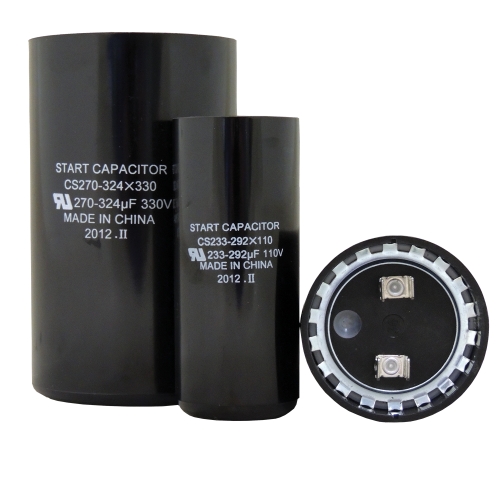
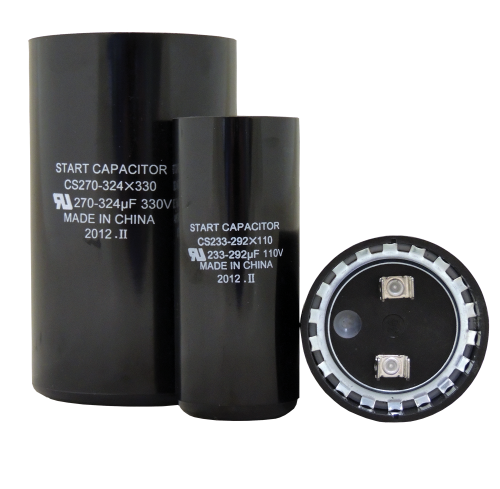
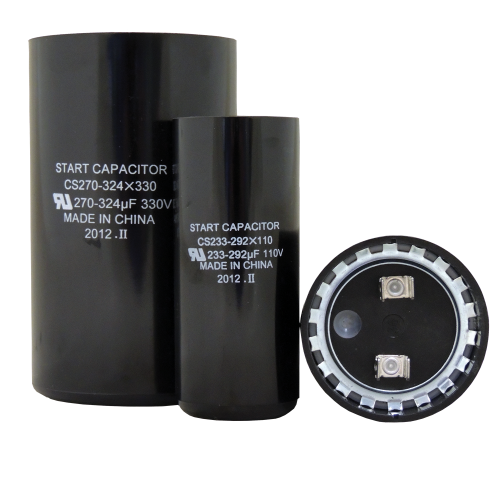
Start capacitors are labeled with a range rather than a single value, such as 88-108 MFD or 189-227 MFD. The replacement should cover the same range. A slightly higher range is sometimes used in the field, but staying close to the original rating keeps starting current and start winding temperature where the manufacturer intended.

Match or exceed the voltage

Start capacitor voltage ratings commonly include 110-125V, 165V, 220-250V and 330V. As with run capacitors, the replacement can have the same or a higher voltage rating but never a lower one. For 208-240V compressors and hard start kits, a 250V or 330V capacitor is typical.

Check for a bleed resistor

If the original had a bleed resistor, or the capacitor is used with a potential relay, choose one with a resistor installed.

Check the size and terminals

Start capacitors come in several diameters and lengths, usually with quick-connect terminals. Make sure the replacement fits the mounting clip or bracket and the space available.

FeatureStart capacitorRun capacitor
Duty ratingIntermittent, seconds at a timeContinuous
Typical capacitanceTens to hundreds of MFD, labeled as a rangeSingle digits to about 80 MFD, labeled as one value
Typical voltage110-330V370V or 440V
ConstructionElectrolytic, plastic casePolypropylene film, metal case, oil-filled
Needs a switching deviceYes: relay, PTC, electronic or centrifugal switchNo
Bleed resistorCommon, especially with potential relaysNot typically used

Cross-reference the OEM number

OEM start capacitors are often labeled with the equipment manufacturer's part number. Read the MFD range and voltage, then check the cross-reference data on the product page.

Installation and Safety Tips

  • De-energize and verify: Turn off the disconnect and confirm zero voltage with a meter.
  • Discharge before touching: Even with a bleed resistor, discharge the capacitor with an insulated resistor tool before handling. A failed bleed resistor won't drain the charge.
  • Inspect the relay: Look for burned, pitted or welded contacts. A failed relay will destroy a new start capacitor quickly.
  • Use the wiring diagram: Start capacitors are wired in series with the start winding through the relay. Follow the equipment or kit diagram, and photograph the original wiring before removal.
  • Mount it securely: Use the bracket or clip, keep it away from hot refrigerant lines and protect terminals from contact with the cabinet.
  • Verify the start: After restoring power, confirm the motor starts quickly and that the start circuit drops out promptly.
  • Know when to call a pro: Compressor start circuits carry line voltage and stored energy. If you're not trained in electrical diagnosis, have a qualified HVAC or refrigeration technician do the work.

Part Details & Shipping

Supco has supplied start capacitors and related parts to the trade since 1945. Our product pages list the MFD range, voltage rating, bleed resistor information, case size and cross-reference data, with spec sheets where available. Items in this category ship in 3-5 business days.

Because start capacitors and their relays tend to fail together, HVAC365 also carries potential relays, hard start kits and run capacitors, so the whole start circuit can be restored on one order instead of waiting on a second part.

Frequently Asked Questions

Can I use a start capacitor as a run capacitor?

No. Start capacitors are rated for intermittent duty only and will overheat and fail if left in the circuit continuously. Run capacitors are built for continuous duty.

Can I use a higher voltage start capacitor?

Yes. A higher voltage rating is acceptable as long as the MFD range matches. A lower voltage rating is not.

Why did my start capacitor burst?

The most common cause is that it stayed in the circuit too long, usually because the relay contacts welded shut or the motor couldn't reach speed. Check the relay and the motor before installing a replacement.

Do I need a bleed resistor?

If the capacitor is used with a potential relay, or the original had one, yes. It protects the relay contacts and drains stored charge between starts.

Can I add a bleed resistor to a capacitor that doesn't have one?

Yes. A properly rated resistor can be installed across the capacitor terminals. Many techs use a 15,000 ohm, 2 watt resistor for this, but follow the equipment or relay manufacturer's guidance.

How do I read a start capacitor label?

The label lists the MFD range, such as 88-108 MFD, the voltage rating, such as 250 VAC, and the frequency, usually 50/60 Hz. Match the range and choose an equal or higher voltage.

How do I test a start capacitor?

Turn off power, discharge the capacitor with a resistor tool and disconnect both wires. Measure across the terminals with a meter or tester that reads microfarads. The reading should fall inside the range printed on the label. If the capacitor has a bleed resistor, some meters read it slightly differently, so you may need to disconnect one end of the resistor for an accurate reading. A reading of zero, an open reading or a value well below the range means the capacitor should be replaced.

Compare
Show: 12 24 48

Fast Shipping

Easy Returns

Warranty Coverage

Financing Available