null

Contactors

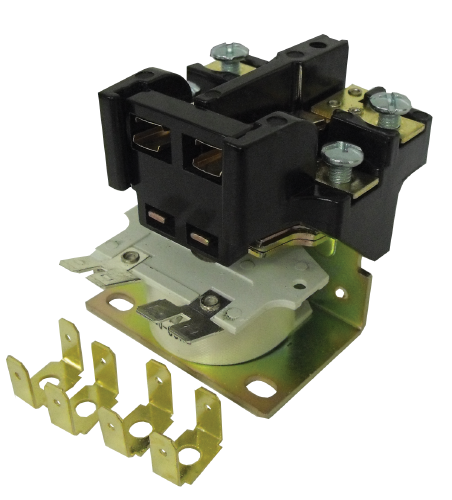
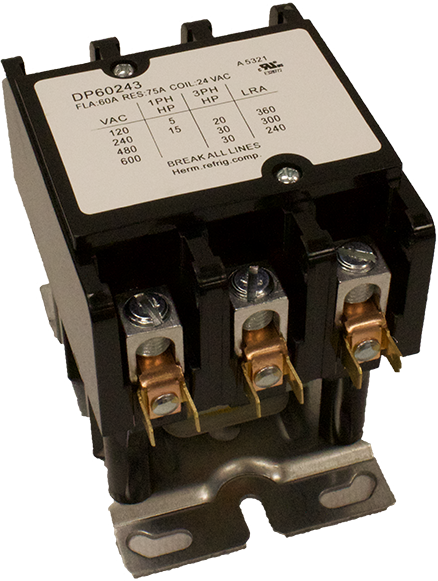
The contactor is the switch that turns the outdoor unit on and off. When the thermostat calls for cooling or heat pump heating, 24 volts pulls in the contactor's coil, and its contacts close to send line voltage to the compressor and condenser fan. It cycles thousands of times a year, and every cycle wears the contacts a little. Eventually the points pit, burn or weld, and the system either won't start or won't stop.

This category covers definite purpose contactors for HVAC and refrigeration equipment: 1-pole, 1.5-pole, 2-pole and 3-pole designs, full load amp ratings from 20A to 90A, and coil voltages of 24V, 120V and 208/240V, along with models that offer auxiliary contacts. Most are from Supco, which has supplied replacement electrical parts to HVAC professionals since 1945.

Contactors are a standard truck-stock item for service techs and a common replacement on systems more than a few years old. Matching the pole count, amp rating and coil voltage is what gets you the right one.

How a Contactor Works

A contactor is an electrically operated switch with two separate circuits:

  • The coil circuit: A low-voltage control signal, usually 24VAC from the thermostat or control board, energizes an electromagnetic coil.
  • The load circuit: When the coil energizes, it pulls an armature down and closes heavy contacts that carry line voltage to the compressor and fan motor.

When the call ends, the coil de-energizes, a spring pulls the armature back, and the contacts open. Line voltage connects to the line side terminals (often marked L1, L2), and the load side terminals (T1, T2) feed the equipment.

Pole configurations

  • 1-pole: Switches one leg of the power supply. The other leg passes through a shunt or bar and stays energized at the equipment even when the contactor is open. Common in residential condensers.
  • 1.5-pole: A single switched pole plus a shunt, built as one assembly. Functionally similar to a single pole contactor with a permanent connection on the second leg.
  • 2-pole: Switches both legs of single-phase power, fully de-energizing the load when open. Common in residential and light commercial units.
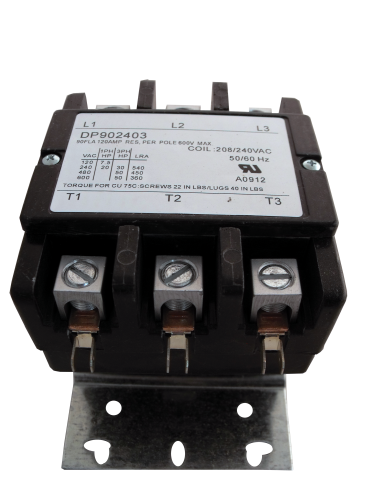
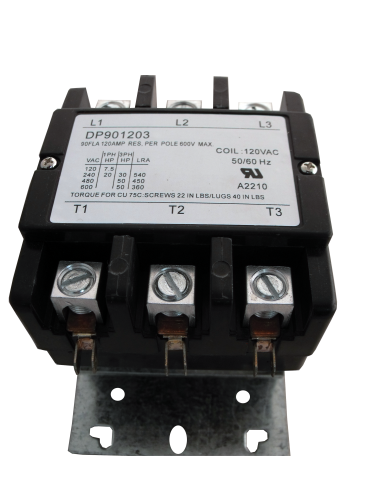
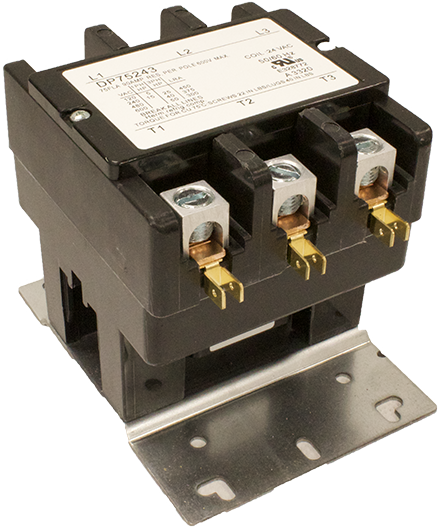
  • 3-pole: Switches all three legs of three-phase power. Used in commercial equipment.

Auxiliary contacts

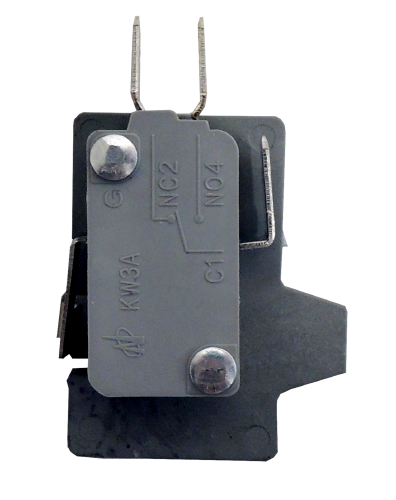
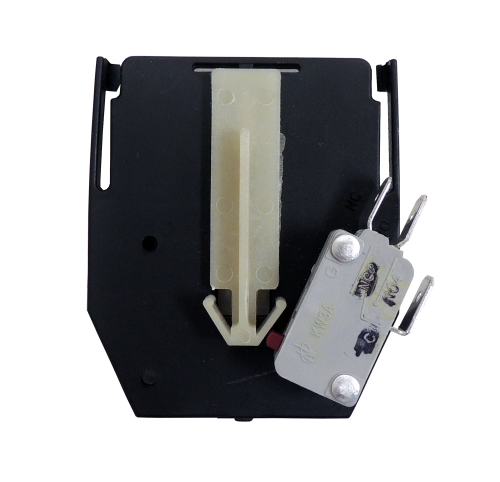
Some contactors include or accept auxiliary contacts, smaller switches that open or close along with the main contacts. They're used for interlocks, signals to other controls or crankcase heater circuits.

Signs a Contactor Is Failing

  • Outdoor unit won't start, even with a call: The coil may be open, or the contacts may be too pitted to make good contact.
  • Outdoor unit runs with the thermostat off: Contacts are welded closed. This can damage the compressor and run up energy bills. Shut off the disconnect.
  • Buzzing or chattering: Low control voltage, a failing coil, debris between the armature and coil, or a weak transformer.
  • Pitted, burned or blackened contacts: Visible wear on the contact surfaces from arcing.
  • Burned or melted wire terminals: Loose connections or overloading create heat.
  • Insects in the contactor: Ants in particular are drawn to the electrical field and can get crushed between the contacts, holding them open.
  • Voltage drop across closed contacts: With the contactor pulled in, voltage measured across a set of contacts (line to load on the same pole) should be close to zero. A measurable drop means the contacts are worn.

How to Choose the Right Contactor

1. Match the pole count

Replace a 1-pole with a 1-pole or a 2-pole, a 2-pole with a 2-pole, and a 3-pole with a 3-pole. Upgrading a 1-pole to a 2-pole is a common and acceptable practice because it fully de-energizes the load when the system is off. Never use fewer switched poles than the original.

2. Match the coil voltage

The coil voltage must match the control circuit. Most residential systems use 24VAC coils. Commercial and some refrigeration equipment use 120V or 208/240V coils. A 24V coil on a 240V circuit will burn out immediately, and a 240V coil on a 24V circuit won't pull in.

3. Match or exceed the FLA rating

Contactors are rated in full load amps (FLA), and often also list a higher resistive amp rating. Choose a contactor with an FLA rating equal to or higher than the original. Compare it to the compressor's rated load amps plus the fan motor's full load amps. Going higher in FLA is acceptable; going lower is not.

4. Check the footprint and terminals

Contactors share common footprints, but mounting hole spacing and terminal style vary. Check the original's mounting dimensions, line and load terminal type (screw lugs or box lugs), and coil terminal type (usually 1/4-inch quick-connects).

5. Cross-reference the OEM number

Many OEM contactors carry the equipment manufacturer's part number. Read the pole count, FLA, resistive amps and coil voltage on the label, then compare to the cross-reference data on the product page.

ConfigurationPower switchedTypical applicationSafety note
1-pole (with shunt)One leg of single-phaseResidential condensersOne leg stays energized at the equipment when off
1.5-poleOne leg plus permanent shuntResidential condensersOne leg stays energized at the equipment when off
2-poleBoth legs of single-phaseResidential and light commercialLoad fully de-energized when open
3-poleAll three legs of three-phaseCommercial HVAC and refrigerationLoad fully de-energized when open

Common FLA ratings include 20, 25, 30, 40, 50, 60, 75 and 90 amps. Coil options commonly include 24V, 120V and 208/240V.

Installation and Safety Tips

  • Lock out the disconnect: Turn off power at the disconnect and breaker, then verify zero voltage at both line and load terminals with a meter. With a single pole contactor, one leg remains energized at the equipment whenever the disconnect is on.
  • Discharge capacitors: The contactor sits next to the run capacitor. Discharge it with a resistor tool before working in the panel.
  • Photograph and label: Take a photo of every wire, including the low-voltage coil wires and any crankcase heater or auxiliary connections.
  • Torque the lugs: Tighten line and load connections firmly. Loose lugs cause heat, pitting and burned wire.
  • Inspect the wiring: Replace any burned, brittle or discolored conductors and terminals.
  • Find the root cause: Repeated contactor failure can point to short cycling, low control voltage, a failing compressor or a weak capacitor.
  • Verify operation: Restore power, run a cooling call and check that the contactor pulls in firmly without chatter. Check voltage at the load side and amperage at the compressor.
  • Use a qualified technician: Contactor replacement involves 240-volt or higher circuits. If you're not trained for line-voltage electrical work, have a qualified HVAC technician do it.

Part Details & Shipping

Supco has supplied contactors and replacement electrical parts to HVAC and refrigeration techs since 1945. Product pages list pole count, FLA and resistive ratings, coil voltage, dimensions and cross-reference information, with spec sheets where available. Items in this category ship in 3-5 business days.

Frequently Asked Questions

Can I replace a single pole contactor with a double pole?

Yes, as long as the coil voltage and FLA rating match or exceed the original and the footprint fits. A double pole contactor fully disconnects both legs when the system is off, which is an improvement.

Can I use a contactor with a higher amp rating?

Yes. A higher FLA rating than the original is acceptable. A lower rating is not, because the contacts can overheat and fail.

Why does my contactor buzz?

A buzzing contactor often has low control voltage, a weak coil, debris on the armature or a failing transformer. Measure the coil voltage while the contactor is energized; it should be close to the coil's rated voltage.

Why does my outdoor unit keep running when the thermostat is off?

The contactor's contacts have likely welded closed, or a low-voltage wire is shorted and keeping the coil energized. Turn off the disconnect and have the system inspected.

What does the shunt on a single pole contactor do?

The shunt is a permanent connection on the second leg. Only one leg is switched, so the equipment still has voltage on the shunted leg whenever the disconnect is on.

How often should a contactor be replaced?

There's no fixed interval. Inspect the contacts during annual maintenance and replace the contactor when they're pitted, burned or showing a measurable voltage drop.

Do ants really cause contactor problems?

Yes. Ants are drawn to electrical equipment and can get trapped between the contacts, preventing them from closing. Keep the area around the outdoor unit clear and inspect the contactor during service.

Compare
Show: 12 24 48

Fast Shipping

Easy Returns

Warranty Coverage

Financing Available