null

Washer Parts

Washers take more abuse than almost any appliance in the house. Every cycle fills the tub with water, spins a heavy wet load at high speed, and drains it again, often several times a day in a busy household or laundromat-style rental. That workload wears out a predictable set of parts: lid switches and door locks, drain pumps, door boots, motor couplers, agitator dogs, shift actuators, tub bearings and water inlet valves.

When a washer won't spin, won't drain, leaks on the floor or sounds like a jet engine, one of those parts is usually the culprit. Replacing the right component costs far less than a new machine, and on many top-load and front-load platforms the repair is straightforward for a technician or a mechanically capable owner. This category stocks Supco washer parts built to fit the major brands, including Whirlpool, Kenmore, Maytag, GE, Frigidaire, Samsung and LG.

Before ordering, pull the model and serial number from the tag (under the lid, on the door frame or on the back panel) and match the OEM part number. Washer parts change between model years more than most people expect.

How a Washer Works

A water inlet valve with hot and cold solenoids opens on command from the control to fill the tub. A pressure switch or water level sensor tells the control when the tub is full. The motor then drives agitation or tumbling. On a direct-drive top loader, a plastic and rubber motor coupler links the motor to the transmission; on many belt-drive and newer direct-drive machines, a shift actuator or mode shifter tells the transmission whether to agitate or spin.

Top loaders with a dual-action agitator use small plastic agitator dogs (cogs) that let the upper section ratchet in one direction. Front loaders tumble the load in a horizontal drum supported by a pair of bearings and a seal at the rear of the outer tub. The door boot, a rubber gasket between the cabinet and tub, keeps water in during tumbling.

Safety interlocks keep the machine from spinning with the lid or door open. Top loaders use a lid switch or lid lock assembly; front loaders use a door lock that latches mechanically and reports its status to the control. At the end of the cycle, the drain pump pushes water out through the drain hose.

Signs a Washer Part Is Failing

  • Won't spin, or stops mid-cycle: Failed lid switch or door lock, a stripped motor coupler, or a bad shift actuator. Many models flash a lock error code when the door lock is at fault.
  • Agitator top doesn't turn on its own: Worn agitator dogs. The lower section works, but the upper section slips freely in both directions.
  • Water left in the tub: Clogged or failed drain pump. Check the pump filter (on front loaders) and the drain hose for socks and debris before condemning the pump.
  • Loud roaring or grinding during spin: Worn tub bearings, especially on front loaders. A leaking rear seal often causes this by washing out bearing grease.
  • Water on the floor: Torn door boot, cracked pump housing, loose hose clamp or a failing inlet valve. Track the drip to its source before ordering.
  • Tub won't fill, or fills when off: Failed inlet valve solenoid, or clogged inlet screens. A valve that lets water trickle in with the power off needs replacing immediately.
  • Motor hums, drum doesn't move: A broken coupler on direct-drive models, or a seized pump jamming the drive.

How to Choose the Right Replacement

Every washer repair starts with the model number. Use it to find the parts diagram and OEM part number, then match that number to the replacement. Supco product pages list the OEM numbers each part replaces.

  • Lid switches and door locks: Match the OEM number exactly. Connector style, mounting and the electrical signal to the control differ between models, even on the same brand.
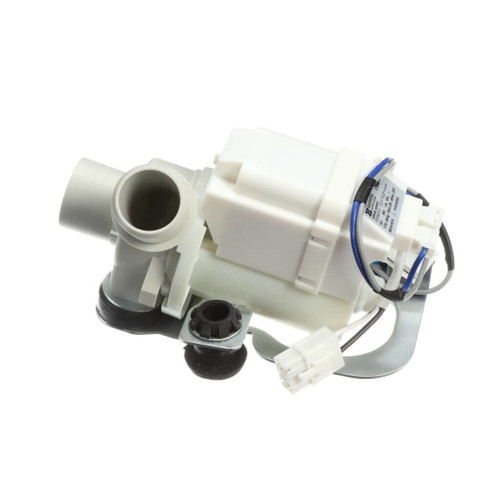
  • Drain pumps: Confirm voltage, inlet and outlet orientation, and the mounting bracket. Some pumps are sold as motor only, others as a full assembly with housing.
  • Door boots: Front-load boots are model-specific. Count the drain holes, check for an integrated spray nozzle port, and compare the profile before ordering.
  • Couplers and agitator dogs: These are platform parts. Most direct-drive Whirlpool-built top loaders share a coupler, but confirm against your model.
  • Bearing kits: A complete kit should include the inner and outer bearings and the seal. Match it to the tub and spider design for your model.
  • Water inlet valves: Match the number of solenoids, the coil voltage, the outlet layout and the inlet thread.
SymptomLikely PartWasher TypeQuick Check
Won't spin, lid closedLid switch / lid lockTop-loadContinuity with lid closed; error code
Won't start, door lock errorDoor lock assemblyFront-loadLock engages and reports locked
Motor hums, no agitationMotor couplerDirect-drive top-loadBroken plastic drive forks
Upper agitator slipsAgitator dogsTop-load, dual-actionUpper section turns freely both ways
Won't switch from agitate to spinShift actuatorMany top-load modelsError code; actuator test
Water left in tubDrain pumpAllClear filter and hose first
Roaring during spinBearing kitFront-load, some top-loadRumble when drum is spun by hand
Won't fill or overfillsWater inlet valveAllSolenoid resistance; inlet screens

Installation and Safety Tips

  • Unplug the washer and shut off both water valves before opening any panel or disconnecting hoses.
  • Drain the tub first. A front loader can hold several gallons behind the pump filter. Have towels and a shallow pan ready.
  • Photograph wiring and hose routing before removal, especially on lid locks, pumps and inlet valves.
  • Never bypass a lid switch or door lock. These interlocks keep hands and clothing away from a drum spinning at high speed.
  • Bearing replacement is a major job. It usually means tearing down the outer tub and pressing bearings in and out. It's best left to an experienced appliance technician with the right tools.
  • Seat door boots fully. Work the boot evenly around the lip and install clamps with the springs or screws in the position the manufacturer specifies, so the boot doesn't leak.
  • Replace inlet hoses when you replace an inlet valve. Old rubber hoses are a common flood source.
  • Leak-test before closing up. Run a short rinse cycle with the panels off and watch every connection.

Part Details & Shipping

Supco has been making replacement parts since 1945, and their washer components are built to match OEM fit and function. HVAC365 product pages carry OEM cross-reference numbers and spec details so you can confirm the match before checkout. Washer parts in this category ship in 3-5 business days, which matters when a family or a rental unit is waiting on laundry.

Frequently Asked Questions

My top loader fills and drains but won't spin. Where should I start?

Check the lid switch or lid lock first, since it is the most common cause. If the interlock tests good, look at the motor coupler on direct-drive models or the shift actuator on models that use one. Fault codes, if your model displays them, can narrow it down quickly.

Why does my front loader smell and leak at the door?

The door boot traps water, lint and detergent residue in its folds. Over time it can mildew, tear or harden. A torn boot leaks during tumbling and needs replacement. Wiping the boot dry after use and leaving the door cracked helps a new one last.

Is it worth replacing washer bearings?

It depends on the machine. Bearings are inexpensive, but the labor is significant. On a quality front loader with no other problems, a bearing kit with a new seal is often worth it. Have a technician inspect the tub and spider for corrosion before committing.

Can I just replace the drain pump motor instead of the whole assembly?

On some models, yes. If the pump housing is intact and the motor is sold separately for your model, motor-only replacement works. If the housing is cracked or the impeller is damaged, use the full assembly.

What do agitator dogs do?

They are small plastic cogs inside a dual-action agitator that let the upper section ratchet in one direction to roll clothes down into the load. When they wear, the upper agitator spins freely. They're inexpensive and usually replaced as a set.

How do I know if my water inlet valve is bad?

Signs include slow fill, no fill on hot or cold, or water entering the tub with the washer off. Clean the inlet screens first. If the screens are clear and the solenoids test out of range, replace the valve.

Compare

Fast Shipping

Easy Returns

Warranty Coverage

Financing Available