null

Heat Pump Parts

A heat pump is an air conditioner that can run in reverse, and that one feature changes how you service it. Refrigerant flows one way in cooling and the opposite way in heating, the outdoor coil has to defrost itself all winter, the thermostat has to tell a reversing valve which way to go, and backup heat waits for the compressor to fall behind. Parts that work fine on a straight-cool condensing unit can cause real trouble on a heat pump, and the filter drier is the classic example.

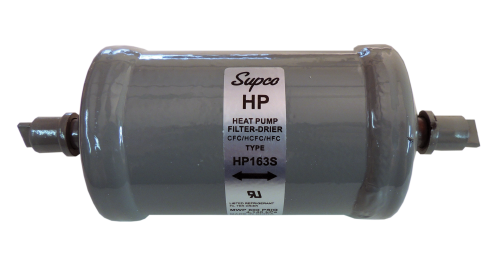
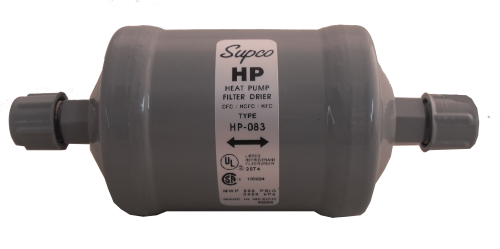
This category covers heat pump specific replacement parts: Supco bi-flow heat pump filter driers in flare and sweat connections (HP083, HP083S, HP163, HP163S, HP164S and HP165S), plus single-stage heat pump wall thermostats. Techs buy bi-flow driers on nearly every heat pump sealed-system repair. Homeowners usually shop here for the thermostat and leave the refrigerant side to a licensed tech.

What Makes Heat Pump Repairs Different

  • The reversing valve. A four-way valve in the outdoor unit that swaps the jobs of the two coils. In cooling, the outdoor coil is the condenser; in heating, the indoor coil is. A 24-volt solenoid shifts the valve, controlled by the thermostat's O or B terminal.
  • Bi-flow metering. Each coil needs a metering device that meters in one direction and gets out of the way in the other, whether a piston with a check feature or a TXV or EEV with a bypass check valve. The liquid line between the coils carries refrigerant both ways depending on mode.
  • The defrost cycle. In heating, the outdoor coil often runs below freezing and frosts over. The defrost control shifts the valve back to cooling, stops the outdoor fan, and sends hot gas through the outdoor coil to melt the ice. Most systems bring on auxiliary heat during defrost so the house doesn't get cold air.
  • Auxiliary and emergency heat. Most air-source heat pumps have electric heat strips, or a gas furnace in dual-fuel setups, that come on as a second stage. Emergency heat is the same source, selected manually to lock out the compressor when the outdoor unit is down.

Bi-Flow vs Standard Liquid Line Driers

A standard liquid line drier is built to flow one direction: in through the desiccant core, out through a screen that holds back debris. On a heat pump, the common liquid line carries refrigerant toward the outdoor coil in heating and toward the indoor coil in cooling. A standard drier in that line runs backwards for an entire season. Debris collected in one mode can be flushed out the inlet side when flow reverses, sending it straight to a metering device, and filtration and pressure drop in reverse are unpredictable.

A bi-flow heat pump drier uses internal check valves to route refrigerant so it is filtered correctly in either direction, keeping contaminants trapped in both modes. The rule is simple: on a heat pump's common liquid line, use a bi-flow drier. A standard drier belongs only where flow runs in a single direction.

When to Replace the Heat Pump Drier

  • Any time the sealed system is opened. Replacing a compressor, reversing valve, metering device, coil or line set exposes the system to air and moisture. Standard practice is a new drier with every sealed-system repair.
  • After a compressor burnout. A burnout leaves acid and carbon sludge, and on a heat pump that contamination travels through both coils as the system changes modes. Install a new bi-flow liquid line drier, add a temporary suction line drier per the compressor manufacturer's cleanup procedure, and test the oil for acid.
  • Restriction. A noticeable temperature drop from inlet to outlet, or frost or sweat on the drier shell, means it is plugging up.
  • Moisture evidence. Repeated metering device restrictions, ice at the TXV or piston, or dark, acidic oil point to a saturated drier.

How to Choose the Right Replacement Drier

  1. System capacity in tons. An undersized drier causes excessive pressure drop. Match the drier's rated tonnage range on the product page or manufacturer data to the system.
  2. Connection size. Match the liquid line outside diameter, commonly 1/4, 3/8 or 1/2 inch on residential heat pumps. Don't reduce line size at the drier.
  3. Flare vs sweat. Sweat connections, the S-suffix models here, are standard for permanent brazed installs and the most leak-resistant. Flare connections fit existing flared lines and some older or ductless equipment.
  4. Refrigerant compatibility. Confirm the drier is rated for the system's refrigerant and oil, such as R-410A with POE. Check the product page for specific ratings.
Situation Drier Type Notes
Heat pump common liquid line Bi-flow heat pump drier Filters correctly in heating and cooling
Straight-cool AC liquid line Standard one-way drier Flow arrow toward the metering device
Heat pump compressor burnout Bi-flow liquid line drier plus suction line drier Follow the compressor maker's burnout procedure
Brazed copper line set Sweat connection (S models) Flow nitrogen while brazing
Existing flared line Flare connection Use a proper flare tool and refrigerant-rated flare oil

Defrost Problems and Symptoms

Light frost on the outdoor coil in heating is normal, and so is steam rising from the unit during defrost. These are not:

  • The coil becomes a block of ice and stays that way. Defrost isn't starting or finishing, or the charge is low.
  • Defrost runs too often or too long, keeping heat strips on and driving up the electric bill. Suspect a sensor or the board.
  • Cold air indoors during defrost. Auxiliary heat isn't energizing, often a wiring or thermostat setup issue.
  • The unit never shifts into defrost. Check the defrost board, defrost thermostat or coil sensor, the reversing valve solenoid and the valve.

Before condemning a reversing valve, confirm 24 volts at the solenoid in the mode that should energize it, check coil resistance, and compare line temperatures across the valve. Low charge, a restricted drier and dirty coils can mimic defrost failures, so check the basics first.

Thermostat Compatibility: Heat Pump vs Conventional, O vs B

A conventional thermostat has no reversing valve output and treats W as primary heat, which on a heat pump means heat strips doing all the work while the compressor sits idle. A heat pump thermostat, like the single-stage models in this category, runs the compressor (Y) for both heating and cooling, controls the reversing valve, and brings on auxiliary heat as a second stage.

  • O energizes the reversing valve in cooling. Most manufacturers use O.
  • B energizes the reversing valve in heating. Rheem and Ruud have historically used B.

Set wrong, the system heats when it should cool and vice versa. Go by the outdoor unit wiring diagram, not the old thermostat, which may have been miswired. A single-stage heat pump thermostat suits a single-stage compressor with one stage of auxiliary heat; two-stage, dual-fuel and variable-speed systems typically need a control designed for them.

Installation and Safety Tips

  • Refrigerant recovery, brazing and charging require EPA Section 608 certification. Leave sealed-system work to a qualified technician.
  • Kill power at the outdoor disconnect and the air handler. Heat strips run at line voltage and high amperage.
  • Recover refrigerant properly; never vent it.
  • Flow dry nitrogen while brazing, and protect the drier shell with a wet rag or heat-block paste.
  • Uncap the drier only when ready to install so the desiccant doesn't absorb room moisture.
  • Pressure test with nitrogen, evacuate to a deep vacuum (typically 500 microns or below) with a decay test, then charge by the manufacturer's method.
  • Verify operation in both cooling and heating, including a forced defrost if the control allows it, and confirm auxiliary and emergency heat work after a thermostat change.

Part Details & Shipping

Supco has been making HVAC and refrigeration replacement parts since 1945. Each HVAC365 product page lists specifications, cross-references and manufacturer spec sheets where available, so you can confirm connection size, capacity and compatibility before ordering. These items ship in 3-5 business days.

Frequently Asked Questions

Can I use a standard filter drier on a heat pump?

Not on the common liquid line. It carries refrigerant both ways, so a standard drier would run backwards half the year and could release trapped debris toward a metering device.

Does a bi-flow drier have a flow direction?

Bi-flow driers are designed to filter in both directions, so direction is not critical the way it is on a standard drier. Follow any markings on the specific drier.

Should I replace the drier when replacing a reversing valve or compressor?

Yes. Any time the sealed system is opened, install a new drier. After a burnout, add a suction line drier for cleanup as well.

What is the difference between auxiliary heat and emergency heat?

Both use the same backup source. Auxiliary heat comes on automatically when the heat pump can't keep up or during defrost. Emergency heat is selected manually and locks out the compressor.

My heat pump blows cold air in heat mode. Is it the thermostat?

Possibly. A reversed O/B setting makes the system cool on a heat call. A stuck reversing valve, failed solenoid, defrost in progress or low charge can do the same. Check thermostat setup and solenoid voltage first.

Is it normal for my heat pump to steam in winter?

Yes, during defrost. A coil that stays solidly iced for long periods is not normal and needs a service check.

Compare

Fast Shipping

Easy Returns

Warranty Coverage

Financing Available