null

Mini Split Capacitors

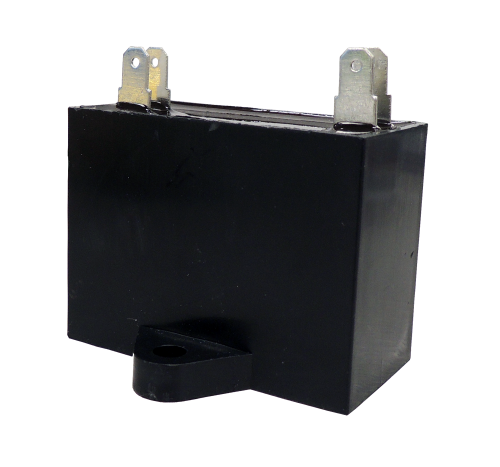
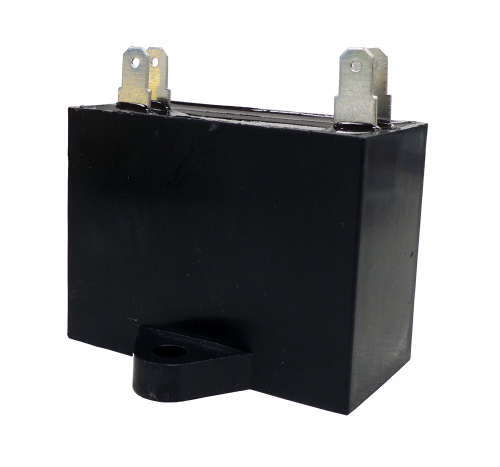
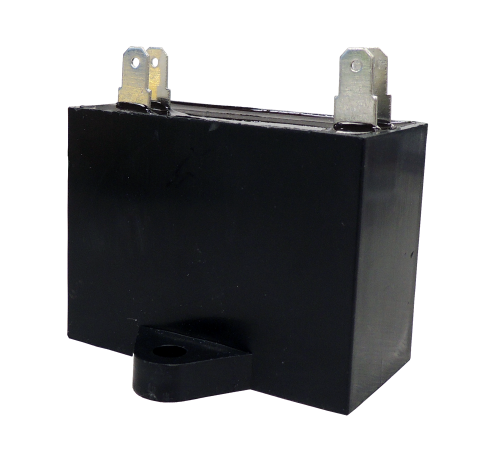
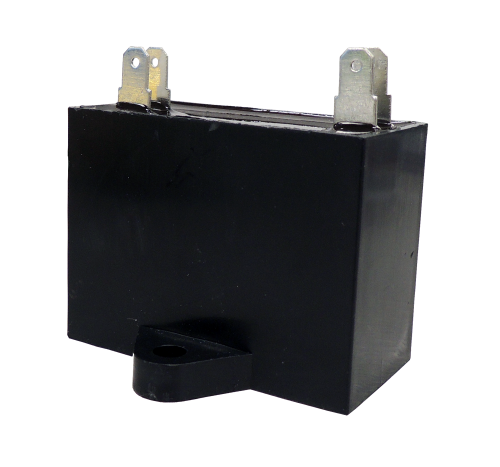
Ductless mini splits use capacitors that look nothing like the big metal cans in a typical condenser. They're smaller, often rectangular or slim cylindrical, frequently come with wire leads instead of spade terminals, and are commonly rated at 450 volts. When one fails, the indoor fan won't spin, the outdoor fan won't start, or a fixed-speed compressor won't run, and finding the right replacement can take some detective work.

This category covers compact replacement capacitors for mini split and ductless systems, including indoor and outdoor fan motor capacitors and run capacitors for fixed-speed compressors. They're from Supco, a supplier of HVAC and refrigeration replacement parts since 1945, and are sized for the tight spaces inside ductless equipment.

Before you order, it helps to know that not every mini split uses run capacitors. Many modern inverter systems drive their compressors and fans electronically. This guide covers how to tell, what fails, and how to match the rating.

How Mini Split Capacitors Work

In a mini split, capacitors serve the same role as in any other single-phase HVAC system. They create a phase shift in the start winding of a PSC (permanent split capacitor) motor, giving it the rotating magnetic field it needs to start and run.

  • Indoor fan motor capacitor: Used on wall-mount, ceiling cassette and ducted indoor units with PSC fan motors. Values are typically small, often in the low single digits of microfarads.
  • Outdoor fan motor capacitor: Used on outdoor units with PSC condenser fan motors. Values are usually in the low single digits.
  • Compressor run capacitor: Used on fixed-speed (non-inverter) mini split compressors. Values are larger, often in the tens of microfarads.

Inverter systems are different

Most current mini splits use inverter compressors driven by a variable-frequency drive on the outdoor control board. Those compressors don't use a run capacitor. Many also use DC or electronically commutated fan motors that are powered by the control board rather than a capacitor. If the fan motor has a multi-wire plug going into the board and no capacitor in the circuit, a capacitor isn't the issue. In those systems, the large capacitors you see on the board are part of the power electronics, not a replaceable motor capacitor.

Why 450 volts?

Mini split motor capacitors are commonly rated at 450 VAC, which gives margin for line voltage variations and the voltages that develop across the capacitor in a PSC motor circuit. Many are built to the same metallized polypropylene film construction as standard run capacitors, in a compact case. You'll often see type designations such as CBB61 on fan capacitors and CBB65 on larger compressor capacitors.

Signs a Mini Split Capacitor Is Failing

  • Indoor fan won't run: The louver opens, the unit beeps or shows the call, but the blower wheel doesn't turn, or turns very slowly. Some units will display a fan motor error code.
  • Outdoor fan won't start: On a fixed-speed outdoor unit, the compressor may start and then trip on high pressure because the fan isn't moving air.
  • Fixed-speed compressor hums and trips: The compressor tries to start and trips its overload.
  • Fan starts only with a nudge: A classic weak-capacitor symptom. Never reach into a running unit to test this.
  • Physical damage: Swelling, cracked case, burned leads or corrosion from coastal air.
  • Reading out of tolerance: Measured capacitance outside the tolerance printed on the case.

Mini split boards often display error codes for fan or compressor faults. Check the manufacturer's service manual for that code before replacing parts, because the same code can point to a motor, a sensor or the board itself.

How to Choose the Right Mini Split Capacitor

Read the old capacitor

The case usually lists capacitance in µF, the tolerance (often ±5%), the voltage rating, frequency and sometimes a temperature rating. If the label has faded, check the fan motor's nameplate or the unit's wiring diagram.

Match the MFD and voltage

Capacitance must match the original within tolerance. Voltage must be the same or higher. A 450V capacitor with the correct µF value is the standard replacement for most ductless fan motors.

Check the connection style and size

Mini split capacitors come with wire leads, spade terminals or both. Some leads end in a plug that connects to the board or motor harness. If the replacement uses a different connection style, use properly rated, insulated connectors. Measure the space, since indoor units in particular have very little room around the control box.

Confirm the motor actually uses a capacitor

If the indoor or outdoor fan motor is a DC motor plugged directly into the control board, a capacitor won't fix it. Look at the wiring diagram on the unit before ordering.

LocationTypical capacitanceCommon voltageCommon connectionNotes
Indoor fan motor (PSC)Low single digits µF450VWire leads or plugNot used on DC/EC fan motors
Outdoor fan motor (PSC)Low single digits µF450VWire leads or spade terminalsCheck motor nameplate for value
Fixed-speed compressorTens of µF450V or as specifiedSpade terminalsNot used on inverter compressors
Inverter control boardNot applicableNot applicableSoldered to boardPart of drive electronics, not a motor capacitor

Installation and Safety Tips

  • Kill power and wait: Turn off the disconnect and breaker. Inverter outdoor units can store dangerous voltage in their board capacitors for several minutes after power is removed. Wait the time listed in the service manual and verify with a meter before touching anything.
  • Discharge the motor capacitor: Use an insulated resistor discharge tool across the leads or terminals.
  • Photograph the wiring: Note where each lead connects. Ductless control boxes are crowded, and wire colors can vary between brands.
  • Make solid connections: If you need to splice, use insulated connectors rated for the voltage and secure the capacitor so it can't touch the fan wheel or sharp edges.
  • Check the motor too: A motor with dry or seized bearings will kill a new capacitor and keep failing. Spin the fan by hand with power off to check for drag.
  • Leave refrigerant and board-level work to pros: Many mini split faults trace back to sensors, boards or refrigerant charge. Refrigerant work requires an EPA Section 608-certified technician, and inverter board diagnosis is best handled by a qualified ductless technician.

Part Details & Shipping

Supco has built replacement capacitors for the HVAC trade since 1945. Our product pages list capacitance, voltage, tolerance, dimensions and connection type, along with cross-reference data and spec sheets where available, so you can confirm the match. Items in this category ship in 3-5 business days.

Frequently Asked Questions

Does my mini split have a capacitor?

It depends on the system. Fixed-speed units and units with PSC fan motors use run capacitors. Most inverter systems use electronically driven compressors and DC fan motors without a separate motor capacitor. Check the wiring diagram on the unit.

Can I use a standard 370V or 440V run capacitor in a mini split?

Electrically, the MFD must match and the voltage should be equal to or higher than the original. If the original is rated 450V, use a 450V or higher capacitor. Size is often the deciding factor, since standard run capacitors may not fit.

What does CBB61 or CBB65 mean?

They're common type designations for film capacitors. CBB61 usually refers to compact fan motor capacitors, and CBB65 to larger, can-style run capacitors often used on compressors. Match the capacitance and voltage, not just the type code.

Why does my indoor fan only run slowly?

A weak fan capacitor is a common cause on PSC fan motors. A dirty blower wheel, failing motor bearings or a control board problem can cause the same symptom, so test the capacitor and inspect the wheel.

Can a bad capacitor cause an error code?

Yes. If the fan motor can't reach the expected speed, many units will flag a fan motor fault. Check the service manual, since the same code can also indicate a motor or board failure.

Is it safe to work on an inverter outdoor unit?

Only with proper training. Inverter boards store high DC voltage after power is removed. Follow the manufacturer's discharge wait time and verify with a meter, or have a qualified technician handle it.

Compare
Show: 12 24 48

Fast Shipping

Easy Returns

Warranty Coverage

Financing Available