null

Limit Switches & Temperature Controls

Limit switches and temperature controls are the safety net of heating and cooling equipment. They watch a temperature and open a circuit when it goes somewhere it should not. A high limit stops a furnace or electric heater from overheating. A rollout switch shuts off gas when flame escapes the burner area. A thermal cutoff permanently opens if a dryer or appliance runs dangerously hot. A defrost terminator tells a heat pump or freezer when the coil is clear. When these parts work, nobody notices. When they fail or trip, the equipment stops.

This category covers snap-disc thermostats such as Supco's L and LD series, rollout switches, thermal cutoffs and fuse links, fan/limit controls, plenum limits, defrost terminators and manual reset limits. Many of these share the same basic disc design but differ in temperature rating, action and mounting, and those differences are what you must match.

A limit that trips is usually telling you something is wrong upstream: low airflow, a dirty filter, a failed blower, a cracked heat exchanger or a venting problem. Replacing the switch without investigating can mask a serious safety issue. That is why these parts should be diagnosed and installed by a qualified technician.

How Limit Switches and Temperature Controls Work

Snap-disc thermostats

A snap-disc switch uses a bimetal disc that snaps from one shape to another at a set temperature, opening or closing contacts. Snap-disc limits are rated with an open temperature and a close temperature. A normally closed limit, the most common style, opens on temperature rise and closes again as it cools. Supco's L and LD series snap-disc thermostats are widely used universal replacements and are identified by their opening and closing temperatures.

Automatic vs manual reset

An automatic reset limit closes again by itself once it cools. A manual reset limit stays open until someone presses the reset button. Manual reset limits are used where an automatic restart could be unsafe, such as many rollout switches and some electric heat limits.

Rollout switches

Rollout switches are mounted near the burner area of a gas furnace or boiler. If flame rolls out of the combustion chamber because of a blocked heat exchanger, blocked vent or other problem, the switch heats up and opens, shutting off the gas valve circuit. Most are manual reset by design.

Thermal cutoffs and fuse links

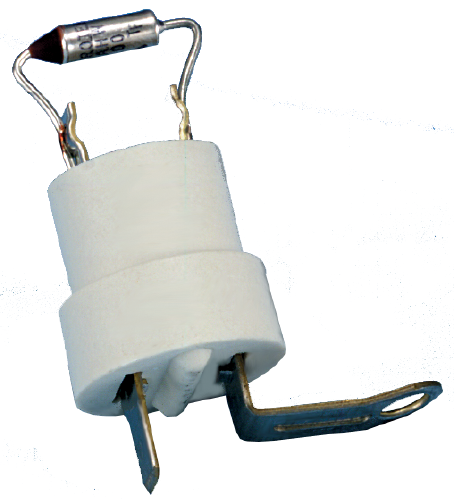
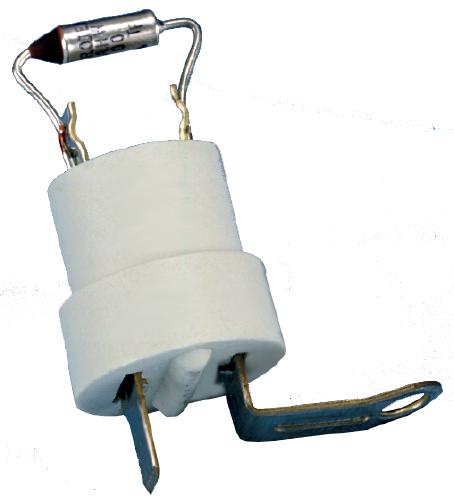
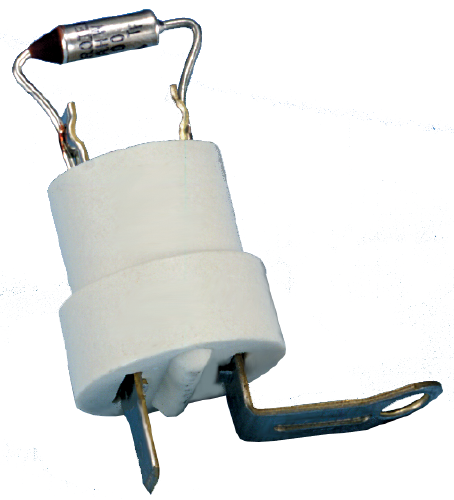
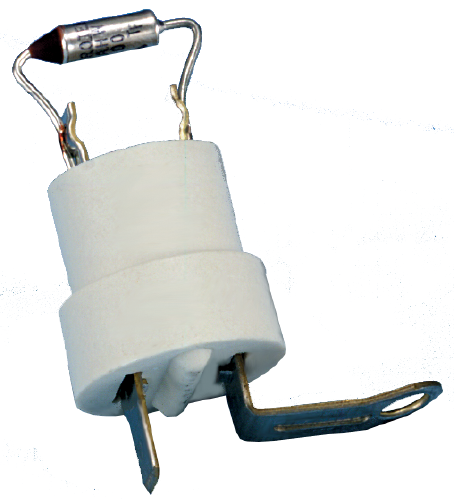
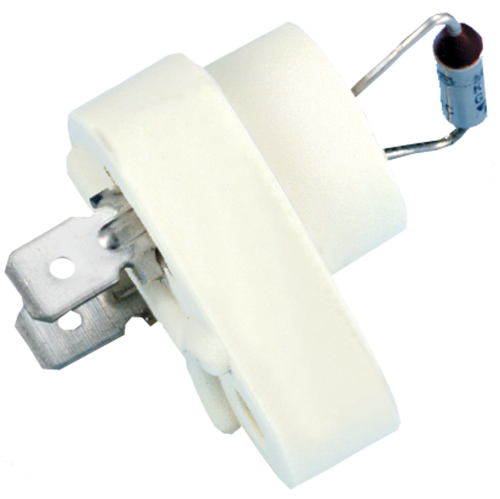
Thermal cutoffs and thermal fuses are one-time devices. When the temperature exceeds their rating, an internal element melts and the circuit opens permanently. They are common in dryers, small appliances and some electric heaters. A blown thermal fuse means something overheated and must be investigated.

Fan/limit controls and plenum limits

A fan/limit control, common on older furnaces, uses a sensing element in the supply plenum with adjustable fan on, fan off and limit settings. It turns the blower on when the heat exchanger warms up and shuts off the burner if the plenum overheats. A plenum limit serves a similar safety function in many systems without the fan control function.

Defrost terminators

Defrost terminators sense coil temperature on heat pumps, freezers and refrigeration evaporators. When the coil warms past a set point during defrost, the terminator signals the control to end the defrost cycle. Some close on rise, others open on rise, depending on the control design.

Signs a Limit or Temperature Control Is Failing

  • No heat with the limit reading open at room temperature. A normally closed limit should show continuity when cool.
  • Burners or heating elements cycle on and off rapidly, often a limit tripping from low airflow or a weak limit opening early.
  • Rollout switch tripped. Treat it as a combustion safety issue and investigate before resetting.
  • Dryer runs but does not heat, often from an open thermal fuse caused by a restricted vent.
  • Blower runs constantly or never starts on older systems with a fan/limit control.
  • Coil frosts over or defrost runs too long on a heat pump or freezer, pointing to the defrost terminator or its control.
  • Visible heat damage, burnt terminals or cracked housing.

Test with power off by checking continuity at room temperature. To confirm a trip point, the part must be heated in a controlled way, which is not usually practical in the field. If a limit is tripping, measure temperature rise across the heat exchanger and compare it with the rating plate, check filter and blower operation, and look at static pressure.

How to Choose the Right Replacement

Match the temperature ratings

Limits are specified by opening and closing temperatures, usually marked in Fahrenheit on the label or coded into the part number. Match these exactly or use the OEM-specified replacement. Never substitute a higher temperature limit to stop nuisance trips.

Match the action

Normally closed (opens on rise) and normally open (closes on rise) are not interchangeable. Defrost terminators in particular come in both styles.

Match the reset type

If the original was manual reset, the replacement must be manual reset.

Match the mounting and terminals

Check the flange style, mounting hole spacing, surface mount versus clip, terminal type and lead length. Limits must make good contact with the surface they sense.

Match the electrical rating

Confirm the switch can carry the current and voltage of its circuit. Electric heat limits carry heavy loads and need appropriate ratings.

Cross-reference the OEM number

The OEM number and the markings on the original are the best guide. Product pages list ratings and cross-reference data to help confirm.

Control typeTypical locationReset typeKey specs to match
Snap-disc limit (L / LD series)Furnaces, air handlers, appliancesAutomatic or manualOpen and close temperatures, action, mounting, rating
Rollout switchBurner area of gas furnaces and boilersUsually manualTrip temperature, mounting, terminals
Thermal cutoff / fuse linkDryers, appliances, heatersOne-time, not resettableTemperature, current rating, mounting
Fan/limit controlOlder furnace supply plenumAutomaticElement length, settings range, mounting
Plenum limitSupply plenum or heat exchanger areaAutomatic or manualTemperature, probe length, mounting
Defrost terminatorHeat pump and refrigeration coilsAutomaticTemperature, open or close on rise, mounting

Installation and Safety Tips

  • Turn off power and gas and verify with a meter before replacing any limit.
  • Never jumper a limit or rollout switch to keep equipment running. Short diagnostic checks should be done only by a qualified technician.
  • Investigate the cause of the trip. For furnaces, check filters, blower speed, duct restrictions, temperature rise and venting. For rollout trips, inspect the heat exchanger, flue and burners. For dryers, clean the full vent run.
  • Mount securely so the sensing surface contacts the part it monitors. Use thermal compound where the manufacturer specifies it.
  • Use proper high-temperature wiring and terminals in hot areas.
  • Test the full sequence after replacement and confirm the equipment runs through normal cycles.
  • Perform a combustion and carbon monoxide check on gas equipment after any rollout or limit event. Gas work should be done by a licensed technician. Any refrigerant system work linked to defrost issues requires EPA 608 certification.

Part Details & Shipping

HVAC365 carries Supco limits and temperature controls, including L and LD series snap-disc thermostats, because Supco has served the HVAC and appliance trade since 1945 and builds broad-coverage universal replacements. Product pages list temperatures, action and cross-reference data so you can verify the match, and these items ship in 3-5 business days.

Frequently Asked Questions

What do the numbers on an L series limit mean?

The numbers generally relate to the temperature ratings of the switch in degrees Fahrenheit. Check the specific product listing for the exact open and close temperatures before substituting, rather than assuming how a part number is coded.

Can I use a higher temperature limit if mine keeps tripping?

No. Frequent trips mean the equipment is overheating, usually from low airflow. A higher limit removes protection and can lead to heat exchanger damage or fire.

Why does my rollout switch keep tripping?

Flame is escaping the combustion area, usually because of a blocked flue, blocked heat exchanger, failed inducer or burner problem. This is a serious safety condition and needs a qualified technician.

Can I reset a thermal fuse?

No. A thermal fuse is a one-time device. Replace it and find out why it blew, which on dryers is most often a restricted vent.

What is the difference between a limit and a defrost terminator?

A limit is a safety device that opens on overheating. A defrost terminator is a control that tells the defrost system when the coil is warm enough to end defrost.

How do I test a limit switch?

With power off and the limit at room temperature, check continuity across the terminals. A normally closed limit should read closed. Testing the trip point requires controlled heating and is best done by matching the replacement to the original rating.

Compare
Show: 12 24 48

Fast Shipping

Easy Returns

Warranty Coverage

Financing Available