null

Refrigerator & Ice Maker Parts

When a refrigerator starts running warm, the instinct is to assume the compressor or the sealed system has failed. In practice, most warm-refrigerator calls come down to parts outside the sealed system: a defrost failure that ices over the evaporator, a fan motor that stopped moving air, or a door gasket that no longer seals. Ice makers and water dispensers add their own set of common failures, mostly water inlet valves, ice maker assemblies and clogged water filters.

This category stocks the refrigerator and ice maker parts that keep units running: water inlet valves, defrost timers, defrost heaters, defrost thermostats (bimetals), evaporator and condenser fan motors, ice makers, door gaskets, water filters and crisper drawers. Supco builds them to fit the major brands, including Whirlpool, GE, Frigidaire, Kenmore, Maytag, Samsung and LG. Appliance techs, property managers and capable homeowners use them to fix the real cause instead of replacing a refrigerator with a healthy compressor.

One note up front: anything involving the sealed system, including the compressor, evaporator coil, condenser coil or refrigerant lines, requires a technician with EPA Section 608 certification. The parts in this category are serviced without opening the refrigerant circuit.

How a Refrigerator Works

The compressor pumps refrigerant through the condenser coil, where heat is released, and then to the evaporator coil inside the freezer section, where it absorbs heat. An evaporator fan motor pulls air across the cold evaporator and pushes it through the freezer and, through a damper or duct, into the fresh food section. On most modern refrigerators the condenser coil sits under the unit, cooled by a condenser fan motor near the compressor.

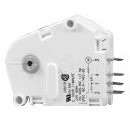
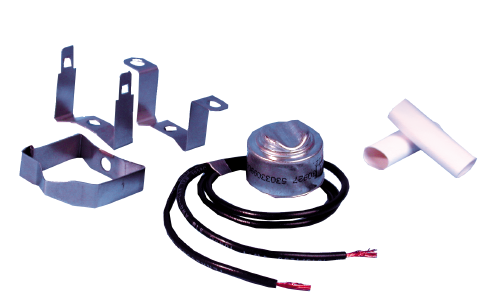
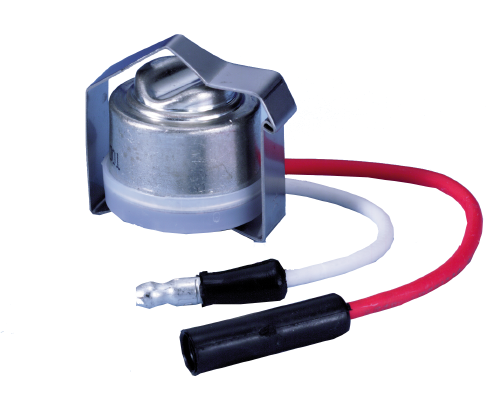
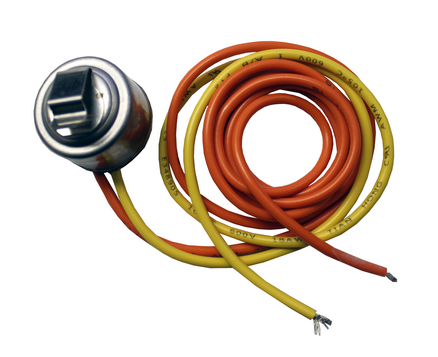
As the evaporator runs, moisture in the air freezes onto the coil as frost. A defrost system periodically melts it off. On older and many current models, a mechanical defrost timer switches the system into defrost every several hours of run time. Newer units use an adaptive defrost control board. During defrost, a defrost heater (a radiant glass tube or a metal sheath element) warms the coil. A defrost thermostat, clipped to the evaporator, closes when the coil is cold and opens once the coil warms, ending heat before the freezer warms up.

The ice maker and dispenser are fed by a water inlet valve mounted at the back of the cabinet. Water passes through the filter, then the valve opens on command to fill the ice mold or dispense water. The ice maker freezes the water, warms the mold slightly, and ejects the cubes into the bin.

Signs a Refrigerator Part Is Failing

  • Freezer cold, fresh food section warm: A classic defrost failure. Frost builds on the evaporator until air can't pass through. Check for a frosted-over back panel in the freezer. The cause is often the defrost heater, defrost thermostat or defrost timer/control.
  • Both sections warming, compressor running: Evaporator fan motor not running, or a dirty condenser coil and a failed condenser fan motor.
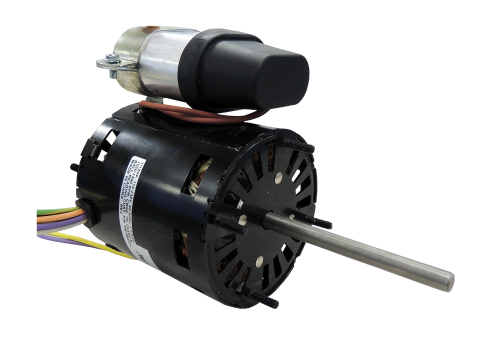
  • Chirping, squealing or buzzing from the freezer: Worn evaporator fan motor bearings, or ice contacting the fan blade.
  • Ice maker not making ice: Failed water inlet valve, frozen fill tube, clogged water filter, or a failed ice maker assembly. Confirm water reaches the mold before replacing the ice maker.
  • Slow water dispenser: Clogged water filter or low household water pressure. Many inlet valves need around 20 psi or more to operate correctly.
  • Water leaking from the back: Cracked inlet valve body or loose supply connection.
  • Frost around the door or sweating on the cabinet: Torn, flattened or warped door gasket.
  • Cracked crisper drawer: Replace by model number; cracked drawers often worsen and can let cold air bypass the humidity control.

How to Choose the Right Replacement

Find the model and serial tag, usually inside the fresh food compartment on a side wall or on the ceiling, then match the OEM part number. Supco product pages list the OEM numbers each part replaces.

  • Water inlet valves: Match the number of solenoids (single, dual or triple), the coil voltage, inlet fitting and outlet configuration.
  • Defrost timers: Match the defrost interval, defrost duration, and terminal layout. Timers are not universal by default.
  • Defrost heaters: Match the type (glass tube or metal sheath), length, wattage and terminal style.
  • Defrost thermostats: Match the open and close temperatures and the clip style. Some are sold with a heater as a kit.
  • Fan motors: Match voltage, rotation direction, shaft length and mounting. Many newer units use DC fan motors controlled by the board, which are not interchangeable with older AC motors.
  • Ice makers: Match the style (modular, cradle, or in-door), the harness connector and the mounting.
  • Door gaskets: Measure the gasket and order by model and door position. Gaskets are specific to fresh food and freezer doors.
  • Water filters: Match the OEM filter number. Filter housings differ even within a brand.
SymptomLikely PartQuick Check
Freezer cold, fridge warm, evaporator frostedDefrost heater, defrost thermostat, defrost timer/controlHeater and thermostat continuity; advance timer manually
Both sections warm, compressor runningEvaporator fan motorFan spins when freezer door switch is pressed
Compressor area hot, unit warmCondenser fan motor; dirty condenserFan running; coil clean
No ice, no waterWater inlet valve; water filterSupply pressure; valve solenoid resistance
Water to mold, no ice ejectedIce maker assemblyMold fills and freezes, but no harvest
Frost near door, cabinet sweatingDoor gasketPaper test around the door perimeter
Slow dispenserWater filterReplace filter; check supply pressure

Installation and Safety Tips

  • Unplug the refrigerator before removing panels, fan covers or the ice maker. Moving the unit out from the wall also exposes the water line, so be careful not to kink it.
  • Shut off the water supply before servicing the inlet valve, water filter housing or ice maker fill tube.
  • Protect food. Move perishables to a cooler during defrost repairs, which often mean melting heavy ice off the evaporator.
  • Never chip ice off the evaporator with sharp tools. Puncturing the coil releases refrigerant and turns a simple repair into a sealed-system job. Let it melt or use gentle, indirect warm air.
  • Leave sealed-system work to certified technicians. Compressor, coil and refrigerant work requires EPA 608 certification.
  • Flush new water filters by running water through the dispenser per the manufacturer's directions to clear air and carbon fines.
  • Warm new gaskets with a hair dryer on low to remove packaging creases so they seal properly.
  • Clean the condenser coil while the unit is pulled out. A clogged coil overworks the compressor and the condenser fan motor.

Part Details & Shipping

Supco has been supplying replacement components since 1945, with parts built to match OEM fit and function. HVAC365 product pages list OEM cross-reference numbers and spec details so you can verify compatibility before you order. Parts in this category ship in 3-5 business days, which matters when a refrigerator full of food is on the line.

Frequently Asked Questions

My freezer works, but the refrigerator section is warm. What's wrong?

In most cases it's a defrost problem. Frost blocks the evaporator, so air can't reach the fresh food section. Check the defrost heater, defrost thermostat and defrost timer or control. A failed evaporator fan motor or a stuck damper can cause similar symptoms.

Why does my ice maker stop making ice?

Common causes include a failed water inlet valve, a frozen fill tube, a clogged water filter, low water pressure, or a failed ice maker. Check whether water reaches the ice mold before replacing the ice maker itself.

Can I replace an AC fan motor with a DC fan motor?

Not without matching the control system. DC motors are driven by the main control board on newer models, and they are not a drop-in replacement for older AC motors. Order by the OEM number for your model.

How often should a refrigerator water filter be changed?

Most manufacturers recommend about every six months, or sooner if water flow slows or taste changes. Follow the filter manufacturer's guidance.

Is a defrost timer interchangeable between brands?

Some timers cross over, but defrost interval, duration and terminal wiring vary. Only use a timer listed for your OEM number.

Do I need a technician to replace a door gasket?

Most gaskets either press into a channel or are held by screws under the liner edge, and are within reach of a capable homeowner. Take your time aligning it so the door seals evenly.

Can I fix a warm refrigerator myself if the compressor is running?

If the cause is a fan, defrost component or gasket, often yes. If the problem is in the sealed system, such as a refrigerant leak or a failed compressor, it requires an EPA 608 certified technician.

Compare
Show: 12 24 48

Fast Shipping

Easy Returns

Warranty Coverage

Financing Available