null
Spa Jets

Spa Jets

Spa jets are the part of the spa people actually feel. Each jet takes water from the pump, mixes in air through a venturi on many styles and fires it at the bather in a set pattern. Over time, jet faces crack, eyeballs stick, internals clog with debris and escutcheons fade in the sun and sanitizer. Replacing jets is one of the most common spa repairs, and it is also one of the easiest to get wrong if the replacement does not match the jet body already in the shell.

This category covers spa jets for portable hot tubs and in-ground spas: complete therapy jets, jet bodies, jet internals and inserts, eyeballs, escutcheons, wall fittings and directional fittings in styles from Waterway, CMP, Hayward, Jandy and others. Spa repair techs buy internals to refresh worn jets. Builders buy complete jets and jet bodies for new gunite spas. Owners shop here with a measurement and a photo to find the right replacement.

How Spa Jets Work

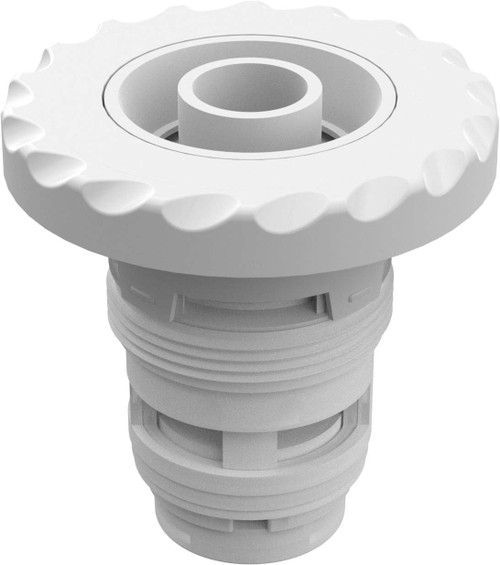
  • Jet body. The fitting glued into the plumbing behind the spa shell. It has water inlet and, on air-injected jets, an air inlet. The body is permanent on most spas; replacing it means cutting into plumbing behind the shell.
  • Wall fitting or escutcheon. The ring or flange that seals the body to the shell and gives the jet its finished look.
  • Internal or insert. The removable part that screws or snaps into the body and sets the spray pattern: directional, pulsating, rotating, massage or cluster. On many jets, rotating the face opens or closes the flow.
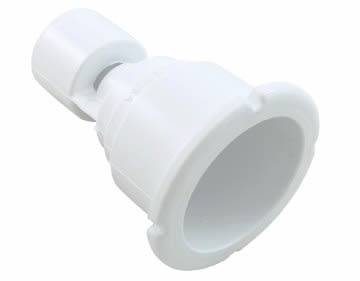
  • Eyeball. A ball-and-socket nozzle that lets the bather aim the spray. Common in in-ground spas and some portable jets.
  • Venturi and air. Water passing through a narrow throat creates suction that draws air through an air line, mixing bubbles into the stream for a stronger massage feel. An air control valve on the spa top regulates it.

Signs Spa Jets Need Replacing

  • Cracked faces or broken fins from sun exposure, sanitizer and age.
  • Jets that will not turn to adjust flow or will not close, usually from scale or a worn internal.
  • Rotating jets that no longer spin, from worn bearings or debris inside.
  • Missing or loose internals that pop out when the pump starts.
  • Weak flow at one jet while others are fine, which often means a clogged internal. Check the filter and pump first if all jets are weak.
  • Leaks around the jet body, which point to a failed body gasket or cracked body. That is a bigger repair than replacing an internal.

How to Choose the Right Replacement Jet

Matching existing fittings is the whole job. Spa jets are not universal, and even jets from the same brand come in many series.

  1. Identify the brand and series. Look for a logo or name on the face or on the back of the internal once removed. Waterway, CMP and others each have multiple jet families with different thread patterns.
  2. Measure the face diameter. Measure across the outermost edge of the jet face. This is one of the main sizing references, with portable spa jets spanning from small accent jets to large rotating jets.
  3. Measure the hole size in the shell if you are replacing the full jet or body, since the body must fit the existing hole.
  4. Determine the attachment style. Threaded internals screw in, often with a specific thread count and direction. Snap-in internals use clips. They do not interchange.
  5. Match the jet style. Directional, pulsating, rotating, massage or cluster. Mixing styles is fine if the internals fit the existing bodies.
  6. Choose finish and color to match the remaining jets, such as gray, black, stainless look or white.
  7. Cross-reference part numbers from the spa manufacturer's parts list when available.
Jet Part When to Buy It What to Measure or Confirm
Jet internal or insert Face cracked, jet stuck or not spinning; body is fine Brand, series, face diameter, thread or snap-in
Eyeball Nozzle cracked or loose in the socket Brand, eyeball diameter, orifice size
Escutcheon or wall fitting Faded or cracked trim ring Brand, outer diameter, thread style
Complete jet or jet body Body leaking or cracked, new construction Shell hole size, plumbing connections, air inlet
In-ground spa therapy jet Gunite or concrete spa build or remodel Jet body type, wall thickness, air and water line sizes

Common Jet Families at a Glance

Most portable spa manufacturers build around a handful of jet suppliers, which is good news for replacement. Waterway is one of the most widely used, with several distinct families such as Poly Storm, Mini Storm, Power Storm and other series, each with its own body and internal design. CMP makes a wide range of portable spa jets and in-ground spa fittings. Hayward and Jandy supply jets and hydrotherapy fittings used mostly on in-ground pools and spas. Many spa brands also used private-label jets built by these suppliers, so the spa brand on the cabinet does not always tell you who made the jets. That is why the face diameter, markings on the back of the internal and a photo are more useful than the spa's brand name alone.

Installation and Safety Tips

  • Turn off the spa and the breaker before removing jets or working near the equipment.
  • Removing internals. Many internals unscrew counterclockwise after turning to the open position, and some need a jet removal tool. Do not pry or you may crack the body.
  • Clean the body threads of scale and debris before installing the new internal. A dab of silicone lubricant on O-rings helps them seat.
  • Jet body replacement requires access behind the shell, cutting and gluing PVC and sealing the body to the shell. On portable spas, that often means removing panels and digging through insulation foam. On gunite spas, it means work on the shell itself. This is a job for a qualified spa technician.
  • Check the suction side. Jets are on the return side. Suction fittings must meet VGB Act and ANSI/APSP-16 requirements. Never confuse a suction fitting with a jet or run the spa with a missing suction cover.
  • Balance the water. Scale and corrosion from imbalanced water are what freeze most jets in the first place.

Shopping This Category at HVAC365

Every spa jet and jet part at HVAC365 is brand-new with the full manufacturer warranty. Product pages list the brand and series, face diameter, attachment type, finish and compatible jet bodies where known. In-stock items ship in 1-2 business days. Jet matching is all about details, so if you send us a photo of the face, the back of the internal and your measurements, we will help you find the right fit.

Frequently Asked Questions

How do I measure a spa jet?

Measure the face diameter across the outer edge. If you can remove the internal, also note thread or snap-in style and look for markings on the back. For a full jet replacement, measure the hole in the spa shell.

Are spa jets universal?

No. Internals must match the jet body in the shell. Even within one brand, different series use different threads and sizes. Always confirm the brand and series before ordering.

Can I replace the jet face without draining the spa?

Often yes. Many internals unscrew or unsnap from the front with the water in. Turn off the pump first. Jet body replacement usually requires draining and access behind the shell.

Why will my jet not turn?

Calcium scale or debris is the most common cause, especially in hard water. Soaking the internal in a descaler after removal often frees it. If it is cracked or worn, replace it.

Can I change jet styles?

Yes, as long as the new internal is designed for the same jet body. Many jet series offer directional, pulsating and rotating internals that fit the same body.

Do in-ground spa jets work the same way?

Yes, the principle is the same, but in-ground spa jets are set into the concrete or gunite shell during construction and usually use eyeball-style nozzles. Replacement internals still must match the original jet body.

Compare
Show: 12 24 48

Fast Shipping

Easy Returns

Warranty Coverage

Financing Available