null

Range, Oven & Cooktop Parts

Ranges, wall ovens and cooktops fail in fairly predictable ways. An electric oven stops heating because a bake or broil element burns open. A coil burner on the cooktop runs only on high, or not at all, because the infinite switch or the receptacle has failed. A gas oven takes forever to light, or never lights, because the igniter has weakened. None of those problems require a new range. They require the right replacement part, matched to the model.

This category covers the parts we see replaced most on cooking appliances: bake and broil elements, surface elements, infinite switches, gas oven igniters, surface element receptacles, drip pans, range power cords, range hood filters and thermocouples. Supco builds these to fit the major platforms, including Whirlpool, GE, Frigidaire, Kenmore, Maytag, Amana and many others. Appliance techs, landlords and property maintenance teams rely on them to keep units in service without the cost and lead time of a full replacement.

Start every repair by locating the model and serial tag (often behind the storage drawer, under the cooktop, or on the oven frame) and matching the OEM part number.

How Ranges, Ovens and Cooktops Work

Electric ovens run on 240 volts and use two main heating elements. The bake element sits at the bottom of the cavity, sometimes hidden beneath the floor panel, and the broil element is mounted at the top. The control or thermostat cycles them on and off based on a temperature sensor in the cavity.

Electric coil cooktops use plug-in surface elements that seat into receptacles (terminal blocks). Each burner is controlled by an infinite switch, which cycles power on and off at a rate set by the knob position. A setting of 3 does not lower voltage; it simply keeps the element on for a shorter share of each cycle. Drip pans sit beneath each element to catch spills and reflect heat.

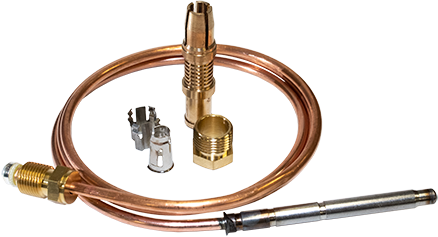
Gas ovens on most modern ranges use a hot surface igniter wired in series with a safety gas valve. The igniter heats up and its resistance drops, allowing enough current to flow to open the bimetal valve. If the igniter is weak, it may glow orange but never pass enough current to open the valve, so the oven never lights. Older gas ranges and some commercial-style units use a standing pilot and a thermocouple, which generates a small voltage when heated by the pilot flame and holds the gas valve open. If the pilot goes out, the thermocouple cools and the valve closes.

Range hoods use grease filters (aluminum mesh or baffle) on ducted models, and charcoal filters on ductless or recirculating models to capture odors.

Signs a Range Part Is Failing

  • Oven won't heat or heats slowly (electric): Open bake element. Look for a visible blister, crack or burned spot. A broil element that fails gives the same symptom on broil.
  • Gas oven won't light, igniter glows: Weak igniter that no longer draws enough current to open the valve. This is the most common gas oven complaint.
  • Gas oven won't light, no glow: Failed igniter, a control problem, or no power to the igniter circuit.
  • Pilot won't stay lit (older units): Weak or failed thermocouple.
  • Surface burner works only on high, or won't shut off: Failed infinite switch.
  • Burner works intermittently, or receptacle is burned: Loose or burned receptacle terminals. A burned receptacle will damage a new element, so replace both together.
  • Range has no power or a scorched smell at the back: Inspect the power cord and terminal block for loose or burned connections.
  • Hood won't clear smoke or drips grease: Clogged grease filters or exhausted charcoal filters.

How to Choose the Right Replacement

Ordering by OEM part number is the safest path, and Supco product pages list the OEM numbers each part replaces. A few selection rules by part:

  • Bake and broil elements: Match the OEM number, voltage, wattage, overall dimensions and terminal style. Element shapes differ even between models from the same brand.
  • Surface elements: Most coil elements come in 6 in. and 8 in. sizes with different wattages. Match the size, number of turns and terminal style to your receptacle.
  • Infinite switches: Match voltage, amperage and the switch's shaft and terminal layout. Many are interchangeable across burners on the same range, but confirm by OEM number.
  • Gas oven igniters: Flat (bar) and round (cylindrical) styles exist, and the igniter must match the current rating the gas valve requires. Always replace with the exact type specified for your model.
  • Receptacles: Match terminal style and mounting. Replace the receptacle any time the element terminals are burned.
  • Drip pans: Match size and the style of the pan (some have a notch for the receptacle). Chrome and porcelain options are available.
  • Range cords: Electric ranges use a 40 or 50 amp cord: a 3-wire NEMA 10-50 or a 4-wire NEMA 14-50, matched to the wall receptacle.
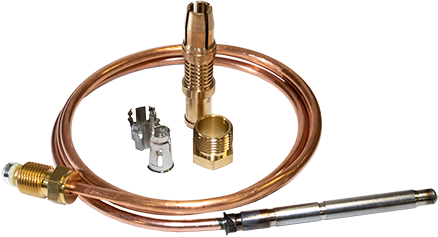
  • Thermocouples: Match length and the fitting style at the gas valve.
  • Hood filters: Match the exact dimensions and the filter type (mesh, baffle or charcoal).
PartAppliance TypeKey Match PointsReplace When
Bake elementElectric ovenOEM number, wattage, shape, terminalsOpen circuit, blistered or cracked
Broil elementElectric ovenOEM number, wattage, shapeOpen circuit, visible damage
Surface elementElectric coil cooktopSize (6 or 8 in.), wattage, terminalsNo heat, warped, burned terminals
Infinite switchElectric cooktopVoltage, amperage, shaft, terminalsStuck on high or no control
ReceptacleElectric coil cooktopTerminal style, mountingBurned or loose terminals
Oven igniterGas ovenFlat or round, current ratingGlows but oven won't light
ThermocoupleStanding pilot gasLength, valve fittingPilot won't stay lit
Range cordElectric range3-wire 10-50 or 4-wire 14-50Damaged, or receptacle change

Installation and Safety Tips

  • Disconnect power before every repair. Unplug the range or shut off the breaker. Electric ranges run on 240 volts, which is a serious shock hazard.
  • Shut off the gas for any gas-side work. Close the appliance shutoff valve. Gas igniters, valves, thermocouples and burner components should be serviced by a qualified appliance technician. Every gas connection disturbed during a repair must be leak-tested with an approved solution, never with a flame. If you smell gas, leave the building and call the gas utility from outside.
  • Let the oven cool completely. Elements and cavity surfaces stay hot well after the oven shuts off.
  • Use proper wire connectors. Element terminals carry high current. Use the high-temperature connectors or screws specified for the part, and never reuse burned wire ends. Cut back to clean copper.
  • Handle igniters gently. They are fragile and should not be touched on the heating surface.
  • Follow the manufacturer's instructions for range cords. On a 4-wire install the neutral-to-frame bonding strap is typically removed; on a 3-wire install it stays in place. Get it wrong and the cabinet can become energized.
  • Re-install the anti-tip bracket after sliding a range back into place.
  • Clean or replace hood filters on schedule. Grease-loaded filters are a fire risk.

Part Details & Shipping

Supco has been building replacement parts since 1945, with components engineered to match OEM fit and function. HVAC365 product pages include OEM cross-reference numbers and spec details so you can verify compatibility before ordering. Parts in this category ship in 3-5 business days.

Frequently Asked Questions

My gas oven igniter glows but the oven won't light. Is the igniter bad?

Usually, yes. A weakened igniter can glow but not draw enough current to open the safety valve. Testing amperage in the igniter circuit confirms it. Because this is gas work, have a qualified technician make the diagnosis and replacement.

Should I replace the receptacle when I replace a surface element?

If the old element's terminals or the receptacle show burning, pitting or discoloration, yes. A damaged receptacle will quickly burn out a new element.

What's the difference between 3-wire and 4-wire range cords?

A 3-wire cord (NEMA 10-50) uses two hots and a combined neutral and ground. A 4-wire cord (NEMA 14-50) adds a separate ground. Most current codes require 4-wire for new installations. Match the cord to the wall receptacle.

Can I install a bake element from a different model if it looks the same?

Only if the replacement is listed for your OEM number. Slight differences in wattage, terminal position or mounting plate can cause poor fit or uneven baking.

How often should range hood filters be replaced?

Metal grease filters can usually be cleaned and reused until damaged. Charcoal filters cannot be cleaned and should be replaced periodically, typically every few months with regular cooking, or per the hood manufacturer's recommendation.

What does a thermocouple do on a gas range?

On standing-pilot appliances, it senses the pilot flame and holds the gas valve open. If the flame goes out, it cools and the valve closes to stop gas flow. A weak thermocouple lets the pilot go out repeatedly.

Compare
Show: 12 24 48

Fast Shipping

Easy Returns

Warranty Coverage

Financing Available