null

Overloads & Motor Protectors

An overload protector is the last line of defense between a motor and a burned winding. When a compressor or motor draws too much current or runs too hot, the overload opens the circuit and lets it cool before it can destroy itself. It is a small, inexpensive part guarding the most expensive component in the system, and that is exactly why it deserves careful selection.

This category covers compressor overloads for refrigerators, freezers, ice machines, dehumidifiers and other fractional horsepower equipment, universal motor protectors that cover a range of motor sizes, and solid state overloads used with modern start devices. Supco builds many of these as universal replacements that cross over to a long list of OEM part numbers.

Overloads also fail on their own. Repeated cycling fatigues the bimetal disc, contacts pit and carbonize, and heat from a loose terminal can cook the housing. A failed overload can keep a perfectly good compressor from running, or worse, let a struggling compressor keep running without protection. Knowing which situation you are in is the real job.

How Overloads and Motor Protectors Work

Bimetal external overloads

Most external compressor overloads use a bimetal disc. Two metals with different expansion rates are bonded together, so the disc snaps from one shape to another at a set temperature. Current flows through a small heater element inside the overload, and the overload is usually mounted tight against the compressor shell. That means it responds to both current (heat from the internal heater) and the compressor's shell temperature. When either gets too high, the disc snaps open and breaks the circuit to the common terminal. Once it cools, it snaps closed and the compressor tries again.

Internal overloads

Many larger hermetic compressors use an internal line break overload buried in the windings. It cannot be replaced in the field. When it opens, the compressor appears dead with an open reading between common and the other terminals, and it can take an hour or more to reset after a hot shutdown. Knowing whether a compressor uses an internal or external protector prevents a lot of wrong diagnoses.

Universal motor protectors

Universal motor protectors are external thermal protectors designed to be wired in series with a motor's supply and mounted on or near the motor. They are selected by voltage, current rating and trip characteristics so one part can cover many motor applications where the original protector is no longer available.

Solid state overloads

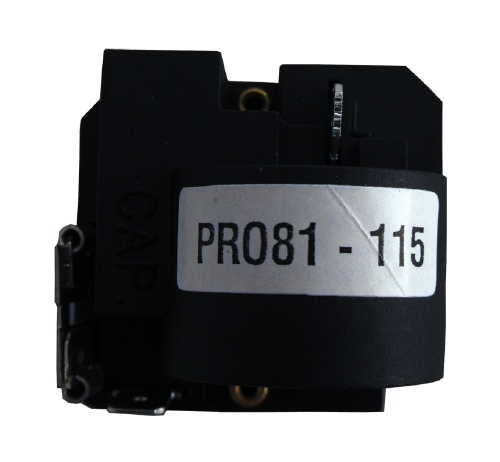
Solid state overloads use electronic sensing rather than a bimetal disc and are often paired with PTC or solid state start relays on fractional horsepower compressors. They tend to give tighter, more repeatable trip points and hold up well to cycling. As with any overload, they must be matched to the compressor they protect.

Signs an Overload Is Failing

  • Compressor will not start and the overload reads open even after it has cooled to room temperature. A cold overload should show continuity.
  • Repeated clicking every few minutes as the overload trips and resets. This is often a start problem, not a bad overload, so check the start relay, capacitor and voltage first.
  • Overload trips early while compressor amp draw and voltage are within nameplate limits. A weak bimetal disc can trip below its rated point.
  • Burned or melted housing, discolored terminals or a burnt smell from the compressor terminal area.
  • Loose fit against the compressor. If the clip is broken and the overload is not touching the shell, it will not sense shell temperature correctly.
  • Compressor runs very hot with no trip. Rare, but a welded overload that never opens leaves the compressor unprotected.

To test, disconnect power, remove the overload and check continuity across its terminals at room temperature. An open reading on a cool overload means it is bad. A closed reading only tells you it is not open right now; it does not prove the trip point is accurate. If the overload keeps tripping, measure compressor current at startup and running, verify supply voltage under load, and confirm the start components and condenser airflow before blaming the overload.

How to Choose the Right Replacement

Start with the OEM or overload part number

The most reliable path is the number stamped on the original overload or the appliance manufacturer's part number. Supco's cross-reference data maps OEM overloads to universal replacements, and product pages list those crossovers.

Match the compressor horsepower and voltage

Many compressor overloads are listed by horsepower range and voltage, for example a part rated for a specific fractional HP range at 115 VAC. Do not substitute an overload rated for a larger compressor. It may never trip when it should.

Match the trip characteristics

Overloads are rated by the current and temperature at which they open and the temperature at which they reset. A universal motor protector should list amperage and trip temperature. When in doubt, match the original part's specifications or use the cross-reference.

Check the physical fit

External compressor overloads have to plug onto the common pin or connect by terminal and seat against the shell. Confirm the terminal style, mounting clip and whether the overload is designed to work with a particular start relay or a combination start device.

Consider the start device

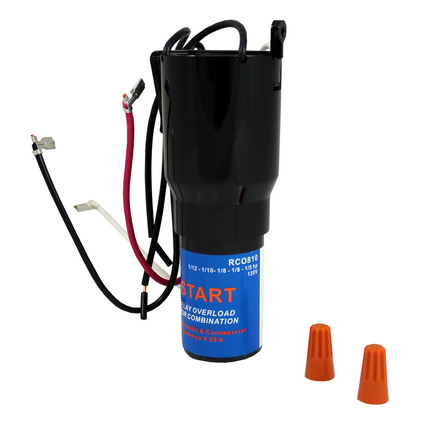
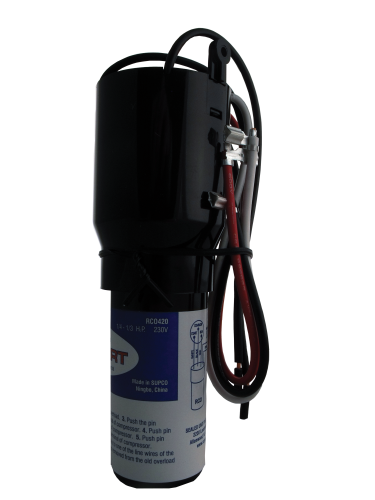
Some overloads are designed to work as a pair with a specific relay or PTC. If the original was part of a relay-overload combination, replacing both together is often the most reliable repair.

Protector typeWhere it is usedField replaceableKey selection specs
External bimetal compressor overloadRefrigerators, freezers, small commercial refrigerationYesCompressor HP and voltage, OEM cross-reference, terminal and clip style
Internal line break overloadMany residential AC and larger hermetic compressorsNoNot applicable; diagnose and allow reset time
Universal motor protectorFan motors, pump motors, general motor applicationsYesVoltage, amp rating, trip and reset temperature, mounting
Solid state overloadFractional HP compressors with PTC or solid state start devicesYesCompressor HP and voltage, compatibility with start device

Installation and Safety Tips

  • Disconnect power and verify with a meter. Unplug the appliance or open and lock the disconnect before removing the terminal cover.
  • Discharge any capacitors in the start circuit with a proper bleed resistor before handling.
  • Be careful with compressor terminals. Do not pry or twist the overload off the pins. Damaged terminals or a weakened terminal seal on a hermetic compressor is a serious hazard and a refrigerant leak point.
  • Seat the overload against the shell and make sure the retaining clip holds it firmly. Poor contact changes how it senses temperature.
  • Replace damaged connectors and wiring. A loose or corroded terminal creates heat that can trip the overload on its own.
  • Do not bypass an overload, even for testing longer than a moment. A compressor running without protection can fail in a way that damages the sealed system.
  • Find out why it tripped. Dirty condenser coils, a failed condenser fan, low voltage, a bad start device or refrigerant problems all cause overload trips. Refrigerant diagnosis and repair must be done by an EPA 608 certified technician.

Part Details & Shipping

HVAC365 carries Supco overloads and protectors because Supco has supplied the replacement parts trade since 1945 and builds its universal protectors to cover a broad range of OEM applications. Each product page includes cross-reference numbers and specification details to help you confirm horsepower range, voltage and fit before ordering. These items ship in 3-5 business days.

Frequently Asked Questions

How do I know if the overload or the compressor is the problem?

Let everything cool, then check the overload for continuity. If it is open while cold, it is bad. If it is closed, check the compressor windings between common, start and run for proper resistance and check for a short to ground. Also verify the start device. Only after those checks should you suspect the compressor.

Can I use a higher rated overload so it stops tripping?

No. An overload that trips too often is a symptom. Installing a higher rated part removes the protection and lets the compressor overheat. Match the rating and fix the underlying cause.

How long does an internal overload take to reset?

It varies with compressor size and how hot it got, but it can take well over an hour. Cooling the shell can help. If it never resets, the compressor may have an open winding.

Should I replace the start relay at the same time?

On refrigerators and other small compressors, it is often a good idea, especially if the relay and overload were designed as a set or the old relay shows signs of heat damage. A new overload paired with a failing relay will keep tripping.

What is a universal motor protector used for?

It replaces an external thermal protector on a motor when the original part is unavailable or obsolete. It is wired in series with the motor supply and selected by voltage, current and trip temperature.

Why does the overload trip on a hot day but not on a cool one?

Higher ambient temperatures raise head pressure and compressor current, and the overload senses both current and heat. Dirty condenser coils or a weak condenser fan make it worse. Clean the coils and confirm airflow before replacing parts.

Compare
Show: 12 24 48

Fast Shipping

Easy Returns

Warranty Coverage

Financing Available