null

Relays & Start Devices

Relays and start devices are the small parts that decide whether a motor or compressor actually gets power, and how it gets up to speed once it does. A thermostat calls, a 24-volt coil pulls in, and contacts rated for real current close to run a blower, a condenser fan or a heat strip. On the compressor side, a start device briefly adds a start winding or start capacitor into the circuit so the motor can break loose against system pressure, then drops it out before it overheats. When any of these parts sticks, burns or opens, the symptom often looks like a bigger failure than it is.

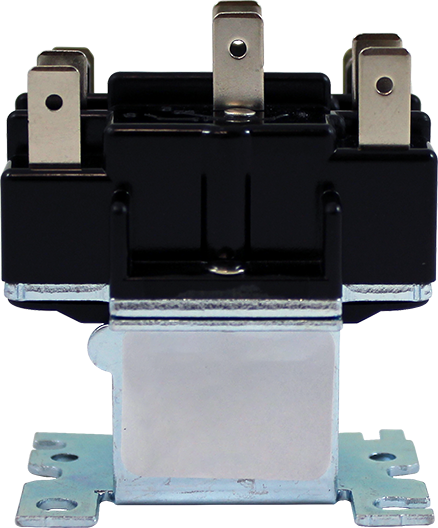
This category covers the relays and starting components that techs and appliance repair people reach for every week: general purpose fan relays, switching relays with DPDT contacts, potential relays such as the Supco 90X series, time delay relays, RCO and URCO style relay-capacitor-overload start kits for fractional horsepower compressors, and PTC solid state starters.

How Relays and Start Devices Work

Fan relays and switching relays

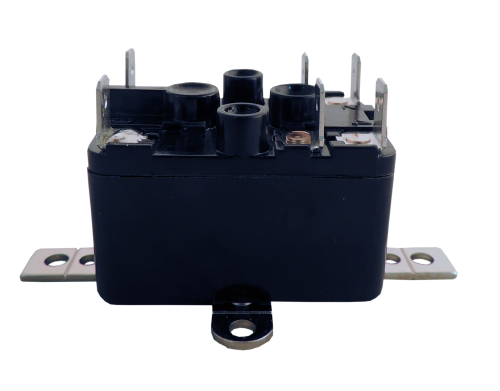
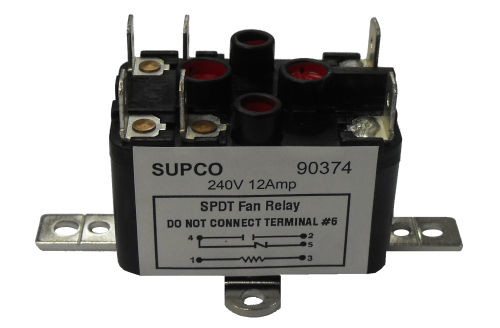
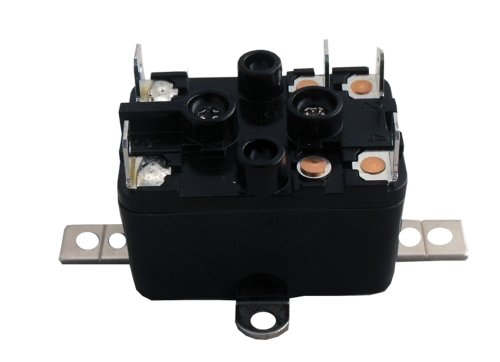
A general purpose relay is an electrically operated switch. A low-current coil, usually 24 VAC in residential HVAC, creates a magnetic field that pulls an armature and closes or opens one or more sets of contacts. Those contacts carry line voltage, typically 120 or 240 VAC, to a blower motor, fan or other load. SPST relays switch one circuit. SPDT relays have a common, a normally open and a normally closed terminal, which is how a single relay can swap a multi-speed blower between heating and cooling speeds. DPDT relays carry two independent poles, so they can switch both legs of a 240-volt load or two separate circuits at once.

Potential relays

Potential relays are used on capacitor-start, capacitor-run (CSR) compressors. The relay coil is wired across the start winding, between terminals 2 and 5, and its contacts between terminals 1 and 2 are normally closed. At startup, the start capacitor is in the circuit through those closed contacts. As the motor speeds up, the voltage generated across the start winding (back EMF) rises. When it reaches the relay's pickup voltage, the coil opens the contacts and drops the start capacitor out. The relay then holds open as long as the motor keeps running. Supco's 90X series potential relays are built around this principle and are selected primarily by pickup voltage, dropout voltage and continuous coil voltage.

Time delay relays

A time delay relay adds a timing function to switching. Common types are delay-on-make (the load starts a set time after the control signal arrives), delay-on-break (the load keeps running for a set time after the signal is removed) and anti-short-cycle timers that prevent a compressor from restarting against high head pressure right after it shuts off.

RCO / URCO start kits and PTC starters

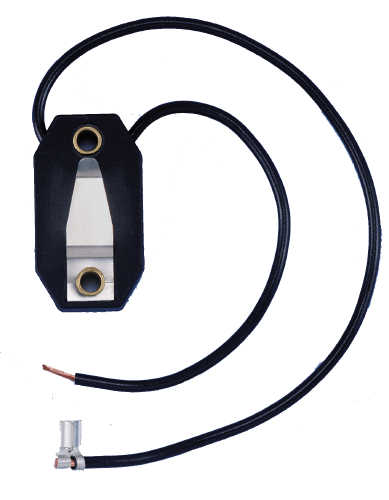
Small hermetic compressors in refrigerators, freezers, water coolers and dehumidifiers often start through a combination relay-capacitor-overload assembly. RCO and URCO style kits package a start relay, an overload protector and, depending on the version, a start capacitor in one unit that plugs onto the compressor's terminal pins. A PTC (positive temperature coefficient) starter does the start relay job with a ceramic thermistor: it conducts when cold, sending current to the start winding, then heats up within a fraction of a second and its resistance climbs, effectively taking the start winding out of the circuit. A PTC needs a few minutes to cool down before it can start the compressor again.

Signs a Relay or Start Device Is Failing

  • Blower or fan will not run on a call while 24 volts is present at the relay coil. Contacts may be pitted, welded open or the coil may be open.
  • Blower or fan will not shut off. Welded contacts on a normally open relay are a classic cause.
  • Compressor hums and trips on overload without starting. This points to the start circuit: a failed potential relay, open start capacitor, bad PTC or failed RCO kit.
  • Start capacitor blown or bulging repeatedly. A potential relay that fails to open leaves the start capacitor in the circuit too long, and the capacitor overheats.
  • Refrigerator compressor clicks on and off every few minutes without running. Often the overload is cycling because the start relay or PTC is not doing its job.

Coil resistance can be checked with an ohmmeter with power off and the relay isolated. An open coil reads infinite. Contacts can be checked for continuity in their de-energized state and then while the coil is energized from a safe source.

How to Choose the Right Replacement

Match the coil voltage

The coil voltage is printed on the relay. Most residential HVAC fan relays use a 24 VAC coil, but 120 and 240 VAC coils are common on commercial and refrigeration equipment. A wrong coil voltage will either fail to pull in or burn up.

Match or exceed the contact rating

Contact ratings are usually listed in full load amps (FLA), locked rotor amps (LRA), resistive amps and horsepower at a given voltage. Choose a replacement with ratings equal to or greater than the original. A motor load needs the inductive or horsepower rating, not just the resistive amp number.

Match the contact configuration

Count the poles and throws you actually need. Replacing a SPDT blower speed relay with a SPST part will lose the speed-change function.

Potential relays: pickup, dropout and continuous voltage

Potential relays are not universal by horsepower alone. The pickup voltage must suit the compressor's start winding characteristics. Mounting orientation also matters on many potential relays. Use the compressor manufacturer's specified relay, or cross-reference the OEM number to a Supco equivalent.

Start kits and PTCs: match the compressor

For RCO, URCO and PTC devices, match compressor horsepower range, voltage and the pin arrangement on the compressor.

Cross-reference the OEM number

The fastest way to a correct part is the OEM part number or the relay's own model number.

Device typeTypical useKey selection specsCommon failure symptom
Fan / general purpose relayBlowers, condenser fans, auxiliary loadsCoil voltage, contact config (SPST/SPDT), FLA/LRA ratingFan will not start or will not stop
Switching relay (DPDT)Switching two circuits or both legs of 240VCoil voltage, two-pole rating, mountingPartial function, chatter
Potential relay (90X series)CSR compressors with start capacitorPickup, dropout, continuous coil voltage; mounting positionCompressor hums, start cap fails
Time delay relayBlower off-delay, compressor anti-short-cycleDelay type, delay time, coil voltage, contact ratingNo delay, or load never energizes
RCO / URCO start kitFractional HP refrigeration compressorsHP range, voltage, pin fit, included overloadCompressor clicks on overload
PTC starterRefrigerators, freezers, small appliancesCompressor HP and voltage, pin fitCompressor will not start, especially on quick restart

Installation and Safety Tips

  • Kill the power and verify it. Turn off the disconnect, lock it out where possible and confirm zero voltage with a meter on both control and line voltage circuits.
  • Discharge capacitors before touching start circuits. Start and run capacitors can hold a dangerous charge. Discharge with an appropriate resistor tool, not a screwdriver.
  • Photograph the wiring before you pull anything. Label wires by terminal number. Potential relay terminals 1, 2 and 5 must go back exactly right.
  • Use the right connectors. Replace burnt or loose female spade terminals. A good relay on a corroded connector will fail again.
  • Find the root cause. Welded contacts often mean an overcurrent condition. Check motor amp draw, capacitor value and supply voltage after installing.
  • Leave sealed system diagnosis to qualified technicians. If a compressor still will not start after the start components are confirmed good, it may have a mechanical or refrigerant problem, and refrigerant work requires EPA 608 certification.

Part Details & Shipping

HVAC365 stocks Supco relays and start components because Supco has been building replacement parts for HVAC, refrigeration and appliance repair since 1945, and its universal relays are designed to cover a wide spread of OEM applications. Product pages include cross-reference numbers and spec sheet data so you can confirm coil voltage, contact ratings and fitment before you order. These items ship in 3-5 business days, which keeps a truck stock refill or a down unit moving.

Frequently Asked Questions

Can I replace a potential relay with a hard start kit?

Sometimes, but not blindly. A hard start kit adds start torque to a PSC compressor that already runs on a run capacitor. If the compressor was designed as a CSR system with a specific potential relay and start capacitor, the best repair is a properly matched relay and capacitor. Follow the compressor manufacturer's guidance.

What does the 90X in Supco 90X series mean?

It identifies a family of Supco potential relays. Individual part numbers in the series differ by pickup, dropout and continuous coil voltage, so match the specific relay to the compressor rather than treating the whole series as interchangeable.

Why does my refrigerator compressor click every few minutes?

That click is usually the overload opening and resetting because the compressor is not starting. Common causes are a failed PTC or start relay, a failed overload, low supply voltage or a compressor problem. Test the start device first since it is the inexpensive and frequent culprit.

Can a DPDT relay replace a SPDT relay?

Generally yes, if the coil voltage, contact ratings and mounting are compatible. You use one pole and leave the other unconnected.

How long should a PTC starter take to reset?

A PTC needs to cool down after each start, typically a few minutes. If a compressor short cycles, the PTC may still be hot and unable to start it, which can look like a failed part when it is actually a cycling problem elsewhere.

What causes relay contacts to weld shut?

Excessive current, usually from a locked or failing motor, a short in the load, chattering from low control voltage or a relay that was undersized for the load. Fix the cause when you replace the relay or the new one will fail the same way.

Compare
Show: 12 24 48

Fast Shipping

Easy Returns

Warranty Coverage

Financing Available