The Brand Story
Hayward: A Brooklyn Valve Shop That Learned to Speak Pool
In 1925 an engineer named Irving M. Hayward opened a small metalworking shop in Brooklyn, New York. He made valves and flow-control parts for factories, the kind of heavy brass and iron hardware that never gets photographed. Nobody in that shop was thinking about backyard swimming pools. It would take a postwar building boom, an immigrant with a background in plastics, and almost a century of patient engineering before the Hayward name became something pool owners would recognize on the pump humming beside their deck.
Chapter 1 · 1925
Valves before water features
The early Hayward company lived in the industrial world. Its products moved and controlled liquids inside plants and mills, and the skills it built there, machining tight tolerances and designing parts that seal and keep sealing, turned out to be exactly what the pool business would need. Around 1950, as American suburbs filled with new homes and the residential pool stopped being a luxury reserved for estates, Hayward began making equipment for that market.
Chapter 2 · 1964
Oscar Davis and the switch to plastic
The turning point came in 1964, when Oscar Davis acquired the company. Davis was a Hungarian immigrant and a veteran of the Second World War, and he arrived with experience in plastics manufacturing. He saw what metal pool equipment suffered from: chlorinated water, sun and weather that corroded housings and seized parts. Under his leadership Hayward moved away from heavy metal components and toward injection-molded thermoplastics for pumps, filters and fittings.
That shift reshaped the product line. In 1971 Hayward introduced the Super Pump, a pool pump that is still treated as an industry standard more than fifty years later. Hayward Europe was established in 1974, and the automatic PoolVac suction cleaner followed in 1982. In 1997 Hayward added SwimClear cartridge filters, designed to clean water without backwashing. By the late 1990s Hayward was regularly counted among the three dominant pool equipment makers in North America.
Davis received the Ellis Island Medal of Honor in 2002, a recognition of his path from immigrant to industrialist. He died in 2021, the same year the company he had transformed returned to the stock market.
Chapter 3 · 2005 to 2016
Letting go of the factory floor to focus on the backyard
In 2005 Hayward sold its industrial division, the descendant of Irving Hayward's original valve business, so it could concentrate on pools and outdoor living. The same year it introduced its first pool automation systems, the beginning of a long effort to put pumps, heaters, lights and sanitizers under a single controller. A smart pool management platform followed in 2011, and the Omni family, including the OmniLogic and OmniPL controllers and the VS Omni pump, brought Wi-Fi control and app access to equipment that had once been run by mechanical timers.
Efficiency became the other long project. The TriStar variable-speed pump, built around a permanent magnet motor, marked a turning point for Hayward, letting pools circulate water at low speeds for long hours instead of running a single-speed motor flat out. In 2016 Hayward acquired two Spanish companies, Kripsol and Sugar Valley, adding pumps, filtration and salt electrolysis expertise in Europe.
Chapter 4 · 2017 to 2025
A family company goes public, then turns one hundred
In 2017 the Davis family sold Hayward to a group of investors that included CCMP, MSD and AIMCo. Kevin Holleran was named chief executive in 2019. In 2021 Hayward Holdings listed on the New York Stock Exchange under the ticker HAYW, raising about $685 million in its initial public offering. The following year it introduced the TriStar XL, a dual-voltage variable-speed pump that ties into Omni automation.
Hayward marked its centennial in 2025. The company now reports annual net sales of just over $1 billion, holds more than 550 active or pending patents, and runs manufacturing operations in the United States, Canada, France, Spain and China. Its corporate headquarters sits in Charlotte, North Carolina, a long way from the Brooklyn shop where it began.
The Lineup
What Hayward builds today
Hayward makes nearly everything that sits on a residential or commercial pool pad: pumps, filters, heaters and heat pumps, salt chlorinators and chemical feeders, automation controllers, robotic and suction cleaners, LED lighting, water features and the fittings that connect it all. The Hayward equipment HVAC365 carries spans that range:
- Pool pumps: TriStar XE multi-speed and variable-speed pumps for residential pools, and the HCP 4000 Series, heavy three-phase commercial pumps for large public and resort pools.
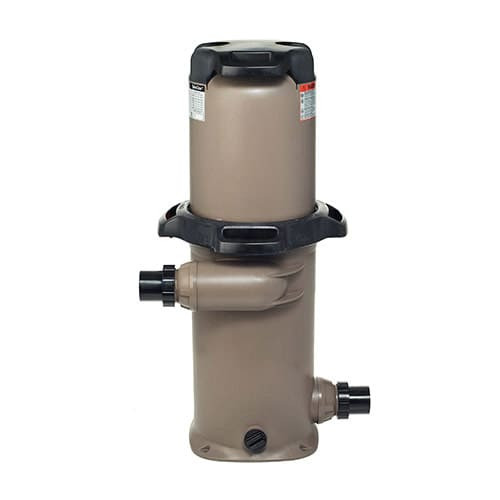
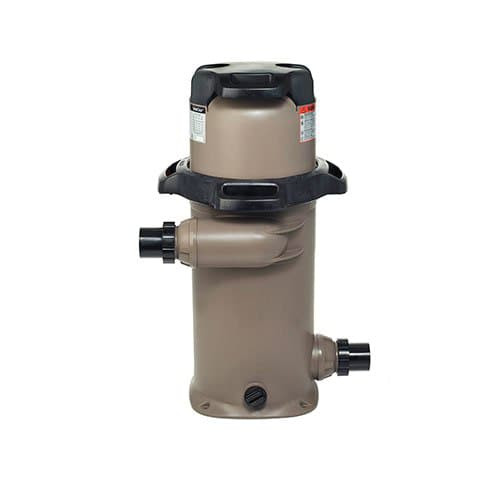
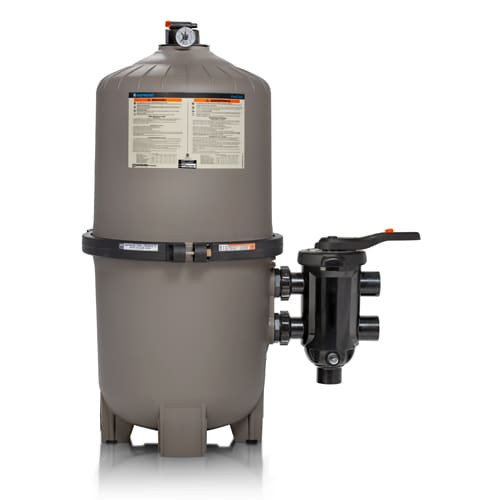
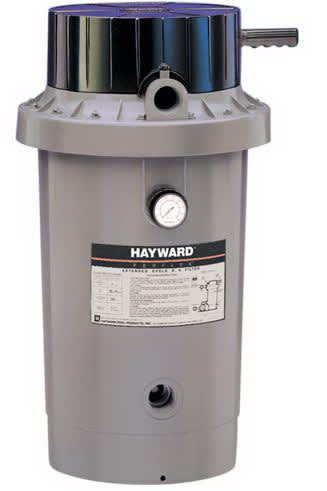
- Filters: Star-Clear Plus cartridge filters, Perflex extended-cycle DE filters, DEP 500 Series pleated-element DE filters, and ProSeries sand filters, including complete top-mount sand filter systems paired with a pump and valve.
- Salt systems: the AquaRite 100 for pools up to 30,000 gallons and the AquaRite S3 Omni with its color display, both producing chlorine from dissolved salt instead of tablets.
- Automation: OmniPL controllers with relay configurations and included salt cells, which tie pumps, heaters, lighting and sanitizing into one app-controlled system.
- Heating: HeatPro heat pumps, which pull warmth from the outside air, Universal H-Series natural gas heaters, and the C-Spa electric heater for spas.
- Drains, inlets and skimmers: the plumbing parts that rarely get attention but decide how well water circulates, including return inlets and jets.
At a Glance
Hayward by the numbers
- Founded
- 1925, Brooklyn, New York
- Founder
- Irving M. Hayward
- Entered the pool market
- Around 1950
- Transformed by
- Oscar Davis, from 1964
- Headquarters
- Charlotte, North Carolina
- Stock listing
- NYSE: HAYW, since 2021
- 2024 net sales
- About $1.05 billion
- Manufacturing
- US, Canada, France, Spain, China
- Patents
- More than 550 active or pending
Questions
Frequently asked questions about Hayward
Who owns Hayward pool equipment?
Hayward is made by Hayward Holdings, a publicly traded company listed on the New York Stock Exchange under the ticker HAYW since 2021. Before that, it was owned by the Davis family from 1964 until a 2017 sale to a group of private investors.
When and where was Hayward founded?
Engineer Irving M. Hayward founded the company in Brooklyn, New York, in 1925 as a maker of industrial valves and flow-control products. It began making residential pool equipment around 1950.
Where is Hayward headquartered?
Hayward Holdings is headquartered in Charlotte, North Carolina. It operates manufacturing facilities in the United States, Canada, France, Spain and China.
What is Hayward known for?
Hayward is known for pool pumps such as the long-running Super Pump and the TriStar variable-speed line, for cartridge, sand and DE filters, for AquaRite salt chlorination, and for its Omni automation platform.
What is the difference between the AquaRite 100 and the AquaRite S3 Omni?
Both are Hayward salt chlorination systems that make chlorine from dissolved salt. The AquaRite S3 Omni adds an LCD color display and is designed to work within Hayward's Omni automation family.
Does Hayward make commercial pool equipment?
Yes. Alongside its residential line, Hayward builds commercial equipment such as the HCP 4000 Series three-phase pumps used on large public, hotel and resort pools.