null
Pool Sand Filters

Pool Sand Filters

A pool sand filter is a pressure tank filled with filter media, usually #20 silica sand, that strains dirt and debris out of the water as the pump pushes it through. Water enters at the top, spreads across the sand bed, works its way down through the media and leaves through a set of slotted laterals at the bottom of the tank before heading back to the pool. As the bed traps dirt, pressure climbs and flow drops. When it gets high enough, you backwash: reverse the flow, lift the bed and send the trapped dirt out to waste.

Sand filters are popular because they are simple, forgiving and cheap to run. There are no cartridges to buy and no DE powder to handle. A good sand filter can run for years with only routine backwashing and an occasional media change. This category carries top-mount and side-mount sand filters, filter and valve combos and related parts from brands such as Pentair, Hayward, Jandy, Waterway and others. Pool service techs replacing cracked tanks, builders specifying new pads and homeowners with a tired filter that no longer keeps water clear all buy here.

How Sand Filters Work

The filtering happens in the sand bed. Dirt sticks to the sand grains and fills the spaces between them as water flows through. A clean sand bed typically catches particles down to around 20 to 40 microns. As the bed loads, it actually filters finer particles, up to the point where pressure gets too high and flow starts to suffer.

  • Tank. Usually a fiberglass-reinforced or thermoplastic tank rated for pool system pressure. It holds the sand bed and the internal parts.
  • Diffuser. Sits at the top of the tank and spreads incoming water evenly over the sand so it does not dig a channel through the bed.
  • Standpipe and laterals. A central pipe runs down to a hub at the bottom of the tank with slotted lateral arms. Filtered water passes through the slots and up the standpipe to the outlet. The slots are small enough to hold back the sand.
  • Multiport valve. A rotary valve that sets the operating mode, usually with positions such as Filter, Backwash, Rinse, Waste, Recirculate, Closed and Winterize. Some systems use a push-pull or slide valve for backwashing instead.
  • Pressure gauge and air relief. The gauge tells you when it is time to backwash. The air relief lets trapped air out of the tank.

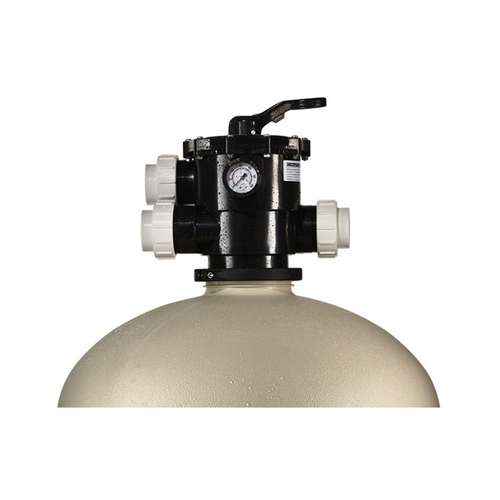
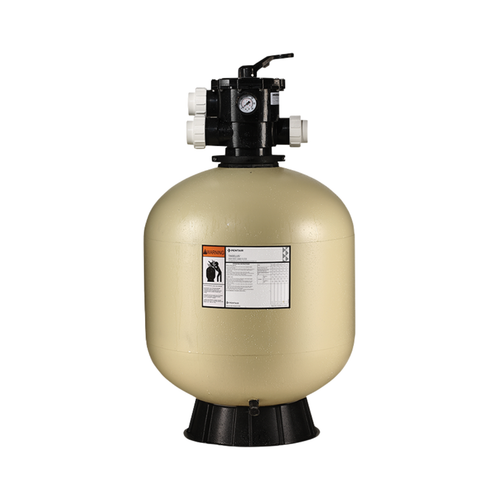
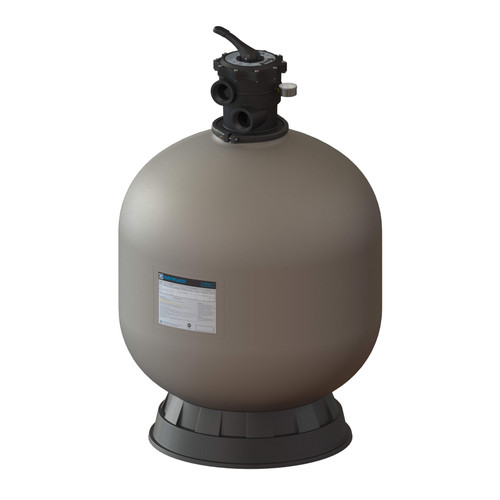
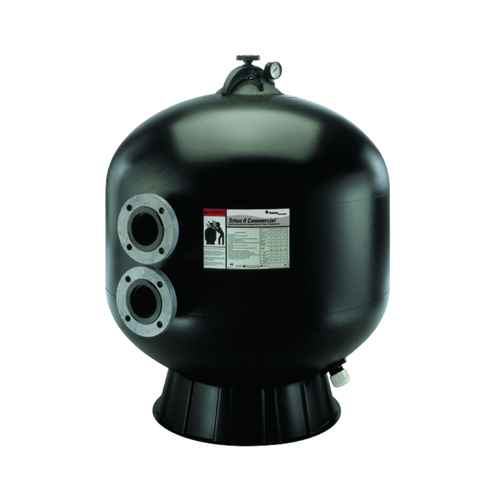
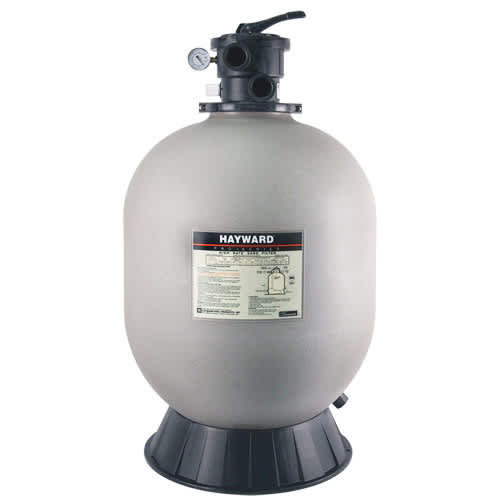
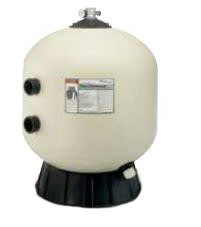
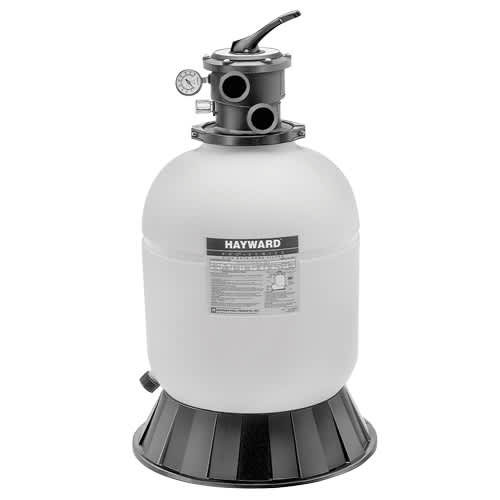
Top-mount vs side-mount. On a top-mount filter, the multiport valve sits on the tank lid. These are common on residential pools and above-ground pools, with compact footprints and simple plumbing. On a side-mount filter, the valve connects to ports on the side of the tank. Side-mount tanks are often larger and taller, can hold a deeper sand bed, and allow the tank to be opened from the top for service without disturbing the plumbing. They are common on larger residential and light commercial pools.

Signs It's Time to Service or Replace

  • Short runs between backwashes. If pressure climbs quickly after a backwash, the sand may be caked, channeled, calcified or full of oils. A media change often fixes it.
  • Sand returning to the pool. Sand on the pool floor near returns usually means a broken lateral, cracked standpipe or hub. It can also mean the wrong sand size or an oversized pump.
  • Cloudy water that won't clear. Channeling, old media or undersized filtration area can let fine particles through. Check water balance and sanitizer first.
  • Water out the backwash line in Filter mode. The multiport spider gasket is worn or out of place.
  • Leaks around the tank or valve. Check O-rings, the clamp band and the tank body. A cracked tank or a stress crack near the ports should be replaced, not patched.
  • Pressure gauge stuck or unreadable. Replace the gauge. You cannot manage a sand filter without a reliable one.
  • Media is old. Sand typically needs replacement every few years, often around three to five, depending on use, bather load and water quality.

How to Choose the Right Sand Filter

  1. Size by filter area and flow. Sand filters are rated by the square footage of the sand bed. High-rate residential sand filters are commonly designed to run around 15 to 20 gallons per minute per square foot. Take the pump's flow rate at system head and make sure the filter's rated flow is equal or higher. Going larger gives longer runs between backwashes and better clarity.
  2. Check turnover. Pool volume divided by desired turnover hours gives gallons per hour. Divide by 60 for GPM. The filter must handle that flow comfortably.
  3. Top-mount or side-mount. Match the existing plumbing if you can. Switching mount styles is possible but usually means re-plumbing.
  4. Valve size and type. Common valves are 1.5 inch and 2 inch. Some filters include the valve, and some are sold as tank only. Match the valve to the pump and plumbing, and check valve compatibility with the tank.
  5. Above-ground vs inground. Above-ground filters are usually smaller and packaged with a pump. Inground filters are larger and built for higher pressure and flow.
  6. Media choice. Standard #20 silica sand is the default. Glass media and zeolite are alternatives, each with its own fill chart and benefits. Always follow the filter manufacturer's media recommendations.
  7. Cross-reference the model. Read the label on the old tank for model number and filter area. That helps match parts, valves and replacement tanks.
MediaHow It FiltersProsThings to Know
#20 silica sandMechanical straining through graded sand, roughly 0.45 to 0.55 mm grainsStandard media, widely available, works in every sand filterCan channel or cake over time; replace every few years
Filter glassCrushed, recycled glass graded for filtrationCan filter finer and resist caking; often lasts longerLighter than sand by volume; follow the fill chart, not the sand weight
ZeolitePorous mineral mediaCan trap finer particles and some ammonia compoundsLighter than sand; may need adjusted backwash practice
Cellulose or fiber aidsAdded to sand to improve fine filtrationCan improve clarity on a sand bedUsed as an aid, not a replacement media; follow product directions

For reference, a 24-inch diameter tank has about 3.1 square feet of filter area, a 30-inch tank about 4.9 square feet and a 36-inch tank about 7.1 square feet. At 20 GPM per square foot, that works out to roughly 62, 98 and 141 GPM. Always confirm the manufacturer's rated flow.

Installation and Safety Tips

  • Shut the pump off before turning the valve. Always turn the pump off before moving the multiport handle. Turning it under pressure damages the spider gasket and can be dangerous.
  • Release pressure before opening. Open the air relief and confirm the gauge reads zero before loosening a clamp band or lid. A pressurized filter can separate violently.
  • Load media carefully. Cover the standpipe opening before filling, fill the tank partly with water to cushion the laterals, then add media slowly. Fill to the level marked by the manufacturer, leaving freeboard space for the bed to expand during backwash.
  • Backwash correctly. Backwash when pressure rises about 8 to 10 psi above clean starting pressure, or as recommended. Run backwash until the sight glass runs clear, then rinse briefly before returning to Filter.
  • Follow local backwash rules. Many areas restrict where backwash water can go. Check local rules before routing backwash to storm drains or landscaping.
  • Use the right sealants. PTFE tape or plastic-safe sealant on threaded fittings. Lubricate O-rings with a silicone-based lubricant made for pool use.
  • Bond and support properly. Set the tank on a level, solid base. Follow local code for equipment bonding. Electrical work on the pad should be done by a licensed electrician.
  • Winterize in freeze areas. Drain the tank and valve and set the valve as directed before cold weather.

Shopping This Category at HVAC365

Every filter in this category is brand-new with the full manufacturer warranty. Product pages list filter area, rated flow, valve size and mount style, and most items ship in 1-2 business days. If you are not sure which filter matches your pump and plumbing, send HVAC365 the old filter's label details and pump information and we will help you size it.

Frequently Asked Questions

How often should I backwash my sand filter?

Backwash when the pressure gauge reads about 8 to 10 psi above its clean starting pressure, or as the manufacturer recommends. Backwashing too often can actually reduce filtration, since a slightly dirty bed filters finer.

How often should I change the sand?

Often every three to five years, depending on bather load, water quality and maintenance. Signs it is time include short runs between backwashes, cloudy water and clumped or greasy sand.

Can I use pool filter glass instead of sand?

In many sand filters, yes. Glass media is lighter than sand for the same volume, so follow the glass maker's fill chart rather than using the same weight of sand. Check that the filter manufacturer allows alternate media.

Why is sand coming back into my pool?

The most common causes are a broken lateral, a cracked standpipe or hub, the wrong sand size, or a pump that is too large for the filter. Inspect the internal parts when you change the sand.

Can I use play sand or regular sand?

No. Use #20 silica pool filter sand or another media approved by the filter manufacturer. Other sand can be the wrong size, contain dust, and pass through the laterals or clog the bed.

What is the difference between top-mount and side-mount sand filters?

On a top-mount filter, the valve is on the tank lid, which makes for a compact setup. On a side-mount filter, the valve is on the side of the tank. Side-mount filters are often larger and taller and allow top access without disturbing plumbing.

Compare
Show: 12 24 48

Fast Shipping

Easy Returns

Warranty Coverage

Financing Available