null

Hard Start Kits

A hard start kit gives a single-phase compressor a short burst of extra starting torque, then gets out of the way. It's one of the most useful parts on a service truck. It can bring back a compressor that hums and trips on its overload, quiet a unit that dims the lights every time it kicks on, and help an aging system start reliably when line voltage sags on a hot afternoon.

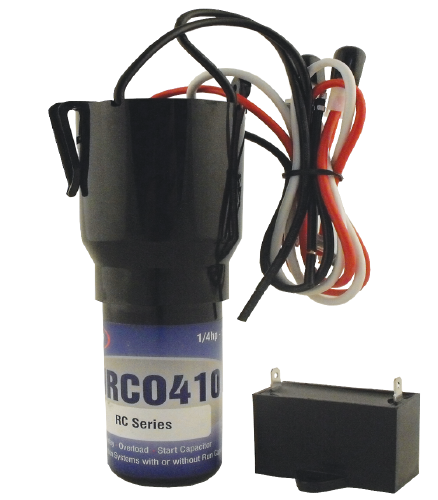
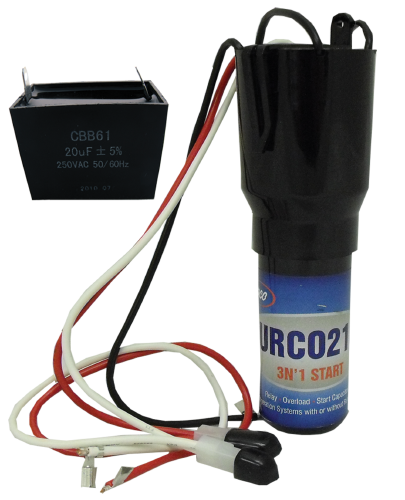
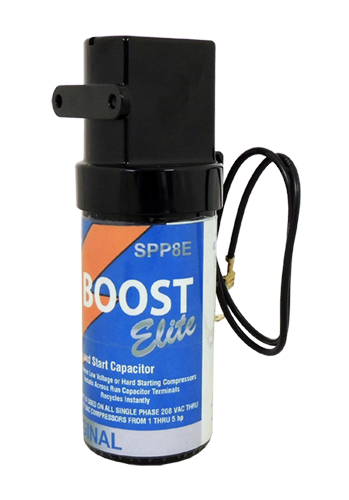
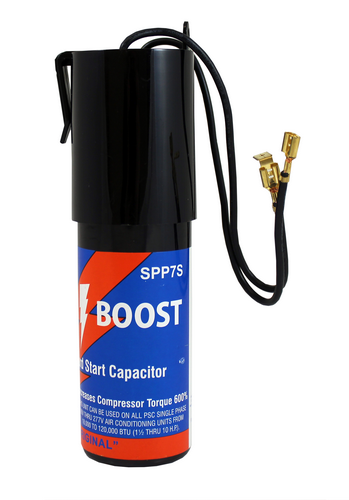
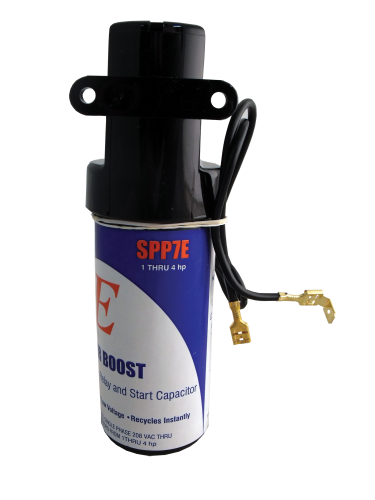
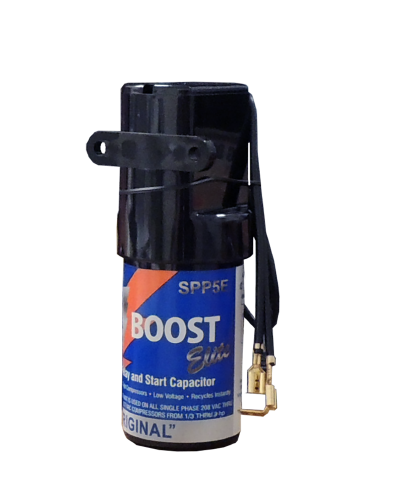
This category covers the main types of starting devices: PTC (positive temperature coefficient) kits such as the Supco SPP series, potential relay and start capacitor combinations, electronic hard start kits such as the SPP-E line, and 3-wire kits that connect directly to the compressor's start winding. Each one works a little differently, and picking the right type matters as much as picking the right size.

A hard start kit is not a cure for a mechanically failed compressor, and it shouldn't be used to cover up a weak run capacitor, low voltage from undersized wiring or a refrigerant problem. Used correctly, though, it reduces starting stress on the compressor windings and the electrical system and can add real service life to equipment that is otherwise sound.

How a Hard Start Kit Works

Most residential compressors are PSC (permanent split capacitor) designs. The run capacitor creates the phase shift needed to turn the motor, but it only provides moderate starting torque. That's fine when pressures have equalized and voltage is healthy. It isn't enough when the compressor tries to start against unequal head and suction pressures, after a short cycle, or when voltage drops under load.

A hard start kit adds a start capacitor in parallel with the run capacitor for the first moment of startup. The extra capacitance increases current through the start winding and greatly increases starting torque. Once the motor is up to speed, the kit has to take the start capacitor out of the circuit. Start capacitors are rated for intermittent duty only and will fail quickly if left in the circuit. How the kit removes the capacitor is what separates the types:

  • PTC kits: A ceramic thermistor has low resistance when cold, so current flows through it at startup. Current heats the thermistor, its resistance rises sharply, and it effectively removes itself from the circuit within a fraction of a second to a second. It needs a cool-down period before it can boost again.
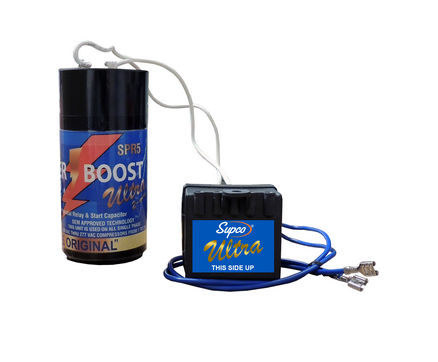
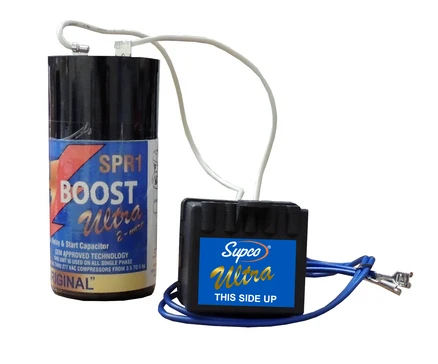
  • Potential relay kits: A potential relay's coil senses the back-EMF (voltage) generated across the start winding. As the motor reaches speed, that voltage rises, the relay picks up, and its normally closed contacts open to drop the start capacitor. This is the same method used by many OEM start assists.
  • Electronic kits: A solid-state circuit controls when the start capacitor is connected and disconnected, typically based on timing or sensing the motor's condition. Electronic designs don't need the long cool-down a PTC needs, so they handle closely spaced starts better.
  • 3-wire kits: Instead of connecting across the run capacitor terminals, a 3-wire kit connects to the compressor's common, run and start circuit separately. This lets a potential relay sense start winding voltage directly and is the most precise way to match relay pickup to the compressor.

Signs a Compressor Needs a Hard Start Kit

  • The compressor hums for a few seconds, then trips on its internal overload, and the run capacitor tests good.
  • The outdoor unit starts on some calls and not others, especially on hot days or after a short off cycle.
  • Lights in the home dim noticeably every time the condenser starts.
  • Locked rotor amps are drawn for longer than normal on startup.
  • The equipment is older, and the compressor's windings test good but starting is getting harder.
  • The system has been put on a generator or has known low or fluctuating utility voltage.

Before adding a kit, rule out the usual suspects. Test the run capacitor under a meter that reads microfarads. Check line voltage at the contactor during startup. Inspect the contactor points. Confirm the compressor windings aren't grounded or open. A hard start kit on a grounded compressor will not save it.

How to Choose the Right Hard Start Kit

Match the compressor size and voltage

Hard start kits are sized by compressor horsepower or tonnage range and by voltage. Most residential kits are rated for 208-240V single-phase compressors. Check the compressor's nameplate for voltage, rated load amps (RLA) and locked rotor amps (LRA), and choose a kit whose range covers that compressor. The supported range for each kit is listed on its product page.

Consider how the system cycles

PTC kits are simple and inexpensive, but their cool-down period means they may not boost on a quick restart. A unit that short cycles, or one that is frequently restarted after a power interruption, will be better served by an electronic or potential relay kit.

Decide between 2-wire and 3-wire connection

Two-wire kits connect in parallel with the run capacitor, at the HERM and C terminals, and are quick to install. Three-wire kits take more wiring but give a potential relay a direct reading of the start winding. If the OEM specifies a particular start assist or a potential relay with a specific pickup voltage, follow that guidance.

Kit typeHow it drops the start capWiringStrengthsLimitations
PTC (e.g. SPP series)Thermistor heats and resistance rises2-wire across run capSimple, fast install, no moving partsNeeds cool-down between starts
Potential relay + capacitorRelay senses back-EMF and opens2-wire or 3-wireMatches OEM start assist method, repeatableRelay must suit the compressor
Electronic (e.g. SPP-E)Solid-state switchingTypically 2-wireHandles closely spaced startsElectronics sensitive to surges
3-wire kitPotential relay on start winding3-wire to C, run, start circuitMost precise relay sensingMore wiring, more time

When a hard start kit is the wrong answer

Kits are designed for single-phase PSC compressors. They are not used on three-phase compressors. Some scroll and variable-speed compressor manufacturers have specific guidance on starting devices, so check the OEM literature first. Inverter-driven compressors, including most modern mini splits, start through their drive electronics and don't use a hard start kit at all.

Installation and Safety Tips

  • De-energize and verify: Turn off the disconnect, lock it out and confirm zero voltage at the contactor with a meter.
  • Discharge the run capacitor: Use a resistor discharge tool across the terminals. Never rely on a screwdriver short.
  • Follow the kit's wiring diagram: Two-wire kits typically land on the HERM and C terminals of the run capacitor. Three-wire kits require a connection to the compressor start terminal circuit. Use proper terminals and keep connections tight.
  • Mount it securely: Secure the kit inside the control panel away from sharp edges, hot refrigerant lines and moving fan blades. Loose start capacitors vibrate and chafe wires.
  • Check amperage after install: Measure startup and running amps. The compressor should come up to speed quickly and settle at or below its RLA.
  • Leave line-voltage work to qualified technicians: Compressor circuits carry 240 volts and stored capacitor energy. If refrigerant charge is part of the starting problem, that work requires an EPA Section 608-certified technician.

Part Details & Shipping

Supco has built starting devices and capacitors for the HVAC trade since 1945, and its hard start kits are a common sight on service trucks. Product pages include ratings, compressor size ranges and spec sheets so you can match the kit before you order, and items in this category ship in 3-5 business days.

Frequently Asked Questions

Will a hard start kit fix a compressor that won't start?

It will if the problem is insufficient starting torque and the compressor is mechanically and electrically sound. It won't fix a seized compressor, a grounded or open winding, a bad run capacitor or a failed contactor. Diagnose those first.

Can a hard start kit damage my compressor?

A correctly sized and wired kit reduces stress by shortening the time the compressor spends at locked rotor current. Problems come from wrong sizing or a start capacitor that stays in the circuit, which is why the switching device has to work properly.

What's the difference between a PTC kit and a potential relay kit?

A PTC kit uses a thermistor that heats up and blocks current to the start capacitor. A potential relay kit uses a relay that opens when the compressor reaches speed. The relay doesn't need a cool-down period, so it handles quick restarts better.

Do I still need a run capacitor with a hard start kit?

Yes. The hard start kit only assists at startup. The run capacitor stays in the circuit the entire time the compressor runs and must be the correct MFD rating.

Can I install a hard start kit on a mini split?

Most current mini splits use inverter compressors that start through a variable-speed drive, so a hard start kit doesn't apply. Some older or fixed-speed units use a PSC compressor, so check the unit's wiring diagram and the manufacturer's guidance.

Should I use a 2-wire or 3-wire kit?

Two-wire kits are faster and cover most residential applications. Three-wire kits give a potential relay direct sensing of the start winding and are preferred when matching a specific OEM start assist or when you want the most precise dropout.

How long does a hard start kit last?

Service life depends on how often the system cycles, line voltage quality and heat inside the control panel. If the compressor starts struggling again, test the start capacitor and switching device as part of your diagnosis.

Compare
Show: 12 24 48

Fast Shipping

Easy Returns

Warranty Coverage

Financing Available