
null
Commercial Rooftop Units (RTU)

Commercial Rooftop Units (RTU)

Commercial Rooftop Units: A Practical Buying Guide for 3 to 25 Ton Packaged RTUs

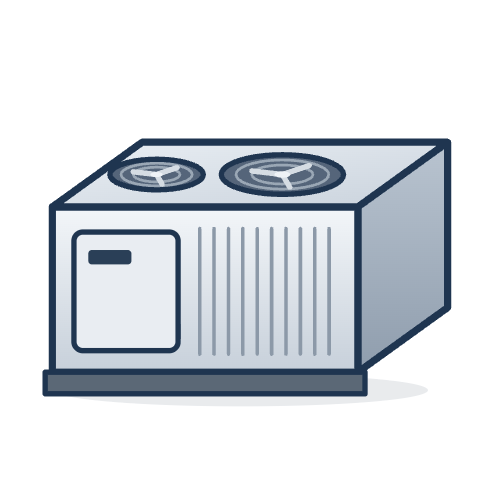
A commercial rooftop unit, usually called an RTU or a packaged unit, puts the entire air conditioning system in one weatherproof cabinet: compressor, condenser coil, evaporator coil, supply blower, filters, controls, and, depending on the model, a gas furnace section, a heat pump reversing circuit, or electric heat. The unit sits on a roof curb, ducts drop straight down through the roof deck (downflow) or run out the side (horizontal), and the building gets heating, cooling, and ventilation from a single piece of equipment. That simplicity is why RTUs condition the majority of low-rise commercial space in the United States: retail strips, restaurants, offices, schools, churches, medical clinics, warehouses with office areas, and light industrial buildings.

This guide walks through how rooftop units are categorized, how to size them, what the electrical nameplate actually tells you, how curbs and economizers fit in, how efficiency is rated after the 2023 DOE changes, and what the 2025 refrigerant transition to R-454B and R-32 means for replacement projects. It is written for contractors writing a quote and for building owners who want to understand what they are paying for.

What are the main types of commercial rooftop units?

Packaged RTUs fall into three heating configurations. The cooling side is basically the same in all three; what changes is how the unit makes heat.

  • Gas/electric RTUs cool with a refrigerant circuit and heat with a natural gas or LP furnace section built into the cabinet. They are the most common choice wherever gas service is on the roof and winters are cold enough that heating matters. Rheem's Commercial Renaissance Line Classic gas/electric families include the RGECYB, RGEDYB, and RGEGYB.
  • Heat pump RTUs reverse the refrigerant cycle to heat the building and typically carry an electric heat kit for backup and defrost. They avoid running gas to the roof and are a strong fit in mild and moderate climates or where owners are moving away from combustion. Rheem offers the RHPCYB and RHPDYB heat pump families, and Daikin's DSH and DHH rooftop heat pumps use R-32.
  • Electric cooling (cooling-only) RTUs provide cooling with an optional electric resistance heat kit, or no heat at all. They are common in hot climates, in buildings with a separate heating plant, and in spaces such as server rooms or kitchens with heavy internal loads. Rheem's RACCYB, RACDYB, and RACGYB are the cooling-only Renaissance Classic families.

Within each type you will find different efficiency tiers, compressor staging options, and blower configurations, which is why a single nominal tonnage can have several model numbers.

How do you size a commercial rooftop unit?

Proper sizing starts with a commercial load calculation, such as ACCA Manual N or an equivalent engineering method, rather than a rule of thumb. The calculation accounts for envelope losses, glazing and orientation, occupancy, lighting and equipment loads, and, critically for commercial buildings, the ventilation air required by ASHRAE 62.1 or the local mechanical code. Outdoor air is often the single largest load on a restaurant or assembly space.

Rules of thumb such as "one ton per 300 to 400 square feet" are only a sanity check. A dense retail space with a lot of lighting may need far more capacity per square foot than a lightly occupied warehouse office. When replacing an existing unit, the old nameplate is a starting point, but it is worth asking whether the space has changed use, whether the original unit was oversized, and whether added insulation or LED lighting has reduced the load.

Airflow sizing matters as much as tonnage. Packaged units are typically designed for roughly 350 to 450 CFM per ton, with 400 CFM per ton as the common nominal figure. Humid climates often benefit from running toward the low end of that range for better moisture removal, while dry climates can run higher. The blower must deliver that airflow against the actual external static pressure of the duct system, which in light commercial work commonly falls between 0.5 and 1.0 inch of water column, and can be higher with long duct runs, high-MERV filters, or added accessories.

What tonnage range do packaged rooftop units cover?

Light commercial RTUs are commonly built from 3 tons up to 25 tons, with larger custom and semi-custom units beyond that. Units under 65,000 Btu/h (about 5.4 tons) are rated much like residential equipment, while units at 65,000 Btu/h and above are rated under commercial standards. The table below summarizes typical characteristics by size bracket; exact values vary by manufacturer and model.

Nominal sizeTypical applicationsCommon voltagesEfficiency metric
3 to 5 tonsSmall retail, offices, clinics, restaurant dining areas208/230-1, 208/230-3, 460-3SEER2 (below 65,000 Btu/h)
6 to 12.5 tonsMid-size retail, schools, larger offices208/230-3, 460-3, 575-3EER and IEER
15 to 25 tonsBig-box zones, gyms, assembly spaces, warehouses208/230-3, 460-3, 575-3EER and IEER

Which voltage should I choose: 208/230, 460, or 575?

Match the building's available service. Most small commercial buildings in the U.S. have 208V three-phase (from a 120/208V wye service) or 230/240V three-phase. Larger buildings and industrial sites often have 480V three-phase, which is served by 460V-rated equipment. 575V equipment is used mainly where 600V service exists, which is more common in Canada and in some U.S. industrial facilities.

A 208/230V unit is rated to run on either, but confirm the actual measured voltage at the disconnect. A unit running at the low end of its acceptable voltage range will draw more current and run hotter. Higher-voltage units draw proportionally less current for the same load, which allows smaller wire and breakers on long runs.

What do MCA and MOP mean on a rooftop unit nameplate?

MCA is the Minimum Circuit Ampacity. It is the value the electrician uses to size the branch circuit conductors. MOP is the Maximum Overcurrent Protection, the largest fuse or HACR-type breaker allowed to protect the unit. You size the wire to at least the MCA and select a breaker or fuse no larger than the MOP. Some nameplates also list a recommended fuse size. Adding an electric heat kit, a powered exhaust fan, or a convenience outlet changes the electrical data, so always use the figures for the exact configuration being installed.

What roof curb do I need for a rooftop unit?

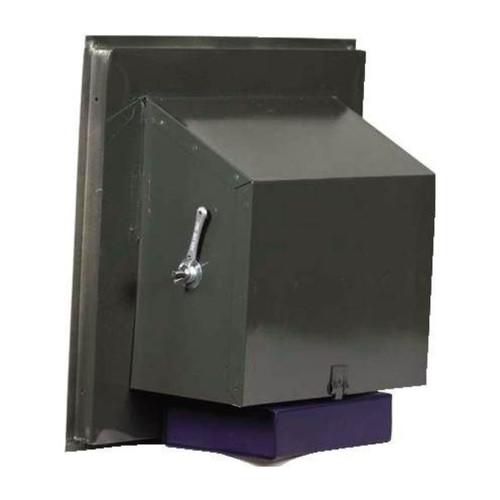
The roof curb is the structural and weather-tight interface between the unit and the building. Curbs are specific to the cabinet size of the unit, and most manufacturers offer a 14-inch standard curb with 24-inch options for snow country or for meeting roof flashing height requirements. When a new unit replaces an older one with a different footprint, a curb adapter lets you reuse the existing curb and duct openings rather than tearing into the roof. Curbs are covered in more detail in our Rooftop Unit Roof Curbs category.

Does my rooftop unit need an economizer?

An economizer uses cool outdoor air for "free cooling" when conditions allow, and it also handles the minimum ventilation air requirement. Current editions of ASHRAE 90.1 and the IECC generally require an air-side economizer on cooling units of roughly 54,000 Btu/h (about 4.5 tons) and larger in most U.S. climate zones, with exemptions in the hottest and most humid zones, including Climate Zone 1A, which covers South Florida. Codes also require fault detection and diagnostics on many economizers. Because local adoption varies, check which code edition your jurisdiction enforces before ordering. Economizers are factory-installed on some models and field-installed accessories on others.

How is RTU efficiency rated: SEER2, EER, or IEER?

For three-phase units below 65,000 Btu/h, efficiency is rated in SEER2 (and HSPF2 for heat pumps) under the same test procedure revisions that took effect for residential equipment in 2023. For units 65,000 Btu/h and above, the federal metric is IEER, the Integrated Energy Efficiency Ratio. IEER weights performance at 100, 75, 50, and 25 percent load, which reflects the fact that commercial units spend most of their hours at part load. EER is the full-load efficiency at a 95°F outdoor condition and is still published and often specified by utilities and engineers.

On January 1, 2023, the U.S. Department of Energy raised the minimum efficiency for commercial packaged units and moved them to IEER. For example, air-cooled air conditioners from 65,000 to under 135,000 Btu/h with electric or no heat must meet 14.8 IEER. Units with multiple compressor stages or variable-speed compressors and VFD-driven supply fans tend to post higher IEER numbers because they match capacity to load instead of cycling on and off.

What changed with R-454B and R-32 refrigerants in 2025?

Under the EPA's Technology Transitions rule implementing the AIM Act, new residential and light commercial air conditioning and heat pump equipment manufactured or imported from January 1, 2025 must use refrigerant with a global warming potential (GWP) below 700. That rules out R-410A, which has a GWP of about 2,088. Manufacturers moved to two main replacements: R-454B (GWP about 466), used across Rheem's current commercial lines, and R-32 (GWP about 675), used by Daikin.

Both are classified A2L under ASHRAE 34: lower toxicity and mildly flammable. In practice that means equipment is built to UL 60335-2-40, many units include a refrigerant detection sensor that activates the blower to disperse refrigerant if a leak is sensed, and technicians need A2L-compatible recovery machines, vacuum pumps, and recovery cylinders. A2L refrigerants are not interchangeable with R-410A, and you cannot retrofit an existing R-410A unit to an A2L refrigerant. The upside for packaged units is that the refrigerant circuit is factory sealed and charged, so the field refrigerant work on a typical RTU replacement is minimal compared with a split system.

What should be checked before installing a rooftop unit?

  • Structure: Confirm the roof can carry the operating weight of the unit, curb, and accessories. Replacements that go up in size or add an economizer may need an engineer's review.
  • Rigging: Plan the crane lift, use the manufacturer's lifting points and spreader bars, and check overhead power lines.
  • Clearances: Maintain service clearances on the access side and condenser airflow clearances. Keep fresh air intakes away from plumbing vents, exhaust fans, and flue outlets per the mechanical and fuel gas codes.
  • Condensate: Trap the condensate drain correctly. Packaged units operate with the drain pan under negative pressure, so an untrapped or undersized trap can hold water in the pan.
  • Controls: Confirm whether the unit will run from a conventional thermostat, a networked thermostat, or a building automation system, and whether it needs a communication card.
  • Startup: Measure voltage and phase rotation, check that scroll compressors are turning the correct direction, set blower airflow against measured static pressure, and verify economizer operation.

Which brands of rooftop units does HVAC365 carry?

This category includes Rheem Commercial Renaissance Line Classic packaged units in cooling-only (RACCYB, RACDYB, RACGYB), gas/electric (RGECYB, RGEDYB, RGEGYB), and heat pump (RHPCYB, RHPDYB) configurations, all using R-454B. It also includes Daikin light commercial packaged units, including the DSH and DHH R-32 rooftop heat pumps. Use the subcategories to narrow by heating type, and see Rooftop Unit Accessories for curbs, economizers, power exhaust, and heat kits that match.

Commercial Rooftop Unit FAQ

How long does a commercial rooftop unit last?

A well-maintained packaged unit commonly runs 15 to 20 years. Coastal salt air, poor filter maintenance, and short-cycling from oversizing shorten that. Coil coatings and regular cleaning help in coastal locations.

Can I replace an R-410A rooftop unit with an R-454B unit on the same curb?

Often yes, if the new unit shares the same cabinet footprint, or with a curb adapter if it does not. Because the packaged unit is factory charged, the refrigerant change does not affect the curb or ductwork. Confirm the duct openings, weight, and electrical data before ordering.

What is the difference between downflow and horizontal rooftop units?

Downflow units discharge supply air and take return air through the bottom of the cabinet into ducts that pass through the curb and roof. Horizontal units connect ducts to the side of the cabinet, which suits slab-mounted installations or buildings where the ducts run above the roof. Many RTUs are convertible between the two.

Is a heat pump rooftop unit or a gas/electric unit better?

It depends on climate, utility rates, and whether gas is available. Gas/electric units deliver strong heat in cold weather, while heat pumps eliminate on-site combustion and are efficient in mild and moderate climates. Compare operating costs using local gas and electric rates.

Do commercial rooftop units come with a thermostat?

Usually not. Most RTUs accept a standard 24V commercial thermostat or a building automation controller. Select a thermostat that supports the unit's cooling and heating stages, economizer, and occupied/unoccupied scheduling.

Compare
Show: 12 24 48

Fast Shipping

Easy Returns

Warranty Coverage

Financing Available