Building the Complete Accessory Package for a Commercial Rooftop Unit
A packaged rooftop unit arrives on the job as a box that cools, heats and moves air. Everything that makes it work in a specific building, from the curb it sits on to the outdoor air it brings in, the pressure relief that goes with that air, the filters, the duct transitions and the safety devices, is usually ordered separately. Missing one of those items on crane day stops the job. This section is organized so a contractor or facility buyer can build that list for a given unit model and order it in one pass.
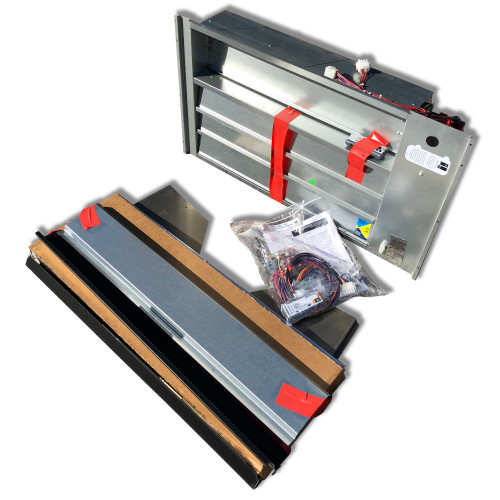
Rooftop Unit Accessories is the parent for six sub-categories: Rooftop Unit Roof Curbs, Rooftop Unit Economizers, Fresh Air Dampers, Rooftop Unit Power Exhaust, Filter Racks and Duct Adapters, and Blower, Vent and Conversion Kits. The products cover Daikin light commercial packaged units across 3 to 25 tons, Rheem commercial packaged units in the C, D and G cabinets, and selected Carrier 50FEQ and American Standard packaged units. Electric heat and safety controls for the same units are in the neighboring Commercial Electric Heat Kits and Commercial HVAC Controls and Sensors categories.
Accessories Are Ordered by Cabinet, Not by Tonnage Alone
Manufacturers build several tonnages on the same cabinet and design the accessories to the cabinet. That is why most part numbers here reference a tonnage range rather than a single size. The catch is that the same tonnage can be built on different cabinets in different product lines, so the unit's model family matters as much as its capacity.
| Brand | How accessories are keyed | Examples in this section |
|---|
| Daikin | Model family plus nominal capacity code in thousands of Btu/h: 036-072 (3 to 6 tons), 090-150 (7.5 to 12.5 tons), 180-240 and 180-300 (15 to 25 tons), plus M Series and GPC/GPH packaged units | 14CURB3672B curb for DCC/DCG/DCH 036-072; DDNECNJ90150B economizer for DCC/DCG/DCH 090-150; 14CURB180300 curb for DSC/DSG and DFC/DFG 180-300 |
| Rheem | Cabinet letter: C (3 to 6 tons), D (7.5 to 12.5 tons), G (15 to 25 tons) | RXKG-DCC14 14-inch curb for the C cabinet; RXRF-ADC1 DDC motorized damper for the D cabinet; RXRF-AGA1 manual damper for the G cabinet |
| Carrier and American Standard | Unit series and size | Carrier curb and low-leak economizer for 50FEQ; American Standard curb and economizer for their listed series |
Note the Daikin 15 ton split: 180-240 accessories fit the DCC/DCG line, while 180-300 accessories fit the DSC/DSG and DFC/DFG lines. Two 15 ton units can need different curbs and economizers. Read the model prefix before you read the tonnage.
A Practical Accessory Checklist
For each rooftop unit on a project, go down this list and decide yes or no for every line. Anything you skip should be a decision, not an oversight.
- Roof curb. New roof opening or replacement on a different footprint? Decide height, and downflow versus horizontal. See Rooftop Unit Roof Curbs.
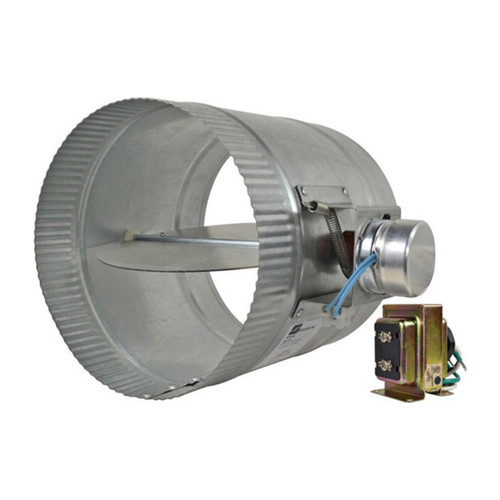
- Outdoor air. Will the unit use an economizer, a motorized or manual fresh air damper, or no outdoor air section? The ventilation design and the applicable energy code drive this. See Rooftop Unit Economizers and Fresh Air Dampers.
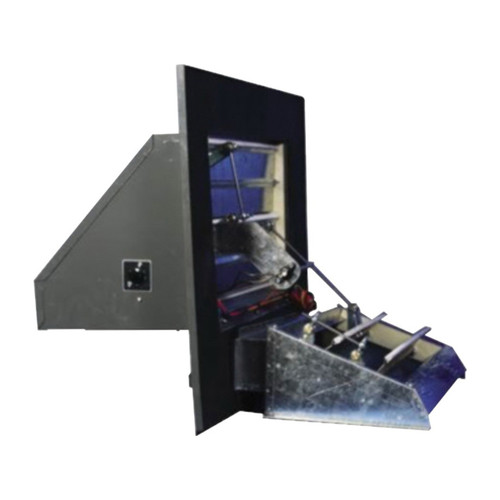
- Building relief. If an economizer is installed, how will that air leave the building: barometric relief or powered exhaust? See Rooftop Unit Power Exhaust.
- Filtration and duct connections. Internal filter rack needed? Round duct at the curb or unit? See Filter Racks and Duct Adapters.
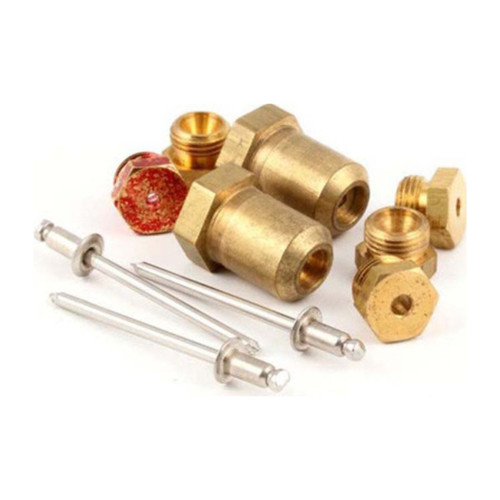
- Airflow and fuel. High static ductwork, propane fuel, high elevation or a flue that needs extending? See Blower, Vent and Conversion Kits.
- Heat. Electric heat for a cooling-only unit or supplemental heat for a heat pump? See Commercial Electric Heat Kits.
- Safety and protection. Duct smoke detection where the mechanical code requires it, and freeze protection for the indoor coil. See Commercial HVAC Controls and Sensors.
Installation Sequence on a New Rooftop Unit
Accessory order on the roof matters because several items are much easier, or only possible, before the unit is set.
- Curb first. The curb is set, squared, leveled and flashed into the roof before the unit arrives. Supply and return duct connections, and any curb-mounted duct adapters, go in while the curb is open.
- Set the unit on the curb with the gasket supplied or specified by the manufacturer.
- Outdoor air section. Install the economizer or fresh air damper in the unit's return or outdoor air section. Downflow and horizontal versions are not interchangeable, so make sure you received the one that matches the unit's duct configuration.
- Relief. Mount the barometric relief or power exhaust where the instructions place it, usually on or alongside the economizer hood.
- Internal components. Filter racks, high static drive kits, heat kits, freeze protection and smoke detectors go in next, with power locked out.
- Gas side. Install LP conversion, high altitude orifices or vent extensions per the kit instructions before the first firing.
- Controls and commissioning. Wire sensors to the unit control or building automation system, set economizer and damper minimum positions, verify airflow and record start-up data.
Factory-Installed Versus Field-Installed
Many of these options can also be ordered factory-installed on new equipment. Factory installation removes field labor and some risk, but it locks the configuration into the unit order and can extend lead time. The parts in this section are field-installed accessories, which make sense when the unit is already on site, already in stock, being retrofitted, or when the outdoor air or relief decision is made late in the project. When you are ordering a new unit and its accessories at the same time, compare both routes.
New Refrigerant Generations and Accessory Fit
Current production commercial packaged units from Rheem use R-454B and Daikin's current lines include R-32 models, both A2L (mildly flammable) refrigerants. Accessories like curbs, economizers and dampers are mechanical parts and are not refrigerant-specific in themselves, but a new generation of equipment can change cabinet dimensions, accessory part numbers or both. Do not assume an accessory listed for an older model also fits its replacement. Match the accessory to the exact new model number, and follow the manufacturer's A2L instructions for any field work that touches the refrigerant circuit or penetrates the cabinet near refrigerant components.
Replacing a Unit on an Existing Curb
When a new unit replaces an old one, the existing curb may or may not match. Same manufacturer and same cabinet usually means the curb can be reused if it is in good condition. A different manufacturer, or a newer cabinet with a different footprint, generally means a new curb or a curb adapter. Measure the existing curb outside dimensions and duct openings, and compare them with the new unit's curb drawing before ordering. The Rooftop Unit Roof Curbs page covers curb selection in more detail.
Ordering Tips
- Send the full unit model number for every unit on the job, not just the tonnage.
- State duct configuration (downflow or horizontal) and building voltage for each unit; power exhaust and some kits are voltage-specific.
- Group accessories by unit so they arrive together and are easy to stage on site.
- Large-cabinet accessories, horizontal curbs and DDC-version controls can carry longer lead times than common items. Build that into the schedule and ask us for current availability before committing to a set date.
Frequently Asked Questions
Do I have to buy accessories from the same brand as the rooftop unit?
For anything that mounts in or on the cabinet, yes in practice. Curbs, economizers, dampers, filter racks and internal kits are designed to the manufacturer's cabinet. Third-party adapters exist for some curb situations, but they are separate engineered items.
What is the minimum I need to order with a new rooftop unit?
At least a curb or other support, and some means of bringing in the outdoor air the ventilation design requires. Beyond that it depends on code, climate and the building. Use the checklist above for each unit.
How do I tell which Daikin cabinet I have?
Look at the model prefix and the capacity code in the model number, such as DCC 090 or DSG 180. The accessory product pages state which families and capacity codes each part fits.
Can the same accessories serve a heat pump and a gas/electric unit?
Often, when they share a cabinet, but not always. Some Daikin economizers and filter racks here are listed specifically for gas/electric units or for AC and heat pump units. Check the compatible models on each product.
Should accessories ship with the unit or ahead of it?
The curb should arrive first, early enough to be installed and flashed before the unit is set. Other accessories can ship with the unit.