null

Belts

V-belts still drive a lot of equipment in HVAC and refrigeration: belt-drive furnace blowers, air handlers, rooftop units, exhaust fans, cooling towers and older commercial condensers. A belt is a wear item, and when it slips, cracks or snaps the fan stops moving air. Choosing the right belt and tensioning it properly keeps airflow on target and protects bearings and motors.

This category covers fractional horsepower (FHP) belts in 3L, 4L and 5L sizes, classical A and B section belts, and cogged AX and BX belts. These are the cross sections that cover most light commercial and residential belt-drive equipment. Sizing and cross-section confusion is the most common reason a replacement belt does not fit, so this guide focuses on getting that right.

Belts fail from age, heat, misalignment, over or under tensioning and contamination by oil or grease. A belt that squeals at startup, has cracked sidewalls or rides low in the sheave is telling you it is time.

How V-Belts Work

A V-belt transmits power by wedging into the groove of a sheave (pulley). The sides of the belt grip the groove walls; the belt should not ride on the bottom of the groove. As tension increases, the belt wedges tighter and transmits more power. When it is worn or loose, it slips, generating heat and noise.

FHP belts: 3L, 4L and 5L

FHP belts are built for lighter duty and smaller motors, typically single-belt drives found on blowers and fans. The number after the L indicates the top width in eighths of an inch: 3L is 3/8 inch, 4L is 1/2 inch and 5L is nominally 5/8 inch (about 21/32 inch actual). FHP belt length is stated as outside length in tenths of an inch, so a 4L360 is about 36 inches outside length.

Classical A and B belts

Classical belts are built for heavier, continuous industrial duty. An A section belt is 1/2 inch wide, similar to a 4L, and a B section belt is 21/32 inch, similar to a 5L. Classical belt numbers usually refer to inside length in inches, so an A34 is about 34 inches inside length. Because of the measuring difference, an A belt is roughly 2 inches shorter in its number than the equivalent 4L outside length, and a B belt roughly 3 inches shorter than the equivalent 5L. Many techs use those rules of thumb, but always check the manufacturer's cross-reference data for exact equivalence.

Cogged AX and BX belts

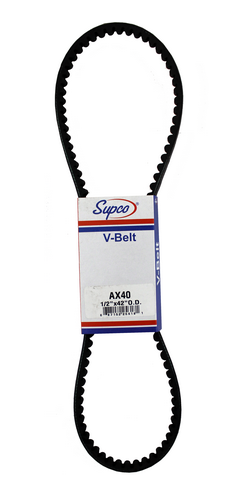
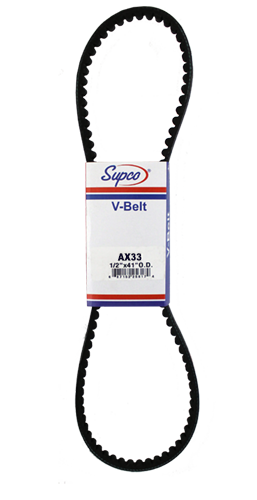
Cogged belts have notches molded into the underside. The notches let the belt bend around smaller sheaves with less stress, dissipate heat better and generally run cooler and with less slip. AX is the cogged version of the A section and BX the cogged version of B. They can replace A or B belts of the same size in most applications and are often a worthwhile upgrade on drives with small motor sheaves.

Signs a Belt Needs Replacing

  • Squealing at startup or under load, which indicates slipping.
  • Cracks across the underside or along the sidewalls.
  • Glazing: shiny, hardened sidewalls from heat and slip.
  • Fraying, missing chunks or a separated cover.
  • Belt riding low in the sheave or bottoming out, a sign of wear on the belt or sheave.
  • Excessive stretch, where the motor base is at the end of its adjustment.
  • Black dust collecting around the blower compartment from belt wear.
  • Reduced airflow or blower speed lower than expected.

Check the sheaves when you change a belt. A worn sheave with dished groove walls will chew up a new belt quickly.

How to Choose the Right Belt

Read the old belt

Most belts have the size printed on the back. If it is worn off, measure the top width to determine cross section, then measure the outside length by wrapping a flexible tape around the belt.

Measure the drive if the belt is missing

If the belt is gone, you can estimate the needed length from the sheave diameters and center distance, or run a string or flexible tape around both sheaves in the groove with the motor at mid-adjustment. Choose a belt that leaves room to tension in either direction.

Match the cross section to the sheave

The belt must match the groove profile. A 4L or A belt goes in an A section groove; a 5L or B belt goes in a B section groove. A 4L belt in a B sheave will bottom out and slip.

FHP vs classical

For small, single-belt residential and light commercial drives, FHP belts are typical. For heavier or continuous duty drives, classical or cogged belts are the better choice. Many techs use A or AX belts in place of 4L for longer life on blowers that run continuously.

Multi-belt drives

Replace all belts on a multi-groove drive at the same time with a matched set. Mixing old and new belts causes the new belt to carry most of the load.

SectionTop widthLength designationTypical use
3L (FHP)3/8 inOutside length in tenths of an inchSmall fans and light blower drives
4L (FHP)1/2 inOutside length in tenths of an inchResidential and light commercial blowers
5L (FHP)About 21/32 inOutside length in tenths of an inchLarger fractional and light commercial drives
A1/2 inInside length in inchesCommercial blowers, continuous duty
B21/32 inInside length in inchesRooftop units, larger fans
AX / BX (cogged)Same as A / BSame as A / BSmall sheaves, heat, longer life

Installation, Tensioning and Safety Tips

  • Lock out and tag out the equipment. Belt-drive blowers can start unexpectedly on a thermostat call or a timer.
  • Loosen the motor mount to remove and install belts. Never roll a belt onto a sheave with a screwdriver or by bumping the motor; it damages the belt cords.
  • Check sheave alignment with a straightedge across both sheave faces. Misalignment wears belts on one side and causes noise.
  • Tension correctly. A common field rule is about 1/64 inch of deflection per inch of span between sheave centers, applied with moderate force at the middle of the span. A belt tension gauge gives more accurate results. Follow the equipment manufacturer's specification when available.
  • Do not over-tighten. Excess tension overloads motor and blower bearings and shortens their life.
  • Recheck tension after a short run-in. New belts seat into the grooves and loosen slightly during the first hours of operation.
  • Avoid belt dressing. It can soften the belt and attract dirt. If a correctly tensioned belt slips, look for worn sheaves or the wrong belt size.
  • Verify blower amps after installation. Amp draw should be within the motor nameplate rating.

Part Details & Shipping

HVAC365 carries FHP, classical and cogged V-belts alongside Supco replacement parts, giving you one source for the belts and electrical parts your service calls need. Product pages list cross section and length so you can match the original belt, and these items ship in 3-5 business days.

Frequently Asked Questions

What is the difference between a 4L and an A belt?

Both are about 1/2 inch wide and fit the same groove, but 4L belts are FHP belts rated for lighter duty and measured by outside length, while A belts are classical belts built for heavier duty and designated by inside length. An A belt numbered about 2 inches shorter is roughly equivalent to a 4L.

Can I replace a 4L belt with an AX belt?

In most cases, yes, if the equivalent length is correct. A cogged AX belt usually runs cooler and lasts longer, especially on small motor sheaves. Check the cross-reference for the right length.

How tight should a blower belt be?

Tight enough to not slip at startup, but not so tight it loads the bearings. A common guide is about 1/64 inch of deflection per inch of span, with a belt tension gauge for best accuracy. Follow the equipment manufacturer's spec if provided.

Why does my belt keep squealing after replacement?

Common causes are low tension, misaligned sheaves, worn sheaves, the wrong cross section or a blower that is overloaded. Check each before replacing the belt again.

How often should belts be replaced?

Inspect belts at every maintenance visit and replace them when they show cracks, glazing or excessive stretch. Run time and drive conditions vary too much for one fixed interval.

Can I use a slightly longer belt?

Only if the motor mount has enough adjustment to tension it properly. A belt that is too long will run at the end of adjustment and may never tension correctly.

Compare
Show: 12 24 48

Fast Shipping

Easy Returns

Warranty Coverage

Financing Available