null

Dual Run Capacitors

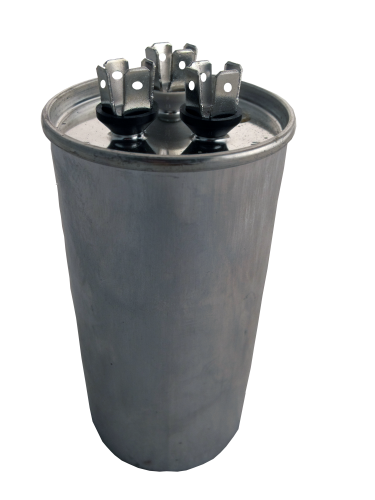
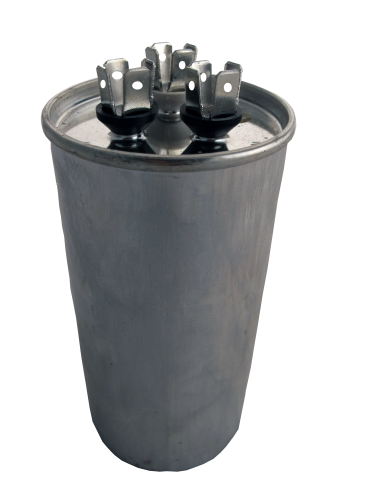
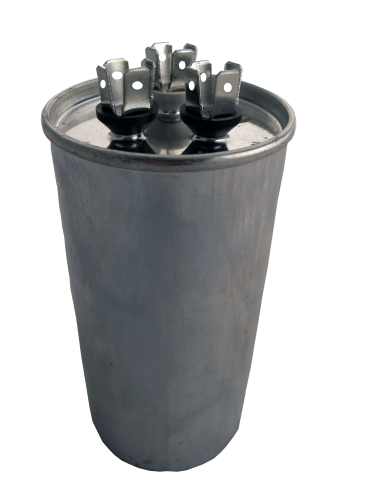
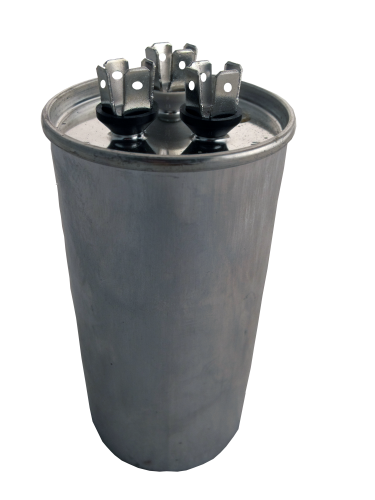
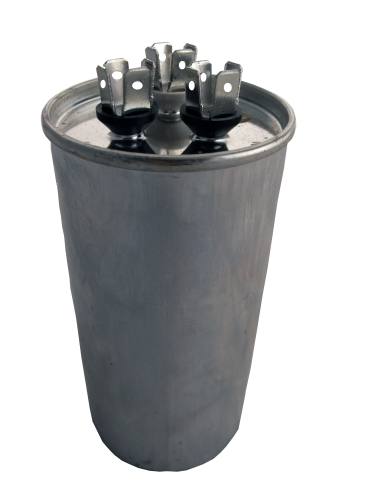
Open the control panel of almost any residential split system condenser and you'll find a dual run capacitor. It's a single can with three terminals that serves two motors at once: the compressor and the outdoor fan. When it fails, the whole outdoor unit stops cooling, and it's the first part an experienced tech checks on a no-cool call.

This category covers dual run capacitors in round and oval cases, in 370-volt and 440-volt ratings, across the common HERM and FAN combinations used in residential and light commercial condensers and heat pumps. Most are from Supco, a name HVAC techs have relied on for replacement parts since 1945.

A dual capacitor is a quick replacement for a trained tech and a frequent purchase for property managers and homeowners who have had the failed part diagnosed. The rating on the can tells you almost everything you need to know.

How a Dual Run Capacitor Works

A dual run capacitor is really two run capacitors built into one case. They share a common terminal and each has its own output terminal:

  • HERM: Connects to the compressor's start winding circuit. "HERM" is short for hermetic compressor. This side has the larger MFD value.
  • FAN: Connects to the condenser fan motor's capacitor lead. This side has the smaller value, usually in the single digits.
  • C: Common. Connects to the line side feeding both motors, usually tied back to the contactor.

A label such as 45/5 MFD 440 VAC means 45 microfarads between HERM and C, 5 microfarads between FAN and C, and a maximum continuous voltage rating of 440 volts. Each section creates the phase shift its motor needs to start and run efficiently, and both stay in the circuit the whole time the unit runs.

Because one can serves two motors, a failure can show up as a compressor problem, a fan problem or both. It's common for only one section to fail while the other still tests good.

Signs a Dual Capacitor Is Failing

  • Compressor hums but doesn't start, and the fan runs: The HERM section is likely weak or open.
  • Compressor runs but the fan doesn't: The FAN section is weak or open, or the fan motor itself has failed. Running the compressor without the fan causes very high head pressure, so shut the system off.
  • Nothing outdoors runs, but the contactor is pulled in: Check the capacitor, then check voltage at the contactor load side.
  • Bulging top or oil on the case: The internal pressure interrupter may have tripped.
  • High amp draw on the compressor or fan: Reduced capacitance makes motors work harder.
  • Out-of-tolerance readings: Either section measuring outside the tolerance on the label.

To test, turn off power, discharge both sections and disconnect the wires. Measure capacitance from HERM to C, then from FAN to C. Compare each reading to its rated value. A dual capacitor with one section out of tolerance needs to be replaced.

How to Choose the Right Dual Run Capacitor

Match both MFD values

The HERM and FAN values both need to match the original within tolerance. A 40/5 and a 45/5 are not interchangeable. If the label is faded, the compressor and fan motor nameplates or the unit's wiring diagram will list the required values.

Match or exceed the voltage

Choose a capacitor rated at the same voltage or higher. A 440V dual can replace a 370V dual with the same MFD values. A 370V capacitor should never be installed where a 440V capacitor was specified.

Check the case size

Dual capacitors come in round and oval cases. The shape doesn't affect performance, but the replacement has to fit the bracket and leave room for the three terminals and their wires. Measure diameter and height before ordering.

Cross-reference the OEM number

Equipment makers often print their own part number on the can. Read the MFD and voltage, then compare to the cross-reference data on the product page.

TerminalConnects toTypical valueIf this section fails
HERMCompressor start winding circuitRoughly 20 to 60+ MFDCompressor hums, trips on overload or won't start
FANCondenser fan motor capacitor leadRoughly 3 to 10 MFDFan won't start or runs slow; head pressure rises
CCommon line feed from contactorNot applicableLoose or burned terminal can disable both motors

Common dual ratings include values such as 35/5, 40/5, 45/5 and 55/5, but there are many combinations. Match what's printed on the original.

Using two single capacitors instead

If the exact dual isn't available, or one motor has been replaced with a motor that needs a different value, two single run capacitors work. Install one with the HERM value and one with the FAN value, jumper their common terminals together, and land the wires exactly as they were on the dual. Use the same or higher voltage rating, and mount both securely.

Universal multi-value capacitors

Some replacement capacitors offer several MFD values in one can through multiple terminals. They're useful for truck stock but take more care when wiring. Follow the terminal chart printed on the capacitor exactly.

Installation and Safety Tips

  • De-energize and verify: Turn off the disconnect, then confirm zero voltage at the contactor with a meter.
  • Discharge both sections: Use an insulated discharge tool with a resistor between HERM and C, then between FAN and C.
  • Photograph the wiring: Note which wires go to HERM, FAN and C. Each terminal usually has multiple tabs; all tabs on one terminal are the same connection.
  • Land wires correctly: Mixing up HERM and FAN can damage the fan motor or compressor. Double-check before restoring power.
  • Replace damaged terminals: Burned or loose quick-connects create heat and early failure.
  • Mount it securely: Use the correct strap or bracket, and keep the capacitor away from sharp edges and moving fan blades.
  • Verify both motors: After restoring power, confirm the compressor and fan both start and check amps against nameplate.
  • Use a qualified technician when appropriate: Condenser panels carry 240 volts. If you're not trained for line-voltage work, have a qualified HVAC technician replace it.

Part Details & Shipping

Supco has made replacement capacitors for HVAC professionals since 1945. Product pages list both MFD values, voltage, tolerance, case dimensions and cross-reference information, with spec sheets where available, so you can confirm the right match. Items in this category ship in 3-5 business days.

Techs who run a lot of no-cool calls in summer often keep the most common dual values on the truck. HVAC365 carries a broad spread of HERM and FAN combinations in both voltage ratings, so you can restock the values you burn through most and fill the odd rating when a callback calls for it.

Frequently Asked Questions

What do HERM, FAN and C mean on a capacitor?

HERM connects to the hermetic compressor, FAN connects to the condenser fan motor, and C is common, shared by both sections and connected to the power feed.

Can I replace a 370V dual capacitor with a 440V dual?

Yes, as long as both MFD values match. The higher voltage rating simply adds margin.

Can I replace a dual capacitor with two single capacitors?

Yes. Use one single capacitor for the compressor value and one for the fan value, jumper the commons together and keep the voltage rating equal to or higher than the original.

What if only one side of my dual capacitor tests bad?

Replace the whole capacitor. Both sections are in one case and share the same age and heat exposure, and you can't repair just one section.

Does the case shape matter?

Not electrically. Round and oval capacitors with the same ratings perform the same. Choose the one that fits your bracket and panel space.

My fan motor was replaced and has a different capacitor value. What now?

Use the value listed on the new motor's nameplate. You can choose a dual capacitor that matches both the compressor and new fan values, or use two single capacitors.

Why do dual capacitors seem to fail so often in hot climates?

Heat is the main enemy of the dielectric film inside a run capacitor. A condenser control panel sitting in direct sun can get far hotter than the outdoor air, and long run times in summer add to the stress. Shading the unit where airflow allows, keeping the panel cover on and testing capacitance during annual maintenance all help catch a weak capacitor before it strands the system on the hottest day of the year.

Compare
Show: 12 24 48

Fast Shipping

Easy Returns

Warranty Coverage

Financing Available