null

Igniters & Flame Sensors

On a modern gas furnace or boiler, the igniter lights the burners and the flame sensor proves that the flame is actually there. If either part fails, the control board shuts off the gas valve and the appliance goes into lockout. These are two of the most common no-heat calls in the field, and both are parts every heating tech should have on the truck in a few common styles.

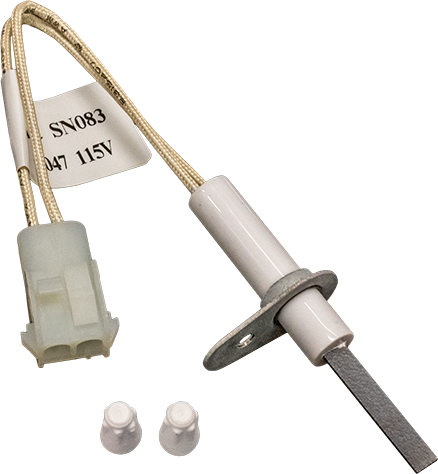
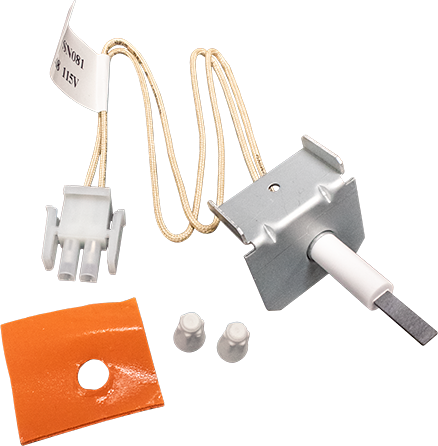
This category covers hot surface igniters in silicon carbide and silicon nitride, in 120-volt and 24-volt versions, along with flame sensors and related ignition parts. Supco and other universal lines offer igniters with mounting brackets and connectors designed to cover many OEM applications, plus straight and bent flame sensor rods to match common furnaces.

Igniters wear out because they heat to glowing temperatures every cycle and eventually crack or burn open. Flame sensors fail more slowly, coating over with oxide and combustion deposits until the signal drops below what the board needs to keep the gas valve open. Both parts should be handled with care and installed by a qualified technician because gas appliances can create fire and carbon monoxide hazards when they are not set up correctly.

How Igniters and Flame Sensors Work

The ignition sequence

On a call for heat, the control board starts the draft inducer, proves venting through the pressure switch, then powers the hot surface igniter. After a warm-up period, the board opens the gas valve. Gas hits the glowing igniter and lights. Within a few seconds, the board must detect flame through the flame sensor, or it shuts the gas valve and retries or locks out.

Silicon carbide igniters

Silicon carbide igniters are the older, widely used style, often flat or in a zigzag shape. They heat up relatively slowly and are brittle; touching the element with bare fingers can leave oils that create hot spots and shorten life, and a small bump can crack them. Most are 120-volt designs.

Silicon nitride igniters

Silicon nitride igniters are more rugged, heat faster and generally last longer. Many are compact round or flat elements encased in a tough ceramic. They are made in 120-volt and lower voltage versions, including 24-volt and other voltages used by specific manufacturers. Never install an igniter at a voltage it is not rated for; a 24-volt igniter on 120 volts fails instantly, and a 120-volt igniter on a low-voltage circuit will not get hot enough.

Flame sensors and flame rectification

A flame sensor is a metal rod positioned in the burner flame. The control board applies an AC voltage to the rod. Because the flame conducts more easily in one direction than the other, a small DC current flows through the flame to ground. This is called flame rectification, and the current is measured in microamps (µA). If the board sees enough microamps, it keeps the gas valve open. If not, it shuts down. Many residential furnaces operate with a few microamps of flame signal; the required minimum varies by manufacturer and should be taken from the equipment documentation.

Signs an Igniter or Flame Sensor Is Failing

Igniter problems

  • No glow during the ignition sequence with voltage present at the igniter.
  • Visible crack or a white spot on the element.
  • Weak or partial glow, or burners that light late and roll out.
  • Open circuit when checked with an ohmmeter. Resistance values vary by igniter type, so compare with the manufacturer's range.

Flame sensor problems

  • Burners light, then shut off after a few seconds, often followed by retries and lockout.
  • Flame signal below the manufacturer's minimum when measured in microamps.
  • Heavy white or dark coating on the sensor rod.
  • Cracked porcelain insulator or a rod that is bent out of the flame.
  • Diagnostic code on the board indicating flame failure or flame sense problems.

Not every short-cycle is a sensor. Poor grounding, reversed line polarity, a weak burner flame or a dirty burner can all produce the same symptom. Check those before replacing the sensor.

How to Choose the Right Replacement

Igniters

  • Voltage: match 120V or 24V or the specific rating of the original.
  • Material: a silicon nitride igniter can often replace a silicon carbide igniter when the kit and the control are designed for it. Check the replacement's application notes.
  • Mounting and position: the element must sit in the same spot relative to the burner. Many universal kits include brackets to achieve this.
  • Connector and lead length: match the plug or use the included adapter.
  • OEM cross-reference: use the furnace model and the OEM igniter number to find the right replacement.

Flame sensors

  • Rod shape and length: straight, bent or hooked to sit in the flame correctly.
  • Mounting style: bracket, single screw or threaded.
  • Terminal type: match the connector on the original.
  • OEM cross-reference: confirm fit by part number or model number.
PartTypeStrengthsWatch out for
Hot surface igniterSilicon carbideWidely used, broad OEM coverageFragile; slower warm-up; avoid touching element
Hot surface igniterSilicon nitrideRugged, fast heating, long lifeMust match voltage and control compatibility
Hot surface igniter24V low voltageUsed by specific OEM systemsNever connect to 120V
Flame sensorSingle rod, flame rectificationSimple, inexpensiveNeeds good ground and correct flame position

Installation and Safety Tips

  • Turn off power and gas to the appliance before removing any burner or ignition parts. Verify power off with a meter.
  • Handle igniters by the base only. Do not touch the element. Keep it in its packaging until installation.
  • Position correctly. The igniter must sit where the gas will reach it but not so deep in the flame that it overheats. Follow the OEM or kit dimensions.
  • Clean flame sensors carefully. A fine abrasive pad removes oxide buildup. Avoid coarse sandpaper, which can leave residue and scratches that collect deposits faster.
  • Check ground and polarity. Flame rectification needs a solid ground path and correct line polarity on many boards. A loose ground wire or burner ground creates weak flame signals.
  • Measure the flame signal with a meter set to DC microamps in series with the sensor, if the board does not display it.
  • Test the full ignition sequence several times, and check for proper flame appearance and rollout.
  • Perform a combustion and carbon monoxide check after service. Gas appliance work should be performed by a qualified, licensed technician in line with local codes.

Part Details & Shipping

HVAC365 carries Supco igniters and flame sensors because Supco has served the HVAC and appliance repair trade since 1945 and builds replacement ignition parts for broad OEM coverage. Product pages include voltage, material and cross-reference details so you can confirm the match before ordering, and these items ship in 3-5 business days.

Frequently Asked Questions

Can I replace a silicon carbide igniter with silicon nitride?

Often yes, using a replacement that is designed as a conversion for that application. The voltage, mounting position and control compatibility must all be right. Follow the replacement's instructions.

What is a normal flame sensor reading?

Many residential furnaces run with a few microamps of flame signal, but the minimum required varies by manufacturer. Use the equipment documentation for the exact range.

Why does my furnace light and then shut off?

The most common cause is a weak flame signal from a dirty or poorly positioned flame sensor. Grounding problems, reversed polarity and burner issues can also cause it.

How long do hot surface igniters last?

It depends on the type, the number of cycles and handling. Silicon nitride igniters generally last longer than silicon carbide. Careful installation and avoiding contact with the element extend life.

Can I clean my flame sensor instead of replacing it?

Yes, cleaning often restores the signal. If the porcelain is cracked, the rod is damaged or the signal stays low after cleaning and grounding checks, replace it.

Why did my new igniter fail right away?

Common causes are the wrong voltage, touching the element during installation, a cracked element from handling or a control applying voltage incorrectly. Check voltage at the igniter and inspect the old part's location for flame impingement.

Compare
Show: 12 24 48

Fast Shipping

Easy Returns

Warranty Coverage

Financing Available