null
Replacement Filter Cartridges

Replacement Filter Cartridges

A cartridge filter is only as good as the cartridge inside it. The pleated polyester fabric is what actually catches the dirt, and over time it loses the fight. Oils from sunscreen and swimmers coat the fibers, calcium and minerals stiffen them, and every cleaning wears a little more off. Eventually the cartridge either stops holding clean pressure after a cleaning or physically tears, and fine dirt goes straight back into the pool. Replacing the cartridge restores the filter's performance without replacing the tank, and it is one of the most common purchases in pool service.

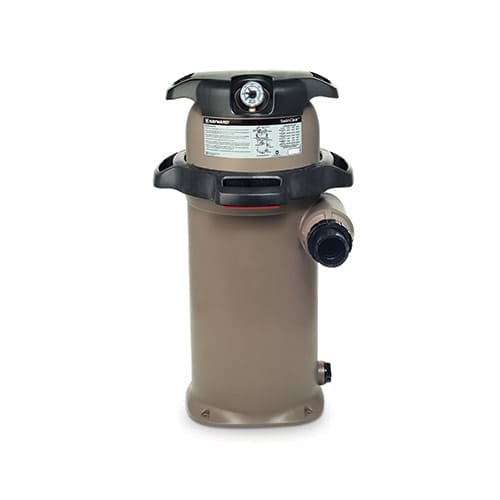
This category covers replacement filter cartridges for residential and commercial cartridge filters, including OEM cartridges from Pentair, Hayward and Jandy/Zodiac and equivalent cartridges sold under cross-reference brands with Unicel and Pleatco style part numbers. Pool techs buy them by the set for customer filters, and homeowners buy them once a cleaning no longer brings the pressure down. Spa and hot tub cartridges follow the same rules, just in smaller sizes.

How Filter Cartridges Work

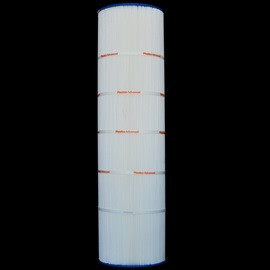
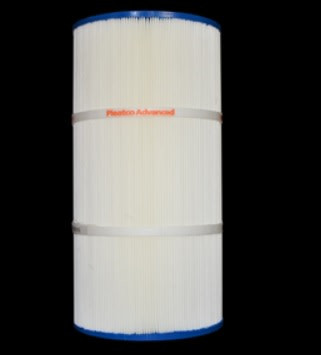
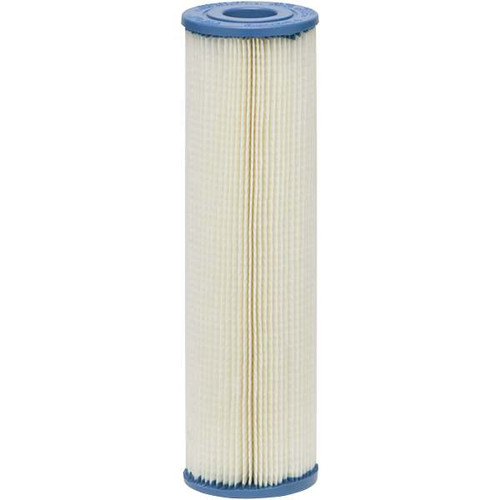
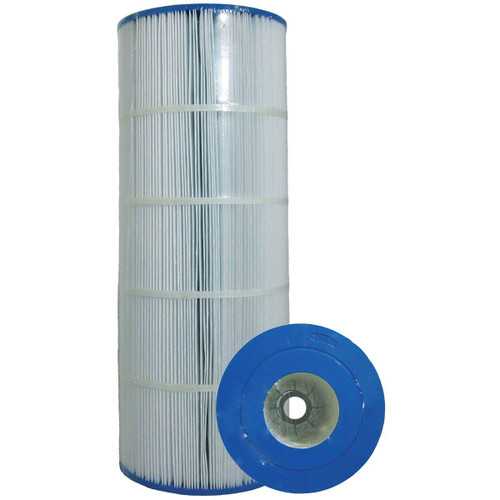
A cartridge is a cylinder of pleated filter fabric wrapped around a perforated core and held between two end caps. Water flows from the outside of the pleats inward, through the fabric, into the core and out of the filter. The pleats create a large surface area in a small space, which is why cartridges are rated in square feet.

  • Filter fabric. Usually spun-bonded polyester. Its weight and quality affect how well it filters and how many cleanings it survives. Some cartridges use antimicrobial-treated or reinforced fabrics.
  • Pleat count. More pleats generally means more surface area in the same space, though pleats packed too tightly are harder to clean.
  • Core. A rigid perforated tube that supports the pleats and keeps them from collapsing under pressure.
  • End caps. Molded caps at each end that seal to the filter housing. End cap style, open or closed, hole size and any handles or nubs must match the filter.
  • Bands. Some cartridges use bands around the outside of the pleats to hold spacing and prevent pleats from collapsing.

Signs It's Time to Replace the Cartridge

  • Pressure won't come down after cleaning. If a thorough cleaning doesn't bring pressure back close to the clean baseline, the fabric is blinded and the cartridge is done.
  • Short filter cycles. Needing to clean more and more often is a sign the fabric has lost capacity.
  • Torn or frayed fabric. Tears let dirt through. Replace right away.
  • Cracked end caps or crushed core. The cartridge can't seal or hold its shape.
  • Flattened or matted pleats. Lost surface area.
  • Cloudy water despite good chemistry. Worn fabric lets fine particles pass.
  • Age. With regular use, many residential cartridges last roughly 1 to 3 years, depending on bather load, debris, cleaning habits and water chemistry. It varies widely.

Cleaning vs Replacing

Cleaning extends cartridge life a lot, but only if it is done right. Most pool pros clean the cartridge when filter pressure rises about 8 to 10 PSI above the clean starting pressure, or as the filter manufacturer recommends.

  1. Rinse. Use a garden hose with a nozzle, working from top to bottom and between each pleat. Avoid pressure washers, which can damage fabric.
  2. Degrease. Soak in a cartridge cleaner made to remove oils, lotions and organic buildup, then rinse well.
  3. Descale when needed. In hard-water areas, calcium can build up. Use an acid-based cleaner only after degreasing; acid applied over oils can set them into the fabric.
  4. Dry and inspect. Let the cartridge dry, then look for tears, crushed pleats or cracked caps.

Many techs keep a spare set of cartridges per filter so one set can soak while the other is in service. That cuts downtime and makes thorough cleaning easier.

How to Choose the Right Replacement Cartridge

The safest way to find the right cartridge is to start with the filter brand and model, or the OEM part number on the old cartridge's end cap. Cross-reference brands use their own numbering systems, such as Unicel numbers that typically begin with a "C" followed by digits, and Pleatco numbers that typically begin with a "P" followed by letters and digits. Product pages list the OEM numbers each cartridge replaces.

  1. Filter brand and model. The fastest way to find the right cartridge. Look on the filter tank label.
  2. OEM part number. Often molded or printed on the end cap.
  3. Square footage. Each cartridge has a filter area rating. Multi-cartridge filters divide their total rating among several cartridges, so a four-cartridge filter's total square footage is split across all four.
  4. Dimensions. If the part number is unreadable, measure overall length, outside diameter, and the inside diameter of the top and bottom end cap holes. Note whether each end is open or closed and whether there are handles.
  5. End cap style. Even cartridges with the same length and diameter may not interchange if the end caps differ.
  6. Fabric quality. Reinforced cores, heavier fabric and more pleats may last longer.
  7. Number of cartridges. Multi-cartridge filters require replacing the full set at once for even flow and filtering.
What to CheckWhere to Find ItWhy It Matters
Filter brand and modelLabel on the filter tankFastest route to the correct cartridge
OEM part numberEnd cap of old cartridgeDirect cross-reference to equivalents
Square footageFilter label or cartridge listingMust match the filter's design
Overall lengthMeasure end cap to end capMust fit the housing
Outside diameterMeasure across the pleatsMust fit the housing
Top and bottom hole sizeMeasure end cap openingsMust seal to the filter's internal fittings
Open or closed ends, handlesInspect end capsDetermines fit and seal

Installation and Safety Tips

  • Turn off the pump and relieve pressure. Open the air relief valve before opening the filter. A filter under pressure can blow the lid off.
  • Follow the filter's clamp and lid instructions. Reinstall the lid or clamp ring exactly as the manufacturer directs, and inspect the tank O-ring each time.
  • Lubricate the tank O-ring. Use a silicone or Teflon-based lubricant made for pool O-rings.
  • Seat cartridges correctly. Make sure each cartridge sits on its locating fittings. A misaligned cartridge lets water bypass.
  • Replace sets together. On multi-cartridge filters, replace all cartridges at once.
  • Bleed air after restart. Open the air relief valve until steady water comes out.
  • Record the new clean pressure. This is your baseline for knowing when to clean next.
  • Handle chemicals safely. Wear gloves and eye protection when using cartridge cleaners, and never mix acid and chlorine products.

Shopping This Category at HVAC365

All cartridges in this category are brand-new with the full manufacturer warranty. Product pages list OEM cross-reference numbers, square footage and dimensions so you can confirm fit. Most items ship in 1-2 business days. If you are not sure which cartridge fits your filter, send HVAC365 the filter model or the old cartridge's dimensions and we can help match it.

Frequently Asked Questions

Are cross-reference cartridges as good as OEM?

Quality equivalents made to the OEM's dimensions and square footage work well in most filters. Compare fabric, core construction and end caps, and confirm the OEM numbers it replaces.

How often should I replace my cartridge?

Many residential cartridges last around 1 to 3 years, depending on use and care. Replace when cleaning no longer restores normal pressure, or if the cartridge is damaged.

Can I use a cartridge with more square feet than my filter's rating?

Only if it is listed as a direct replacement and fits the housing. Some higher-capacity cartridges are designed for the same filter. Don't force a cartridge that doesn't fit.

Why does my pressure stay high after cleaning?

The fabric may be blinded by oils or minerals, or the cartridge may be worn out. Try degreasing first. If pressure is still high, replace the cartridge.

Should I acid-wash my cartridge?

Only for mineral buildup, and only after degreasing. Acid on an oily cartridge can set the oils into the fabric.

Can I pressure wash a cartridge?

It is not recommended. High pressure can damage the fabric and shorten the cartridge's life.

Compare
Show: 12 24 48

Fast Shipping

Easy Returns

Warranty Coverage

Financing Available