null
Pool Timers & Switches

Pool Timers & Switches

Before automation became common, almost every pool ran on a mechanical time clock, and plenty still do. A timer turns the filter pump, booster pump or lights on and off at set times. Air switches let someone start the spa jets or lights from the water without electricity anywhere near it. Freeze protection controls run the pump when the air gets cold enough to threaten the plumbing. These are simple parts, but they carry real motor loads, sit outdoors and wear out.

This category covers pool timers and switches: Intermatic mechanical time clocks and replacement mechanisms, digital and astronomic timers, enclosures, air switches, spa-side switching and freeze protection controls. Service techs buy timer mechanisms by the box. Homeowners shop here to replace a failed clock or add a second timer for a booster pump, with an electrician lined up for anything that touches line voltage.

How Pool Timers and Switches Work

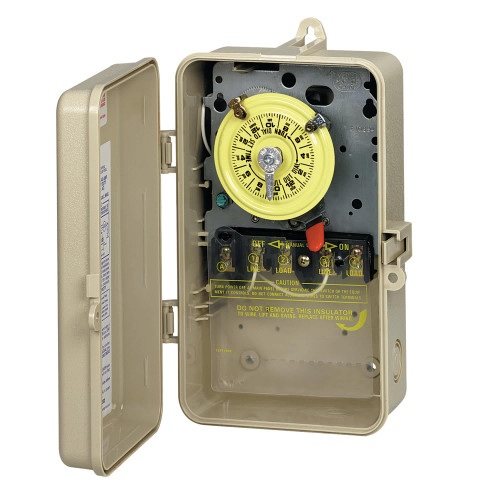
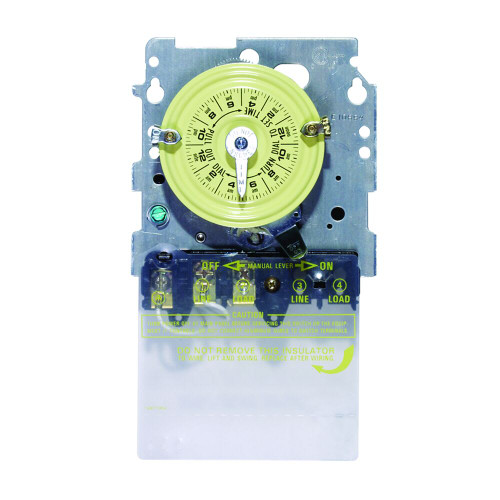
  • Mechanical time clocks. A small synchronous clock motor turns a 24-hour dial. On and off trippers clamped to the dial push the switch contacts open and closed at the set times. Intermatic T100 series clocks are the most common style on pool pads. Models differ by voltage and contact arrangement. For example, the T101 is a 120 V single-pole model and the T104 is a 208 to 277 V double-pole model commonly used on 240 V pool pumps.
  • Digital and astronomic timers. Electronic timers allow more on and off events per day, day-of-week programming and, on astronomic models, sunset-based light control. Most retain settings through a power loss with a battery or memory.
  • Air switches. A pneumatic button at the spa pushes a puff of air through small tubing to an air switch at the equipment pad, which toggles a line voltage circuit. The button has no electrical connection, which keeps electricity away from the water.
  • Freeze protection controls. A thermostat with an outdoor sensor turns on the pump when air temperature drops near freezing, overriding the timer. Some units also run a booster or heater circuit.

Signs a Timer or Switch Is Failing

  • Clock is off by hours or has stopped. The clock motor has failed, or power was lost and the dial was never reset.
  • Pump will not turn on at the scheduled time, or will not turn off. Contacts may be burned or welded, trippers may be loose, or the mechanism may be worn.
  • Burned or melted terminals inside the box, often from loose wire connections or a motor drawing more current than it should.
  • Manual lever stiff or broken, or the dial slips.
  • Rusted enclosure with water inside, insects nesting or a door that will not latch.
  • Air switch does not respond, which is usually a cracked button, a split or disconnected air tube, or a worn switch.
  • Freeze protection not activating or running constantly on mild nights, caused by a failing sensor or a misadjusted set point.

How to Choose the Right Replacement

  1. Match the voltage. A 120 V timer will not work on a 240 V circuit and vice versa. Check the voltage of the circuit and the timer's clock motor rating.
  2. Match the contact arrangement. Single-pole for 120 V loads, double-pole for 240 V loads so both hot legs open. Two-speed pumps and some applications need a timer or switch with specific contact configurations.
  3. Check the amp and horsepower rating. The timer's contacts must be rated for the motor's horsepower and full-load amps.
  4. Mechanism only or complete timer. If the enclosure is in good shape, a replacement mechanism of the same series drops into the existing box. If the box is rusted, replace the whole unit.
  5. Enclosure type. Outdoor pads need a rain-tight enclosure. Choose metal or plastic based on corrosion exposure; plastic holds up well near salt pools and coastal air.
  6. Air switch ratings. Match the air switch's amp rating to the load, and confirm whether it is latching (alternates on and off with each press) or momentary (closed only while pressed) for the application.
  7. Cross-reference the old model number printed on the mechanism or enclosure label.
Device Typical Use What to Confirm
Mechanical time clock, single pole 120 V pumps, lights, accessory loads Clock motor voltage, contact amp rating
Mechanical time clock, double pole 240 V filter and booster pumps Horsepower rating, enclosure condition
Digital or astronomic timer Multiple daily events, sunset lighting Voltage, load rating, memory backup
Air switch Spa jets, blowers, lights from spa-side buttons Amp rating, latching or momentary, tubing size
Freeze protection control Starting the pump in freezing weather Set point range, contact rating, sensor placement

Freeze Protection Basics

Water expanding as it freezes can crack pumps, filters, heaters and pipes. Moving water is far less likely to freeze, so the standard approach is to run the filter pump continuously when air temperature drops near freezing. In warm climates like South Florida, freeze events are rare, but a single cold night can damage exposed equipment, which is why many pros still install freeze protection on pads without automation. In colder regions it is essential until the pool is winterized. Freeze protection does not replace proper winterization when a pool will be closed.

Installation and Safety Tips

  • Use a licensed electrician for new timer installations, circuit changes or anything beyond a like-for-like mechanism swap by a qualified technician. Pool circuits fall under NEC Article 680, including GFCI requirements on pump circuits.
  • Turn off the breaker and verify zero voltage before opening a timer box. Timer enclosures often have line voltage on several terminals.
  • Tighten terminal screws firmly. Loose connections cause the burned terminals that kill most timers.
  • Set the clock to the correct time by turning the dial in the direction indicated, never backward, and confirm trippers are tight.
  • Check air tubing for cracks and secure both ends. Leaks are the most common air switch problem.
  • Run the filter pump long enough. Most pools need several hours of filtration daily. Your pool professional can recommend run times for turnover and chemistry.

Shopping This Category at HVAC365

Timers, mechanisms, air switches and freeze protection controls at HVAC365 are brand-new with the full manufacturer warranty. Product pages list voltage, contact configuration and load ratings so you can match the existing setup. In-stock items ship in 1-2 business days. If the old timer label is faded or you are unsure which model fits your pump, send us what you have and we will help you sort it out.

Frequently Asked Questions

Can I replace only the timer mechanism?

Yes, if the enclosure is in good condition and you use a mechanism from the same series and voltage. Replacing the whole unit is better when the box is rusted, cracked or does not latch.

What is the difference between a T101 and a T104?

The T101 is a 120 V single-pole timer for 120 V loads. The T104 is a 208 to 277 V double-pole timer used on 240 V loads such as many pool pumps. Match the timer to your circuit voltage and the number of hot legs.

Why is my timer running slow or stopped?

The clock motor has likely failed or the timer lost power. If power is good and the dial does not move, replace the mechanism or the clock motor.

How does a spa air button work without electricity?

Pressing the button pushes air through a thin tube to an air switch at the equipment pad. The switch toggles the circuit. Nothing electrical is at the spa, which improves safety around water.

Do I need freeze protection in Florida?

Freezing nights are rare in South Florida, but they do happen in parts of the state. Freeze protection is inexpensive insurance for exposed pumps and plumbing, especially in North and Central Florida.

Can a timer control a variable-speed pump?

Most variable-speed pumps have built-in schedules and are better controlled by their own programming or automation. A timer cutting power to a variable-speed pump is not recommended by many manufacturers, so check the pump manual first.

Compare
Show: 12 24 48

Fast Shipping

Easy Returns

Warranty Coverage

Financing Available