null
Replacement Salt Cells

Replacement Salt Cells

A salt chlorine generator makes chlorine on site by passing low-voltage current through a cell full of coated titanium plates while slightly salty pool water flows between them. The control box gets most of the attention, but the cell is the part that wears out. Every hour it runs, the coating on those plates is slowly consumed, and once it is gone, the cell stops producing chlorine no matter what the controller says. Replacing the cell is a normal maintenance expense on every salt pool, roughly comparable to replacing tires on a car.

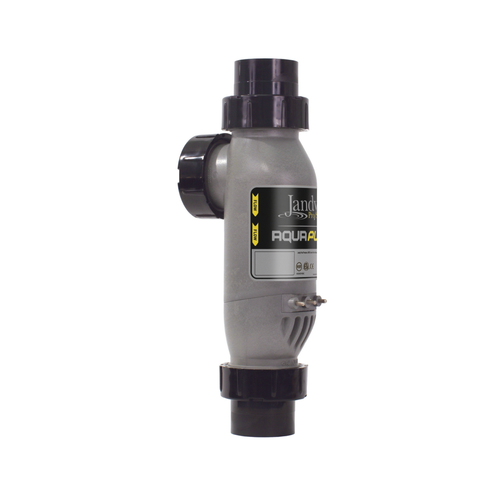
This category covers replacement salt cells for major salt chlorine generator platforms, including Hayward T-Cell / TurboCell, Pentair IntelliChlor, Jandy AquaPure and other systems, in both OEM and compatible generic versions, along with cell cleaning stands, unions, O-rings and flow switches. Service techs replace cells all year in South Florida. Homeowners usually shop here after a "check cell" or "low salt" warning that will not clear, or after a cleaning that did not bring chlorine output back.

How a Salt Cell Works

Pool water is typically kept around 3,000 to 4,000 ppm salt, depending on the manufacturer. That is far less salty than seawater. As water flows through the cell, DC current from the controller drives electrolysis between the plates, converting chloride in the water to chlorine. The chlorine sanitizes the pool and then reverts to salt, so salt is mostly lost to splash-out, backwashing and rain, not consumed.

  • Plates. Titanium coated with precious metal oxides, commonly ruthenium or iridium. The coating is what does the work and what wears away.
  • Polarity reversal. Most modern cells periodically reverse the polarity of the plates to shed calcium scale that builds up on the negative plates.
  • Flow switch and sensors. The cell will not generate without flow, protecting it from gas buildup. Many cells include a temperature sensor and the system estimates salt level from cell current.

Cell Life and Gallon Ratings

Manufacturers rate cells two ways, and both matter.

  • Rated cell life in hours. Many residential cells are rated somewhere around 8,000 to 10,000 hours of generating time, with some rated higher. In real life, that often works out to roughly three to seven years depending on run time, output setting, water temperature and how well the water is maintained.
  • Maximum pool gallons. Cells are rated by pool size, such as 15,000, 25,000 or 40,000 gallons. That rating usually assumes ideal conditions. In hot climates with heavy sun and bather load, many pros size one step up so the cell runs at a lower output percentage, which extends life.

Things that shorten cell life: running at 100 percent output all the time, low salt, high calcium and pH that drive scaling, acid washing too often or too strong, phosphates and metals, and running the cell in very cold water where many systems shut off or produce poorly.

Signs a Salt Cell Needs Cleaning or Replacement

  • "Check cell," "inspect cell" or "low salt" messages when a salt test shows the level is correct. As the coating wears, the cell draws less current, and many controllers interpret that as low salt.
  • Chlorine won't hold even at high output settings with balanced chemistry and enough stabilizer.
  • Visible scale bridging between the plates. Clean it first before condemning the cell.
  • Plates look dull, worn or show bare titanium where the coating is gone.
  • Hours on the cell approaching or past its rated life, shown on many controllers' diagnostic menus.
  • Cracked housing, burnt connector or corroded terminals.

Cleaning and Descaling

Inspect the cell every few months and clean only when needed, since every acid cleaning removes a little coating. Turn off the power, remove the cell, and look between the plates. If scale is present, use a cell cleaning stand and a diluted acid solution as the manufacturer recommends, often a weak muriatic acid mix such as about 4 parts water to 1 part acid, or a commercial cell cleaner. Always add acid to water, never water to acid. Soak only until fizzing stops, rinse thoroughly, and never scrape the plates with metal tools. If scale returns quickly, address high calcium hardness, high pH or high alkalinity rather than cleaning more often.

How to Choose a Replacement Cell

  1. Identify the system. Find the controller brand and model and the cell part number. Cells are generally not interchangeable across brands, and many controllers recognize only specific cell models.
  2. Match the gallon rating. Replace with the same capacity or step up to a larger cell if the controller supports it.
  3. Check connector and union style, and cell length. Some cells change dimensions between generations.
  4. OEM vs generic. OEM cells come from the system manufacturer and are designed for full compatibility with the controller. Generic or compatible cells are built to fit and work with specific controllers and are often less expensive. Check the generic maker's compatibility list and warranty terms, and be aware that some OEM controller warranties may be affected by a non-OEM cell.
  5. Firmware or setup. Some controllers need the cell type selected in setup after replacement, or a reset of the cell hours counter.
Platform Common Cell Families Typical Notes
Hayward AquaRite and related controls T-Cell / TurboCell (e.g. T-CELL-3, T-CELL-9, T-CELL-15) Number indicates relative capacity; confirm controller compatibility
Pentair IntelliChlor IC20, IC40, IC60 and newer generations Rated by capacity; check compatibility with automation
Jandy AquaPure / TruClear PureLink and AquaPure cells Match cell to controller model and gallon rating
Generic / compatible cells Built to fit specific OEM controllers Verify compatibility list and warranty terms

Installation and Safety Tips

  • Turn off power to the salt system and pump at the breaker before disconnecting the cell. Hard-wired controllers and bonding work should be handled by a licensed electrician per NEC Article 680.
  • Install the cell last on the return line, after the filter, heater and any other equipment, as the manufacturer specifies.
  • Replace union O-rings and hand-tighten unions per the maker's instructions. Over-tightening cracks unions.
  • Check the flow switch orientation and confirm it reads flow at your pump's operating speed.
  • Verify salt with a separate test before adding salt based on a new cell's reading.
  • Wear acid-resistant gloves and goggles when cleaning cells, and work in a ventilated area outdoors.
  • Keep the bonding connection intact. Many salt systems require bonding of the cell housing or nearby equipment.

Shopping This Category at HVAC365

HVAC365 carries brand-new OEM and compatible salt cells with full manufacturer warranty. Each product page lists gallon rating, controller compatibility, connector style and rated life information so you can match a cell to the system on the pad. Orders ship in 1-2 business days. If you are not sure which cell fits your controller, send us the controller model and existing cell part number and we will help you confirm the right replacement.

Frequently Asked Questions

How long does a salt cell last?

Many residential cells are rated in the range of roughly 8,000 to 10,000 operating hours or more, which often means three to seven years. Water chemistry, output settings and run time make a big difference.

Can I use a generic cell with my OEM controller?

Many compatible cells are designed to work with specific controllers. Confirm the model on the compatibility list and understand the warranty terms on both the cell and controller.

My controller says low salt but my test kit says salt is fine. Why?

A worn or scaled cell draws less current, which many controllers interpret as low salt. Clean and inspect the cell; if the coating is worn, replace it.

How often should I clean my salt cell?

Only when you see scale. Inspect every few months. Frequent scaling points to high calcium, pH or alkalinity that should be corrected.

Should I size up my salt cell?

In hot climates and busy pools, many pros choose a cell rated above the pool's volume so it runs at lower output and lasts longer, as long as the controller supports it.

Can I swap a T-Cell-9 for a T-Cell-15?

Often, on Hayward systems that support both, with the cell type set in the controller. Confirm compatibility for your specific controller first.

Compare
Show: 12 24 48

Fast Shipping

Easy Returns

Warranty Coverage

Financing Available