null
In-Ground Pool Light Fixtures

In-Ground Pool Light Fixtures

A dark pool is an unused pool. Whether it is a backyard residential install or a commercial aquatic facility, reliable in-ground lighting is what keeps a pool safe and inviting after the sun goes down. Finding the right fixture is not always straightforward, though: voltage ratings, wet-niche versus dry-niche designs, LED versus incandescent, and the physical constraints of an existing niche can all turn a simple-looking swap into a frustrating afternoon if the wrong fixture ends up in the cart. HVAC365 stocks a broad selection of in-ground pool light fixtures so that homeowners handling their own replacements, contractors on a tight job schedule, and commercial facility operators running larger installs can all find what the job actually calls for rather than settling for what happens to be available.

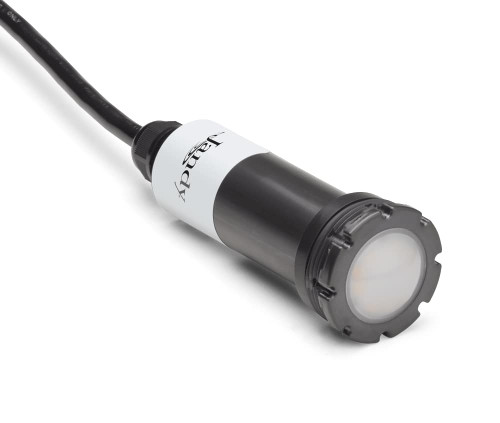
In-ground pool light fixtures are the permanently installed, submersible or semi-submersible luminaires that mount into a niche in the pool wall below the waterline. They are purpose-built for continuous wet-environment operation, and they are not interchangeable with standard outdoor fixtures or above-water landscape lighting. The category spans replacement bulbs and complete fixture assemblies, low-voltage and line-voltage designs, LED and incandescent sources, and the accessories and housings that surround them. Buyers range from residential homeowners replacing a burned-out or aging fixture, to professional pool and electrical contractors specifying fixtures on new builds or renovation jobs, to commercial operators outfitting hotel pools, water parks, or municipal aquatic centers, to distributors and supply houses stocking fixtures for resale or fleet replacement programs.

Choosing the Right Pool Light Fixture

The single most important thing to nail before buying is the niche. In-ground pool fixtures mount into a niche that is cast or cut into the pool wall during construction, and that niche has a specific size and a specific cord-entry configuration. Most niches in North American pools follow standard sizing conventions, but not all, and a fixture that does not match the niche is not an installation problem you can work around on-site. Before ordering, measure the niche diameter and depth, note whether it is a wet niche (the fixture sits fully submerged inside a water-filled housing) or a dry niche (the fixture assembly mounts behind a waterproof lens, and the lamp itself stays dry), and check whether the existing niche is made of plastic or stainless steel. Those three facts will eliminate most of the wrong options immediately.

Voltage is the next decision point. In-ground pool fixtures operate at either 120V line voltage or 12V low voltage, and the two are not interchangeable at the fixture level. Low-voltage fixtures require a compatible transformer, and the transformer's output capacity needs to be sized for the number of fixtures it will power. Line-voltage installations have their own code requirements around GFCI protection, bonding, and setback distances from the water's edge. Which voltage is right for a given install depends on the existing wiring and transformer infrastructure already in place, local code requirements, and the pool builder's original design. Swapping voltage types is possible but it involves more than just a fixture change, so understanding what is already on-site before specifying is worth the time.

Light source matters too, and most buyers in this category are moving toward LED. LED fixtures draw significantly less power than incandescent equivalents, generate less heat, and last considerably longer between replacements. The tradeoff is upfront cost: LED fixtures cost more at purchase, though the operating cost difference tends to recover that gap over time in most residential and commercial applications. Color temperature and color-changing capability (common in LED fixtures designed for entertainment and ambiance) are also worth specifying up front if the application calls for it, because these are not features you can add to a fixture later.

Lumen output is worth thinking through relative to pool size and geometry. A single fixture adequate for a small residential plunge pool will leave a larger lap pool or a commercial facility with dark corners. The number of fixtures, their placement in the pool wall, and their individual output all contribute to even, shadow-free illumination. For commercial installs or larger residential pools, laying out fixture placement as part of the design process, rather than retrofitting additional niches later, saves significant cost and disruption.

Buyers specifying for a commercial aquatic facility or a larger residential renovation will also want to verify that the fixtures they are considering carry the appropriate listings and certifications for the jurisdiction. National standards and local amendments vary, and a fixture that is listed for residential use may not meet the requirements for a public pool. Distributors buying in volume for resale should confirm that the fixtures they stock cover both markets, or maintain separate inventory for each, rather than assuming a single SKU covers all applications.

Buying Tips

  • Match the niche before anything else. The most common mistake is ordering a fixture based on wattage or style and discovering on installation day that it physically does not fit. Niche diameter, mounting style, and cord length are all niche-specific. If you are replacing an existing fixture, pulling the old one and noting the brand and model number printed on it is often the fastest way to confirm what the niche was designed for.
  • Do not underestimate cord length. The conduit run from the niche to the junction box has a code-required minimum distance, and that run needs to be looped in the niche to allow the fixture to be pulled out to the pool deck for relamping without disconnecting wiring. Fixtures come with different cord lengths; buying one that is too short creates a compliance and serviceability problem that is not fixable without replacing the fixture again.
  • If you are switching from incandescent to LED and keeping the existing niche, verify that the LED fixture is certified as a direct replacement for that niche type. Not every LED fixture is validated for every niche, even when the physical dimensions appear to match. Manufacturers publish compatibility lists; checking them before ordering is faster than managing a return.
  • Color temperature is a permanent choice. Buyers who want color-changing LED capability need to select a fixture designed for it at the time of purchase. Standard single-color LED fixtures cannot be field-converted to RGB or color-changing operation after the fact.

Fixture Types and Where Each One Fits

The practical choice in this category comes down to a few core distinctions, and understanding which one applies to a given install narrows the field quickly.

  • Wet-niche fixtures are the most common design in North American in-ground pools. The fixture mounts inside a niche that is open to pool water, meaning the housing is always submerged. The lens and lamp assembly can be unbolted and pulled out to the deck on its cord for servicing without draining the pool. Most residential replacement work in this category involves wet-niche fixtures.
  • Dry-niche fixtures mount behind a sealed lens in the pool wall, with the lamp compartment remaining dry and accessible from outside the pool structure. These are less common in standard residential pools but appear in older commercial installations and in some specialty builds. Replacement parts and fixture assemblies for dry-niche applications are more specialized, and confirming the niche type before ordering is especially important here.
  • Nicheless fixtures are a newer design that mount flush to the pool surface without a traditional recessed niche, making them popular for vinyl liner pools and pool renovation projects where cutting a full niche is not practical. They are shallower in profile and typically lower in output than full niche-mounted fixtures, which makes placement and quantity planning more important.
  • LED retrofit assemblies are designed to drop into an existing wet niche and replace an incandescent fixture without changing the niche hardware. These simplify the upgrade path for existing pools and are one of the more common purchases in this category for residential replacement buyers.

Installation and Electrical Considerations

In-ground pool lighting is governed by the National Electrical Code, specifically Article 680, and by any state or local amendments on top of it. This is not a category where installation requirements are optional or advisory; compliance is a safety requirement, and inspectors enforce it. Before beginning any fixture work on an existing pool, check whether the existing installation has an inspection record and whether any open permits or code updates apply.

Every in-ground pool light circuit requires GFCI protection. Verify that the existing breaker or outlet feeding the fixture circuit is GFCI-protected; if it is not, that is a correction that needs to happen before the new fixture goes in, not after. Bonding is a separate but related requirement: the fixture housing and the surrounding pool structure must be electrically bonded to equalize voltage potential and reduce shock risk. Bonding connections should be inspected any time a fixture is pulled for replacement.

The junction box for pool lighting has to be mounted at a specific elevation above the waterline, with a specific setback from the pool edge, and it needs to be weatherproof and listed for the application. Measure the existing junction box location against current code before assuming it meets requirements, particularly on older installations. If the box is undersized or in the wrong position, relocating it is part of the installation scope.

For low-voltage systems, look at the existing transformer's capacity before adding fixtures. A transformer that is already loaded to capacity cannot support additional fixtures without being upsized. Check the transformer's output rating on the nameplate and compare it against the combined wattage of all the fixtures it will power, including any that are already connected.

Cord length needs to cover the run from the niche to the junction box with enough surplus to loop in the niche and allow the fixture to be pulled to the deck. Measure the run before ordering if there is any doubt about whether the cord length on the selected fixture is sufficient.

For commercial applications, the installation scope also includes verifying that the fixture is listed and labeled for the specific commercial pool type (public pool, spa, wading pool) under the applicable standard. Some fixtures are listed for residential application only, and that distinction matters during inspection.

Questions Buyers Ask About Pool Light Fixtures

Q: Can I replace a pool light fixture without draining the pool?

A: In most cases, yes, if the existing fixture is a wet-niche design. Wet-niche fixtures are designed to be unbolted and pulled out to the pool deck on their cord for servicing while the pool remains full. Dry-niche and nicheless designs have different serviceability approaches. The fixture types section above covers how each design handles servicing.

Q: How do I know if a new LED fixture will fit my existing niche?

A: Check the niche diameter, depth, and mounting configuration against the fixture's listed niche compatibility. Manufacturers publish compatibility lists for LED retrofits, and most LED fixtures specify which niche brands and models they are certified for. If the existing fixture's brand and model number are visible on the housing, that is the fastest starting point. Physical dimensions alone are not a sufficient check; certified compatibility is what matters for both performance and code compliance.

Q: What voltage should my pool light fixture be?

A: Match the voltage of the new fixture to the voltage of the existing circuit and niche. Mixing voltages requires infrastructure changes beyond the fixture itself — transformer changes for low-voltage systems or rewiring for line-voltage systems — and those changes carry their own permit and inspection requirements. The existing system's voltage is typically labeled on the transformer or breaker feeding the circuit.

Q: Is a GFCI breaker required for in-ground pool lights?

A: Yes. Article 680 of the National Electrical Code requires GFCI protection on all in-ground pool lighting circuits, and most local jurisdictions follow or exceed that requirement. If the existing circuit does not have GFCI protection, that correction belongs in the installation scope alongside the fixture replacement — not deferred.

Q: What is the difference between a wet-niche and a dry-niche fixture?

A: A wet-niche fixture mounts inside a niche open to pool water; a dry-niche fixture mounts behind a sealed lens with the lamp compartment remaining dry and accessible from outside the pool structure. The two are not interchangeable, and the niche type is fixed at the time of pool construction. The fixture types section above has the full breakdown of each design and what to check before ordering.

Q: Do color-changing LED pool fixtures require special wiring?

A: Color-changing LED fixtures typically require a compatible control system — a dedicated controller, a home automation interface, or a proprietary remote depending on the fixture brand and design. The circuit wiring from the junction box to the niche follows the same NEC Article 680 requirements as any other pool light circuit, but the controller and its wiring are additional components that need to be specified and installed alongside the fixture. Confirm what control hardware a given fixture requires before ordering.

Q: How many fixtures does my pool need?

A: The right number depends on pool size, geometry, depth, and the desired lighting level. A single fixture is often adequate for a compact residential pool; larger pools, L-shaped or irregular layouts, and commercial facilities typically require multiple fixtures to eliminate dark zones. Fixture placement is ideally planned during pool construction or a renovation design phase, because adding niches to an existing pool is a significant structural undertaking. For commercial projects, the designer or engineer of record typically specifies fixture count and placement as part of the lighting plan.

HVAC365 ships in-ground pool light fixtures nationwide, and the catalog covers the range of fixture types, voltage classes, and niche configurations that residential replacement jobs and commercial installs actually call for. Whether you are sourcing a single replacement fixture for a backyard pool or specifying inventory for a multi-unit facility project, the selection is available to order and ship to your location directly.

Compare
Show: 12 24 48

Fast Shipping

Easy Returns

Warranty Coverage

Financing Available